Theatre

Why George Bernard Shaw was an overrated babbler

When I was a kid, I was taught by a kindly old Jesuit whose youth had been beguiled by George Bernard Shaw. The provocative ironies of ‘GBS’ were quoted everywhere and he was, for several decades, the world’s leading public intellectual. But as a schoolboy I found it hard to assent to the infatuations of my elders and though I relished Shaw’s aphorisms (‘we learn from history that we learn nothing from history’) I conceived a suspicion that he was smug and overrated. A babbler. Perhaps even a bore. Man and Superman, rarely revived at full length, offers us GBS with all the taps running. Imagine Fry, Brand and Norton rolled into one and given a bushel of coke to snort.

Muswell Hill reviewed: a guide on how to sock it to London trendies

Torben Betts is much admired by his near-namesake Quentin Letts for socking it to London trendies. Letts is one of the few individuals who enjoys the twin blessings of a Critics’ Circle membership card and a functioning brain so his views deserve serious attention. The title of Betts’s 2012 play Muswell Hill shifts its target into the cross hairs with no subtlety whatsoever. Curtain up. Married couple, Jess and Mat, are nervily tidying their yuppie dream home in expectation of supper guests. Jess is a sex-bomb accountant. Mat is a blankly handsome scribbler whose debut novel keeps getting rejected. Then a missile strikes. Mat casually mentions his acquaintanceship with an Australian electrician whom Jess has been secretly entertaining. Tense silence. The doorbell rings.

How to Hold Your Breath, Royal Court, review: yet more state-funded misanthropy

‘We hate the system and we want the system to pay us to say we hate the system.’ The oratorio of subsidised theatre rises, in triumphant blast, at the Royal Court whose current empress Vicky Featherstone has chosen to direct an interesting new play by Zinnie Harris. I’d call it a quasi-symbolist extraterrestrial tragicomic chicklit road-movie spoof with Chomsky-esque anti-corporate neo-collectivist socioeconomic textual underpinning but I fear this may lend it a clarity of purpose, and a firmness of character, which it doesn’t quite possess. We start with Dana, a chippy frump on the last lap of her sex life, bedding a UN drudge named Jarron who claims to be ‘a demon, a devil, a god’.

Both lyricist and agitator: the split personality of Vladimir Mayakovsky

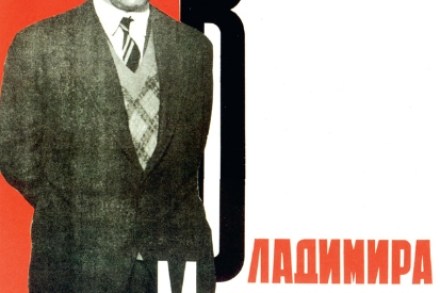
Why increase the number of suicides? Better to increase the output of ink! wrote Vladimir Mayakovsky in 1926 in response to the death of a fellow poet. Four years later, aged 36, he shot himself. What drove the successful author, popular with the public and recognised by officialdom, to suicide? Bengt Jangfeldt provides some clues to this question in his detailed, source-rich biography. Mayakovsky came to poetry as a Futurist, co-authoring the 1912 manifesto A Slap in the Face of Public Taste, which granted poets the right ‘to feel an insurmountable hatred for the language existing before their time’. That the new era demanded a new language was a principle Mayakovsky adhered to all his life.

What Samsung’s new TVs owe to Jeremy Bentham

Watching brief Samsung warned users of its voice-activated televisions that what they said in front of the TV could be transmitted to other people. The story attracted comparison with the telescreens in George Orwell’s Nineteen Eighty-Four, but the principle of keeping a population under control by surveillance was foreseen a century earlier by Jeremy Bentham. — In 1791 he came up with the idea for a Panopticon, a circular prison with one-way observation holes which would allow a single gaoler to patrol several hundred prisoners, none of whom could tell whether they were being watched at any one moment. — Bentham saw the government’s eventual rejection of the scheme as ‘sinister’, a word now more likely to be used to describe the idea itself.

A tatty new theatre offers up a comic gem that’s sure to be snapped up by the BBC

New venue. New enticement. In the undercroft of a vast but disregarded Bloomsbury church nestles the Museum of Comedy. The below-stairs space wears the heavy oaken lineaments of Victorian piety but the flagstones have been smothered with prim suburban carpeting, wall-to-wall. There’s a bar in one corner. Yes, a bar in a church. With prices high enough to make you take the pledge. The ecclesiastical shelves are crammed with books, magazines, scripts and photographs that summon up the ghosts of our comedy heroes. A big carved pew, centrally plonked, invites the worshipper to sit and read, let us say, the autobiography of Clive Dunn or the diaries of Kenneth Williams. The sheer incongruity of this arrangement causes palpitations in the brain.

Tom Stoppard’s The Hard Problem review: too clever by half

Big event. A new play from Sir Tom. And he tackles one of philosophy’s oldest and crunchiest issues, which varsity thinkers call ‘the hard problem’. How is it that a wrinkled three-pound blancmange sitting at the top of the spinal cord can generate abstract thoughts of almost limitless complexity? In real life Sir Tom is said to have such a flair for philosophical chitchat that he can fire off searching observations about Descartes, mind-body dualism, the nature of immateriality, being and non-being, the ‘cogito’ and so on, until those around him have slithered into a coma. Which is not rude of them.

My Night With Reg at the Apollo Theatre reviewed: a great play that will go under without an interval

Gay plays crowd the theatrical canon. There are the necessary enigmas of Noël Coward, like The Vortex or Design For Living, which are slyly aimed at an audience of knowing code-breakers. There are the proud, defiant (and rather tedious) pleas for understanding like La Cage Aux Folles. And the gayest of them all, My Night With Reg, is also the least overtly gay because it dispenses with all homosexual caricatures. There isn’t an interior designer, a flight steward or a hair stylist in sight, let alone a Liberace fetishist, or a Maria Callas wonk. The characters are mainstream yuppies who are exactly like hetero folk, except that they seduce one another with very little encouragement and an enviably high success rate. We’re in the 1980s.

Young Vic’s Bull, review: a new Mike Bartlett play to bore you into catalepsy

A knockout show at the Young Vic. Literally. The stage has been reconfigured as a boxing ring to make Mike Bartlett’s play, Bull, feel like a sporting fixture. This is a common conceit, even a cliché, but here it’s done superbly. The auditorium floor is squash-club yellow and the stage is surrounded by a casual standing area that creates the ragged informal atmosphere of a training arena. Excellent stuff. The play is a wordy, tricky, shifty, nasty, faithless thing. The characters lie about their backgrounds so it’s hard to know who, or what, to latch on to. More problematically the plot is infertile. Nothing grows or develops. At curtain-fall the position is the same as at curtain-rise. We’re in a workplace.

Truth, Lies, Diana review: it was a cover-up!

Truth, Lies, Diana Charing Cross Theatre, in rep until 14 February John Conway’s sensationalist play, Truth, Lies, Diana, is a forensic re-examination of the circumstances surrounding the princess’s death in 1997. The issue of Prince Harry’s paternity, which earned the play much advance publicity, reaches no conclusions. James Hewitt co-operated with the show and Conway portrays him as a decent twerp ruthlessly smeared by shadowy puppet-masters (‘men in suits,’ Conway calls them), who set out to destroy his credibility. Hewitt admits that his trysts with Diana began at least a year before Harry’s birth. But is the Cad the dad? Hewitt’s keeping mum.

ENB’s Swan Lake: the rights and wrongs of ballet thighs

There’s been heated disagreement over the past week about what’s right and wrong. Is the rocket-propelled ex-Bolshoi enfant terrible Ivan Vasiliev ‘right’ for Swan Lake? Is English National Ballet right to accept such huge thighs in this of all classics, when the sizeist cohorts of the Russian establishment always said nyet to the sturdy, forceful Belarussian? That peculiar balletic categorisation ‘emploi’ has been invoked even by British critics. Emploi means ‘rightness’ as a ‘type’ for a role. Emploi was what drove Mikhail Baryshnikov, another short man condemned at home by his build to demi-caractère parts, to quit Russia and its narrowmindedness and redefine himself as danseur noble in the West.

An American in Paris: a zingy new Wheeldon dance-musical that you won’t want to miss

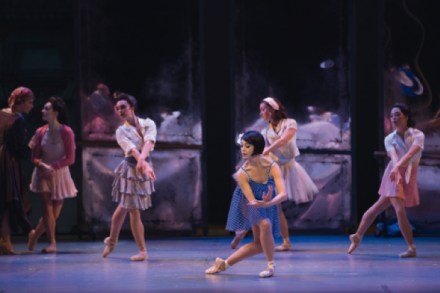
A new year must start with hope and resolution, and if you’re very rich, with influence in the highest places, I’d urge you to resolve to dust off the private jet and get to Paris quick this weekend hoping to find a ticket somehow for the last Châtelet performances of An American in Paris, Christopher Wheeldon’s s’wonderful, s’marvellous new staging of the Gershwin/Minnelli musical film. Or book for New York in March when the show moves to its second home on Broadway. But surely there must be a UK run soon. It’s the first big dance-musical of the Royal Ballet’s favourite son, which is why we should pay attention. The secret of Christopher Wheeldon’s current status at 41 as blue-eyed boy of the Western ballet world is his geniality.

National Theatre’s 3 Winters: a hideous Balkans ballyhoo

A masterpiece at the National. A masterpiece of persuasion and bewitchment. Croatian word-athlete Tena Stivicic has miraculously convinced director Howard Davies that she can write epic historical theatre. And Davies has transmitted his gullibility to Nicholas Hytner, who must have OK’d this blizzard of verbiage rather than converting it into biofuel and sparing us a hideous Balkans ballyhoo. Certainly the play is conceived on a grand scale. Location: a Zagreb mansion. Timeline: 1945 to 2011. Characters: several generations of clever proles plus one dangling aristo. It opens on a note of sourness and corruption. A blonde Marxist stunnah seduces a top commissar who buys her off with the freehold to a townhouse occupied by some rich bloodsuckers. The snooty vermin are kicked out.

Lloyd Evans’s top five plays and musicals of 2014

1. The play of the year, by a mile, was Fathers and Sons at the Donmar adapted from Turgenev’s novel. Lindsey Turner directed Brian Friel’s harrowing and exhilarating script with immense visual aplomb. 2. Fings Ain’t Wot They Used T’Be Lionel Bart’s first musical was a sublimely witty look at the Cockney underworld starring Gary Kemp. 3. The Realness A new song-and-dance comedy at Hackney Downs Studio, approached the same material as Fings but with a punchier and more contemporary style. 4. I Can't Sing! The exhilarating title melody of this musical set my nape tingling with static electricity and I was convinced that Harry Hill’s X-Factor spoof would stick around for years. It lasted a matter of weeks. 5.

Penelope Lively’s notebook: Coal holes and pub opera

I have been having my vault done over. Not, as you might think, the family strong room, but the place beneath the pavement — the former coal cellar — pertaining to an early 19th-century London house. The vault opens onto the area — mine is the last generation to know that that is what you call the open sunken space between the basement and the pavement — and has been given the latest damp-proof treatment, plus shelving and smart lighting, so that I can use it for storage. Others use their vault more creatively: a couple next door had theirs excavated several feet and made into a troglodyte bedroom. No, they said, they couldn’t hear feet overhead, but wheeled suitcases could be tiresome.

Panto season has arrived – and even the kids are turning their nose up at it

‘What is a panto?’ I asked my companion at the Hackney Empire’s Saturday matinee. ‘It’s basically a really bad play,’ said Coco, aged five and three quarters. She was there with her older brother and my son to help me appreciate the Christmas frolics. Half an hour in, I feigned confusion over the storyline. ‘People are trying to steal the duck,’ she said. Mother Goose is a parable of wealth and greed set in Hackney-topia where an impoverished family become rich when their champion egg-layer starts to produce bullion instead of breakfast. Menaced by an assortment of harpies and malefactors, they move into a spangly new palace and try to protect their asset from thieving hands.

Don’t criticise Janet Suzman for saying theatre’s ‘a white invention’, thank her

Janet Suzman’s throwaway comment about the theatre being 'a white invention' has attracted a storm of opportunistic derision. What Dame Janet may have meant was this. Theatre is gossip ceremonially presented. And the dramatic structures devised by the Athenians in the 5th century BC raised the form to such a pitch of excellence that the offspring cultures of Ancient Greece acquired a head start that has never been relinquished. A harmless footnote. But her timing was unlucky. A day earlier the head of Arts Council England, Peter Bazalgette, ordered the 670 arts bodies he supports to get their skates on and make a bigger push for ‘diversity’.

A critic’s guide to theatre bars

Head upstairs. That’s my tip for thirsty play-goers during the interval. Most West End theatres are sunken affairs built in scooped-out craters, and this quirk of their design places the stalls 20 feet beneath the earth’s crust (hence the belly-rumble of Tube trains that wakens sleepy-heads during Twelfth Night or The Winter’s Tale). So the stalls bar is invariably a cramped dungeon with flock wallpaper and a ventilation system that pipes fresh air in from the Gents. Up a flight or two, you’ll find lightness, space and perhaps a view. But it seems that bunkers are now the first option of theatre architects. The Old Vic’s basement bar has been given the full SM treatment. Hot light bulbs glare angrily at sweating walls and stag-beetle black tiles.

The recruitment company to go to if you’ve got no arms or legs

When to launch? For impresarios, this is the eternal dilemma. Autumn is so crowded with press nights that producers are heard to sigh, ‘The market’s full. There’s no room.’ When the glut abates in late November, the same producers sob, ‘The market’s empty. There’s no point.’ But national rags have to report on something, even a fringey foxhole like the Southwark Playhouse, and a bold investor can exploit this opportunity. Most of the dailies sent their top sniffer dogs to check out Saxon Court by Daniel Andersen, which is set in the feverish, sharp-suited world of Square Mile recruitment.

Is theatre more left wing than other art forms? Yes – and so it should be

A couple of nights ago a question arose in our post-show discussion. It is a question I am familiar with. I run Theatre Uncut. We commission writers to create short plays that explore social or political issues. We then release these plays, rights free, to be performed by anyone anywhere for a limited period and stage them in leading theatres across the country. So far this year 328 groups in 25 countries have downloaded the plays. While we don’t advertise our own political persuasion it is pretty obvious to which side we lean: we were set up in response to the cuts. We use the word ‘social’ believing that society very much exists. We give plays to other makers rights free. So the question that arose is what we often get asked: what about right-wing voices?