Terrorism

The Irish Question, as recorded by The Spectator

From our UK edition

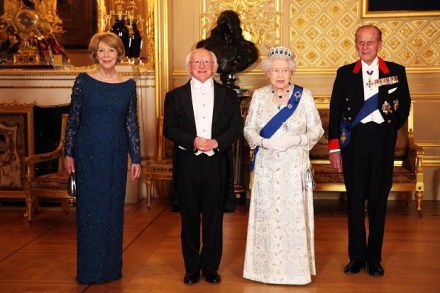
As the Irish president is making the first visit to the United Kingdom by an Irish head of state, some people have asked what’s taken him so long. The Spectator’s archive offers some insights into the two countries’ rocky relationship. The British government has often been criticised for not doing more to mitigate the effects of the Irish potato blight in the 1840s. The Spectator agreed the government could have done more, but also voiced suspicions about one of Ireland’s national champions, Daniel O’Connell. He’s known as The Liberator in Ireland and was one of the early campaigners for the repeal of the Act of Union.

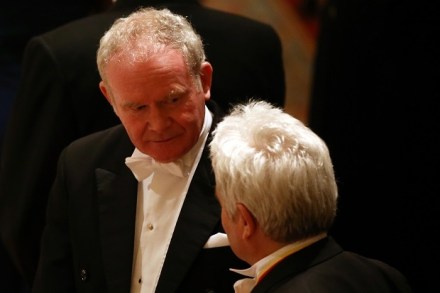
Martin McGuinness at Windsor Castle. What an odious sight

From our UK edition

I know that the official line is delight at the ‘progress’ allegedly represented by the presence of Martin McGuinness, in white tie and tails, standing to toast the Queen’s health at a banquet in Windsor Castle. But what an odious sight. Firstly because the idea that this constitutes some important step is all post-hoc prevarication. The steps that Martin McGuinness has taken in the last ten years were all open to him forty years ago. But he chose to turn them down then and pursue the IRA’s path of violence and murder. Pursuing that path should have caused him the worst imaginable problems; instead it has brought him only rewards.

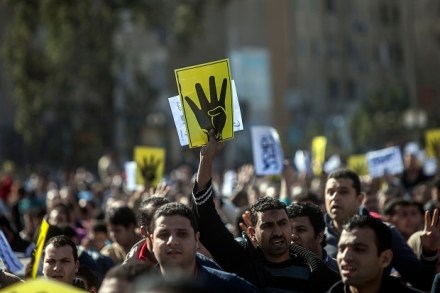
At last, Britain is investigating the Muslim Brotherhood

From our UK edition

The UK government has announced a long-overdue investigation into the activities of the Muslim Brotherhood in the UK. I am delighted. Why Britain should continue to act as an Argentina-like sanctuary for Islamic fascists I have never understood. I hope the investigation will be deep and wide-ranging. But of course if the government really wants to go into this properly it could do no better than to start at its own doorstep. Last week the inept and unelectable Baroness Warsi announced the formation of a new Foreign Office Advisory Group on Freedom of Religion or Belief. Given that Warsi has previously and repeatedly claimed that tackling 'Islamophobia' is one of the UK government's 'priorities' I think we can probably all guess where this 'Advisory group' will be heading.

The police’s blunder over John Downey is one thing, the government’s cravenness another

From our UK edition

So, the IRA terror suspect, John Downey, will now not face a trial for his alleged involvement in the Hyde Park and Regent’s Park bombings of 1982, in which eleven soldiers (as well as seven horses) were murdered by nail bombs. The former Northern Ireland Secretary Peter Hain seems to be delighted about this and expressed his astonishment that Downey had been arrested in the first place. Downey mistakenly received a so-called ‘comfort letter’ as part of the Good Friday Agreement, informing him that he was now effectively immune from prosecution. For what it’s worth, Downey denies the charges. It wasn’t a very good Friday, was it?

British jihadists in Syria cannot be compared to George Orwell and Laurie Lee

From our UK edition

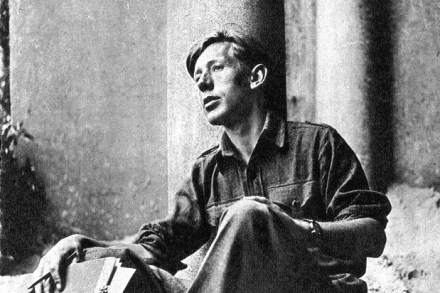
George Monbiot had a moving piece in yesterday’s Guardian in which he reflected on the UK government’s efforts to arrest and charge returning British subjects who have gone to fight the Assad regime in Syria. As Monbiot said in his very opening: ‘If George Orwell and Laurie Lee were to return from the Spanish civil war today, they would be arrested under section five of the Terrorism Act 2006. If convicted of fighting abroad with a "political, ideological, religious or racial motive" – a charge they would find hard to contest – they would face a maximum sentence of life in prison. That they were fighting to defend an elected government against a fascist rebellion would have no bearing on the case. They would go down as terrorists.

The Winter Olympics should never have been awarded to Vladimir Putin’s Russia

From our UK edition

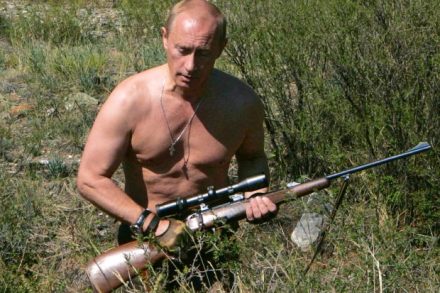
Last month's terrorist attacks in Volgograd were doubtless an attempt to warn foreigners off the Winter Olympics in Sochi next month. An attempt, too, to remind Vladimir Putin that his problems in the Caucasus - many of them at least partially made in Moscow - haven't gone away. For understandable reasons the bombs have caused plenty of folk to wonder about the security of athletes and visitors in Sochi. Those concerns are, plainly, real even if we may also, I think, expect the Russian state to erect several rings of steel around the Black Sea resort. The real concern, frankly, is that Russia was awarded the games in the first place. As I've written in today's Scotsman: The games should never have been sent to Russia in the first place.

The wild life and times of Ariel Sharon

From our UK edition

When Ariel Sharon slipped into a coma in January 2006, The Spectator was just beginning to rather like him. Days after his stroke, the magazine ran a piece arguing that Sharon’s legacy would be ‘not his military exploits but his final major political act: unilateral withdrawal from Gaza’. Douglas Davis described Gaza as a lawless gangland where terrorism was the major growth industry. Yasser Arafat had sown the seeds of anarchy and Mahmoud Abbas was too weak to do anything about it. ‘The terror war appears to be on the verge of entering a new, more dangerous, phase,’ he wrote. ‘Israelis have cause to be grateful that Sharon dragged them out when he did.’ Before 2006, The Spectator would have often made less comfortable reading for Ariel Sharon.

‘If they kill us all, what would be the reaction of Christians in the West?’

From our UK edition

The Silence of Our Friends, my Amazon Singles ebook about the persecution of Christians in the Middle East, is published today. I know I’ve written several posts on this subject recently, so I promise to stop, so long as everyone buys the book. Otherwise I won’t. Ever. It’s a subject that has become ever more urgent this year with violence against Christians in Syria, where Islamists have been engaged in ‘religious cleansing’, and in Egypt, which saw the worst anti-Christian violence in centuries.

Who is more powerful: a backbench MP or Alan Rusbridger?

From our UK edition

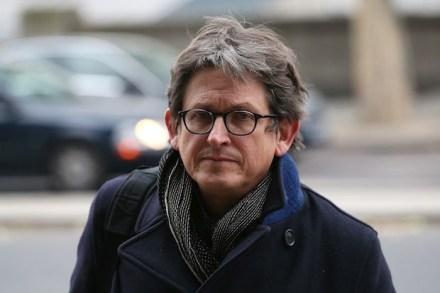
Well Alan Rusbridger has certainly received a glowing review from his own newspaper for his appearance in Parliament yesterday. In a moving paen, Roy Greenslade today describes how his boss ‘was able to bat away MPs' concerns without raising a sweat, despite bluster from a couple of them who sought to suggest he might be guilty of breaching the Terrorism Act.’ Which, if it is true, says more about the MPs than it does about Rusbridger. As it happens, I don’t know why some of the Select Committee MPs went into some of the cul-de-sacs they did. Why the ‘outing’ of the sexuality of some people working at GCHQ should have been such a prominent issue for Michael Ellis I do not know.

How al-Shabaab is keeping the black-market African ivory trade alive

From our UK edition

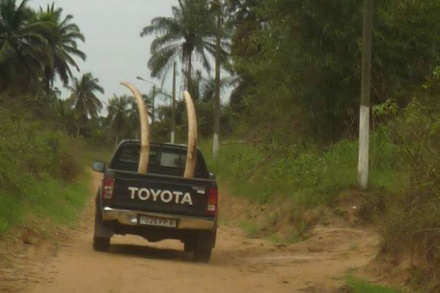
It has taken a while, but finally the world appears to be taking the illegal trade in ivory seriously. Why now? Reports of a ‘terror trail’ that links al-Shabaab and black-market ivory. The Elephant Action League investigated the ivory trail into Somalia, and found that ivory, or ‘white gold’, is ‘one of the lifelines of al-Shabaab’. EAL found that according to sources within the militant group, ‘between one to three tons of ivory, fetching a price of roughly $200 per kilo, pass through the ports in southern Somalia every month’. Al-Shabaab’s monthly income from ivory is - according to EAL - between $200,000 and $600,000.

May sails through TPIMs statement with disapproving attack on Yvette Cooper

From our UK edition

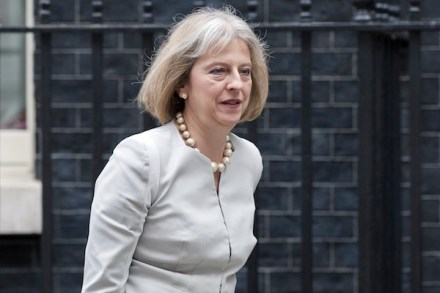
Aside from having to explain her government's policy on clothing that might be used as a disguise, Theresa May did pull it out of the bag, again, in that statement on Mohammed Ahmed Mohammed's TPIM. Her short speech at the start wasn't anything to write home about, simply setting out the bare bones of what was being done to find the terror suspect. But it was in her response to Yvette Cooper that the Home Secretary really got her eye in. She took a rather disapproving tone to answer Cooper's questions, telling her that she was wrong to suggest that TPIMs were in some way a watering down of Labour's control orders.

Theresa May has taken the heat out of Home Office rows

From our UK edition

Theresa May will give a statement to the House of Commons this afternoon on the disappearance of terror suspect Mohammed Ahmed Mohammed. The Home Secretary has earned a formidable reputation over the past few years for emerging unscathed from a variety of Home Office rows, and Labour has struggled to lay a finger on her. But this afternoon May will face a grilling from Yvette Cooper over the TPIM arrangements for Mohammed Ahmed Mohammed, and Labour wants to use this incident as a way of claiming that the Home Secretary's own policy is flawed.

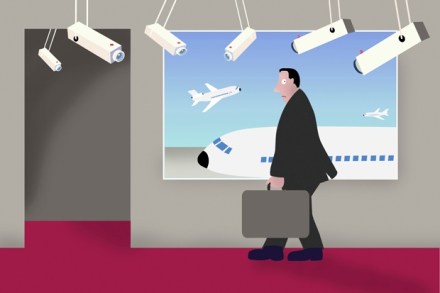
Richard Dawkins is right: Osama bin Laden has made air travel insufferable

From our UK edition

It’s not that often I feel a real bond with Richard Dawkins but no sooner did I read his diatribe about Osama bin Laden having won the global war on terror because he, Prof Dawkins, had had a jar of honey confiscated at the airport, than I realised that here was a kindred soul. The prof declared on Twitter over the weekend: Bin Laden has won, in airports of the world every day. I had a little jar of honey, now thrown away by rule-bound dundridges. STUPID waste. — Richard Dawkins (@RichardDawkins) November 3, 2013   Ah yes, I’ve been there. Except the jar of forest honey – raw, lovely, village stuff – confiscated from me on my way back from Kosovo wasn’t little at all; it was full-size.

Brave, non-denominational freedom fighters

From our UK edition

Those of you who wonder why the BBC is so politically correct, so craven in its expressions regarding, for example, Islamic terror, may find a partial answer here:  Stephen Whittle Director of Editorial Policy at the BBC Dear Stephen, We have received many complaints over the last 24 hours from British Muslims regarding the use of the phrase 'Islamic terrorists' by your news reporters in connection with the struggle for Kashmiri independence. We believe this phrase is totally inappropriate and adds nothing to the story and even distorts what is a long-standing struggle by the Kashmiri people to gain control of their own destiny. We have noticed that your news reports are also failing to adequately report the background to this conflict.

Theresa May’s grubby little warning: an independent Scotland will be out in the cold

From our UK edition

It is a good thing that government ministers come to Scotland sometimes. It is a bad thing that they insist on opening their mouths when they do. Earlier this year we endured the spectacle of Philip Hammond making an arse of himself; today it has been Theresa May's turn to make one wish cabinet ministers would, just occasionally, contemplate the virtue of silence. The Home Secretary was in Edinburgh to warn that an independent Scotland would be a dangerous place. It would, in fact, be left out in the cold. It would not, you see, be part of the English-speaking-world's Five Eyes intelligence-poolling network. The UK, United States, Canada, Australia and New Zealand will continue to share information. Little Caledonia will be left on the outside, all forlorn, friendless and at risk.

This is no time to prosecute the perpetrators of ‘Bloody Sunday’

From our UK edition

The front-page of yesterday’s Sunday Times carried the news that up to 20 retired members of the British Armed forces are likely to be taken in for questioning in relation to the deaths of 30th January 1972, known as ‘Bloody Sunday’. Some readers will know that I have taken a great interest in this case and have written a book which I don’t think spares many details on what specific soldiers of 1st Battalion of the Parachute Regiment, among others, did that day. In certain cases – including that of at least one soldier who is still alive (‘Soldier F’) – I do not hesitate to call what they did ‘murder’. But the process from here is fraught with difficulty.

Al-Qa’eda targeted Kenya not because it’s a banana republic, but because it’s a symbol of African success

From our UK edition

If Al-Shabaab was behind the terrorist attack in Nairobi, then the group has come a long way since its foundation in a derelict shampoo factory called Ifka Halane — ‘Clean and Shiny’ — in Mogadishu in 2006. I know a little about the group because I am the only westerner to have met its founder, Aden Hashi Ayro, before he was killed in a US air strike. In those days Al-Shabaab was a small militia providing muscle for the Islamic courts in Mogadishu. For a brief spell the courts did a good job of bringing a degree of law and order. Then Washington foolishly backed an Ethiopian invasion of the country. For Al-Shabaab, this was a godsend. Afghan-trained Salafists don’t enjoy fixing drains or street lights. Insurgency is much more worthwhile.

How we survived terror at Nairobi’s Westgate mall

From our UK edition

 Nairobi Kenya is one of those places where everybody knows everybody — and each one of us seems to have friends or relatives caught up in the Westgate shopping mall terrorist attack. My friends Simon and Amanda Belcher were on their way to lunch at the mall before catching a film at the cinema. They had parked their car on the top floor and walked past a marquee where a children’s ‘super chef’ cookery competition was about to start when gunfire erupted inside. Simon at first thought ‘firecrackers’. Then they heard shots from the ramp up to the car park. Walking towards them were two slim young men carrying AK-47s with their faces swathed in Arab scarves.

Ignoring Islamic terrorism didn’t make it go away

From our UK edition

Not so long ago politicians were hailing the end of al-Qaeda and the global jihad movement. By the middle of 2011, key ideologues like Osama bin Laden and Anwar al-Awlaki were dead. Arab Street also appeared to have embraced peaceful protest, with popular uprisings unseating seemingly entrenched regimes in Tunisia and Egypt. A new dawn, we were told, was breaking. The weekend’s events have brought that hopeless optimism into sharp relief. The terrorist siege of the Westgate shopping mall in Kenya continues, with around 70 people dead so far. Elsewhere, at least 80 Christians were killed in a suicide attack outside a church in the Pakistani city of Peshawar yesterday.

No, Mr Cameron. The Kenyan massacre is all about Islamism

From our UK edition

Here we go again. A group of Islamist terrorists armed with guns and grenades head into a shopping mall in Kenya. They separate out the Muslims from the non-Muslims, let the former go free and massacre the latter. Cue the usual responses. The British Prime Minister, David Cameron, says: ‘These appalling terrorist attacks that take place where the perpetrators claim they do it in the name of a religion – they don’t.  They do it in the name of terror, violence and extremism and their warped view of the world. They don't represent Islam or Muslims in Britain or anywhere else in the world.’  I don’t think any sensible person would argue that the perpetrators represent all Muslims.