Terrorism

Countering Terrorism in Britain and France, by Frank Foley – review

From our UK edition

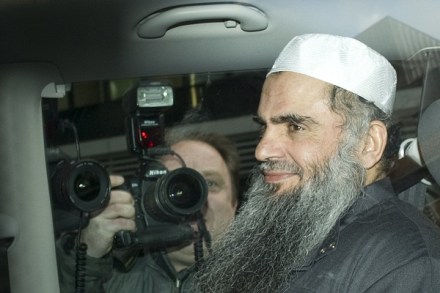
Have you ever wondered why we’re stuck with the radical cleric Abu Qatada? It’s a question the last four Home Secretaries will have asked as they battled, and failed, to deport him. Now Theresa May is learning just how stubborn the old curmudgeon can be. Indeed, the whole issue of deporting terror suspects is a difficult one. In the nine years that followed the 9/11 attacks, France deported 129 individuals considered to be threats to national security, while we removed just nine. The intransigence of British judges is not new. Long before the ‘War on Terror’ brought matters of international security to public attention, the French had been pursuing Rachid Ramda, an Algerian wanted for masterminding the 1995 Paris Metro bombings, through British courts.
A guide to understanding Islamist terror in the UK and US

From our UK edition

Readers may like to know that I have a cover piece in this week's magazine titled 'The Enemy Within'.  It is available here for subscribers. (Non-subscribers can subscribe here.) It looks at what - if anything - will change after the killing of Drummer Lee Rigby in Woolwich. It is also an account of just some of the difficulties going on inside the British government in the fight against extremism. On a separate but related note, my colleague at the Henry Jackson Society, Robin Simcox was testifying in front of the US House of Representatives last week. His testimony is here. Robin is one of the authors of our latest report on Al-Qaeda related terrorism in the US.

It’s time for MI5 to abandon the disastrous ‘clerical honeypot’ strategy

From our UK edition

Douglas Murray has an important piece in this week’s Spectator looking at the stultifying political culture around counterterrorism. Civil servants frequently thwart ministers wanting to adopt a harder line against extremists while a number of radical groups remain legal despite repeated pledges to ban them. This cultural stasis is not confined to mandarins in Whitehall. Ever since 9/11 the police and Security Service have pursued a disastrous policy of cultivating ‘clerical honeypots’. The thinking behind it seems reasonable enough at first glance: leave extremist clerics to preach in the open and then you can easily identify the network around them, and the various actors within it.

What enemy within? Britain is not losing the battle against Jihadism.

From our UK edition

To read Douglas Murray's cover story from this week's edition of the magazine (subscribe!) you might think the British government is not only losing the battle against Islamist extremism and Jihadism in this country but that it wants to lose that struggle. I think this is weak but pretty pernicious sauce. But it is the sort of thing that will appeal to some. Especially those with a mania for betrayal. Only the strong and the vigilant and the this-is-how-it-is-chum brigade are tough enough to see the pathetic and craven weaklings currently staffing the government, the legal profession and the civil service for what they really are: the next worst thing to traitors. It is a myth and a bullshit one at that.

MI5 is wrong: subversion is still a threat

From our UK edition

The website of the Security Service (MI5) says that since the end of the Cold War, the threat of subversion is ‘now considered to be negligible’. Isn’t this a mistake? It seems likely that many Muslim organisations — university Islamic societies, for example — are subverted by jihadists. The infiltrators whip up hatred against the West and create networks, rudimentary but often powerful, of the like-minded. When they have done their work well, they do not need to give direct orders to people like the Woolwich murderers to kill: they have primed their human device, and left it to explode. Such subversion may not be backed by foreign state power, but it still resembles communism in its ability to infiltrate minds and organisations at the same time.

Revive the Snooper’s Charter? It’s already obsolete

From our UK edition

The political response to the Woolwich murder is following two broad patterns. On the one hand, the party leaders make dignified, calm statements, tending almost to the banal. There was, for example, very little difference between the comments of Ed Miliband and those of Nigel Farage. Both condemned the murder, offered support to Drummer Rigby’s family and urged calm from all. Unity is not surprising: there is not much one can reasonably say about such events without jerking a knee and making oneself hostage to fortune. The beheading of an off-duty soldier is no more representative of Islam than the reaction of the English Defence League is representative of patriotism.

You’re going to lose. It is only you against many.

From our UK edition

If, in the aftermath of an act of would-be terror, the people refuse to be terrorised does it still remain a terrorist act? Perhaps but there's a sense, I think, in which we should not grant yesterday's guilty men the title "terrorist". Murderers, surely, will suffice? There is no need to grant them the war they so plainly desire. This murder in Woolwich was an uncommon act of barbarity; the product too of a kind of mental illness. That does not excuse the act, far from it, and there's no need to be sparing in our condemnation. But, appalled as we may be, it seems important to recognise and remember just how unusual these acts remain. There will, quite properly, be consideration of whether the security service could have done more.

Woolwich attack: the aftermath

From our UK edition

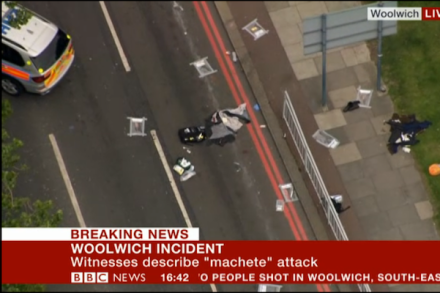
Westminster and Whitehall are tonight trying to assess the implications of the brutal murder of a soldier in Woolwich. It is clear from the vile rant made by one of the men that this was an act of terror inspired by the ideology of radical Islamism. But what is not yet clear if this was an example of self-radicalistion or whether the attackers had any links to established terrorist organisations. The security services have long worried about self-radicalistion. By its nature, it is far more difficult to detect and stop. If this was an example of self-radicalisation, then we are into a new phase of the struggle against terrorism. The BBC's Richard Watson has, however, reported chatter that one of the attackers was known to the police.

Geoffrey Wheatcroft’s diary: Peter King, terror hypocrite, and the joys of Longhorns

From our UK edition

As we landed at Houston, I suddenly thought of my first visit to America, in 1965 during what we didn’t then call my gap year. Forty-eight years does seem a long time, but my fascination with this country is undimmed. The occasion of this trip was to talk at the British Studies seminar at the University of Texas, which has become a regular gig over the years, and Austin is now a nest of old friends. This time I made a new pal. Holly McCarthy is a graduate student, who became my cicerone, offering to take me across Austin on the back of her motor-scooter. After a deep breath, I cheerfully accepted. Really, it’s much the best way to see the town. With all my American friendships and happy professional connections, on every visit I think yet again of what G.K.

Nick Clegg: No one has proposed to me that the UK should leave the European Court of Human Rights

From our UK edition

In a detailed interview on the Sunday Politics, Nick Clegg claimed that neither the Home Secretary nor Downing Street have ever proposed to him that Britain should temporarily leave the European Court of Human Rights so that it can deport Abu Qatada. Clegg was adamant that ‘no one has put a proposal to me.’ Under questioning from Andrew Neil, Clegg defended his decision to block any communications data legislation in the Queen’s Speech. He maintained that the proposals were ‘neither workable nor proportionate.’ Clegg conceded that the UKIP offer was ‘very seductive’ to voters. But he then attacked them for their flat tax proposal.

Will Boston still fund the Real IRA?

From our UK edition

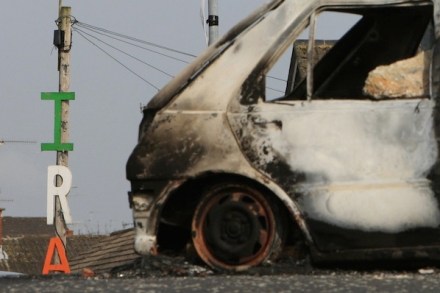
One of the first world statesmen to send a message of sympathy to Boston after last week’s outrage was Gerry Adams, president of Sinn Fein. ‘Just watching news of the explosion in Boston,’ he tweeted, ‘Sympathy with people of that fine city.’ Mr Adams has every reason to think fondly of Boston. Throughout the troubles, while he sat on the IRA war council, Boston was one of the major American centres which he (through Noraid) could rely on for support and funding. Bostonian money would have been used to help pay for the IRA attack on Margaret Thatcher’s democratically elected government in Brighton, the grotesque Birmingham pub bombings that left 21 dead, and of course the Lisburn van bombing of 15 June 1988.

Islamophobia is a government priority. What about Islamism?

From our UK edition

According to one of his family members Tamerlan Tsarnaev was, among other things, ‘angry that the world pictures Islam as a violent religion.’ His efforts to refute this charge included planting bombs in the middle of a family sports event in Boston, killing - among others - an eight year old boy. The case brings to mind that of Muzzammil Hassan from western New York. Hassan was the founder of Bridges TV in the US – a station set up to help ‘non-Muslims overcome the negative images they may have of both Muslims and Islam.’ Mr Hassan was subsequently convicted and sent to prison for beheading his wife. Certainly this is not a good week for the ‘nothing to see here’ crowd.

Britain and America face a new enemy: the lone wolf terrorist

From our UK edition

Yesterday, thousands of runners in the London Marathon converged on the greatest target in the world. Winston Churchill was the first to see the problem. ‘With our enormous metropolis here… [we are] a kind of tremendous fat cow, a valuable cow tied up to attract the beasts of prey,’ he told the Commons in 1934. But ‘we cannot possibly retreat, we cannot move London.’ New enemies, from the IRA to al-Qa’eda, have come to do their worst — but since the London Underground bombing of 7 July 2005 none has succeeded. The average British urbanite would be forgiven for thinking the threat has subsided. It has not. The atrocity at the Boston Marathon last week is a reminder that such threats never vanish — they just get intercepted. Most of the time.

Boston bombing suspect taken into custody

From our UK edition

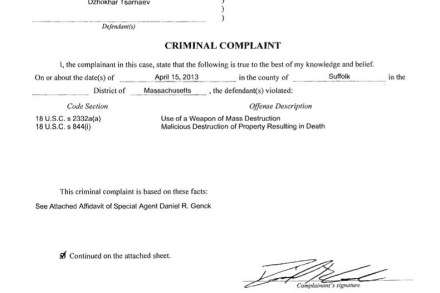
After a day-long man hunt, Dzhokhar Tsarnaev, the second named suspect in the Boston marathon bombing, has been taken into custody. He was found hiding in a boat that was parked behind a house just outside the search area. He has, we are informed, various gun-shot wounds and is in a critical condition. His capture alive means that there is a chance for the US authorities to establish whether he and his brother were, if they are guilty, working alone or in cooperation with others. The US authorities have already said that he will not be informed of his Miranda rights, essentially his right to remain silent, on public safety grounds.

Boston Marathon blasts kill two and injure many more

From our UK edition

Update CBS News in the US are reporting that a Saudi national is being questioned by the FBI. He denies any involvement in the attack In a press conference just now, President Obama has made clear that the Federal Authorities do not know who is responsible for the attack on the Boston Marathon. But it was noticeable that he did not call it a ‘terrorist’ attack. Meanwhile in Boston, the authorities there have denied reports that anyone is in custody—there had been chatter in the US media that a Saudi male was under arrest in Boston. So far, no individual or organisation has claimed responsibility for this attack.

Syrian rebels pledge allegiance to al-Qaeda, but promise to behave

From our UK edition

This, from the BBC – just in case any further evidence were needed. 'The leader of the al-Nusra Front, a jihadist group fighting in Syria, has pledged allegiance to the leader of al-Qaeda, Ayman al-Zawahiri. Abu Mohammed al-Jawlani said the group's behaviour in Syria would not change as a result. Al-Nusra claims to have carried out many suicide bombings and guerrilla attacks against state targets. On Tuesday, al-Qaeda in Iraq announced a merger with al-Nusra, but Mr Jawlani said he had not been consulted on this. Al-Nusra has been designated as a terrorist organisation by the US. Debates among Western leaders over whether to arm Syria's rebels have often raised the concern of weapons ending up in the hands of groups such as al-Nusra.

After the Brighton bomb

From our UK edition

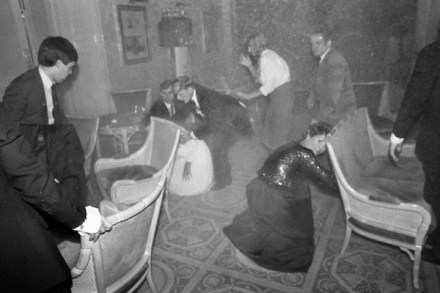
It is worth pointing out yet again that Mrs Thatcher really was very brave last Friday. It would have been no disgrace to her if, once she had realised how narrow had been her escape, she had felt weak and — as did a few of the Tory wives in the Grand Hotel — had sat down and cried. There would have been nothing cowardly in cancelling what remained of the Conference in honour of the dead and injured. But the fact that she did neither of these things and the way that she conducted herself that day confirms that she has an extraordinary amount of that particular kind of courage which rises to an occasion, appearing more magnificent the greater the challenge.

Is that a ‘no’ then, Owen?

From our UK edition

To my simple suggestion that Owen Jones apologise for claiming that an 11-month old child killed by a Hamas rocket was in fact killed by an Israeli ‘so-called targeted strike’, Owen appears to have answered ‘no’. He starts his reply: ‘In the last couple of years I've learned one thing: the right don't like me very much, and expend a sizeable amount of energy attacking me personally rather than my writing.’ In saying that he has learned even ‘one thing’ I fear Owen exaggerates. He begins his next paragraph: ‘Hard right pseudo-intellectual [Douglas] Murray…’ Nothing worse than attacking a person rather than their writing is there?

Will Owen Jones apologise?

From our UK edition

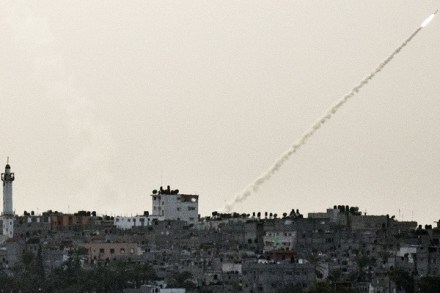
Last November, during another exchange between Israel and Hamas in the Gaza, the left-wing columnist Owen Jones appeared on BBC Question Time. Invited to comment on recent events, what he read out (or so it appears from the tape) was a catalogue of errors about Israel. Among them were big, sweeping incorrect allegations – such as the claim that Israel is enforcing ‘a siege which stops basic supplies’ getting into Gaza. But there were also some new and more specific errors. Take his striking and emotive claim that Israel’s ‘onslaught’ included ‘targeted strikes’ which killed children. Here is one of the things he said: ‘I don’t want to just throw statistics around – I’ll give you one example of one of those children.

A great honour in memory of a remarkable man

From our UK edition

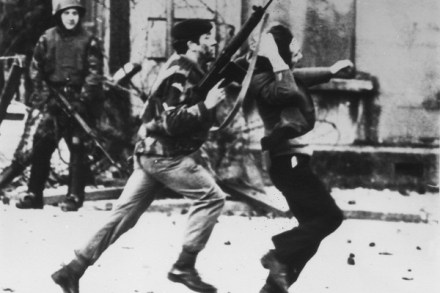
I am delighted to say that my latest book, Bloody Sunday: truths, lies and the Saville Inquiry, has been jointly awarded the Christopher Ewart-Biggs memorial prize at a ceremony in Dublin. My co-winner is Julieann Campbell, author of Setting the Truth Free: the inside story of the Bloody Sunday justice campaign. The literary prize is named after the former British Ambassador to Ireland. Christopher Ewart-Biggs was educated at Wellington and Oxford and served with the Royal Kent Regiment during World War II. He lost his right eye at the Battle of el-Alamein. After Foreign Office postings to numerous countries, including Algeria, he arrived in Dublin in July 1976. Twelve days after his arrival he was murdered by the IRA in a landmine attack on his car. His killers were never found.