Terrorism

Why does David Cameron refuse to admit that the terrorist attack in Nairobi is linked to Islam?

From our UK edition

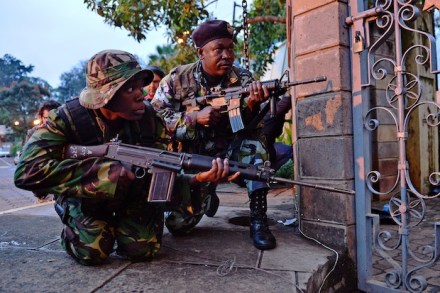
Do you know the name of Muhammed’s mother? No, me neither. I can manage the names of two of his wives and his Christian concubine, plus his daughter, but not his mother. The matter was, however, of more than academic interest when gunmen took over the Westgate shopping centre in Nairobi. According to witnesses, members of the public were lined up and then gunned down if they failed to name the mother of the founder of Islam or recite verses from the Koran. Those lucky enough to be able to speak Arabic — possibly passages from the Koran — were let go. The rest were fair game. Now, whatever else you can say about these individuals, I think we can agree, can’t we, that religion looms quite large in their world view?

The reaction to David Miranda’s detention is completely ridiculous

From our UK edition

It may not have been the smartest move to detain David Miranda, the Brazilian partner of Guardian ‘journalist’ Glenn Greenwald, under the Terrorism Act.  But the explosion of righteous anger over the episode is ridiculous. Starting with the outraged claim that Miranda was arrested only because of his connection with Greenwald. Wrong. Greenwald himself has previously told journalists that his partner assists him in his work. That present ‘work’ consists of engineering the leak of massive amounts of classified intelligence from a source – Edward Snowden – currently granted asylum in Moscow.

David Miranda’s arrest proves how sinister the state has become

From our UK edition

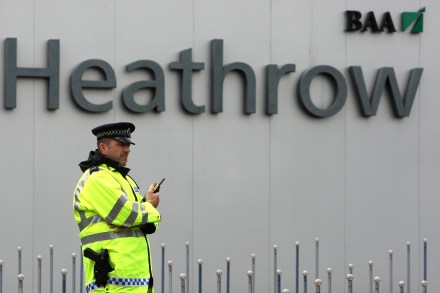
Always remember mornings like these, the next time police officers and politicians demand more powers to protect us from terrorism. They always sound so reasonable and so concerned for our welfare when they do. For who wants to be blown apart? But the state said its new powers to intercept communications would be used against terrorists. They ended up using them against fly tippers. Now the police are using the Terrorism Act against the partner of a journalist who is publishing stories the British and American governments would rather keep quiet. The detention of David Miranda at Heathrow is a clarifying moment that reveals how far Britain has changed for the worse.

David Miranda’s detention shows that the state is not only malevolent but stupid too

From our UK edition

The problem is less that the state is malevolent but that it is stupid. And that stupidity means that a lack of malevolence may be a matter of luck, not policy. Or, if you wish to be more generous, the state has the power to crush liberties and its failure to do so on a more consistent, wider, basis is a matter of forebearance or inefficiency more than anything else. That, at any rate, is one theory to explain why David Miranda, the partner of Guardian journalist Glenn Greenwald, was detained at Heathrow airport for nine hours. If the state wants to fuck you up, as Larkin didn't quite write, it can. And will. This is not something unique about the British state (unrestrained by oversight though it be).

Freeing terrorists for peace?

From our UK edition

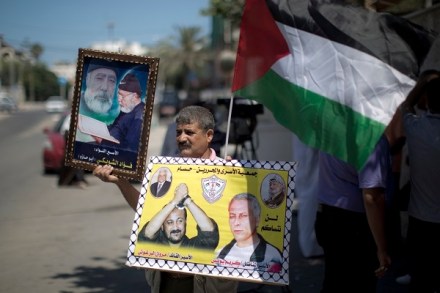
Amid all the bloodshed in Egypt and Syria at the moment the fact that the Israelis and Palestinians are once again at the negotiating table has received less notice than usual. Which is not necessarily a bad thing. The intense international focus on the dispute seems to me a minor contributing reason why the dispute remains unresolved. But there is one aspect of the talks which really ought to be highlighted. That is the Palestinian demand that Israel release 104 Palestinian terrorists from prison before talks commence. While agreeing to this precondition, Israel has not asked for – and is not getting – anything in return. Of course Israel has been here before. Many times.

Mehdi Hasan and the EDL

From our UK edition

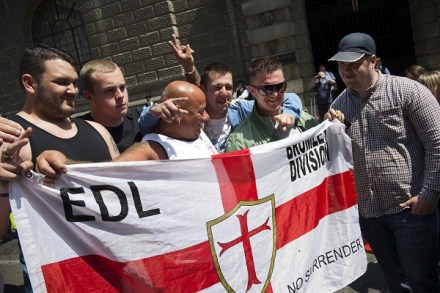
At the weekend I was on the BBC TV programme Sunday Morning Live. We discussed pilgrimages and the ethics of the banking industry. But the first debate was the most heated. It was titled, ‘Are Muslims being demonised?’ The Huffington Post’s UK political director, Mehdi Hasan, claimed that Muslims are indeed being demonised. For my part I argued that while there are serious reasons – principally terrorism and murder – to be concerned about some strands of Islam, those who would tar all Muslims with the brush of the extremists are doing something very wrong. I thought it an interesting and lively discussion. However at the very end Mehdi Hasan told a smear which I think needs correcting.

The EU fails to ban Hezbollah

From our UK edition

As though the sunny weather and the royal baby were not enough, here comes yet more good news. The European Union has finally banned the military wing of Hezbollah. This is something I have argued for often, including here, here, and here. After recent trials of Hezbollah operatives and Hezbollah operations – including the Bulgaria bombing – on European soil the decision did seem inevitable. Yet there is a cloud on the silver lining - which is that the EU, in somewhat characteristic fashion, has only managed to do a partly good thing. While they have banned the ‘military wing’ of Hezbollah they continue to allow the ‘political’ wing to fundraise and recruit in Europe.

Sadiq Khan has unwittingly highlighted the problem of Islamic extremism

From our UK edition

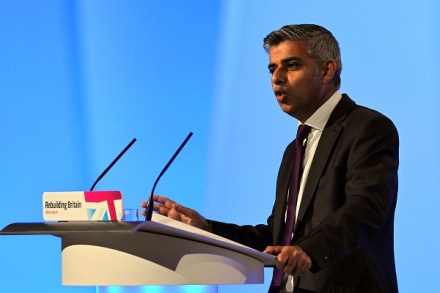
Sadiq Khan MP had a piece in the Telegraph last week attacking an excellent piece by Charles Moore in the same paper the Saturday before. In his piece Sadiq makes a number of claims which are worth rebutting. First is his question, ‘Would we accept the Jewish community being talked about the way the Muslim community are?’ Well, as I have written here before, that would depend, among other things, on whether or not in recent years a bunch of fundamentalist Jews had detonated bombs across the London transport system or beheaded a soldier on the streets of London. It would also depend on whether cells of Jewish extremists had been caught, tried and prosecuted on a fairly regular basis for trying to kill and maim numerous British people.

Cameron wants to change the military balance in Syria, but how do you do that without arming the Islamists?

From our UK edition

David Cameron and Vladimir Putin have just concluded their pre G8 talks, the main topic of which was Syria. Cameron wants to use the next few days to try and persuade the Russians to stop backing Assad; the weapons they’ve been sending him have enabled him to gain the upper hand on the rebels militarily. Cameron instinctively wants to do something about the slaughter in the Levant for both strategic and moral reasons. As one figure intimately involved in British policy making on Syria told me earlier, ‘The one certainty is that, if nothing is done, not only will lives be lost, not only will Assad not negotiate, but we will also not stop radicalisation.

Prism controversy will deepen coalition divisions over the snooper’s charter

From our UK edition

GCHQ’s use of the US monitoring system Prism is threatening to turn into a major political row. Douglas Alexander is demanding that William Hague come to the House of Commons to explain what GCHQ was doing and what the legal basis for it was. But this controversy is going to have an effect on coalition relations too. It is going to intensify Liberal Democrat opposition to the measures included in the Communications Data Bill. This comes at a time when David Cameron has decided, as he made clear in the Commons on Monday, that the measures in it are needed. In the United States, the Obama administration is pushing back against criticism of the programme.

Countering Terrorism in Britain and France, by Frank Foley – review

From our UK edition

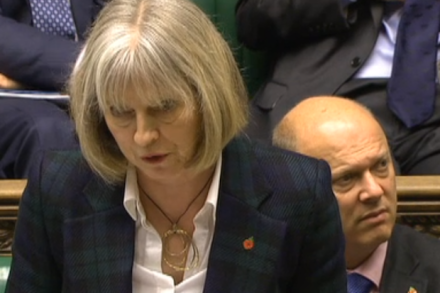
Have you ever wondered why we’re stuck with the radical cleric Abu Qatada? It’s a question the last four Home Secretaries will have asked as they battled, and failed, to deport him. Now Theresa May is learning just how stubborn the old curmudgeon can be. Indeed, the whole issue of deporting terror suspects is a difficult one. In the nine years that followed the 9/11 attacks, France deported 129 individuals considered to be threats to national security, while we removed just nine. The intransigence of British judges is not new. Long before the ‘War on Terror’ brought matters of international security to public attention, the French had been pursuing Rachid Ramda, an Algerian wanted for masterminding the 1995 Paris Metro bombings, through British courts.

A guide to understanding Islamist terror in the UK and US

From our UK edition

Readers may like to know that I have a cover piece in this week's magazine titled 'The Enemy Within'.  It is available here for subscribers. (Non-subscribers can subscribe here.) It looks at what - if anything - will change after the killing of Drummer Lee Rigby in Woolwich. It is also an account of just some of the difficulties going on inside the British government in the fight against extremism. On a separate but related note, my colleague at the Henry Jackson Society, Robin Simcox was testifying in front of the US House of Representatives last week. His testimony is here. Robin is one of the authors of our latest report on Al-Qaeda related terrorism in the US.

It’s time for MI5 to abandon the disastrous ‘clerical honeypot’ strategy

From our UK edition

Douglas Murray has an important piece in this week’s Spectator looking at the stultifying political culture around counterterrorism. Civil servants frequently thwart ministers wanting to adopt a harder line against extremists while a number of radical groups remain legal despite repeated pledges to ban them. This cultural stasis is not confined to mandarins in Whitehall. Ever since 9/11 the police and Security Service have pursued a disastrous policy of cultivating ‘clerical honeypots’. The thinking behind it seems reasonable enough at first glance: leave extremist clerics to preach in the open and then you can easily identify the network around them, and the various actors within it.

What enemy within? Britain is not losing the battle against Jihadism.

From our UK edition

To read Douglas Murray's cover story from this week's edition of the magazine (subscribe!) you might think the British government is not only losing the battle against Islamist extremism and Jihadism in this country but that it wants to lose that struggle. I think this is weak but pretty pernicious sauce. But it is the sort of thing that will appeal to some. Especially those with a mania for betrayal. Only the strong and the vigilant and the this-is-how-it-is-chum brigade are tough enough to see the pathetic and craven weaklings currently staffing the government, the legal profession and the civil service for what they really are: the next worst thing to traitors. It is a myth and a bullshit one at that.

MI5 is wrong: subversion is still a threat

From our UK edition

The website of the Security Service (MI5) says that since the end of the Cold War, the threat of subversion is ‘now considered to be negligible’. Isn’t this a mistake? It seems likely that many Muslim organisations — university Islamic societies, for example — are subverted by jihadists. The infiltrators whip up hatred against the West and create networks, rudimentary but often powerful, of the like-minded. When they have done their work well, they do not need to give direct orders to people like the Woolwich murderers to kill: they have primed their human device, and left it to explode. Such subversion may not be backed by foreign state power, but it still resembles communism in its ability to infiltrate minds and organisations at the same time.

Revive the Snooper’s Charter? It’s already obsolete

From our UK edition

The political response to the Woolwich murder is following two broad patterns. On the one hand, the party leaders make dignified, calm statements, tending almost to the banal. There was, for example, very little difference between the comments of Ed Miliband and those of Nigel Farage. Both condemned the murder, offered support to Drummer Rigby’s family and urged calm from all. Unity is not surprising: there is not much one can reasonably say about such events without jerking a knee and making oneself hostage to fortune. The beheading of an off-duty soldier is no more representative of Islam than the reaction of the English Defence League is representative of patriotism.

You’re going to lose. It is only you against many.

From our UK edition

If, in the aftermath of an act of would-be terror, the people refuse to be terrorised does it still remain a terrorist act? Perhaps but there's a sense, I think, in which we should not grant yesterday's guilty men the title "terrorist". Murderers, surely, will suffice? There is no need to grant them the war they so plainly desire. This murder in Woolwich was an uncommon act of barbarity; the product too of a kind of mental illness. That does not excuse the act, far from it, and there's no need to be sparing in our condemnation. But, appalled as we may be, it seems important to recognise and remember just how unusual these acts remain. There will, quite properly, be consideration of whether the security service could have done more.

Woolwich attack: the aftermath

From our UK edition

Westminster and Whitehall are tonight trying to assess the implications of the brutal murder of a soldier in Woolwich. It is clear from the vile rant made by one of the men that this was an act of terror inspired by the ideology of radical Islamism. But what is not yet clear if this was an example of self-radicalistion or whether the attackers had any links to established terrorist organisations. The security services have long worried about self-radicalistion. By its nature, it is far more difficult to detect and stop. If this was an example of self-radicalisation, then we are into a new phase of the struggle against terrorism. The BBC's Richard Watson has, however, reported chatter that one of the attackers was known to the police.

Geoffrey Wheatcroft’s diary: Peter King, terror hypocrite, and the joys of Longhorns

From our UK edition

As we landed at Houston, I suddenly thought of my first visit to America, in 1965 during what we didn’t then call my gap year. Forty-eight years does seem a long time, but my fascination with this country is undimmed. The occasion of this trip was to talk at the British Studies seminar at the University of Texas, which has become a regular gig over the years, and Austin is now a nest of old friends. This time I made a new pal. Holly McCarthy is a graduate student, who became my cicerone, offering to take me across Austin on the back of her motor-scooter. After a deep breath, I cheerfully accepted. Really, it’s much the best way to see the town. With all my American friendships and happy professional connections, on every visit I think yet again of what G.K.

Nick Clegg: No one has proposed to me that the UK should leave the European Court of Human Rights

From our UK edition

In a detailed interview on the Sunday Politics, Nick Clegg claimed that neither the Home Secretary nor Downing Street have ever proposed to him that Britain should temporarily leave the European Court of Human Rights so that it can deport Abu Qatada. Clegg was adamant that ‘no one has put a proposal to me.’ Under questioning from Andrew Neil, Clegg defended his decision to block any communications data legislation in the Queen’s Speech. He maintained that the proposals were ‘neither workable nor proportionate.’ Clegg conceded that the UKIP offer was ‘very seductive’ to voters. But he then attacked them for their flat tax proposal.