Terrorism

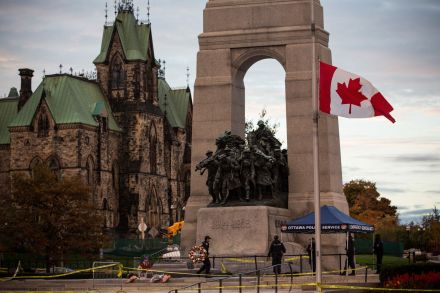
So what if the Canadian terror attacks are blowback?

From our UK edition

Anti-NSA crusader Glenn Greenwald published an article on Wednesday morning where he explained that the recent murder of a Canadian soldier by a radicalised Muslim convert was down to Canadian foreign policy. The important sentence in Greenwald’s piece is this one: ‘A country doesn’t get to run around for years wallowing in war glory, invading, rendering and bombing others, without the risk of having violence brought back to it.’ To put it another way, it was inevitable that the jihadists would come after Canadians, given that Canadians had meted out some fairly ripe treatment to the jihadists – first in Afghanistan and now against the Islamic State in Iraq and Syria (I’m being generous to Greenwald here, I grant you).

Why would jihadi terrorists attack Canada? Better to ask: why not?

From our UK edition

The attacks in Canada probably seem non-sensical to some people. After all, much of the press and political class in the West has spent years trying to cover over the motivations of people like those who have spent this week targeting soldiers and politicians in Canada. 'Why did they target Canada?' headlines are asking today. And well they might. There has been a great push in recent years to put the causes of Islamic jihad not onto the perpetrators but onto the victims of this problem. So, for instance, when America has been attacked, it has regularly been suggested that 'the United States had it coming' (as Mary Beard so charmingly put it immediately after 9/11). Of course Israel should always be presumed to be inciting attacks by such people.

Hooray for Homeland – Carrie’s back blasting America’s enemies to pieces with drones

From our UK edition

One of the more welcome and surprising things about television at the moment is that Homeland (Channel 4, Sunday) is good again. As I’m not the only person to have pointed out, the first series was great. After that, though, the show suffered badly from the diminishing returns which so often afflict a deserved American hit that’s obliged for financial reasons to just keep on going — usually by serving up increasingly minor variations on a theme. (Exhibit A: Lost; exhibit B: most of mid-period 24.) Fortunately now that Damian Lewis’s Brody is dead, Homeland no longer has to think up any more ways to make us wonder which side he’s on. Instead, to the obvious relief of all concerned, it can start again with a different story.

Portrait of the week | 16 October 2014

From our UK edition

Home Checks began at British airports for passengers who might have come from west Africa with Ebola fever (even though there are no direct flights from the countries most affected). People who rang 111 with suspicious symptoms were to be asked whether they’d come from a high-risk country. Police arrested three men and three women from Portsmouth, Farnborough and Greenwich as part of an anti-terrorism operation. Of five men arrested the week before, two were released. The trial began before a jury at the Old Bailey of Erol Incedal on charges of preparing for acts of terrorism; parts of it will be held in secret.

Does Jonathan Powell really want to negotiate with the Islamic State?

From our UK edition

I think I’ve finally worked out the time-honoured Jonathan Powell formula for promoting a new book: take which-ever group constitutes the most bloodthirsty terrorist organisation of the day — in this case IS, the warped Islamist force currently enslaving and beheading its way across Iraq and Syria — and create a media fizz by boldly declaring that sooner or later we’re going to have to negotiate with them. Powell’s predicted circumstances in which the ‘talking’ to IS should actually happen, however, are hedged with unrealised conditions. At other moments he will daringly hint that talking is best without any preconditions at all.

Your enemy’s enemy is not your friend

From our UK edition

The United States faces a very difficult task in Syria. It is trying to use air raids to contain and weaken ISIl. But, at the same time, it is trying to prevent the Assad regime from turning this intervention to its advantage. However, as the Washington Post reports today, the Assad regime have taken advantage of ISIl being pinned back to turn their fire on the moderate rebels, the very group that the US is trying to help. As the situation in Iraq is demonstrating, air strikes against ISIl can be effective when paired with ground operations. But in Syria, the US has no effective allies on the ground. The Turks could assist. But they are sitting on their hands. They aren’t even coming to the relief of Kobani, which sits on the Syrian Turkish border.

Jonathan Powell interview: middle-man to the terrorists says ‘secret talks are necessary’

From our UK edition

Jonathan Powell is a British diplomat who served as Tony Blair's chief of staff from 1997 to 2007. During this period, he was also Britain's chief negotiator for Northern Ireland. These days, Powell runs a charity called Inter Mediate, which works as a go-between among terrorist organizations and governments around the globe. David Cameron appointed him last May as the UK's special envoy to Libya. His book 'Talking to Terrorists' was published this month, a review of which can be found in the October 4 edition of The Spectator. In it, Powell argues the British government has failed to learn lessons from the history of diplomacy with guerrilla groups.

US warns it will take a year to wrest Mosul back from Islamic State

From our UK edition

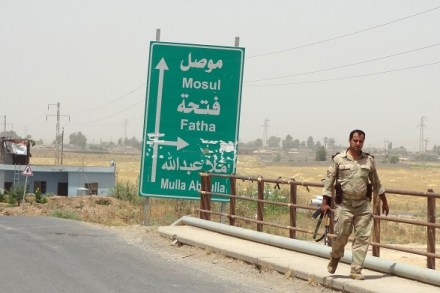
The problem posed by Islamic State will, sadly, not be dealt with quickly. The New York Times reports that John R. Allen, the retired US general coordinating the international coalition against IS, has warned that it will take up to a year before Iraqi forces are ready to try and re-take Mosul.   Given that IS is more firmly entrenched in Syria than Iraq, this suggests that defeating it there will take even longer. Indeed, the Syrian problem is compounded by the fact that there are not credible ground forces there to take the fight to IS.   Air strikes against IS are aimed more at disrupting its momentum and containing it than eliminating it.

Britain doesn’t need hateful laws to defeat hate preachers

From our UK edition

If the Labour party conference in Manchester felt like a funeral, the Conservatives’ gathering in Birmingham had the air of a wedding. It had jazz bands, champagne bars and a near-universal mood of celebration — which is odd, given that every opinion poll and bookmaker reckons the Tories are on course to lose power next year. Almost every speech delivered from the floor was more substantial, forceful and credible than any delivered at the Labour party conference. And one of the highlights was the tour de force delivered by Theresa May. For almost two decades the job of Home Secretary has been a political graveyard. Theresa May has made it into a power base. Several home secretaries tried to deport Abu Qatada; she succeeded.

Could the Kenyan mall atrocities happen here?

From our UK edition

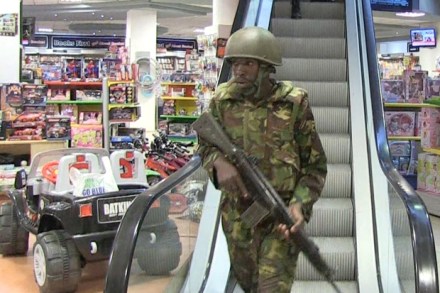
So you’ve just popped down to the supermarket for the weekly shop, toddlers in tow, when the grenades start to fly, the air lights up with tracer bullets and you realise to your horror that unless you find a suitable hiding place in a matter of seconds these are the last moments you’ll spend with your kids on earth. This was the awful crisis that faced Amber Prior and her children, who were among the numerous innocents caught up in the al-Shabaab suicide attack on the Westgate shopping mall in Nairobi, Kenya, last year. Their tale was told in the BBC2 documentary Terror at the Mall, and I make no apologies for reviewing it late because it is surely one of the most gripping and important pieces of television any of us are likely to see this year.

Why is Theresa May pretending that Islam is a ‘religion of peace’?

From our UK edition

In advance of the Home Secretary’s speech today the Conservative party issued an advance briefing of its ‘new strategy for tackling extremism’. It was gratifying to see that a huge chunk of it credited a piece of mine from four and a half years ago. It is always gratifying when the political consensus catches up with you. So in my self-anointed role of prophet, let me highlight something which, four and a half years from now I will expect another Home Secretary to say. Because although there were many things to admire in Theresa May’s speech there was also one horrible, glaring and nearly unforgivable error. That is that the Home Secretary chose to speak about religion – indeed to lecture the hall, and the nation, on religion.

Theresa May’s speech on terrorism and extremism – full text and audio

From our UK edition

Our values will prevail in the fight against terrorism and extremism Thank you, Alexander, for that thoughtful and inspiring speech. listen to ‘Theresa May's speech on terrorism and extremism’ on audioBoom It’s difficult for most of us here in this hall to really appreciate the effects of stop and search. You see, most of us are white. Most of us are of a certain age. Well, we’re certainly not teenagers anymore. But imagine walking home, or driving to work one day, and being stopped by the police. Imagine, having done nothing wrong, you are patted down, you have your pockets turned inside out, and your possessions examined.

Commons vote for strikes against IS in Iraq

From our UK edition

By 524 votes to 43, the House of Commons has voted to support air-strikes against Islamic State in Iraq. The margin of victory is not surprising given how limited the motion was, it rules out ground troops and makes clear there’ll be another vote before any action in Syria. But in a sign of the unease of some on the Labour side, Rushanara Ali, who represents George Galloway’s old seat of Bethnal Green and Bow, has resigned from the front bench over Labour’s support for the motion. Indeed, the first estimates are that 24 Labour MPs voted against while just five Tories opposed. The question now is whether, and when, Cameron might return to the Commons to try and gain approval for action in Syria.

Religion does not poison everything – everything poisons religion

From our UK edition

It slips so easily off the tongue. In fact, it’s a modern mantra. ‘Religion causes all the wars.’ Karen Armstrong claims to have heard it tossed off by American psychiatrists, London taxi-drivers and pretty much everyone else. Yet it’s an odd thing to say. For a start, which wars are we talking about? Among the many causes advanced for the Great War, ranging from the train timetables on the continent to the Kaiser’s withered left arm, I have never heard religion mentioned. Same with the second world war.

A flashlight into the cellar of the lawless ‘dark net’

From our UK edition

This year marks the 25th anniversary of the world wide web, and I wonder whether its inventor, Tim Berners-Lee, would still have given it away had he known where it would be now. Had he foreseen Google and Facebook and Twitter, the conquest of web porn and the normalisation among teen-agers of misogyny and sodomy, the endless harvesting and mining of data, the surveillance, the cruelty and vulgarity and invasive crassness, the commercialisation of everything — would he still have said, ‘Have it for free, in the common good’? That’s a question that only he can answer. But the great fascination of the web lies in the near-asymptotic rate at which it has grown, not only in scope but in its domination of our lives.

Why is Britain arming countries that support terror in the Middle East?

From our UK edition

Why is the UK still supplying arms to those who helped fund the so-called Islamic State, and what leverage does it bring? In the Prime Minister’s statement to the House of Commons following the Nato summit over the weekend, he spoke of seeking a broad base of support through the UN. Yet there was no mention of military action—as opposed to diplomatic assistance—from Gulf States. Islamic State has been bankrolled by wealthy Gulf individuals from Saudi Arabia, Qatar, and Kuwait, and their Governments have failed to act to prevent it. In March 2014, Nouri al-Maliki, the outgoing Iraqi Prime Minister, accused Saudi Arabia and Qatar of being ‘at war with Iraq’. Six names were added the latest UN sanctions list, issued on the 14th August.

PMQs: Fighting suspended as leaders respond to Iraq terror

From our UK edition

A few days ago, one would have expected the first PMQs of term to be a rowdy affair as Labour went for Cameron over the Carswell defection. But the recent, hideous events in Iraq have changed all that and today’s PMQs was instead a sober, statesmanlike affair which reflected well on both Cameron and Miliband.

The current political climate rewards authoritarians, not civil libertarians

From our UK edition

The talks between the Lib Dems and the Conservatives on the anti-terror measures that David Cameron will unveil this afternoon have finally finished. There are a few more details to be thrashed out - crossing of Ts and dotting of Is rather than major policy decisions - but the two parties are basically there. That the talks have only broken up with just over an hour to go until the statement shows how contentious these measures have been in the Coalition. David Cameron's press conference, in which he set out the heightened threat, was partly a softening-up exercise to push the Lib Dems into accepting what the security and intelligence services had told him: that they needed to plug the 'gaps in Britain's armoury'.

Coalition minds the gap on anti-terror measures

From our UK edition

The Coalition parties are gearing up for a week of minding the gaps. Tomorrow, David Cameron plans to tell MPs about measures that he feels are necessary for plugging the gaps in Britain's armoury. They're gaps highlighted to him by the intelligence and security services, and where the Tories once said they would be very sceptical about gaps, whether they existed, and whether it was right to plug them, the Prime Minister seems pretty keen to listen to the spooks. But the Lib Dems are still cross about the gaps, and possibly cross about another change of heart from the Conservatives.

David Cameron may be about to call time on the coalition’s civil libertarian stance

From our UK edition

It was not so much the announcements that David Cameron made in his press conference about the terror threat to the UK that were significant, but what he looks like he's going to have to announce on Monday. The Prime Minister confirmed that the threat level to the UK has been raised from 'substantial' to 'severe'. But he also said that on Monday he will be unveiling new measures to address 'gaps' in the UK's 'armoury': 'I said very clearly last week that there would be no knee-jerk reactions. We will respond calmly and with purpose. And we'll do so driven by the evidence and the importance of maintaining the liberty that is the hallmark of the society that we defend. But we have to listen carefully to the security and the intelligence officers who do so much every day to keep us safe.