Syria

How Syria became another narco-state

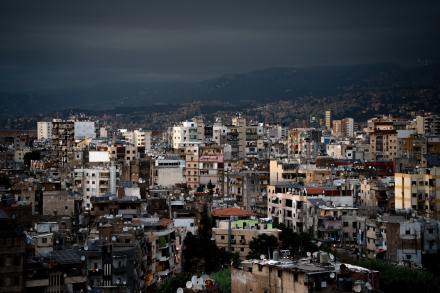
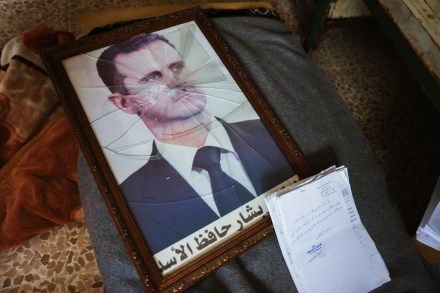
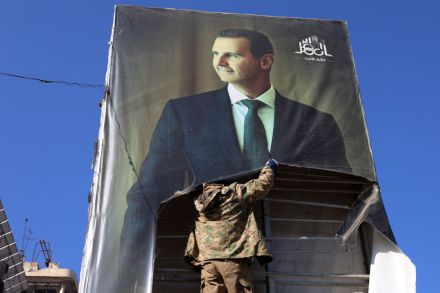
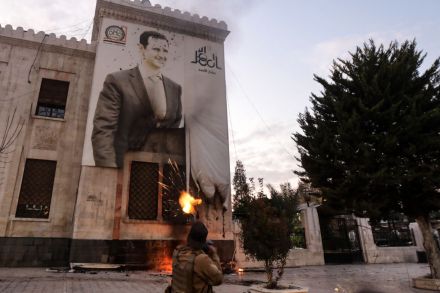
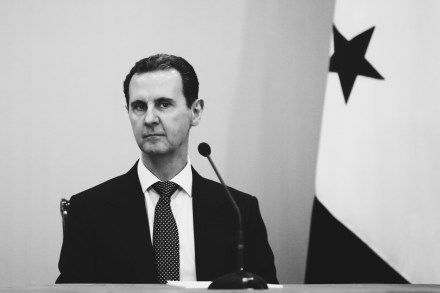
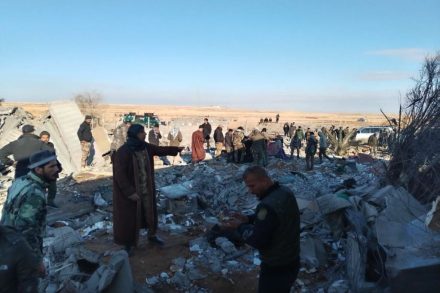
There is a drug war brewing in the Middle East, and Syria is at its center. The country has been destroyed by its eleven-year civil war, and in the ruins of what was once a prosperous country, an entirely different economy now takes shape. It’s an economy of poverty and privation, where food and energy prices are perpetually high, and supplies of basic commodities are uncertain. The regime of Bashar al-Assad, now unlikely to be overthrown, has become the Middle East’s biggest moocher — a rent-seeking entity that begs for “reconstruction” funds from nearby monarchies to keep its own corrupt machinery in operation. Wartime brings its own economic calculations.

The end of the last Arab Spring success story

Visibly, and with very little pretense, Tunisia is sliding into tyranny. In the last two years, its president, Kais Saied, has frozen and dissolved the country’s parliament and threatened its former members with prosecution. He has dismissed an errant prime minister. He has ruled by decree. He has quashed the high judicial body attempting to scrutinize his changes to the constitution and replaced it with a new organization filled with hand-picked appointees. Accusing his opponents of planning their own coup attempt, Saied has faced down months of protests over each of these individual changes with uncommon steeliness. Saied’s hold over the instruments of government and his comradery with the brass of the army appears near total.

How many refugees can Eastern Europe take?

Hundreds of thousands of Ukrainian refugees have already streamed into Slovakia, Hungary and the Czech Republic. Head north to Poland, and the numbers go from the unprecedented to the jaw-dropping: two and a half million refugees have entered the country with a total population of 38 million since the war in Ukraine began. In the Czech Republic, where I live, official estimates put the current number of refugees at over 300,000, a figure expected to rise to between 500,000 and 600,000 in the coming months. In a country of less than eleven million, that’s five percent of the population. In Poland, a proportion closer to ten percent is possible. At the moment, most of the Czech Republic’s refugees are concentrated in Prague.

Time for Turkey to align with the West

To deter Russia from invading Ukraine, the US and its Western allies vociferously vowed unified and decisive action against Russia. Countries like Hungary and Turkey, which enjoy favorable relations with Russia, were a concern, as it was not clear whether they would join US-led sanctions against Russia. Turkey’s refusal to enforce these sanctions would be a significant lifeline for Russia and show division in the Western camp. Turkey’s uncertain loyalties don’t come as a surprise. For one thing, Turkey is heavily dependent on energy imports from Russia. For another, Turkey has had a turbulent history with the Kremlin. When Putin annexed Crimea back in 2014, Turkey only expressed meek disapproval, a stark departure from its historical strategic stance regarding Ukraine.

west

Yes, Putin could use biochemical weapons in Ukraine

The Russian Defense Ministry held a briefing last week claiming that they have discovered US-led biological laboratories in Ukraine. Moscow stated that a rapid halt was brought to the facilities’ activities, adding that Kyiv and Washington had violated the Convention on the Prohibition of Biological and Toxin Weapons. The Kremlin did not feel the need to provide evidence of its claims, par for the course in Putin’s Russia.

biochemical weapons

Sanctions on Russia won’t work

Another battle in the West’s sanctions war against Russia is set to begin. The US and its NATO allies have put together what they’re calling a strong package of economic restrictions on Russia in response to its military buildup near Ukraine’s border. What’s in the package remains a secret but it appears to focus on Russia’s energy sector. A State Department spokesperson told NPR on Thursday that the Nord Stream 2 pipeline from Russia to Germany would remain inoperable if an invasion happened. The Financial Times suggested that other new Russian gas developments are also on the sanctions list. The UK wants Russia booted from SWIFT, the Belgian financial messenger services company, while the West also floated the idea of sanctioning Russian President Vladimir Putin.

Why is the US still in Syria?

A week ago, US troops camped out in the small, dusty Syrian outpost of al-Tanf suddenly found themselves under a “deliberate and coordinated attack", as multiple explosive-laden drones barreled toward their positions. According to US officials who spoke to the AP on background, Iran “resourced and encouraged” the latest drone attack targeting US forces. The five drones were also reportedly Iranian-manufactured, leading to speculation that Tehran is testing the Biden administration at a time when nuclear negotiations between the US and Iran remain in limbo. Fortunately, US troops managed to defuse the drone attack without suffering any casualties.

syria
baghdadi

Stop all the clocks, Baghdadi is dead

Bright eyes, burning like fire Bright eyes, how can you close and fail? How can the light that burned so brightly Suddenly burn so pale? Bright eyes. It seems poignant that this was the song playing on my Spotify playlist when I watched Donald Trump’s vulgar and insensitive speech announcing the tragic probable death of Abu Bakr al-Baghdadi. It’s so like Trump to find the death of a minority something to celebrate. ‘Something very big has just happened!’ he had tweeted an hour before, in the same way a child would announce to their parents they’d gone poopy in their potty for the first time. I dared to hope that perhaps he had accidentally impeached himself, but no such good fortune was to be forthcoming.

Biden stole Trump’s foreign policy

When President Donald Trump in 2020 signed a trade deal with China after years of escalatory tariffs, then-presidential candidate Joe Biden blasted the agreement. 'China is the big winner of Trump’s "phase-one" trade deal with Beijing,' Biden said after the agreement was finalized. He wasn’t alone. Many trade experts at the time believed the purchasing targets Beijing was required to meet were highly unrealistic. Sure enough, China’s compliance has been less than ideal. According to the Peterson Institute for International Economics, China is roughly 70 percent of the way there with two months left to go. Yet despite Biden’s past comments about the accord, not to mention the tariffs that set the stage for the deal, the White House isn’t fully breaking with the pact.

foreign policy

Biden’s big UN whopper

President Joe Biden walked into the grand UN General Assembly chamber this morning with a list of asks, an appeal for greater cooperation among the world’s great powers and a bit of controversy trailing behind him. Biden’s first UN address came at a difficult time in American diplomacy. The European Union, led by an irate France, is livid over a $60 billion US-Australian nuclear submarine deal that European leaders view as skeevy and duplicitous. And last month’s American troop exit from Afghanistan remains a sore point for contributing nations in the Nato coalition, some of which wanted more time to evacuate their own nationals. Biden, however, sidestepped all of these disputes.

un

Stephen Miller: here comes the Afghan refugee crisis

The rapid takeover of Afghanistan by the Taliban has potentially dire consequences for Afghan women and children. The Islamist group was able to commandeer sophisticated US weaponry and other military equipment during our poorly-planned troop withdrawal. And so Americans have been primed to cheer the arrival of planes carrying thousands of Afghan refugees, who we are told would otherwise be executed by the Taliban, into the United States. But what are the long-term consequences of rapid refugee resettlement? Could this present a risk to national security? How will this effect Americans economically or culturally?

Former White House Senior Advisor Stephen Miller (Getty Images)

Can Joe Biden get real about Russia?

President Biden’s description of President Putin as a 'worthy adversary’, in advance of their summit today, was a sensible move. On the one hand, it restores the basic civility necessary for any diplomatic exchange, after Biden’s unfortunate 'killer’ remark. After all, the conduct of international relations by a superpower is a serious matter — and part of Biden’s own international prestige lies in his restoration of dignity to the US presidency after the flamboyant excesses of Trump.

putin russia

Adios, AUMF

Saddam Hussein was executed at the gallows in 2006 — but the Authorization for the Use of Force used by the US military to topple his regime in Iraq is still alive and kicking, a legacy the Pentagon has been loath to bury along with that war. That legislation, passed in October ahead of the March 2003 invasion of Baghdad, authorized then-president George W. Bush to use the Armed Forces of the United States ‘as he determines to be necessary and appropriate’ in order to ‘defend the national security of the United States against the continuing threat posed by Iraq; and enforce all relevant United Nations Security Council Resolutions regarding Iraq’.

aumf

Back to tit-for-tat in the Middle East

Plus ça change, plus c'est la même chose. President Biden may have promised that ‘America is back’, but the United States’ decades-long shadow war with Iran never left. Last month’s reciprocal strikes in Iraq and Syria, and a further 10 rockets launched at a US base in Anbar Province last week, were notable only for their normalcy. Far from being Biden’s ‘Hour One Crisis’, this kind of geopolitical hair-pulling via high explosives is all too normal in the post-Iraq War, post-Arab Spring hash of the Middle East. Two American contractors and at least one Iraqi Shia militiaman are now dead. More casualties are likely to come in the weeks ahead. This first Biden counter-strike was no more than violent messaging, perhaps primarily to a domestic audience.

iran tit-for-tat

Western states have failed the Palestinian ‘right of return’

The issue of Palestinian refugees, and the Arab and Palestinian demand that those refugees be allowed to exercise what they call a ‘right of return’, attracts scant attention. Neither Israel’s leaders nor its public, and certainly not the international community, spend very much time discussing it. This is in stark contrast to other core issues. For example, there is endless discussion of the settlements and the military occupation of the territories, which are indeed important; but the Palestinian refugee issue has barely been subjected to any real strategic discussion. There have been no serious attempts at a resolution, or even efforts to place it on the agenda.

palestinian

After the Americans

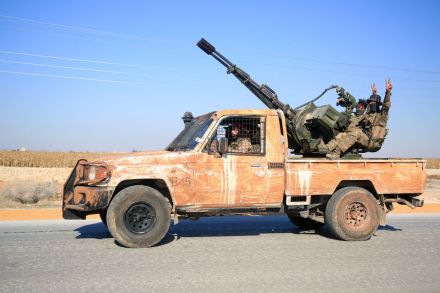
This article is in The Spectator’s January 2020 US edition. Subscribe here.Malkef, northern Syria I’m sitting under an olive tree about a mile from the front with ‘Agir’, a Kurdish soldier from the Syrian Democratic Forces (SDF). The sharp cracks and dull rumbles of fighting make their way to us over dusty farmland; the shade protects us from the scorching mid-morning sun and omnipresent Turkish drones. Agir tells me how the Turkish-backed Free Syrian Army (FSA) can’t fight — at least, compared with the Islamic State (Isis). Agir fought Isis with American backing for years in Syria. Sometimes, he says, Isis soldiers would tie foam cushioning to their feet, sneak up to your position in the moonlight and slit your throat.

americans syria

Hungary isn’t afraid to call ‘Christian persecution’ what it is

Following Donald Trump’s election, there was hope that the US would aid Christian communities overseas, especially in Iraq where the population of Christians was reduced by over 80 percent since the US invasion. The Obama administration was less receptive to a focus on persecuted Christians, often opting to use euphemistic terms. Christian persecution became known more as a series of sporadic, unrelated incidents rather than a phenomena. The US has invested significantly in helping rebuild Iraq, but the effectiveness of our aid has been limited, and some people on the ground in Iraq claim they never saw the entirety of the aid themselves.

hungary christians

In defense of journalism

It was lucky for the New York Times and the Washington Post that they did not uncover the Pentagon Papers or the Watergate Scandal in this unhappy age. They would have found themselves mercilessly beset by ‘citizen journalists’ denouncing them as tools of the Soviet Kremlin or the Red Chinese. Perhaps the same self-appointed guardians of rectitude would also have gone through the past writings and sayings of the journalists involved, and found they were insufficiently loyal to the fashionable opinions of the time. It is a form of McCarthyism. And if you scoff at that, you have to ask yourself honestly if you would have recognized Joe McCarthy for what he was in his own time, or stood up to him, as so few actually did?

syria journalism

Trump’s Syria missile strike was a scandal

This article is in The Spectator’s January 2020 US edition. Subscribe here. I suspect the Third World War will begin with a claimed atrocity — probably the use of poison gas by a ‘regime’ against ‘its own people’. Such things are now the favorite way to make wars where there was peace. Border violations went out of fashion years ago. Invasions are illegal under the UN Charter. There are no Archdukes left to assassinate. ‘Weapons of Mass Destruction’ will forever evoke hollow laughter. But democracy needs a popular pretext for war, and righteous mass outrage about the inhumanity of the enemy is almost invariably effective. This is why it is rather important that the people we trust to verify such claims are honest and trustworthy. For who will verify the verifiers?

syria

Turkish delight at the White House

President Trump’s recent moves in northern Syria are already paying off. Overshadowed as it was by the ‘impeachment' kabuki a mile down Pennsylvania Avenue, Trump’s hosting of Turkey's president Erdogan at the White House today signals progress in an area of significant US national interests.Some perspective on the hysteria over Trump’s ‘abandonment' of the Kurds last month. First, the notion that any Kurdish group represents 'the Kurds' anywhere is absurd. The world’s 30 million or so Kurds live in four countries –– Turkey, Iraq, Iran and Syria, in order of numbers.

turkish erdogan