Syria

US troops finally leave Syria

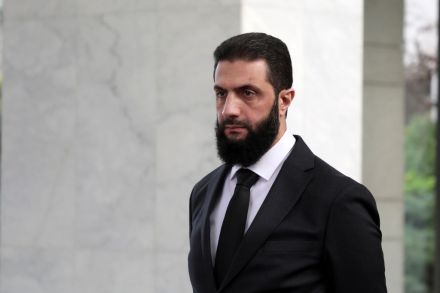
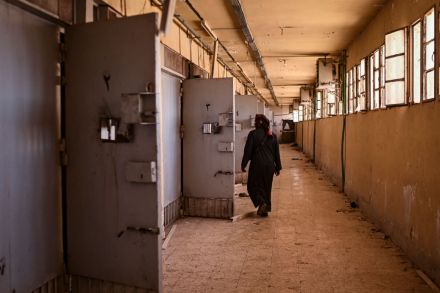
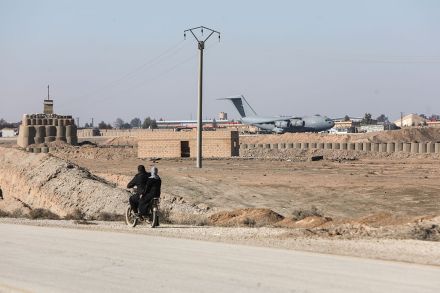
In December 2018, to the shock of pretty much everybody in the US national security establishment at the time, President Donald Trump publicly ordered the withdrawal of all US troops from Syria. The announcement caused a panic within the Defense Department, State Department and National Security Council, whose officials teamed up to dissuade Trump from going through with it. A similar story unfolded ten months later, in October 2019. Again, the bureaucracy pushed back; in October 2019, the House went so far as to pass a resolution opposing a US withdrawal, with senior Republican lawmakers signing onto the measure. Fast-forward more than six years later, and the US troop withdrawal Trump floated about during his first term is finally coming to fruition in his second.
Syria

Playing ball with Team Trump

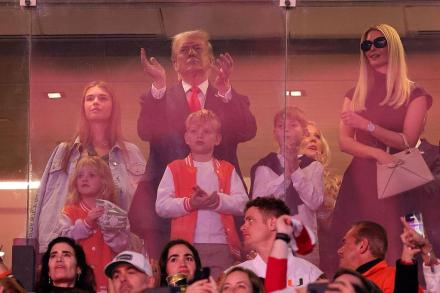
The State Department has a “secret playbook for using sports to advance Trump’s agenda,” according to Politico. Foggy Bottom has a tough assignment ahead. Witness the opening ceremonies of Sunday’s NBA game in London between the Memphis Grizzlies and Orlando Magic, the first NBA game in the UK in six years. As Vanessa Williams sang the National Anthem, someone shouted “Leave Greenland alone,” which the arena cheered. Cockburn doesn’t think Williams is much of a threat to Greenland. President Trump’s appearance last night at the College Football Championship – along with Secretary of State Marco Rubio, Ivanka and Jared, Kai Trump and Steve Witkoff – went without a hitch.

Putin moves troops into Trump’s backyard

Clandestine US military forces are not the only foreign military troops operating in Venezuela. Russia has quietly dispatched military advisors of its own to the country, moved to reinforce Venezuela’s air defenses and signaled readiness to deepen military cooperation. While Donald Trump has authorized the CIA to conduct covert ops on Venezuelan soil and just days ago approved the seizure by US troops of an oil tanker leaving Venezuela, Vladimir Putin has pledged his support for Nicolás Maduro. In a phone call with Maduro on Thursday after the tanker was captured, the Russian president “expressed solidarity with the Venezuelan people.

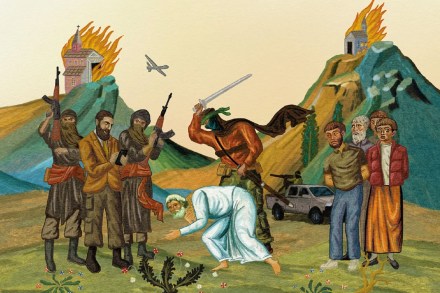
Inside the gruesome world of the ‘human safari’

“People don’t actually do that, right?” my publisher asked nervously. “No one actually goes on a human safari, do they?” Eight years ago, I didn’t know for sure. There had certainly been rumors for years that wealthy foreigners were traveling to conflict zones to kill civilians at random. Gradually I had concluded that some people were indeed heading off to complete their bucket list of horrors. In my novel To The Lions, I placed the “human safari” in a fictional refugee camp in southern Libya. Concrete proof, however, was almost impossible to find. Several times during my years as an investigative journalist, I heard stories about nightmarish things going on in places where law and order had collapsed.

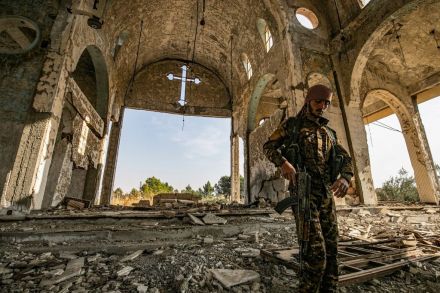
ISIS is stirring once more

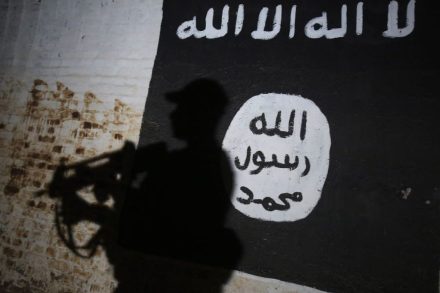
Indications that the Islamic State (ISIS) has begun to employ artificial intelligence in its efforts to recruit new fighters should come as no surprise. At the height of its power a decade ago, Isis was characterized by its combination of having mastered the latest methods of communication with an ideology and praxis that seemed to have emerged wholesale from the deserts of 7th century Arabia. In 2014 and 2015, ISIS recruitment took place on Twitter and Facebook. YouTube was the favored platform for the dissemination of propaganda. The group's videoclips of its barbaric prisoner executions, including the beheadings of a series of western journalists and aid workers and the immolation of a captured Jordanian pilot, became the organization’s gruesome trademark.

isis

The jihadist I knew: my life as al-Sharaa’s prisoner

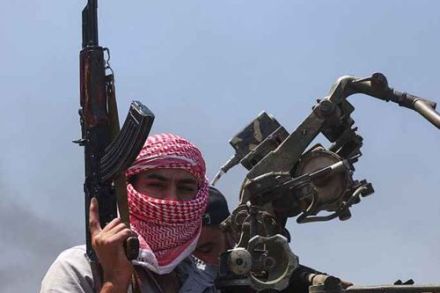
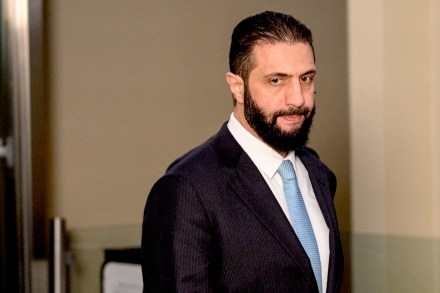
As Washington rolls out the red carpet today for the former al-Qaeda chieftain and now Syrian president, Ahmed al-Sharaa, Syria’s minorities continue to live in terror. An army of destruction, half Mad Max, half Lollapalooza is rolling through the desert somewhere south of the country’s capital, Damascus. Who has ordered these militants into action? No one knows. What do they want? It isn’t clear. But, as a former prisoner of al-Sharaa’s band of jihadists, I can’t say I’m surprised by what is unfolding in Syria. Whatever else might be said about the old regime of Bashar al-Assad, no one was ever in doubt as to who was in charge.

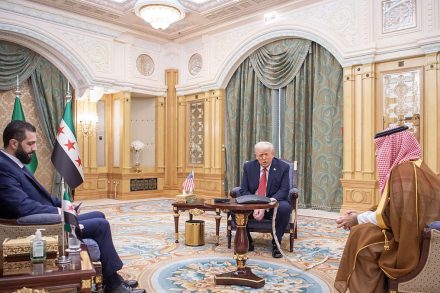
Why Trump met Syria’s interim president

Few career arcs in modern history can be as remarkable as that of Ahmed Hussein al-Sharaa – or Abu Mohammed al-Jolani, to give him the nom de guerre under which he fought American troops in Iraq back when he was a firebrand member of al-Qaeda. Twenty years ago al-Sharaa was languishing in a US military prison in Baghdad, held on suspicion of terrorism. Today, as Syria’s new interim President, he shook hands with Donald Trump posing for photo-calls alongside the de-facto ruler of Saudi Arabia Mohammad bin Salman. Trump was evidently impressed by al-Sharaa, who has swapped the turban and dusty fatigues that he habitually wore before taking Damascus by storm last winter for a plain blue suit and purple tie. “He’s a young attractive guy.

al-sharaa

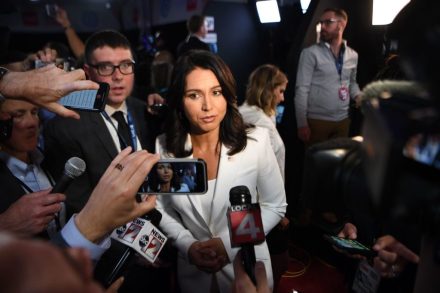
Tulsi Gabbard will bring sunlight to a rotten system

First, a disclaimer: Tulsi and I are good friends. Despite our political differences, we’ve forged a deep bond over the years.  At our first lunch together, we got kicked out of the restaurant because we couldn’t stop talking. Today, I’m proud that she and her husband Abraham are godparents to my eldest daughter, Liberty. It’s because I know Tulsi so well that I understand why she would make an excellent director of national intelligence. Americans have understandably lost trust in our intelligence services. In choosing Lieutenant Colonel Gabbard, President Trump has picked a highly-qualified, reform-minded leader who can regain that trust.

tulsi gabbard

Trump is already the diplomat-in-chief

The United States only has one president at a time. Until January 20, that’s Joe Biden. But President-elect Donald Trump and his skeleton foreign policy team are waiting in the wings, plotting policy behind the scenes on issues — Ukraine, Gaza, Iran, Middle East peace — that have stymied the Biden administration for the last year. In fact, Trump is already influencing the respective calculations of allies, partners and adversaries before he even steps foot in the Oval Office. And Biden’s advisors seem perfectly fine with it. Trump fancies himself as a master negotiator, somebody who’s inherently skilled at poking, pressuring and sweet-talking the opposite side of the table until he gets what he wants.

diplomat

Would a Secretary Marco Rubio implement Trump’s policies?

What on earth is Donald Trump thinking? That’s what many realists and restrainers inside and out of Washington are asking themselves after news broke late last night that Marco Rubio, the senior senator from Florida, is set to be tapped as secretary of state in the next administration.  The reactions haven’t been uniformly bad, mind you. Other candidates rumored to be under consideration, such as Vivek Ramaswamy, caused many in the US foreign policy elite to wretch in fear. Others, like former national security advisor Robert O’Brien and Senator Bill Hagerty, who served as US ambassador to Japan during Trump’s first term, would have been predictable choices with whom most could live.  Rubio, however, is one of the most hawkish options Trump could have picked.

rubio

Biden’s action in Iraq and Syria is merely delayed reaction

What do you think of the apothegm “Better late than never?” I think it is often dubious. For confirmation, I adduce the airstrike the Biden administration just conducted against eighty-five targets in Iraq and Syria. The attacks, against infrastructure associated with Iran’s Revolutionary Guard, are billed as the opening salvo in response to last week’s drone attack by Iranian assets in Jordan that left three Americans dead and more than forty injured. Taking a page from an earlier, square-jawed time, officials from the administration tersely commented that America’s “multi-tiered” response would continue at a “time and in a manner of our choosing.”  Spoken like a real administration. I wonder from what storeroom they got the script?

air strikes iraq syria

US launches retaliatory air strikes in Iraq and Syria

The US is currently launching retaliatory air strikes in Iraq and Syria, the Pentagon confirmed this afternoon.  The strikes come after three American servicemembers were killed in a drone strike by an Iranian-backed militia on Sunday, with dozens more wounded. Top Biden administration officials had said “it will pretty be clear” when the American response begins. “The first thing you see won’t be the last,” National Security Council spokesperson John Kirby told the media Wednesday. -Matt McDonald Soros staffers unionize — and immediately get laid off This month’s better-than-expected jobs numbers are cold comfort to employees of a George Soros-funded group that recruits young Democrats to run for office.

The Middle East catches diplomacy fever

Peace isn’t exactly blossoming like rosebuds in the Middle East. The region is still host to a devastating civil war in Yemen, a humanitarian crisis in Syria, sporadic terrorist attacks in Iraq and an endless tit-for-tat between the US and Iranian-backed militias in Iraq and Syria. Indeed, just last night, President Biden authorized several airstrikes against three militia locations in retaliation for a drone attack on an American base in Syria that killed one contractor and injured six others. But for an area of the world so often regarded as hopeless, the Middle East is suddenly looking like an epicenter of diplomacy.

syria peace

The earthquake that will devastate Seattle

At around eleven in the morning on February 28, 2001, I was standing in front of a mirror in my home in suburban Seattle, adjusting what remained of my hair prior to driving downtown to meet a friend for lunch, when the ground began to shake beneath my feet. The movement lasted about twenty seconds and wasn’t entirely unpleasant, with just the slightest hint of the old days when I was a devotee of Bacchus. After a bit, I checked that the house was all right, looked in on my infant son peacefully asleep in his crib, said goodbye to my wife, started the car and went on my way into the city. It was bedlam out there.

How the earthquake is strengthening Syria’s dictatorship

Northwest Syria is one of the most wretched places on earth. The Syrian province of Idlib, straddling the border with Turkey, is a haven for the internally displaced and is in all practicality a state within a state. Throughout Syria’s twelve-year-long civil (and proxy) war, Syrian dictator Bashar al-Assad has treated the area as a dumping ground for fighters who refuse to lay down their arms and civilians who want nothing to do with Assad family control. Idlib, representing 4 percent of Syria’s total land, is now host to 25 percent of its entire population. And that was before the earthquake hit. If Syria’s northwest was a gateway to misery before the tremors, it’s now a hellscape. Entire families have been wiped out. Buildings have been reduced to rubble.

A year in Gaziantep before the earthquake

In 2013, I was studying for a Master’s degree in Beirut when a bomb went off in Baghdad. I remember receiving a message from a friend checking in to see if I was all right — even though I was 500 miles away. It can be hard to convey to people back in the United States that violence in the Middle East is not necessarily a part of everyday life. At times — in Iraq in the years following the US invasion, for example — it is. But such attacks are usually a tragic anomaly. All this stands in stark contrast to news about the earthquakes in southern Turkey and northern Syria, which struck last week and killed at least 36,000 people.

gaziantep

The virtues of American ‘nation-building’

Newly minted senator JD Vance of Ohio has wasted no time in extolling the virtues of a soft isolationist foreign policy. In a January 31 op-ed for the Wall Street Journal, Vance endorsed Donald Trump for president largely because Trump isn't a hawk. A prominent member of the GOP's national conservative wing, Vance has made skepticism of American leadership abroad a centerpiece of his political identity. The senator attacks the “bipartisan foreign policy consensus that has led the country astray many times.” Never mind that the so-called "consensus" only really exists under extreme circumstances, such as after the 9/11 terror attacks. Think of the deep divide between right and left over how to deal with Cuba and Saudi Arabia, for example.

The US must punish Iran for aiding Russia

Russia’s brutal war in Ukraine has been disastrous for Vladimir Putin, but it has been a boon for the Islamic Republic of Iran. Western nations are increasingly concerned about Tehran’s profitable cooperation with Moscow, as Iran leverages Russian desperation to fuel its own ambitions. So far, Iran has sent hundreds of drones to Russia along with training personnel, and may soon send ballistic missiles. Tehran has continued its malign activities in the Middle East as well, attempting to steal American drones and blind American ships, attacking and endangering American forces and personnel, and supporting destabilizing groups such as the Houthis in Yemen. Iran has also ruthlessly repressed widespread protests at home.

Iran and Russia: the new Axis of Evil?

Russian President Vladimir Putin’s visit to Tehran last week brought attention to a growing partnership between Russia and Iran. The Russian shook hands with Iranian Supreme Leader Ali Khamenei, a rare gesture since both men are notorious coronaphobes. The old cleric expressed support for the Russian invasion of Ukraine, while the old KGB man offered Iran supplies of grain. US intelligence even claims Iran will open its drone arsenals to Russia. This strange friendship has its limits, but its growth could spell trouble. History does not suggest this is a natural partnership. The list of grievances between Iran and Russia is long. Great powers are often rough with middle-power neighbors.

Where will the war in Ukraine go next?

Almost every night in Russia, it seems, a government building bursts into an unexplained fire. Fuel depots, office buildings, infrastructure hubs — and once a bridge. No doubt people have their theories. Insinuation abounds. "Karma is a cruel thing," one Ukrainian official has said on Telegram. But in the main, both the Russian government and Ukraine maintain an eloquent silence. The metaphor is apt. The fires are an unexpected consequence of Russia’s war in Ukraine, an eventuality, no doubt, that no one in the Kremlin inner circle anticipated, or planned for. And yet they burn merrily nonetheless.