Suicide

Ideation

From our UK edition

‘Suicide!’ yelled my husband, while performing an inappropriate mime of a hangman’s noose. That was his reply when I asked him what ideation suggested to him. Unknown to him, ideation has, since my husband’s day, made an unlikely leap from psychiatry to management theory. ‘Management gurus,’ wrote Arwa Mahdawi in the Guardian, ‘seem inordinately obsessed with free office pizza and open-plan offices where people can bump into each other for out-of-the-box ideation opportunities.’ Ideation only means coming up with ideas. While that is essential to any business, this technical-sounding term has been recruited to the task of making it seem that coming up with ideas is scientific and susceptible to being harnessed for profit.

Books Podcast: What really causes depression?

From our UK edition

In this week’s Spectator Books podcast — arranged in partnership with the male suicide prevention charity CALM — I talk to Johann Hari about his controversial new book Lost Connections: Uncovering the Real Causes of Depression — and the Unexpected Solutions. In it, Hari argues that the psychiatric establishment overprescribes chemical antidepressants, and that the orthodoxy that depression is caused by a chemical imbalance in the brain is wrong. The book has already caused fierce debate — with not only Hari’s arguments but (in light of the 2011 scandal that came close to ending his journalistic career) his integrity coming in for criticism.

Derren Brown tells Daily Mail hacks to commit suicide

From our UK edition

Last year Benedict Cumberbatch came under fire for giving an impromptu expletive-filled rant on the government's handling of the refugee crisis following a performance of Hamlet at the Barbican. While critics suggested that the theatre was not the right venue for the rant, at least Cumberbatch's airing happened after the show had finished. Alas the same cannot be said for Derren Brown. Steerpike understands that the illusionist has a regular slot in his Miracle show where he shares his views on journalists who work for the Daily Mail. Disgruntled audience members -- who have attended on different nights -- were surprised to hear Brown say that Daily Mail hacks should commit suicide.

Who is Sylvia – what is she?

From our UK edition

In May 1956, three months after meeting Ted Hughes, one before they will marry, Sylvia Plath writes to her mother Aurelia about the talented man she has fallen in love with: ‘He will start some portraits of me! A combination of both witch and ghost, perhaps.’ Because of Hughes’s editing and writing of her work, a combination of witch and ghost is precisely how we know her, and he strongly encouraged the idea that the version of Plath he offered was the ‘real one’, a core of personality born in an inevitably fatal struggle narrated through the Ariel poems. Ariel, in his view, was her only true work.

The man who disappeared

From our UK edition

Walking out of one’s own life — unpredictably, perhaps even without premeditation and certainly without anything approaching a plan — is a common staple of fantasy, and therefore fiction. But why, when we spend so much of the rest of the time fretting about losing what we have and hatching plans to safeguard it? In this short, powerful novel, the Swiss writer Peter Stamm, suggests some oblique but compelling possibilities. Thomas and Astrid have returned from a holiday with their two children and begun the ordinary business of resettling: unpacking, laundry, a last glass of wine in the garden. As Astrid tends to the house, Thomas walks down the path and, after only a momentary hesitation, through the gate.

At death’s door

From our UK edition

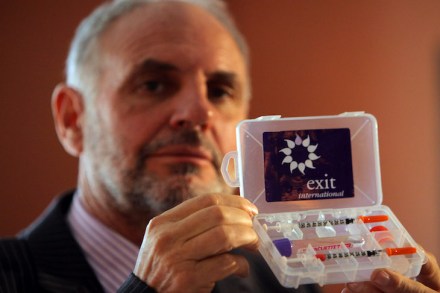
It is a sunny Saturday afternoon in Covent Garden and we are all learning how to kill ourselves. The venue is a nondescript community centre in Stukeley Street. It usually hosts activities for children, so there are crayon drawings and anti-bullying posters on the noticeboard. Today, however, a purple pop-up banner displays the Exit International logo and its mission statement: ‘A peaceful death is everybody’s right.’ Admittance to the four-hour workshop costs £50 and is reserved for those over the age of 50 and the seriously ill. The company collects around the tea hatch, everyone fanning themselves with their copies of the Exit International magazine, Deliverance. There are 80 or so men and women, grey-haired and crepe-soled.

Hymn to self-slaughter

From our UK edition

Anatomy of a Suicide looks at three generations of women in various phases of mental collapse. They line up on a stage that resembles a grey dungeon while sad events unfold around them. The first woman gets pregnant. The second takes heroin. The third argues with a lesbian about a fish. Their lives span several decades but their stories are presented simultaneously, and this tripartite method conceals the plain fact that the events dramatised are too flimsy to merit theatrical portrayal. A soap opera would baulk at such scenes: a druggie teenager bores a cameraman with a list of gloomy soundbites; a female wedding guest is partially seduced by a giggling gatecrasher; a patient in a hospital invites a nurse to eat some haddock.

The great depression

From our UK edition

If it was not yet ‘The Age of Anxiety’ in 1947, when Auden published his long poem of the same name, now it most certainly is, given the manifold global uncertainties that keep any sane person awake with worry. Nearly 20 per cent of adult Americans have been diagnosed with a general anxiety disorder, while the pharmaceutical industry has produced a legion of drugs that promise to combat the effects of such conditions. In Adam Haslett’s beautiful new novel, Imagine Me Gone, mental illness rips through one New England family over the course of four decades. Told in alternating first-person chapters by the parents and their three children, it is a captivating portrait of the ways depression and anxiety mark both the afflicted and everyone who loves them.

Intimations of mortality | 9 February 2017

From our UK edition

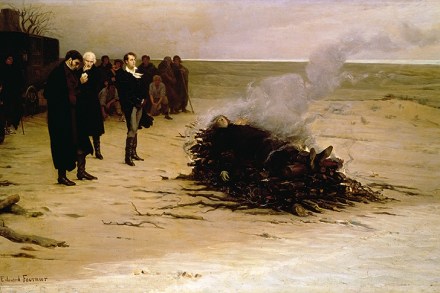
In Deaths of the Poets two living examples of the species, Paul Farley and Michael Symmons Roberts, retail the closing moments of close on 30 poetical lives, ranging from Thomas Chatterton to Robert Frost, Lord Byron to Rosemary Tonks, John Clare to Thom Gunn. Why? Because they feel the influence on ‘our’ generation (Farley was born in 1965 and Symmons Roberts in 1963) of the ‘confessional’ American poets, several of whom cast a solemn glamour over their calling by killing themselves — John Berryman, Sylvia Plath, Anne Sexton.

A mystery, even to herself

From our UK edition

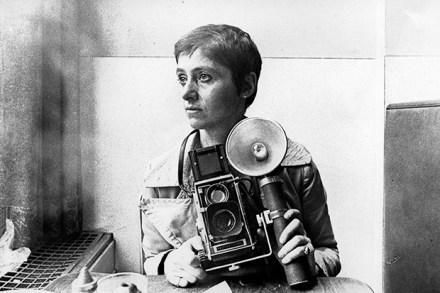
Armed with their tiny Leicas and Nikons, most of the great postwar ‘street’ photographers liked to be unobtrusive; they wanted to capture life unobserved. Garry Winogrand and Henri Cartier-Bresson haunted the city in search of the ‘decisive moment’. Somebody I know was photographed by Robert Doisneau, a very ghostly snapper. Doisneau entered the room and then left. His subject was baffled; he had not seen him take any shots at all. And then along came Diane Arbus. She was small but very noticeable, partly because of her childlike good looks but mainly because of the big flash and brick-heavy and breeze-block-sized Rolleiflex or Mamiya slung round her neck.

Death by television

From our UK edition

Forty years ago this month a film appeared, so prescient I wonder if its author, Paddy Chayefsky, saw the 2016 American presidential election campaign in a crystal ball. It was called Network and it foretold the rise of Donald Trump. The plot is King Lear appears on Newsnight: a newsman run mad. The protagonist is Howard Beale (Peter Finch), an anchorman at a failing network. The year is 1976, and America is embattled with inflation, depression and the end of the Vietnam war. It is not a time for American heroes, to paraphrase Chayefsky’s acolyte Aaron Sorkin writing in The West Wing. Beale’s ratings are low. He is fired. He announces that he will kill himself, live on air. ‘I just run out of bullshit,’ he says.

Linked in

From our UK edition

What makes the World Service so different from the rest of the BBC? I asked Mary Hockaday, the controller of the English-language service. And how does it justify the additional £289 million funding (spread over the next five years) which the Treasury granted it at the end of last year? Will that money, which could after all otherwise go to welfare or the NHS, be well spent? ‘News is our core,’ says Hockaday. ‘It’s all about the now.’ Which sounds a bit Day Today. Anyway, isn’t this what BBC News and Radio 4 do already? It’s not just about presenting the news, Hockaday adds, but putting it in context. This last bit the World Service certainly does better than anyone else.

Long life | 28 January 2016

From our UK edition

No good deed goes unpunished. This is a saying that applies with special poignancy to Olive Cooke, the 92-year-old poppy seller who jumped to her death in the Avon Gorge near Bristol after receiving something like 3,000 begging letters a year from charities. Mrs Cooke was a great believer in charity. She had sold poppies on behalf of the Royal British Legion since 1938, taking up position every November outside the entrance to Bristol Cathedral. She may have disposed of more than 30,000 poppies during her eight decades of selling them there. She was, said her family, somebody of an ‘incredibly kind, generous and charitable nature’ who held 27 direct debits to charities. The word got about. Here, obviously, was a sucker.

Strange young things

From our UK edition

[audioplayer src="http://rss.acast.com/viewfrom22/thegreendelusion/media.mp3" title="Douglas Murray and Steph Smith discuss whether all young politicians are oddballs" startat=1130] Listen [/audioplayer]Whenever the curtain is pulled back on youthful political activism, the picture is ugly. Three years ago, in Young, Bright and On the Right, the BBC followed students at Oxbridge fighting like vipers to get ahead in their university Conservative clubs. Along with the inevitable three-piece suits, wildly invented accents and endless talk of what ‘the party’ expected, there was also that characteristic lack of awareness that ‘the party’, like the rest of the world, remained largely indifferent to them.

The Spectator’s notes | 26 November 2015

From our UK edition

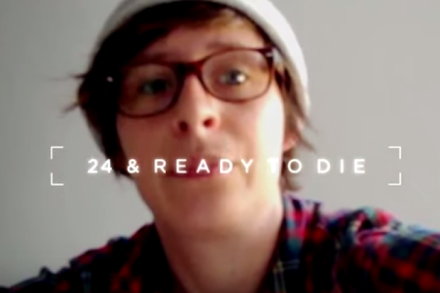
Because, it says, of its ‘liberal values and respect for human dignity’, the Economist has put out a film about Emily, a 24-year-old Belgian woman, who wants assisted dying. She is physically healthy, and comes, the film assures us, from a happy family. She has suffered from severe depression since childhood, however. By her own account, her self-made video (two years ago), in which she says ‘I don’t want to live a lie’ and ‘It keeps feeling empty whatever I do’, made her feel empowered. It inspired her to seek death at the hands of doctors. Belgium is one of two countries in the world which permits assisted dying for psychiatric reasons.

Many people feel their life is worthless. The Assisted Dying Bill tells them they might just be right

From our UK edition

As Charles Killick Millard conceded, there was an issue about grandparents. Millard, the leading figure of the Voluntary Euthanasia Legalisation Society back in the 30s, realised that people might cajole their elderly relatives into choosing death. But this had its benefits, he argued: ‘It would make querulous old folk more careful how they dilated upon their aches and pains.’ Havelock Ellis, one of the Society’s celebrity supporters, was blunter: he expressed his annoyance that ‘we are terribly afraid of killing those citizens whom we all regard as financially unpromising.' There is a callousness in those remarks which resurfaces whenever assisted suicide is put forward.

Matters of life and death

From our UK edition

‘Bait by Cartier,’ she growls as her priceless diamond bracelet is strapped to a piece of rope and dropped overboard in the hope it might lure a fish on to the line. She’s stuck on a boat with a group of survivors after the freighter she was aboard was hit by a German U-boat during the second world war. She was Tallulah Bankhead, playing Connie, heroine of John Steinbeck’s novel-cum-film Lifeboat, for Mystery Theater, the American radio drama series, first broadcast in 1950 and now replayed on Radio 4 Extra (Sunday). They just don’t make voices like that anymore. It had star quality streaked right through it. That deep husky tone, the raucous laugh, the harsh put-down veering almost at once into a sensual come-on.

Eyes wide shut | 2 July 2015

From our UK edition

Asif Kapadia’s documentary about Amy Winehouse, whom Tony Bennett describes as ‘one of the truest jazz singers that ever lived’, and who died of alcohol poisoning at 27 (FFS), is masterly and gripping, which is a pity, as you can’t look away. You will want to look away, and may even yearn to do so once the heroin comes into play, and the crack, and that husband and that gig in Belgrade, when she was all unsteady, shuffling and broken beneath the big hair, but you can’t. Oh, Amy, I kept thinking, if only — if only — you’d said, ‘Yes, yes, yes’. It is almost unbearable in this way.

We don’t encourage suicide, so why should we assist it?

From our UK edition

As MPs prepare to consider a private member's bill to license what is being euphemistically called 'assisted dying', in Belgium a young woman with mental health problems has been cleared for euthanasia some time this summer. The Belgium-based outlet DeMorgen outlined the situation of the 24-year-old, identified only as ‘Laura’. Aside from depression and the feeling that 'she wanted to die ever since childhood', ‘Laura’ is physically healthy, enjoys coffee, friends and going to the theatre. According to the New Yorker, 13 percent of Belgians who died by euthanasia last year didn’t have a terminal illness — and 3 percent suffered from mental disorders. Belgium legalised euthanasia in 2002.  Since then the numbers have soared.

Turing’s long shadow

From our UK edition

As a young student, the atheist Alan Turing — disorientated with grief over the death of his first love Christopher Morcom — wrote to Morcom’s mother with an atomic theory of how one’s spirit might transmigrate. Years later, he brought the modern computer age into being by positing machines imbued with consciousness. You can’t help wondering what Turing’s shade — whether ethereal or perhaps digital — makes of his posthumous fame. Plays; books; postage stamps. Now, following Benedict Cumberbatch’s doomy big-screen portrayal of the Bletchley Park codebreaking genius in The Imitation Game, David Lagercrantz fictionalises the murky aftermath of Turing’s death. In doing so, he explores questions not only of identity and maths and philosophy, but also of good taste.