Suicide

Men behaving badly: Nero, Claudius and even Seneca could be intensely cruel to women — and fish

From our UK edition

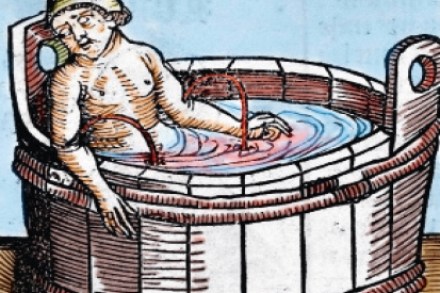
They lived in barrels, they camped on top of columns, or in caves: the lives of the sages are often inconceivable to the modern reader. Seneca, however, that rich, compromised sophisticate of the first century AD, is instantly kin, his voice weary with consumerism, his problems definitively first-world. ‘Being poor is not having too little,’ he observed. ‘It is wanting more.’ Those in need might disagree. But from where Seneca was sitting, in his personal banqueting suite with 500 ivory-legged tables (all matching, no less — matching furniture in Rome was considered staggeringly smart, due to the lack of means of mechanical reproduction) he was able to cultivate the elegant indifference to luxury that speaks to our age so vividly.

A phone used to be a helpline. Now it’s a device used to film people in distress

From our UK edition

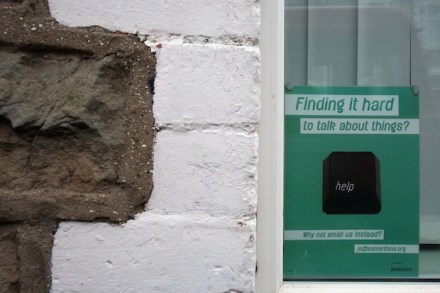
A pal recently told me a story. It was about a friend of theirs who had been travelling on a train last summer, one of those old fashioned trains, with the windows that let you open the door from the outside. He was leaning on the door with his arm resting outside when another train suddenly passed by and clipped his hand. His wrist snapped. There was blood everywhere. He turned back into the carriage and was relieved to see his fellow travellers reaching for their phones. He assumed they were dialling for help. But he quickly realised he was wrong. They were in fact taking photos. I was reminded of this somewhat grim story today, after I read about a man from Telford who had committed suicide on Saturday.

The crisis of masculinity won’t be solved with antidepressants

From our UK edition

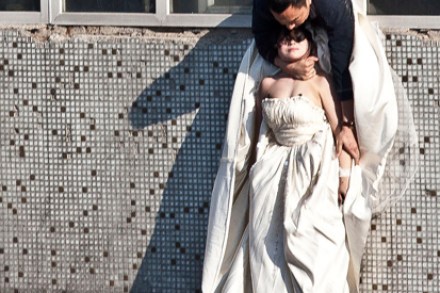
There was much discussion recently about the rise in male suicide rates, after official figures published last week showed they were at their highest level since 2001. But one aspect of this has attracted little attention: the lack of support for men abused by their partners. In a poll of 130 Citizens Advice Bureaux workers, 63 per cent said it was easy to get help for women reporting domestic abuse, compared to 13 per cent for men. It’s bad enough that men struggle to find help once they pluck up the courage to ask for it. But they are also less likely than women to look for support in the first place - and more likely to be disbelieved.

‘Another terrible thing…’: a novel of pain and grief with courage and style

From our UK edition

Nobody Is Ever Missing takes its title from John Berryman’s ‘Dream Song 29’, a poem which I’d always thought related to Berryman’s strange sense of guilt over his father’s suicide. At the heart of Catherine Lacey’s novel there is another suicide that brings with it enormous pain and grief, that of the heroine Elyria’s adopted sister Ruby, six years earlier. This is a novel of extremes — to put it mildly — charting Elyria’s slide into a derelict state. It is a witty, knowing and lyrical work that takes as its subject the thoughts and feelings of a woman who has suffered more misery than most humans can take. The bulk of the novel’s action takes place in New Zealand, but it could happen anywhere.

Policymakers must address high male suicide rates

From our UK edition

It’s pretty tough to find good news in suicide statistics, but today’s figures for 2013 are particularly grim reading. The number of suicides increased from 2012, and the male suicide rate is now at its highest since 2001. The male rate of suicide has increased significantly since 2007, where it stood at 16.6 deaths per 100,000 population, to 19.0 deaths per 100,000 as the graph below shows: [datawrapper chart="http://static.spectator.co.uk/yGG0M/index.html"] It used to be the case that young men were the most likely to kill themselves, but the highest suicide rate in the UK is now for men aged 45 to 59, at 25.1 deaths per 100,000. This is the highest for that group since 1981.

Should ‘suicide’ mean pig-killing?

From our UK edition

There was a marvellous man in Shakespeare’s day known as John Smyth the Sebaptist. ‘In an act so deeply shocking as to be denied by Baptist historians for two and a half centuries,’ Stephen Wright, the expert on separatist clergy wrote, ‘he rebaptised first himself and then his followers, and set out his new views in The Character of the Beast (1610).’ His former confederate Richard Bernard fired a counterblast in that year showing (to his own satisfaction) that ‘the Church of England is Apostolicall, the Separation Schismaticall’. Reading a word like sebaptist we take the prefix se- to indicate a reflexive act, a self-baptism, as we would if reading French or Spanish. But that is not how ancient Romans used se-.

Good Samaritans or sinister surveillance? The app that tries to stop suicide

From our UK edition

According to an email I received earlier this afternoon, I should be worried about the mental state of someone I know. An alert popped up in my inbox from an app called 'Radar' which the Samaritans launched this week, telling me a tweet from someone I followed might suggest they were contemplating suicide. Here's the tweet: Clearly the Samaritans need to work on their formula, otherwise I'll be receiving daily alerts whenever Jim Murphy warns against Scottish Labour committing electoral self-harm or one Conservative faction warns another faction that it is being politically suicidal.

Charles Saatchi’s new book of photos makes me feel sick

From our UK edition

Charles Saatchi, the gallery owner, has created his own Chamber of Horrors in this thick, square book, ‘inspired by striking photographs’. One of the most successful of these is a black and white image of male and female figures: ‘Gruesome and gaunt, they look like extras from an early piece of zombie cinema.’ They are, it soon becomes clear, oddments saved by firemen from a blaze at Madame Tussauds in 1925. Madame Tussaud, the author reminds us, ‘would ‘tiptoe through the piles of corpses behind the guillotine to discover the most illustrious of the heads, and would promptly make casts of them, her hands bathed in their blood’.

Radio 4 deserts the British bird. Shame on them!

From our UK edition

A strange coincidence on Saturday night to come back from the cinema, having seen a film about a woman fighting to save her job while suffering from depression and thoughts of putting an end to it all, only to switch on the radio and hear from people who have had suicidal thoughts themselves or who have suffered the peculiar, awful grief of losing someone to suicide. The film was affecting and sensitively done, but after listening to In Memoriam: Conversations on a Bench (Radio 4) I realised how different the impact of radio can be. It was not that the film had in any way glamorised depression, or turned us as viewers into voyeurs revelling in someone else’s misfortune.

It’s time we accepted that depression is a terminal illness

From our UK edition

For Robin Williams, depression was a terminal illness. He also, his wife has revealed, suffered from Parkinson’s disease. These two problems are far more connected than most people know: for many sufferers the first signs of Parkinson’s, often ten years or more before the more readily recognized abnormal movements are seen, are those of a depressive illness. Why? Because the abnormal brain chemistry of the two illnesses is essentially the same. But it is a grave mistake to assume that Williams must have killed himself because he couldn’t face the onset of Parkinson’s. He killed himself because he suffered from depression. Suicide is the final symptom of a mental illness.

When did suicide cease to be morally repugnant?

From our UK edition

The great Theodore Dalrymple once came up with the theory that there is a fixed level of righteous indignation in any society. As soon as we become more relaxed about one area — say, drug taking — we get much more prudish and finger-wagging about something else — smoking, for example. Sometimes one taboo easily takes the place of a previous one. Race, for example, has become the new sex, with the F-word and C-word de-stigmatised and replaced by the N-word and P-word as no-nos (the new taboo also comes with its own hypocrisies, obviously, and few of today’s moral leaders send their kids to vibrant inner-city schools). But in other cases, whole moral frameworks are inverted.

Why I’m against posthumous pardons, even for Alan Turing

From our UK edition

Ross Clark is a columnist I try to read because he is never trite. So I was sorry to miss performances of his musical play staged earlier this month. Shot at Dawn is about a sister’s quest for a recognition (after his death) of her brother, Harry Briggs, a soldier in the Great War who was executed for desertion. The play is sympathetic to the idea of posthumous pardon; coupled with this, it’s a lament that society punishes people without trying to understand why they do what they did. A second theme emerges: homosexuality, and the difficulty (then) of living with this in a world that does not understand. I suppose you could say that Ross’s play is about looking back not in anger but in sympathy. Here’s a heresy, then.

Assisted dying? Ancient religion was all for it

From our UK edition

There is something mildly unexpected about religious groups’ hostility to euthanasia. After all, in the ancient world one of the major differences between e.g. Christians and pagans was that Christians were renowned for welcoming, indeed rejoicing at, death. Pagans found this incomprehensible. Not that pagans feared the afterlife. Although, in the absence of sacred texts, there were no received views on the matter, Greeks reckoned that if the gods were displeased with you, they would demonstrate it in this life rather than the next.

The terminal confusion of Dignity in Dying

From our UK edition

[audioplayer src="http://traffic.libsyn.com/spectator/TheViewFrom22_3_July_2014_v4.mp3" title="James Harris and Madeleine Teahan discuss the Assisted Dying Bill" startat=874] Listen [/audioplayer]If you were around in the days when the US series M*A*S*H was a regular feature on British television, its sing-song theme is probably still lodged in your memory: ‘Suicide is painless/ It brings on many changes/ And I can take or leave it if I please’. However catchy, it is broadly untrue. The human life force is stubborn, and it takes a visceral struggle to extinguish it.

There’s cause to worry about our sons as well as our daughters

From our UK edition

The graph below shows one of the most unsettling trends I've come across. It's the female and male suicide rates, and while the former has halved since the 1980s, the latter has fallen by just 8 per cent. Men account for 77 per cent of all suicides, and the group now most likely to take their lives are men aged 40-44. [datawrapper chart="http://static.spectator.co.uk/flzpM/index.html"] These are the starkest statistics in what I argue in this week's magazine is a 'crisis of masculinity' in our country. There are male-specific problems ranging from catastrophic mental health conditions to boys falling behind girls at every stage of their education. Men get ahead in the workplace only because women are forced by high childcare costs to leave. That's not true equality, is it?

Madness and massacre in the jungle

From our UK edition

In his new novel, Children of Paradise, Fred D’Aguiar, a British-Guyanese writer, returns to the Jonestown massacre, previously the subject of his 1998 narrative poem, ‘Bill of Rights’. D’Aguiar often examines brutal historical episodes from the perspective of a survivor or escapee. In Feeding the Ghosts (1997), the drowning of 140 slaves in 1798 so that the Liverpool-based owners could claim on the insurance is told through the story of Mintah, the one slave who did not die. In the new novel we have Joyce and her daughter, Trina, Americans who, having fallen for the messianic allure of ‘the preacher’ (a figure based on Jim Jones) and followed him to a promised land in Guyana along with a thousand others, now question their decision and want to leave.

William S. Burroughs was a writer – not a painter, prophet, philosopher

From our UK edition

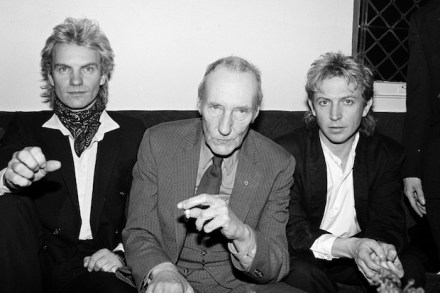
William S. Burroughs lived his life in the grand transgressive tradition of Lord Byron and Oscar Wilde and, like all dandies, he had a nose for hedonistic hot spots which he could mythologise along with himself. On the occasion of his centenary, Barry Miles takes us through these gorgeous, macabre scenarios with an attention to detail reminiscent of Dadd or Bosch: the boyhood in suburban St Louis; Harvard and early trips to Europe; the war, Greenwich Village and the Beats; Latin America and exile in 1950s Tangier, Existential Paris, Swinging London; the return to the USA and emergence as a literary celebrity adored by Warhol.

Death by Dior, by Terry Cooper – review

From our UK edition

This book may sound like it’s going to be about high fashion, but it’s actually about Nazism, satanism, incest and murder. Françoise Dior decided that her uncle Christian had been killed in a Jewish plot in 1957, so she joined a Nazi movement in France before moving to London to work for the cause over here. Later, she got more interested in the ‘spiritual side of Nazism’, which developed into a fascination with Satan. A sexual relationship with her teenage daughter Christiane eventually turned sour and when Françoise could no longer put up with her, she tricked Christiane into committing suicide. It’s all told in a cheerful, chatty way by Terry Cooper, who was Françoise’s lover for many years.

Lord Falconer has the wrong ideas about assisted suicide

From our UK edition

So Lord Falconer’s commission, funded by Sir Terry Pratchett, has concluded that there is a ‘strong case’ for assisted suicide, has it? Well, there’s a thing. Given their previous form and the composition of the committee, it would have been remarkable if they’d decided that, on balance, the law works perfectly well — which is what one of their witnesses, the Director of Public Prosecutions, Keith Starmer, said. On the whole, partly because some anti-euthanasia bodies refused to participate and partly because people with a blatant opposition to assisted dying weren’t invited to sit on it, the composition and conclusions of the body reflected the opinions of those who set it up.

The debate over assisted suicide

From our UK edition

Looking at today's report by the Commission on Assisted Dying, the first thing that jumps out is just how comprehensive it is. They reach the conclusion that assisted suicide should be legalised — and they've done so after hundreds of hours of consultation with various groups and experts, as well as sifting through the evidence from countries where various forms of assisted dying are allowed. This is no rush job.