Suicide

A house of secrets: Where Are the Kings, by Donal Ryan, reviewed

From our UK edition

A typical adolescent, Jack Fristensky is consumed by uncertainty about who he is, his place in the world and, of course, his burgeoning sexuality. Less typically, he must also contend with his mother’s suicide and his father’s subsequent admission to a mental hospital. Effectively orphaned, he is sent to live with his mother’s ‘mad, mysterious family’ – his grandparents, Aunt Rose and three uncles, Theo, Haulie and JJ, the last of whom is only two years his senior. All the characters are richly and idiosyncratically drawn.

The rise of mediated murder

A few months ago I stumbled across a TikTok series. A distraught older sister. A younger brother who’d committed suicide. And an online girlfriend who had allegedly coerced him – and several others – into taking their own lives. According to the video creator, this was the girl’s modus operandi: target vulnerable people on Roblox, form relationships with them over Discord and find ways to convince them to kill themselves, often on camera. I can’t verify the videos’ claims, but it was a story I felt I’d heard many times before. A young person falls into an intense, online relationship. That person commits suicide. Someone close to the youngster becomes convinced that the other party’s sole goal is to drive people to suicide.

Adolescent anxieties: Schoolgirl, by Osamu Dazai, reviewed

From our UK edition

In June 1948, the writer Osamu Dazai and his last love, Tomie Yamazaki, drowned themselves in the Tamagawa Aqueduct near Tokyo. It was a murky ending to a life which had begun in wealth and social status but which rapidly descended into alcoholism, depression, impoverishment – and literary genius. During his short life – he died at 38 – Dazai produced a substantial body of work: novels and stories which helped define Japanese literature of the 1930s and 1940s and which are enjoying a significant global reputation now. Often autobiographical in nature, playing games with the blurred borders between reality and illusion, they chart disordered, chaotic lives, exploring isolation, poverty and debauchery with a sly wit and brutal honesty.

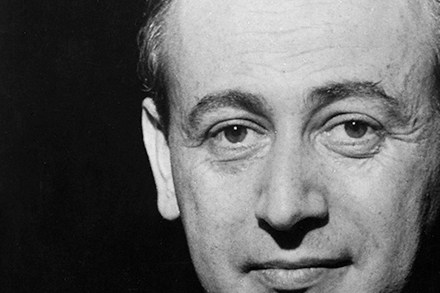
The tragedy of Paul Celan – trapped in his own allusive poems

From our UK edition

Some time in the late 1950s, Jacques Derrida and other intellectual luminaries at the École Normale Supérieure in Paris were surprised to be told that the excruciatingly introverted German-language instructor they had been avoiding in the corridors for several years was ‘the greatest living poet in the German language’. Paul Celan was reputed to be as ‘difficult’ as his poetry – rebarbative, then intriguing and finally unforgettable. His best known poem is ‘Todesfuge’ (‘Death Fugue’), which may refer to Jewish musicians in a Nazi death camp: ‘Black milk of dawn, we drink you at night...’ He can be heard online reciting the poem in a rising tone of suppressed hysteria.

A sinister strangeness: City Like Water, by Dorothy Tse, reviewed

From our UK edition

In Dorothy Tse’s City Like Water the location is never named. Anonymous, mutable, it slips from normal into nightmare, strangeness signalled from the opening lines: ‘In the place I used to live, my rusty top bunk rocked like a boat. Night after night, it carried me off towards a secret crevice.’ This is a novel written out of sorrow and anger: the pain of recalling sweeter times. It’s not the boy narrator who is unreliable; it’s the city itself. When, in Invisible Cities, Italo Calvinodescribed Marco Polo’s travels, he named 55 settings – each delineating an aspect of Venice. Tse has acknowledged Calvino as a major influence, and the locus of City Like Water, in all its bewildering manifestations, its beauty and squalor, can only be her own city – Hong Kong.

The Anthony Bourdain Reader leaves a reader hungry

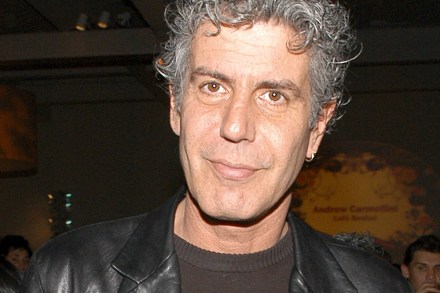
Charismatic, handsome and with a great white shark’s feral cool, Anthony Bourdain was someone that everyone wanted to be. The chef, writer and TV presenter described the premise of his award-winning shows, No Reservations and Parts Unknown, as “I travel around the world, eat a lot of shit and basically do whatever the fuck I want.” They cemented his image as a gadabouting, kamikaze gourmand. Bourdain scarfed down andouillette and warthog anus, drank sun-bear bile and polished off the still-beating heart of a cobra, plonked into a shooter of Vietnamese firewater. He showed Barack Obama the correct way to slurp bún chả noodles on a steamy Hanoi side street, and he and his team watched from their hotel pool as Israeli jets strafed downtown Beirut during the 2006 invasion.

anthony bourdain

Courage and humour in the face of unimaginable grief

From our UK edition

In the face of unendurable pain that must be endured and unimaginable loss that must be imagined, jokes should not be resisted or turned away. Miriam Toews, describing the day that her father ended his life, remembers him assessing the outfit – torn jeans and a green hoodie – that she had been wearing for a fortnight. ‘Did you have much trouble deciding what to wear?’ he asked as he left his ham sandwich uneaten at a family lunch. Afterwards, he made his way to the railway tracks. A dozen years later, Miriam’s older sister Marjorie died by suicide in the same manner the day before her 52nd birthday. Toews wrote about her father’s life in the non-fictional Swing Low, and about her sister in the astounding novel All My Puny Sorrows.

The joyless rants of Andrea Long Chu

From our UK edition

Andrea Long Chu is the poster girl critic of the American progressive left. Writing primarily for New York magazine, she made her name with takedowns of celebrated novelists such as Hanya Yanagihara, Bret Easton Ellis and Zadie Smith. In 2023, she was awarded the Pulitzer Prize for reviews that ‘scrutinise authors as well as their works’. Refusing to separate art from artist is, of course, central to both critical theory and wider progressive politics. ‘If that makes me an ideologue, so be it,’ Chu writes. Authority is a compilation of these pieces, two new essays, and others that Chu published between 2018 and last year. ‘Why shouldn’t a book review be personal?’ she asks. ‘It’s my understanding that persons are where books come from.’ Fair enough.

‘Too bohemian for Bournemouth’: the young Lawrence Durrell

From our UK edition

These legendary lives need the clutter cleared away from them occasionally. Lawrence Durrell and his brother Gerald turned their family’s prewar escape to an untouched Corfu into a myth that supplied millions of fantasies. It still bore retelling and extravagant expansion recently, if the success of ITV’s series The Durrells is any sign. (One indication of that pleasant teatime diversion’s accuracy: the actor playing Larry, Josh O’Connor, is 6ft 2in. Larry himself was a whole foot shorter.) How Louisa Durrell, struggling with life in Britain after returning from India, went in a bundle with her children to a Greek island of cheap Venetian mansions, heat and innocent adventure is always going to have its appeal.

Bloodbath at West Chapple farm

From our UK edition

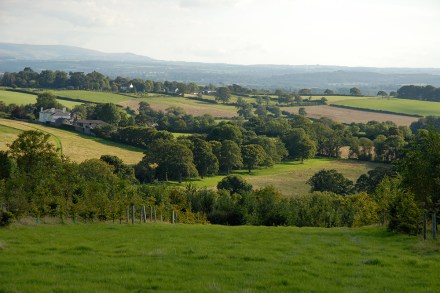
Fifty years ago, the blasted bodies of three unmarried siblings, members of the Luxton family, were discovered at a Devon dairy farm, set in a lush stretch between the ‘lavender haze’ of Exmoor and Dartmoor. The youngest member of the family, Alan, was 55. He lay in his pyjamas and work boots on the cobbles in the farmyard. Robbie, 65, with cuts to his face, and Frances, 68, clad in a nightgown rucked up to her waist, were found together in the garden. All the doors to the primitive thatched family farmhouse were locked from inside. The ‘tragic trio’, as they were described by the tabloid press, were the last of an ancient line who had farmed at West Chapple, Winkleigh. Each of the victims had their heads blown off.

The weirdness of the pre-Beatles pop world

From our UK edition

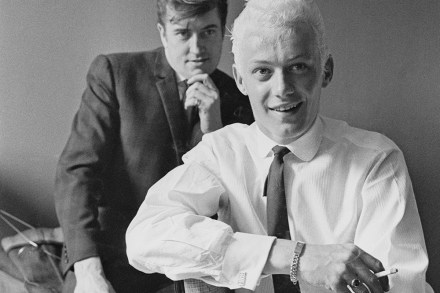
Quizzed about pop by the teen music magazine Smash Hits in 1987, the year of her third consecutive electoral victory, Margaret Thatcher singled out ‘Telstar’, a chart-topper from a quarter of a century earlier, for special praise. She pronounced it ‘a lovely song… I absolutely loved that. The Tornados, yes.’ As a whizzily futuristic sounding instrumental ode to a transatlantic communications satellite, and only the second British recording to top the American Billboard charts, its charm for Thatcher was perhaps as much political as musical. That it was the work of an independent producer might also have appealed to her love of freewheeling, self-reliant private enterprise.

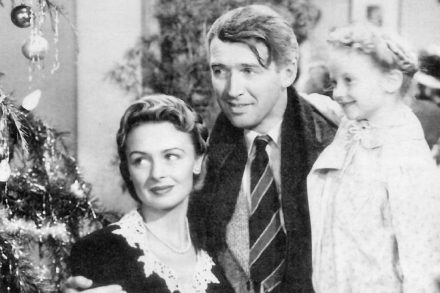
Karolyn Grimes looks back on her role as Zuzu in It’s a Wonderful Life

The title tells it all. It’s a Wonderful Life was first released back in December 1946, in the same week that President Truman was issuing Proclamation 2714, which officially ended hostilities in World War Two, and for that matter prefiguring Donald Trump by proposing that the US buy Greenland. The movie may be seventy-eight years old, but it’s one of those timeless classics, like Casablanca or The Searchers, that actually improve with familiarity. It’s also long since woven its essential message of good cheer into the fabric of our festive season. It’s an unusual plot for a film synonymous with feel-good family entertainment.

it's a wonderful life

Let prisoners phone home

From our UK edition

‘A society is measured by the treatment of its prisoners,’ Winston Churchill said. Last year, in England and Wales, every three and a half days a prisoner killed themselves. What does this say about our society? Perhaps you think: why should we care – aren’t there better things to worry about than criminals committing suicide? But the suicide rate in prisons is actually, surprisingly, a measure of the safety of society at large, because those who kill themselves in their cells represent the tip of an iceberg of despair within the prison population. It’s an indication of just how desperate life inside is – and when prisoners are feeling desperate, you can be sure that, when they are released, they are far more likely to reoffend.

Refugee lives: The Singularity, by Balsam Karam, reviewed

From our UK edition

One Friday evening in a half-ruined, half-rebuilt city, where smart tourists dine out in restaurants next to refugees in makeshift shelters, a woman walks the streets. In torn clothes and slippers ‘worn ragged’, she hands out leaflets. On every piece of paper the same words are written: ‘Has anyone seen my daughter?’ On the same evening, in the same coastal city, which is ‘half obscured by skyscrapers’, another woman walks the streets with a different purpose, seeking to spend time away from her co-workers on a business trip. As she cradles her pregnant stomach, she watches as a female figure climbs over a clifftop railing and jumps, leaving behind a bag of leaflets. Later, the second woman has a miscarriage.

Blake Butler: ‘I don’t want this story to end as “Molly killed herself”’

A recent controversy rocked the literary world when coverage of author Blake Butler’s memoir, Molly, about his late wife, notable poet Molly Brodak, hit tabloids and spun for the worst. The coverage sparked debate over the ethics of writing about relationships, as online attackers made accusations that the widower weaponized Brodak’s private life and exploited her death for fame or revenge.   Claims gained ground that it was a “shameless cash grab,” “literary revenge porn,” or that it shouldn’t have been published due to privacy concerns, since the memoir reveals Butler’s discovery of his late wife’s affairs after her passing.

blake butler

Robyn Davidson explores yet another foreign country – the past

From our UK edition

Robyn Davidson never set out to become a writer. ‘It did not form my identity,’ she tells us early on in her memoir Unfinished Woman. ‘In my own mind I had simply pulled another rabbit out of a hat. As I had done all my life with everything.’ The rabbit, in this case, is the ability to capture an exciting and complex life with insight and humour. When she decided to leave the underworld, she was sexually assaulted at knifepoint Born in 1950 on a cattle station in Queensland, Australia, Davidson was the second daughter of a handsome war hero from a privileged background. Home was a place full of ‘dust and wide verandas, comfortable old chairs and good horses, though never adequate cash’.

Another tragic case involving medical incompetence and cover-up

From our UK edition

It was only eight lines into O Brother that I realised I was in the hands of a good writer. John Niven’s landline phone has rung. His partner hands it to him. ‘I take the phone from her as she watches me in the intense, quizzical way we monitor people who are about to receive Very Bad News.’ I can’t recall a writer noticing that before (I presume a few have), but we have noticed it ourselves. And the narrative masterstroke is that now the reader is looking at the page in an intense, quizzical way, for we want to know what the Very Bad News is. The VBN is that Niven’s younger brother Gary is in a coma, following a suicide attempt.

Why did Epstein kill himself? Negligent guards…

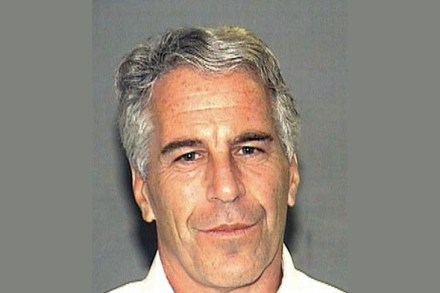
It’s fun to conspire about the mysterious death of Jeffrey Epstein — or, at least, Cockburn has whiled away several hours doing so. Was it ordered by the Queen? Bill Gates? The Clintons? Did Ghislaine Maxwell stick a pin straight through the heart of an Epstein-shaped voodoo doll? It’s almost a shame that we now know the fault lies with something as mundane as negligent prison guards.  The Justice Department’s watchdog announced Tuesday that a “combination of negligence, misconduct and outright job performance failures” by the Federal Bureau of Prisons and workers at its New York City jail allowed for the disgraced financier to take his own life in August 2019, finding no evidence of foul play.

jeffrey epstein

Lorrie Moore’s latest novel is deeply troubling, but also consoling

From our UK edition

Sometimes a novel’s means are so strange, however compelling its final effect on the reader, that a straightforward account of it will be most helpful. I’ve read, or part-read, this novel three times now. On the first reading I gave up, shaking my head. On the second I got to the end, but thought it absurdly wilful, self-absorbed and idiosyncratic to the point of whimsy. The third reading – something, after all, must have drawn me back – exerted an appalling power, and I emerged shaken, troubled, but also consoled. Take your pick. This is a book that is going to divide people, and one that can look very different to the same reader in different lights. Finn visits the cemetery – and there is Lily.

A magpie proves a troublesome pet

From our UK edition

With his swashbuckling gait, ominous associations and garrulous demeanour, the magpie is the dandified razor boy of our avifauna and provokes ambivalent feelings (the ‘pie’ part signifies many a mixture). His pilfering reputation has inspired work from Rossini to the prog-rock band Marillion, and in lab tests he’s one of the few creatures brainy enough to recognise his own image in a mirror – even some Marillion fans can’t do that. But it’s hard to see how this corvid could be truly lovable. The artist and poet Frieda Hughes, however, fell for a little foundling Pica pica back in May 2007 when she was refurbishing her ramshackle new home. He was an unloved, unfledged orphan, and adopting him changed her life. George is a diary-based record of the sprightly saga that ensued.