Suicide

A lost brother: My Mind to Me a Kingdom Is, by Paul Stanbridge, reviewed

From our UK edition

Grief leads us down some strange roads. Few, though, can be as peculiar as those charted by Paul Stanbridge in his auto-fictional My Mind to Me a Kingdom Is. This singular and striking book follows a narrator (the extent to which this figure overlaps with Stanbridge is kept teasingly obscure) mourning the suicide of his brother, an isolated, eccentric mathematician. Yet, while it contains passages of raw tribute, it is a self-consciously tricksy narrative. Stanbridge circles around his brother’s death via some of history’s more overgrown byways, such as ‘Clever Hans’, the mathematical horse, locked-in syndrome and Jean-Jacques Rousseau’s enthusiastic onanism. There’s a suggestion of Olga Tokarczuk’s novel Flights to this omnivorous freewheeling.

A gay journey of self-discovery

From our UK edition

Seán Hewitt, born in 1990, realised that he was gay at a very early age. ‘A kind, large woman’ who was babysitting him told him that it was wrong. ‘I was perhaps only six or seven at the time, but she knew. I knew it too. It was as if she had peered into the deep, secret part of my soul and seen what I was hiding.’ Alongside the precocious knowledge came desperate attempts to conceal the truth. Hewitt adopted alien ways of being: ‘I regulated myself; I policed myself.’ As an adolescent, he spread rumours about his exploits with girls. He even watched heterosexual porn on the sitting room television in the hope that his classmates would spot him from the street.

Is Donald Trump postmodern?

From our UK edition

David Shields is an American author who has decided to collate many of the questions he’s been asked in interviews and reprint them – without any of his answers – under themes of Childhood, Art, Envy, Capitalism etc. The idea is that the questions put to him are just as revealing as his responses. This is a gimmick, but not merely that. To map how others interrogate us is an original idea. It follows that the best way of testing whether this works for the length of a book, even one as short as this, would be for the book to be reviewed by someone who had no prior knowledge of Shields. In this, I’m your man. My ignorance of him was immaculate – and I’ve kept it that way, for the duration.

Murder, suicide and apocalypse: Here Goes Nothing, by Steve Toltz, reviewed

From our UK edition

Angus Mooney is dead. Freshly murdered, he’s appalled to find himself in an Afterworld, having always rejected the possibility of life after death. Moreover, he can observe his murderer getting on increasingly well with his innocent widow. Mooney’s Afterworld is a deeply unsatisfactory mixture of computerised bureaucracy and urban chaos. In a landscape undreamed of by Dante, his guide is no cicerone but a woman with a welcoming bed and good contacts in Management, who knows her way around the local drinking spots. The Australian novelist Steve Toltz specialises in the blackest of comedy. His first novel, A Fraction of the Whole, was shortlisted for the Booker in 2008. Here Goes Nothing, his third, plays with murder, suicide and apocalypse. Laughter in the dark.

Has gambling become the great British addiction?

From our UK edition

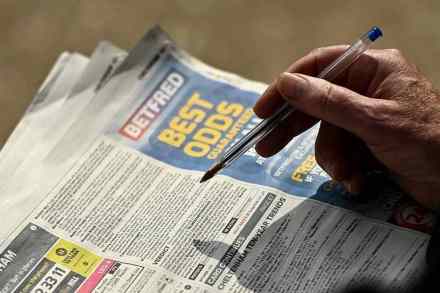
When I was 14 my father took me to a bookmaker’s and encouraged me to place a bet. He wanted to show me the futility of gambling, I think. Big mistake. I picked a horse called Maroof at 66/1 in the Queen Elizabeth II stakes at Ascot. My father put on 50p each way. Maroof romped to victory, no problem. ‘I think I’ve just ruined your character,’ said my father, not entirely joking, as he handed over the winnings. He had. I’ll forever associate betting with that triumph – the rush of joy I felt jumping up and down on the cruddy red carpet surrounded by Irish drunks and cigarette smoke. Heaven. We should have put more on. That was 1994. Britain changed a lot in the years that followed.

How does David Sedaris get away with saying the unsayable?

From our UK edition

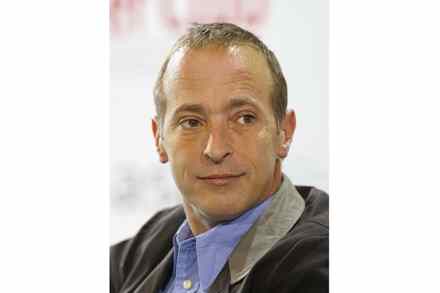
These aren’t diaries in the sense that Chips Channon kept diaries, or Samuel Pepys. They aren’t diaries at all, beyond the fact that each entry records an event and has a date and place attached. If a diary is a conversation with yourself, A Carnival of Snackery is a conversation with a crowd, because the observations it contains were written as material for David Sedaris’s shows. The entries, which begin in 2003 and continue to Christmas 2020, are therefore, as Sedaris admits, over-polished, and what we hear on the page is a spoken rather than a written voice.

Gay abandon: Filthy Animals, by Brandon Taylor, reviewed

From our UK edition

What does it mean to be a body in this world? It’s the question animating Brandon Taylor’s Filthy Animals. Our fleshy bodies and fragile minds complicate our experience of other people and isolate us from one another. As with Real Life, Taylor’s first novel, this short story collection displays his talent for rendering the precise inflection of a relationship while exploring the drama of the body. In ‘Potluck’, Lionel, a gay, black graduate student who has recently tried to commit suicide, meets Sophie and her partner Charles. Always ‘arriving at the moment just as it was ending and everyone was moving on’, Lionel connects with Charles and they sleep together.

A matter of life or death: Should We Stay or Should We Go, by Lionel Shriver, reviewed

From our UK edition

Leave or remain? That’s the question hanging like a cartoon sledgehammer over Lionel Shriver’s 17th novel. Although she makes merry with the parallels, her subject isn’t Brexit. It’s how long a person should choose to live. Should we allow ourselves to shamble, with gentle optimism, into decades when mental and physical decay are statistical probabilities? Or should we Take Back Control, and off ourselves before revolted strangers are required to wash our private parts at great cost to our struggling NHS? The characters Shriver charges with assessing the options are Cyril and Kay Wilkinson. We meet them in their early fifties as they return home after Kay’s father’s funeral.

Does the British government care about veterans’ suicides?

From our UK edition

Ex-veterans minister Johnny Mercer appears to have launched a one-man frontal assault on the UK government. Rarely a day goes by when he isn’t voraciously criticising their shoddy treatment of veterans. Speaking as a veteran and ex-British Army officer like Mercer, I can’t say I blame him. One tour of Afghanistan was enough to break me. Mercer did three. Mercer’s most recent broadside came after the news that the eleventh person from 2 Rifles, an infantry regiment that served in Iraq and Afghanistan, had killed himself. ‘That veterans who served in the bloodiest conflict this country has seen for 50 years are still taking their lives in 2021 because they cannot find help is a shocking stain on our nation,’ Mercer said after Andy Francis’ death.

A study in vulnerability: The Coming Bad Days, by Sarah Bernstein, reviewed

From our UK edition

When the unnamed narrator of Sarah Bernstein’s The Coming Bad Days leaves the man with whom she has been living because she can’t bear the sight of the tidy line of his shirt collars hanging in the wardrobe, she triggers an existential crisis that dominates this debut novel: ‘The notion that I was free in theory but also in practice to do whatever I liked with my life was terrifying: it was nothing short of a nightmare.’ She moves to a cottage, where she lives alone, worrying variously about the plight of women and the state of a world that is on fire or under water depending on the season.

Aintree is doing Rose Paterson proud

From our UK edition

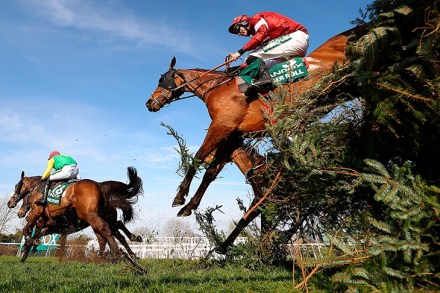
On Grand National Day at Aintree this Saturday, the Rose Paterson Trust will be launched. This time last year, Rose was the chairman of Aintree, and had to cancel the meeting because of Covid. In June, she took her own life. The purpose of the trust is to help prevent such events. Owen, her widower, is very frank. He believes that: ‘If Rose had been aware of the utter catastrophe she has wrought — the first victim being herself — she would not have done it.’ The worst is that it cannot be undone. It is a wound that time can do frighteningly little to heal. He says it is wrong to think of suicide only as something committed by obviously lonely and depressed people.

A Romeo and Juliet-like tragedy in Uttar Pradesh

From our UK edition

In the early hours of 28 May 2014 the bodies of two young girls were found hanging from the branches of a mango tree in the small village of Katra in India’s northern state of Uttar Pradesh. Their deaths caused outrage locally and attracted attention worldwide, as domestic and foreign media descended on Katra, the case gaining international notoriety less than two years after the gang rape of a young woman, Jyoti Singh, on a bus in Delhi in 2012. The Good Girls is a tragic tale, both in terms of what it reveals about village life and also about what women in India can expect in a society hidebound by tradition.

Suicide was always a spectre for John Berryman

From our UK edition

‘A matter that hurts me is that I have made many hundreds of people laugh, in various cities, during the last year or so, but not you — and your father is thought to be a wit.’ This was the poet John Berryman to his nearly-estranged son Paul in 1964. The hurt, off-kilter tone and the humble-brag speak to the Berryman one encounters in this capacious Selected Letters. One of the great extremists of a brilliant generation, which included Robert Lowell, Randall Jarrell and Elizabeth Bishop, Berryman’s entanglement of art and risk, his view of poetry as a ‘terminal activity’ and the artist’s life as one of self-annihilating labour, is present early, and enduringly. In 1936, just graduated from Columbia, Berryman writes to R.P.

Private tragedies: Must I Go, by Yiyun Li, reviewed

From our UK edition

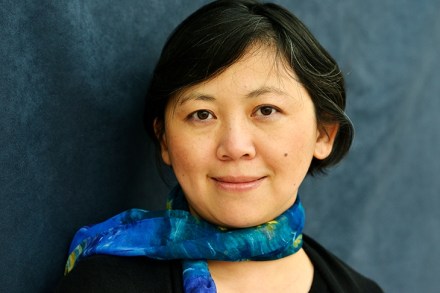
I can think of few novels as bleak or dispiriting as Yiyun Li’s 2009 debut, The Vagrants. Set in a Chinese industrial town in 1979, it opens with one woman’s death and closes with another. The pages in between are jammed with misery meted out by scalpel: treacherous friends, underfed children, craven officials, all have their turn upon the stage, while school choirs sing unfalteringly in praise of the communist party. Her latest book, Must I Go, is more cheerful, if only by a whisker. It’s the first time Li has set a novel squarely in her adopted America, with a faded Californian babe as its heroine. Lilia Liska is 81 and thrice widowed. She is spending her final years in a retirement village that she tolerates.

What is the relationship between truth and accuracy? The Lifespan of a Fact reviewed

From our UK edition

At the time, I’m sure it all seemed absolutely hilarious. It was in 2012 that W.W. Norton first published The Lifespan of a Fact, co-written by the essayist John D’Agata and his one-time fact-checker Jim Fingal. The book consists of an essay by D’Agata, ‘What Happens There’ — which tells the story of the death of a 16-year-old, Levi Presley, who killed himself by jumping from the Stratosphere Hotel in Las Vegas — plus Fingal’s meticulous marginal notes and comments. (The essay was apparently written for Harper’s magazine in 2003, which rejected it because of factual inaccuracies: it was eventually published in the magazine The Believer, fact-checked by Fingal, in 2010.

An astonishing treat: Dear Evan Hansen at the Noël Coward Theatre reviewed

From our UK edition

Dear Evan Hansen, by Steven Levenson, opens as a standard American teen-angst musical. Evan is a sweaty geek with a crush on Zoe Murphy whose rebellious brother, Connor, is so disturbed that he styles his hair to suggest ‘school-shooter chic’. Evan tries to befriend Connor but gets shoved to the ground. Then, a bombshell. Connor kills himself. By an amazing but credible coincidence Connor’s parents start to believe that Evan was good pals with their deceased son. And Evan exaggerates the depth of the friendship in order to help the family, and especially the mother, cope with their grief. He even fabricates an exchange of emails in which Connor appears to speak warmly about his parents and to express hopes for the future.

A matter of life and death | 11 July 2019

From our UK edition

One of the advantages that podcasts have over the scheduled array of programmes is the space that can be given to a subject, turning what would have been a one-off into a whole series sometimes three or four hours long. This can be offputting. Who has the time to give so much to one programme? Even more so now when there’s so much else on offer to distract and entertain. But in the case of the new podcast ‘dropped’ this week by the Beyond Today team those three hours (in six half-hour episodes) have been used to best effect, allowing the story to build, the voices to become clearer, the families and the horror of what they have experienced to become more real.

Dialogue with the dead

From our UK edition

When Yiyun Li first became a writer, she decided that she would leave behind her native language, Chinese, and never write or be published in it again. She has described this decision as being like a suicide. In languages, she suggests, we form our identities. Leaving one behind is a death of a version of our self; and starting afresh in a new language is a kind of rebirth. In Where Reasons End, the English language, in which Li has made her name as a Chinese-American author, has transformed into something the narrator can no longer depend upon.

The mask of death | 17 January 2019

From our UK edition

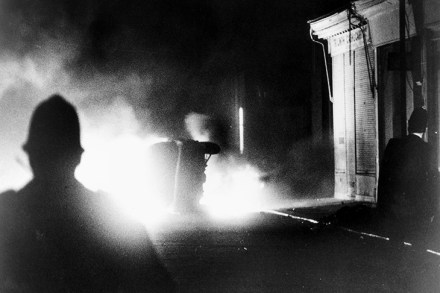
Here is a novel set in the no man’s land between past and present, a fertile and constantly shifting territory whose precise boundaries are unique for each reader. Its author, Jeff Noon, is probably best known for his intellectually adventurous science fiction (his first novel, Vurt, won the Arthur C. Clarke award) and also, to readers of The Spectator, as a crime fiction reviewer. The labels are unfairly reductive, however, since his work has never slotted neatly into genre categories. On the face of it, Slow Motion Ghosts looks as if it might buck the trend and be Noon’s first straight crime novel (if such a thing exists). Set in 1981, in the aftermath of the Brixton riots, the plot centres on the ritual murder of a young musician named Brendan Clarke.

No shrinking violet

From our UK edition

‘I have fallen in love many times in my consulting room,’ writes the psychotherapist Jane Haynes. ‘I do not mean that I want to have an explicit sexual relationship,’ she clarifies. That said, she describes herself as the Desdemona of the consulting room, falling in love as she listens to ‘someone share the pity of their history’. And like Othello’s stories that titillated Desdemona, Haynes’s narratives of her and her patients’ painful lives are compelling, if passing strange, particularly given that her profession is usually reticent about what goes on behind closed doors between shrink and shrunken.