Sport

Cameron, Villa and the succession

The Prime Minister is, as we know an Aston Villa fan. So we can expect him to be disappointed at Martin O’Neill’s departure. On his trip to Birmingham the other week, Cameron’s support for Villa caused the PM to, as the phrase has it, misspeak. He told the Birmingham Post that with “the Governor of the Bank of England as a supporter, the next King of England and the current Prime Minister, [Aston Villa] got a good set” of fans in high places. But his reference to the next King of England being a Villa fan will raise a few eyebrows as it is Prince William — not Prince Charles — who is the Royal Villain. Now it is obvious that Cameron just slipped up and that he didn’t mean to impart any information about the succession.

Over and out?

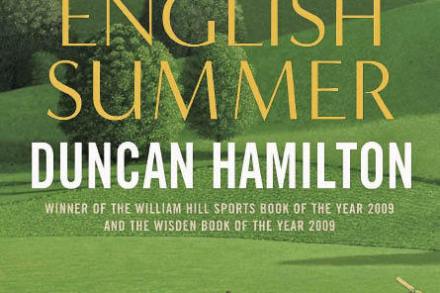
Cricket writing, in the age of professionalism, affords less room to dreamy scribes. Fact and revelation are preferred to style and reflection. The roaming tour diary is rare, ghosted autobiographies rife. There are notable exceptions, of course, and we can happily toss Duncan Hamilton among them. Hamilton is on a roll. He has won the William Hill Sports Book of the Year twice, in 2007 and 2009, the latter for his biography of Harold Larwood, chief executioner — and victim — of the infamous Bodyline tactic used to nullify Don Bradman’s Australians in 1932-33.

Never again should so much be wasted by so few

If you tire quickly of the tediously lengthy build up to Christmas, which starts about now, then heaven help you in dealing with two years of hyperbole about the 2012 Olympics. Even the most enthusiastic synchronised swimming fan will find it hard to imagine that the actual event will live up to the billing. And as a keen follower of sport (well, proper sport like football or motor racing), I hope that the London Olympics absolutely bomb.   I want half empty stadia, feeble athletic performances (particularly from British competitors) and embarrassingly low television viewing figures.

Teed off

There are those of us who, asked if we play golf, reply: ‘No, I like women.’ A relaxing game in pleasant surroundings it may be. There are those of us who, asked if we play golf, reply: ‘No, I like women.’ A relaxing game in pleasant surroundings it may be. But that disappears under a landslide of regulations about shirt collars and footwear, penned by men who boast of ‘values’ yet are happy only when everyone in sight is Exactly Like Them, and not just in terms of gender. Maurice Flitcroft loved the game with a passion. Regulations less so. A crane driver at Vickers shipyard in Barrow, Flitcroft reached his forties before discovering golf.

Odd men out

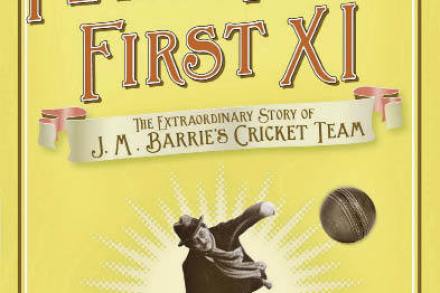
The first game played by the Allahakbarries Cricket Club at Albury in Surrey in September 1887 did not bode well for the club’s future. The first game played by the Allahakbarries Cricket Club at Albury in Surrey in September 1887 did not bode well for the club’s future. One player turned up wearing pyjamas, another held the bat the wrong way round while a third — a Frenchman — thought the game had finished every time the umpire called ‘Over’. The Allahakbarries were skittled out for just 11 runs and under the circumstances it seemed entirely appropriate that the team’s name should have been derived from the Moorish phrase for ‘Heaven Help Us’. However, the team’s captain, the playwright, J. M.

Morgan in Parliament? Surely not!

Is Piers Morgan going to be an MP? I suspect that this is one of those questions to which, as John Rentoul would tell you, the answer is no. (UPDATE: Indeed it is!) So Fraser has to be joking, right? I mean Piers Morgan is ubiquitous enough as it is without raising the chill prospect that he might make it into parliament? That said, Morgan is right to suggest that vastly increasing the provision of sport in schools is something most people should be able to agree upon. Doing so, mind you, would a) be hugely expensive, b) exceedingly difficult and c) be bound to further annoy the teaching unions. Those aren't reasons for not making kids exercise but actually making that happen is much harder than people might assume it would be.

The changing face of English football

As Fraser said earlier, we've got a great piece by Mihir Bose in the latest issue of the mag on British football's debt crisis.  I would normally say that non-football fans should look away now, but the story is so redolent of the entire financial crisis that it's worth any CoffeeHouser's time.  What you'll find is a tale of big clubs, big egos and even bigger debts – the latter running into billions of pounds. Much of this debt has been down to financial brinkmanship on the part of football club owners and chairmen.  Even though money has been pouring into the English game from global television deals and the like, they've been spending money to buy players, and fund wage structures, that they simply can't afford.  This has left many clubs close to ruin.

Autumn Rugby Round-Up

So, now that the autumn internationals have been completed, we can assess who's best advanced their preparations for the Six Nations this spring and, longer-term, the next World Cup which, while still distant, is now within sight. In descending order, then, of satisfaction (not quite the same as achievement), the rankings might go something like this: 1. Ireland: The only northern hemisphere side to survive November unbeaten, even if they were mildly fortunate to escape with a draw against Australia. Better than anything on the scoreboard, however, was the emergence of Jonny Sexton as a true international-class fly-half. Next projects: finding a fresh tighthead prop and a genuine open-side flanker.

Fun and games

Sport, say those who write about it, is only the toy department of daily journalism. They don’t really mean it. Some of the finest wordsmiths in what may still be called Fleet Street earn a crust by writing about games, and the people who play them. In some cases — the late Ian Wooldridge comes to mind — they transcend their specialism. People bought the Daily Mail to read Wooldridge, just as they buy it now to read Quentin Letts. In recent years sports journalism has been invaded by outsiders who, to borrow a phrase from Paul Hayward, one of its finest practitioners, display nothing more than ‘strident ignorance’. They don’t attend events, or know very much about the performers, yet hand out opinions like parking tickets.

Department of Equine Hyperbole

Sea the Stars winning the Arc de Triomphe at Longchamp. Photo: Michael Steele/Getty Images. So long, then, Sea the Stars. A shame you won't run as a four year old or in the Breeders' Cup but hardly a surprise that you're heading straight for the stud farm. The BBC News last night suggested you were the greatest horse we'd ever seen and an editorial in today's Times suggests you may "without much quibble, be considered the greatest" of all champions. This is a typically unecessary piece of hyperbole. It doesn't diminish Sea the Stars one bit to note that there is room for quibble here. Comparing horses from different generations is even more difficult than measuring human athletic achievements across the years, not least because even the ratings don't pretend to tell the full story.

The Greatest

Wow, that really was something.  Just like last year's Wimbledon final, Roger Federer's 5-7 7-6 7-6 3-6 16-14 victory over Andy Roddick has to go down as one of the greatest, and most nerve-wracking, contests in tennis history.  A spectacular way for Federer to claim his fifteenth Grand Slam title, breaking Pete Sampras's record in the process. UPDATE: Ok, so it looks as though I have a bit of explaining to do here.  Most CoffeeHousers comment below that the match was actually a boring slog-a-thon, and paled in comparison with other Wimbledon finals.  First, I stress that the headline - "The Greatest" - is referring to Federer and his record-breaking fifteenth Grand Slam title, rather than the match itself.

No longer beautiful

To some it might seem unbelievable that a goal scored at a football match at Anfield between Arsenal and Liverpool 20 years ago could be the event around which anyone could write an entire book. But this is exactly what Jason Cowley has done. Despite a childhood spent in the East End, and with a West Ham- supporting father, the author has been, from an early age, an avid Arsenal fan and wears his Arsenal shirt under his jacket when standing with his father at Upton Park. This book is certainly not just for Arsenal or Liverpool fans but for all who want to reflect on the huge changes which have taken place in the culture of football over the past 20 years. The watershed year was 1989.