Mark Littlewood

Osborne made a start on deregulation, but there’s a long way to go

From our UK edition

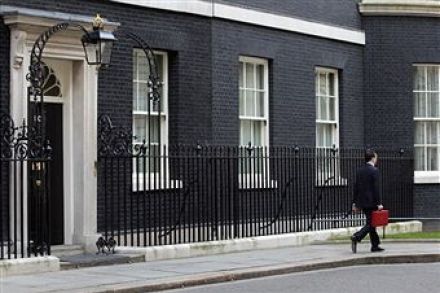
This was always going to be a rather modest budget. Having set out the Comprehensive Spending Review last year, the government had already decided its broad plan; we were never going to see much more than some minor tinkering. Nevertheless, as a budget billed as a serious driver for growth, it is a disappointment. George Osborne seems to have a reasonable understanding of the problems that need tackling, but he seems shy of solutions. Concerned about the regulatory burden on business and enterprise, the Chancellor announced that he would reduce the cost of compliance by £350m. But, even on his own figures, this is a tiny slice of the £90bn overall cost to companies. Cutting red tape by 0.
Plurality or not?

From our UK edition

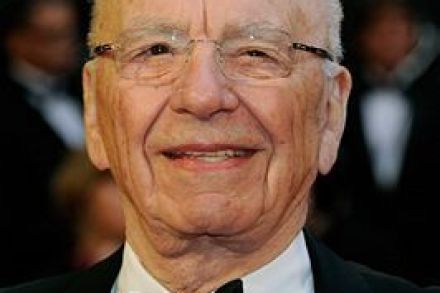
With all the provisos attached to News Corp’s takeover of BSkyB, opposition to the deal has surely now been diluted. But there are, perhaps, two groups who can still legitimately complain about the outcome.   Firstly, those of us who believe that unrestricted freedom of speech is vital in the TV broadcasting arena. The Murdoch empire has had to surrender its news channel in order to, essentially, buy a profitable platform for broadcasting sport and movies. This is seriously disturbing for anyone who feels that the BBC’s output of ‘neutral news’ needs to be challenged. The only major independent broadcaster – ITV – gave up long ago with their own news channel. Only Murdoch ran an alternative news platform, and at a massive loss.

How truly liberal is the coalition government?

From our UK edition

Mark Littlewood is Director General of the Institute of Economic Affairs and contributed an article to the recent collection Big Brother Watch: The state of civil liberties in Britain. He summarises his argument here. It’s not fanciful to argue that the formation of a Liberal-Conservative coalition government last May was helped by the fact that Lib Dem and Tory parliamentarians had worked closely together in the previous Parliament to thwart or temper some of the Labour administration’s more aggressive assaults on civil liberties.

Why education should be for profit

From our UK edition

Michael Gove’s free schools programme has been heralded as the cutting edge of the coalition’s structural reform programme. Removing the dead hand of the state and allowing new schools to emerge makes the Big Society project tangible at least. But already – and unsurprisingly – the reforms are running into difficulty. By the end of the summer, only 62 schools had applied for “free school” status. They will all be run on a not-for-profit basis. Perhaps, just perhaps, this is the start of a cascade. But it’s doubtful. If you want real innovation and improvement in the educational sector, people need to be able to make money out of it. That would surely bring about a flood of exciting, new entrants to the market.

The Big Society is a threat to Labour

From our UK edition

If you think there really is a big idea behind the Big Society, then you agree with the unlikely pairing of Jon Cruddas (Lab, Dagenham) and Jesse Norman (Con, Hereford). The latter's new book, The Big Society: The Anatomy of the New Politics, attempts the seemingly impossible task of providing a grand philosophical narrative to underscore David Cameron's often amorphous rhetoric. Cruddas and Norman debated at the Institute of Economic Affairs last night, alongside the IEA’s Professor Philip Booth and Dr Steve Davies. The ninety minute discussion did more to expose the philosophical fault lines in modern British politics than any public event I’ve attended since the General Election.

Going beyond the IDS reforms

From our UK edition

Iain Duncan Smith deserves credit for fully understanding the nature and scale of the welfare problem. But that’s the easy bit. Finding a solution with the right balance of carrot and stick and making it somehow affordable in these austere times is the tougher part of the equation. And it’s not at all clear that the IDS proposals have either enough carrot or enough stick.   He has certainly gone some way to tackling the lunacy of huge withdrawal rates – if by entering the workforce your new post-tax pay packet is less than the benefits you stand to lose, then don’t be surprised when an entrepreneurial work ethic fails to emerge in some of the country’s poorest areas.

Finding a narrative of hope

From our UK edition

In these grim dark days of austerity and cuts, the coalition urgently needs to find a compelling political narrative of hope and optimism. David Cameron's Big Society rhetoric occasionally threatens to contain some philosophical depth, but suffers from the same problem as most new fangled analyses of the world. Namely, it is so fluffy that it becomes bewildering.   To the government's credit, they have managed to prepare the public for the upcoming belt tightening. This achievement is all the more remarkable given the woeful refusal of either coalition party to admit the scale of the fiscal problem facing Britain during the general election campaign.   But softening up public opinion for wide ranging cuts is only a short term tactic, however necessary.

A solid enough start

From our UK edition

The Liberal-Conservative administration deserves to pass its 100 day probation. It hasn’t done much yet, but it has said some of the right things and sounds like it might even get round to doing a few of these things at some point in the not-too-distant future. I’d pretty much accept that from a new staff member, so I guess I should be half-pleased that I seem to be getting this level of performance from my government. The coalition partners were right to shelve their timid pre-election rhetoric about the size of the hole in the public finances. The Liberal Democrats’ implausible insistence that cuts shouldn’t start until next year was ditched as soon as they had “looked at the figures”.

Never again should so much be wasted by so few

From our UK edition

If you tire quickly of the tediously lengthy build up to Christmas, which starts about now, then heaven help you in dealing with two years of hyperbole about the 2012 Olympics. Even the most enthusiastic synchronised swimming fan will find it hard to imagine that the actual event will live up to the billing. And as a keen follower of sport (well, proper sport like football or motor racing), I hope that the London Olympics absolutely bomb.   I want half empty stadia, feeble athletic performances (particularly from British competitors) and embarrassingly low television viewing figures.