Sport

The Spectator at war: Maintaining the machinery of sport

From our UK edition

The Spectator, 22 August 1914: WHEN so great a business as war comes upon England, the sports and games of the country fall into their proper places. Cricket has been packed into an obscure corner of the daily newspaper. Golf clubs have expended their activities largely in trenching vacant ground, and in forwarding subscription lists to the Prince of Wales's Fund. The Scottish Football Union, sending its contribution to the Fund, exhorts its members to prove what they may owe to the discipline and self-control given by the game. But these games—just because they are merely games—are less seriously affected than other country activities.

What does Duncan Fletcher actually do?

From our UK edition

Some years ago, when the last Conservative government was limping towards defeat, someone published a book called 101 Uses for a John Major. It was cruel and fairly funny, the premise being that since he couldn’t run his party, there must be some other way he could be employed. Perhaps an Indian publisher is considering a new version after the country wilted in the Test series this summer: 101 Uses for a Duncan Fletcher. What does the India coach actually do? He called his memoirs Behind the Shades, a vain and self-regarding title, but quite what has been going on behind those shades this summer has been a bit of a mystery.

Spectator letters: A defence of nursing assistants, a mystery shotgun, and a response to Melanie Phillips

From our UK edition

Poor treatment Sir: Jane Kelly’s article (‘No tea or sympathy’, 2 August) on the lack of empathy and emotional support shown to patients is humbling. It is also worth noting that showing patients a lack of compassion has wider consequences. We know for instance that around 13,000 cancer patients feel like dropping out of treatment each year because of how they are treated by staff. In other words, it could risk their lives. It is unfair to say, however, that the nurses who used to be ‘angels’ have been replaced by the ‘mechanistic bureaucrats’ of assistants.

Why squash deserves a place in the Olympics

From our UK edition

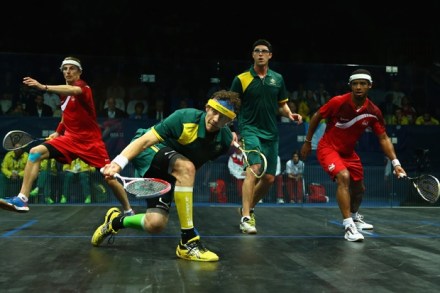
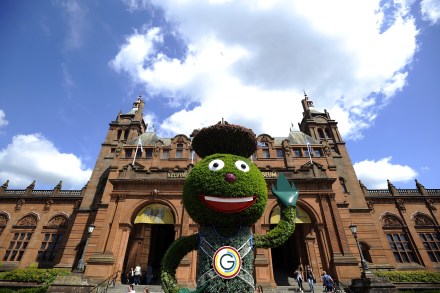
Thank god for the Commonwealth Games: at least they gave us a brief respite from football transfer stories. Instead of having to read about an 18-year-old defender being bought by Overambitious Wanderers for the GDP of a medium-sized African nation, we could delight in Norfolk Island beating South Africa at lawn bowls, Kiribati and Nauru winning medals in weightlifting or Sri Lanka sharing a rugby pitch with England and Australia. It was a reminder of the brotherhood (and sisterhood) of sport and made me nostalgic for the days before the money men took over football, rugby and cricket. (Yes, especially cricket: have you noticed we don’t have a drinks break any more but a Buxton hydration break, and tea is now the Yorkshire Tea interval?

Moeen Ali reminds us that sometimes sport is the only place for politics

From our UK edition

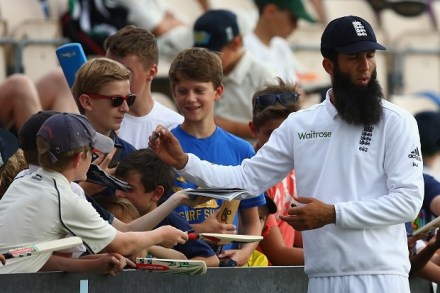
Moeen Ali, the England cricketer, faces a possible reprimand after the International Cricket Council (ICC), the game’s governing body, censured him for wearing two wristbands, one saying ‘Save Gaza’, the other ‘Free Palestine’. International cricketers are, you see, prohibited from making political statements on the field. The English Cricket Board, which is not above making political statements (as its various boycotts of Robert Mugabe’s Zimbabwe suggest), dissents from the ICC’s view, and says that Moeen’s stance is ‘humanitarian not political’. What, then, of ‘Save Gaza’ and ‘Free Palestine’? There is politics here. And, yes, it is partial.

Simon Barnes: The England cricket team is playing out Don Giovanni

From our UK edition

Simon Barnes has written the diary in this week’s issue of The Spectator. Here are his opening two paragraphs: ‘Sport is like love: it can only really hurt you if you care. Or for that matter, bring joy. You can’t explain sport, any more than you can explain the Goldberg Variations: you either get it or you don’t. So it can be hard to justify a life spent among bats and balls and leaping horses. I spent 32 years writing about sport for the Times, the last 12 as chief sportswriter, all of which comes to an close at the end of this month when I become News International’s latest economy, doomed to wander Fleet Street (is it still there?) wearing a luggage label that reads ‘Please look after this bear’. What shall I write about in my last week?

Simon Barnes’s diary: A sportswriter is never without a big subject (unless it’s golf)

From our UK edition

Sport is like love: it can only really hurt you if you care. Or for that matter, bring joy. You can’t explain sport, any more than you can explain the Goldberg Variations: you either get it or you don’t. So it can be hard to justify a life spent among bats and balls and leaping horses. I spent 32 years writing about sport for the Times, the last 12 as chief sportswriter, all of which comes to an close at the end of this month when I become News International’s latest economy, doomed to wander Fleet Street (is it still there?) wearing a luggage label that reads ‘Please look after this bear’. What shall I write about in my last week?

Alastair Cook is world class. Steven Gerrard isn’t

From our UK edition

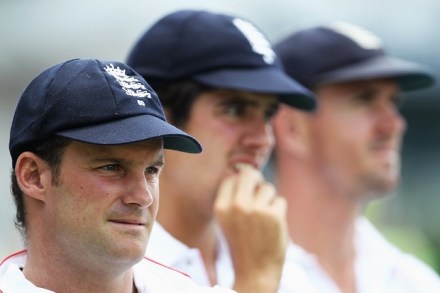
This time last year, England’s cricketers were 2-0 up against Australia, two thirds of the way towards their third consecutive series victory in sport’s longest-established international contest. Not quite top of the world, they were nevertheless a good team in the prime of life. The winter before, they had beaten India on their dusty pitches, quite an achievement. What a falling-off there has been. Since the turn of the year, England have lost Graeme Swann, Jonathan Trott and Kevin Pietersen, three senior players, to retirement, mental fragility and banishment. They have also lost seven of their last nine Test matches, the latest against India at Lord’s by 95 runs after they had won an important toss.

The political implications of the Commonwealth Games in Glasgow

From our UK edition

Several people have asked me to write something about the politics and potential implications of the Commonwealth Games which open tonight in Glasgow. As is sometimes the case, I am happy to oblige. There aren't any. To think otherwise is to insult the great Scottish public. I am often prepared to do this, not least because it often needs to be done but in this instance, and not for the first time, the people are liable to be more sensible than the pundits. Back in the day, it was sometimes claimed that the campaign for (modest) home rule in 1979 was scuppered by Scotland's woeful (yet epic!) misadventure in the 1978 World Cup. I've always thought that theory insulted the electorate.

Why we’ll mostly be supporting Germany on Sunday

From our UK edition

If you’re walking through any built-up area in England between 8 and 10pm this Sunday and you hear a cheer you can be pretty sure it means one thing – Germany have scored yet again. One of the great myths we were fed as children in the 1980s and ‘90s was that the English don’t like the Germans, and in particular the living representatives of all things Teutonic on earth, the German national football team. We love ‘em, and I imagine most English people will be supporting Germany on Sunday. I remember being stuck in the countryside in 2006 and watching the Argentina-Germany quarter-final in a pub; the place went wild when Germany equalised and then won.

So are public-sector workers really underpaid?

From our UK edition

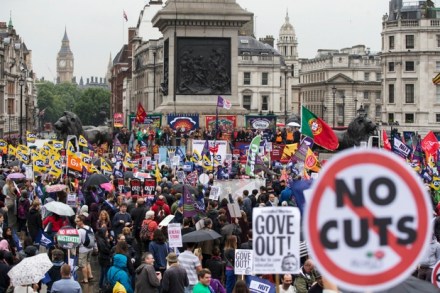
Public benefit Public sector unions held a strike over pay. How well are public-sector workers paid compared with their counterparts in the private sector? — Comparing jobs like for like, public sector workers earn between 2.2% and 3.1% more than private sector workers in April last year. — In the lowest-earning 5% of workers, public sector workers earned 13% more than private sector workers. — In the highest-earning 5%, public-sector workers earned 6% less than private sector ones. Source: ONS Fine, fine, fine Network Rail was fined £53 million for running late trains. We are used to public authorities fining us, but how much do they fine each other? £2.5m: Fine imposed upon York hospital by government for missing A&E targets.

World Cup diary: England’s obscenely rich footballers don’t give a monkey’s

From our UK edition

What a fabulously boring England performance. I watched it only because I had this to write and now feel resentful towards you, which is unfair. Because I don’t suppose you want to hear anything about it, really. The inquest into our national team’s appalling performance at this World Cup (“I couldn’t have asked for any more from the players” – ©Roy Hodgson, every game. Well in which case, mate, you’re the wrong bloke for the job.) has of course already begun. It is being said that Woy has been given an easy ride – which is a way, I suppose, of not giving him one. But when we look for the reasons it’s worth remembering this.

When Geoff Boycott was a DJ in a Sydney nightclub

From our UK edition

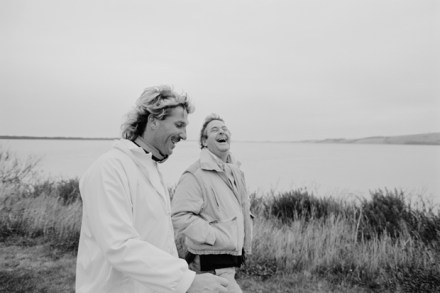
Sport isn’t about putting a ball into a net or over a bar or into a hole. It’s about the people who are trying to do those things. Frank Keating, late of this and several other parishes and now just late, understood that truth, which is what made him such a great sports writer. Matthew Engel explains in the introduction to this anthology that his old colleague ‘liked sportsmen and made lasting friendships with them. This would be impossible nowadays.’ Most of the pieces report on those friendships rather than on matches: by portraying sportsmen as they were off the pitch Keating revealed what made them succeed on it.

World Cup diary: Italy were poor but England were worse

From our UK edition

Another fairly unpleasant evening spent watching England playing football. Ah well. It used to be that England were renowned for two things: we could score from set pieces, and we knew how to defend set pieces. In fact we rarely scored from open play – but give us a corner, or a free kick, and suddenly we became dangerous. Similarly, we rarely conceded from set pieces. This was a consequence of the English game, I suppose. Against Italy we conceded from a set piece in fairly lamentable fashion. Worse, though, was the endless parade of wasted corners and free kicks. I don’t know how many corners we had in the second half – maybe eight? Only one found the head of an England player.

World Cup diary: Was the ref playing for Brazil?

From our UK edition

Suspicions that FIFA is an organisation given, occasionally, to a bit of corruption will not have been allayed by the first match of the 2014 World Cup. Brazil won with two goals from a player who should have been sent off, including a penalty which clearly wasn’t a penalty, while Croatia had a perfectly good goal disallowed and were denied a rather more clear cut penalty themselves. Incidentally, I say “Brazil” – and so do ITV. So do FIFA. And so does the OED, Wikipedia and Google. But not the BBC. The BBC says “Brasil”. Of course it does.

State of the Union – not good

From our UK edition

Mr S attended the international rugby union 7s tournament at Twickenham on Saturday, which was graced by some 76,000 people – mostly yuppies on the razzle by the look of things. I regret to report that this crowd of genteel, if beery, English people loudly and roundly booed the Scottish team. The Scots ran in several tries against the hapless Portuguese, and each score was met with open resentment, while every Scottish handling error, missed tackle or infringement was cheered with glee. The noise was shattering, the atmosphere hostile. No other team received a barracking (as is right: booing is abhorrent). Even the Australians, who are the default villains at Twickenham, were given a measure of respect.

What’s right with Saracens — and José Mourinho’s Chelsea

From our UK edition

It’s hard to love Saracens rugby club — their centre is called Bosch, a word that also describes their bulldozing style of play — but you have to admire the demolition job they did on Clermont Auvergne in the semi-finals of the Heineken Cup. The flamboyant French side, free-runners to a man, had 68 per cent of possession, 64 per cent of territory and yet were tackled into impotence. Clermont limped off the Twickenham turf, stuffed 46–6. The English club play Toulon, the defending champions, in the final in Cardiff on 24 May and again I will be supporting the French team, not just  because this will be the last match of Jonny Wilkinson’s career.

Hancock’s half hour on the treadmill

From our UK edition

Osborne protégé Matt Hancock has climbed rapidly up the government ranks; leaving plenty of enemies in his wake. The ruthlessly ambitious Education and BIS minister is always in a hurry; but that does not look like it has done him much good for an actual race: ‘When Haverhill decided to host its first ever half marathon I thought it only right, as the local MP, to sign up to it myself. Now only 4 weeks away it’s certainly crept up on me. I am running for St. Nicholas’ hospice in Bury – a fantastic hospice that helps so many families in Suffolk.’ Jokes aside, you can sponsor Hancock here.

A Tragedy at the Theatre of Dreams, starring David Moyes

From our UK edition

And so the axe fell and the crowd cheered for they loved nothing more than a good beheading. They had been waiting for this execution for some time and would have grown restless if they had been denied their head very much longer. Now the deed is done and they are booting David Moyes's napper up and down the Stretford Road. We all knew it was coming and Moyes, being an intelligent man, must have known it too. His ten month reign at Manchester United has been perhaps the greatest - and also grimmest - drama since Brian Clough's ill-fated 44 days in charge of Leeds United. Hello David Peace, you have your subject now. Paradoxically, one of the few souls to emerge from this Tragedy in the Theatre of Dreams with their dignity intact is Moyes himself.

In defence of the Boat Race

From our UK edition

It’s Boat Race time again and as soon as the BBC starts its broadcast on Sunday there will be those who invade Twitter and such places, having a moan faster than the Bullingdon Club can trash an Oxford curry house. Why’s it always the same two teams in the final? The more strident will demand why licence fee payers’ money is being spent on a private race that’s of no interest to anyone who wasn’t educated under one set of dreaming spires or the other. It’s amazing how many people went to Oxbridge, in that case. Why do more than seven million viewers tune in each year, and why has the BBC just renewed its contract for another six years? Why are the riverbanks rammed solid with spectators for four miles?