Sport

A Carve-Up That’s Just Not Cricket

From our UK edition

By god, you know matters have come to a wretched pass when you feel inclined to defend and protect the International Cricket Council. And yet, remarkably, such a moment is upon us. Like the old Roman republic, the ICC is threatened by a triumvirate. In this instance, Crassus is represented three times as India, England and Australia bid to carve up cricket's empire between themselves. Few people doubt change is needed. The ICC has been broken for ages. It is easy to conclude that it has outlived its usefulness. Nevertheless, that does not mean any proposed alternative is going to produce better outcomes for cricket. The proposals for reforming cricket's governance and, more pressingly, its finances are mooted in a 21 page paper that, usefully, has been leaked. You can read it here.

A time for despair but not for panic

From our UK edition

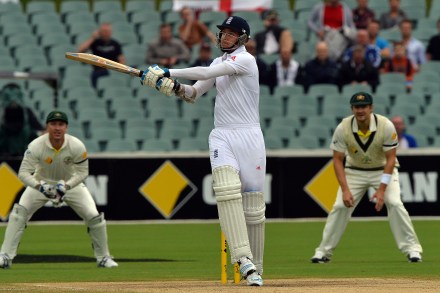
All winning cricket teams are alike; each losing cricket team loses in its own way. It doesn't matter, right now, that Shane Watson and Michael Clarke will never be chums just as it did not matter very much, back in the day, that Shane Warne and Adam Gilchrist couldn't stand one another. Victory spawns solidarity. Happiness too. We are wired to over-react to defeat and under-react to victory. England have been trounced in Australia. Battered in Brisbane, assaulted in Adelaide and pummelled in Perth. The tour has become a travelling horror show and, god help us, there are still two tests left. A 5-0 whitewash is a distinct possibility. Don't believe anyone who suggests the Aussies might ease up now the little urn is back in their possession.

A crucifixion in the City of Churches

From our UK edition

Here we go again. Time for another round of that perennial game so wearily familiar to England cricket supporters: Hunt the Positives. It is a mean game because, most of the time, there aren't any. Certainly not today. England were abject in Adelaide. Scarcely any better than they had been in Brisbane. If, borrowing from Evelyn Waugh, we classify sides as Leading team, First-Rate team, Good Team and Team we must acknowledge that England, at present, rank as Team. And as Mr Waugh would have put it, Frankly, Team is pretty bad. Less a team, in fact, and more a rabble. With the exception of Joe Root's second-innings knock England can take nothing but misery with them as they cross the Nullarbor Plain to Perth.

Champagne sales point to stable recovery at Gold Cup

From our UK edition

Green shoots were visible in Newbury on Saturday for the 57th Hennessy Gold Cup. While brandy cocktails warmed the punters in the Fred Winter Suite, Rob Brydon and Martin Clunes chatted up Joan Collins, who, despite being the most famous person in the room, was wearing a name badge. Myleene Klass displayed a lack of class when posing for a photograph with Princess Anne. And Tinie Tempah might want to have a word with his tailor: the rapper’s trousers were cut off half way up his shin and he must have been freezing without any socks on. Mr Steerpike feared that he might have had one too many nips of the Paradis Imperial when he saw the diarist from the Times singing a duet of Memory with Elaine Paige. But I’m reliably informed that this actually happened.

Massacre at the Gabbatoir

From our UK edition

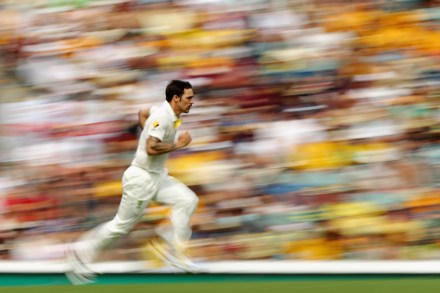
Don't say you weren't warned. You were. "Australia will win at least one test this winter...England will have a bad test or Australia an extremely good one...This is an Australian side learning who it is. There are signs of improvement, signs that on their day they could be formidable. (The question being, as before, how many of those days there will be). Meanwhile, England are solid but not perhaps quite as good as they think they are. Brilliant individual performances saved the English collective in this series. They are not a team in transition but nor are they quite a team going anywhere." That was this blog's verdict on the last Ashes series. England's 3-0 victory was both clear-cut and less than it seemed.

Sachin Tendulkar is among the very greatest sportsmen, but heroes are made to be surpassed

From our UK edition

It was the sort of summer’s day that makes you glad to be alive; but we were watching the telly. We would not normally do this. If the weather was fine, we would play games of catch on the lawn: my 4-year-old self hurling any object that came to hand at my 78-year-old grandfather. The old man would leap about for my amusement, often careering into my parents’ sacred flower beds. He would pooh-pooh my father’s concerns about the wisdom of these exertions, and ignore my grandmother’s distress over the ruin of ‘yet another pair of trousers’. My delight would urge him to even greater theatrics when their backs were turned.

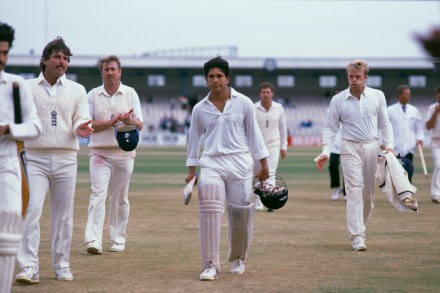
Farewell to the Little Master: we will not see the likes of Sachin Tendulkar again.

From our UK edition

As you know, only seven batsmen have scored more than 50,000 first-class runs. Hobbs, Woolley, Hendren, Mead, Grace, Sutcliffe and Hammond are untouchable. We shall not see their like again. The game changes and old records written on parchment are left unmolested, gathering dust. Comparisons between the great players of a single era are troublesome enough; fashioning them between the cricketers of the prelapsarian past and those of today is an exercise easily considered futile. And yet the hunger to do so is a craving that can never be wholly pacified. The 50,000 run mark is an arbitrary figure, for sure, but if you add-up all the runs scored in all accredited forms of senior cricket you find only another eight batsmen have plundered bowlers for more than half a hundred thousand runs.

I’m ashamed of myself

From our UK edition

On waking up (at noon) on Thursday morning, I found I had a text from one of my fellow History freshers. Sent at 6am and accompanied by a screenshot of a half-finished essay: ‘WHY am I still up?!’ The all-nighter is a notorious Oxford experience, and not one I thought I would ever have to sample. ‘I’ll be fine getting the work done at university,’ I blithely assured those warning me of how unstructured a History student’s life is, ‘I like to keep busy.’ What I failed to appreciate is that it’s impossible not to be busy at university. School without lessons was dire — by Tuesday afternoon of the pre-Christmas week of ‘fun’ I had lost the will to live, let alone make Chemistry-themed paper-chains.

Ed Miliband supports the Boston Red Sox. This is all anyone need know about him.

From our UK edition

It is, of course, beyond dismal that the Boston Red Sox won the World Series last night. The only upside to this is that it ensured the St Louis Cardinals, the National League's most pompous franchise, lost. It is a very meagre upside. The Boston Red Sox: insufferable in defeat, even worse in victory. It comes as no surprise, frankly, that Ed Miliband is a devoted member of what is teeth-grindingly referred to as the Red Sox Nation. Dan Hodges and James Kirkup each salute Ed's willingness to embrace a cause as unfashionable as baseball. Why, it's charmingly authentic! Better a proper baseball nerd than a fake soccer fan. There is, I concede, something to this.

Anti-Murray mania in Essex

From our UK edition

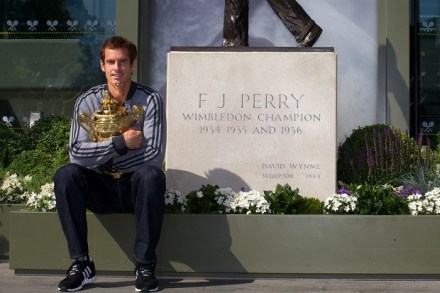
Andy Murray may have crashed out of the US Open; but last time I checked he was still a hero in this land after 12 months of triumph. All of which makes the recent travails of Conservative MP David Amess rather odd. A complaint to the PPC shows that his local paper, The Southend Echo, made an erroneous claim about him wanting Murray to be knighted, after he was subjected to public abuse. The paper has since grovelled and apologised; but at least it exposed its patch as being the most anti-Murray part of the country.

Golf’s $10 million nobodies

From our UK edition

Golf has reached the eye-watering end of the season in the United States. By Sunday night, one man in a baseball cap will walk off the 18th green in Atlanta $10 million richer. This week is the final event in the FedEx Cup play-offs, a four-week season-within-a-season on the American Tour in which a total of $67 million is up for grabs for the top 125 players. Not a bad reward for a sunny afternoon trying to put a white ball in a hole in fewer strokes than everyone else. Being a golfer is one of the few jobs where the less work you do the richer you become. As Alan Partridge in his sports interviewing days put it to one of the world’s finest players, ‘So, Seve Ballesteros, only 63. Not very good is it? Everyone else has got a lot more.

The flammability of dwarves

From our UK edition

An Aussie rules footballer was apparently in trouble for having set fire to a dwarf who had been booked to entertain the team at an end of season party. Clinton Jones saw the diminutive Blake Johnston capering around and, being a half-wit, couldn’t resist applying a gas lighter to his backside. Whooooof, went the dwarf. Quite rightly Jones has been carpeted by bosses and forced to pay compensation. Too few people understand that dwarves are highly flammable - and some will actually explode if exposed to a naked flame. If you are being entertained by a dwarf it is a good idea to spray them with a fine mist of water, in order to keep them damp and therefore safe. Never, ever, allow a dwarf onto a garage forecourt – keep him locked in the car while you fill up the tank.

Ashes to Ashes, Dust to Dust, if Pietersen don’t get ya, the ICC must.

From our UK edition

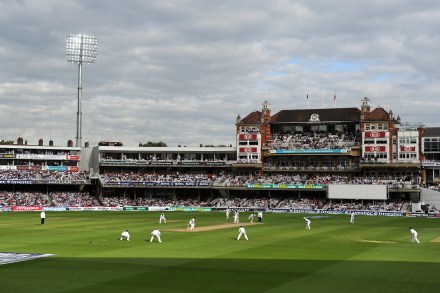
It was pretty dark. Darker, in fact, than it had been when the players were hauled off for bad light earlier in the test. Darker, too, than it had been in Manchester when Michael Clarke objected to the umpire's decision to halt play on account of the light. But so what? Was there any evidence that continuing to play would constitute an "obvious and foreseeable risk to the safety of any player or umpire, so that it would be unreasonable or dangerous for play to take place"? That is what the laws demand; it remains a mystery why this is not the standard umpires actually use. The England batsmen did not think conditions dangerous. We have all seen test cricket played in murkier conditions than those pertaining in south London last night.

Suddenly, the future of British golf looks bright

From our UK edition

Were you still up, as they used to say about Portillo in the 1997 election, for Hedwall? It was well past midnight on Sunday, the sort of hour when all good Spectator readers should be tucked up in bed — or when the really good ones are thinking about heading home — that Caroline Hedwall, a young Swedish golfer, made a birdie at the 18th hole of Colorado Golf Club that meant two unprecedented things. For the first time on American soil, Europe could not lose the Solheim Cup, the women’s version of the Ryder Cup, and Hedwall had become the first player to win five matches out of five in the competition. Never mind the Ashes or the Lions tour, which were both against fairly weak Australian opposition, this was the outstanding team performance of the year.

Australia are just New Zealand in disguise (plus Michael Clarke and Ryan Harris)

From our UK edition

Thumping Australia is grand; thumping Australia without playing well almost feels like cheating. But in a good way. This is where England find themselves today. The Ashes are safe for another few months and England have not had to be very good to keep them. Which is just as well, frankly, since even though they are unbeaten in 12 tests England are not quite as good a side as they like to think they are. They are good enough to defeat these hapless Australians, however. The Australians are basically New Zealand in disguise. Like New Zealand they are a side good enough to get themselves into good positions but not a side good enough to take advantage of those good positions.

Football’s still the big boy in the playground – even when the big boys aren’t playing

From our UK edition

It’s been a long, hot, soccerless holiday. There has been football about — the women’s European Championship, for example, and various age-group tournaments, all of which England departed with undue haste — but not the proper stuff. There hasn’t been a tournament where players can ‘put themselves in the shop window’ or prove that they have what it takes ‘at the highest level’ for any club with a fat chequebook and a friendly press. Youth football, even women’s, is all very well but it doesn’t pay the bills. Men’s professional football is, sadly, the big kid in the playground of sport.

Some brilliant book reviews

From our UK edition

As ever, the Spectator carries some splendid and erudite book reviews this week. There are contributions from stellar writers and thinkers such as Margaret MacMillan, Susan Hill, Alexander Chancellor and John Sutherland. Here is a selection. Margaret MacMillan is captivated by Edwardian Opulence: British Art at the Dawn of the Twentieth Century, a ‘lovely lush book’ edited by Angus Trumble.

I’m sick of sponsoring you to suffer

From our UK edition

Within waving distance of blessed solid ground, Susan Taylor lost her bid to swim the Channel — and, with it, her life. She was 34 years old, brainy and beautiful, gifted and giving; it is, indeed, a peculiarly bitter irony that it was the giving that killed her. For years she had been an avid fundraiser, facing all manner of challenges in charitable effort, and for this, her final swim, she even gave up her job as an accountant to train: admirable in intent, courageous in execution. What I find less admirable, however, is the general acceptance that this kind of stunt is a reasonable and even a desirable way to raise money for good causes.

Can anyone save Aussie cricket?

From our UK edition

Insomniacs, invalids and cricket obsessives (step forward yours truly) were probably the only people who stumbled on it, but BBC4 put out a cracking drama from Down Under the other day called Howzat! It was subtitled ‘Kerry Packer’s War’ and was a rumbustious retelling of how the Australian media millionaire put a bomb under the sport with World Series Cricket, complete with Boogie Nights moustaches, preposterous hairstyles and tight, tight shorts.

Two riveting journeys to the heart of India and Pakistan

From our UK edition

50 summers have passed since C.L.R. James asked, ‘What do they know of cricket who only cricket know?’ James’s belief, that this quaint game reveals profound truths of those who play and love it, is alive and well: evident in The Great Tamasha by James Astill, which describes India, and Cricket Cauldron by Shaharyar M. Khan, which fumigates Pakistan. Astill, who is a Raja at The Economist, tells the story of India’s turbulent rise with reference to the history of cricket in India, where the sport is a form of entertainment – or tamasha, as numerous sub-continental languages have it. Astill is a self-confessed ‘cricket tragic’ but he is good company nonetheless, with an eye for an anecdote and an ear for a joke.