Sport

Football’s still the big boy in the playground – even when the big boys aren’t playing

From our UK edition

It’s been a long, hot, soccerless holiday. There has been football about — the women’s European Championship, for example, and various age-group tournaments, all of which England departed with undue haste — but not the proper stuff. There hasn’t been a tournament where players can ‘put themselves in the shop window’ or prove that they have what it takes ‘at the highest level’ for any club with a fat chequebook and a friendly press. Youth football, even women’s, is all very well but it doesn’t pay the bills. Men’s professional football is, sadly, the big kid in the playground of sport.


Some brilliant book reviews

From our UK edition

As ever, the Spectator carries some splendid and erudite book reviews this week. There are contributions from stellar writers and thinkers such as Margaret MacMillan, Susan Hill, Alexander Chancellor and John Sutherland. Here is a selection. Margaret MacMillan is captivated by Edwardian Opulence: British Art at the Dawn of the Twentieth Century, a ‘lovely lush book’ edited by Angus Trumble.

I’m sick of sponsoring you to suffer

From our UK edition

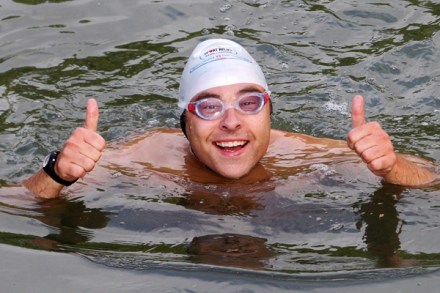
Within waving distance of blessed solid ground, Susan Taylor lost her bid to swim the Channel — and, with it, her life. She was 34 years old, brainy and beautiful, gifted and giving; it is, indeed, a peculiarly bitter irony that it was the giving that killed her. For years she had been an avid fundraiser, facing all manner of challenges in charitable effort, and for this, her final swim, she even gave up her job as an accountant to train: admirable in intent, courageous in execution. What I find less admirable, however, is the general acceptance that this kind of stunt is a reasonable and even a desirable way to raise money for good causes.

Can anyone save Aussie cricket?

From our UK edition

Insomniacs, invalids and cricket obsessives (step forward yours truly) were probably the only people who stumbled on it, but BBC4 put out a cracking drama from Down Under the other day called Howzat! It was subtitled ‘Kerry Packer’s War’ and was a rumbustious retelling of how the Australian media millionaire put a bomb under the sport with World Series Cricket, complete with Boogie Nights moustaches, preposterous hairstyles and tight, tight shorts.

Two riveting journeys to the heart of India and Pakistan

From our UK edition

50 summers have passed since C.L.R. James asked, ‘What do they know of cricket who only cricket know?’ James’s belief, that this quaint game reveals profound truths of those who play and love it, is alive and well: evident in The Great Tamasha by James Astill, which describes India, and Cricket Cauldron by Shaharyar M. Khan, which fumigates Pakistan. Astill, who is a Raja at The Economist, tells the story of India’s turbulent rise with reference to the history of cricket in India, where the sport is a form of entertainment – or tamasha, as numerous sub-continental languages have it. Astill is a self-confessed ‘cricket tragic’ but he is good company nonetheless, with an eye for an anecdote and an ear for a joke.

Books are a load of crap – the sporty kids have got it made

From our UK edition

What a glorious sporting summer it has been so far. For some the highlight will have been Andy Murray at Wimbledon, for others that nailbiting first Test against the Aussies. But for me, none of this comes even close to matching the joy, the exultation, the triumph of the moment on an Atlantic beach a few days ago when our hot young female Portuguese surf instructor took Girl and me aside to comment on our morning’s performance. ‘You, Poppy, and you, James, are both good,’ she said. That’s ‘good’ as in the exact opposite of ‘bad’.

Has Test Match Special lost its wits?

From our UK edition

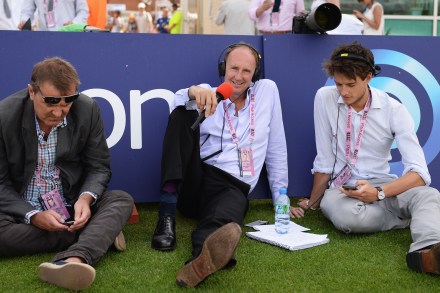
There’s a 13th man at the table at Lord’s this week as England resume the Ashes contest with Australia, which began so thrillingly at Trent Bridge, where England prevailed by 14 runs. For the first time in half a -century, -Christopher Martin-Jenkins is not present to renew one of the great rituals of the English summer. ‘CMJ’, who passed away on New Year’s Day at the less than grand age of 67, was always going to be missed and listeners to Test Match Special, the programme he adorned with his balanced commentaries, are cursing Time for being so vicious in his reaping. The graveyard, it is said, overflows with people once thought to be irreplaceable.

What kind of Englishman is embarrassed by beating Australia?

From our UK edition

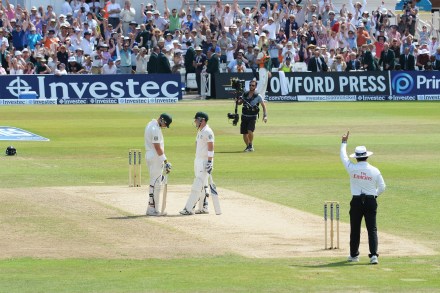
Four months ago I wondered if this might be the worst Australian side in history. Previous contenders for that badge of shame were weakened by political disputes at home. Michael Clarke's XI is the best available or, rather, the best available in the view of the Australian selectors. There are no excuses. No Packer disruption, no Chappell retreating to his tent, no nothing. And little that happened at Trent Bridge has caused me to change that view. Many of us suspected Australia were likely to perform more strongly in England than in India but that does not make Clarke's XI a vintage Australian side. Recalls for Chris Rogers and Brad Haddin have stiffened the team; they have not transformed it.

Spectator sport: Why Andy Murray may be the greatest sportsman Britain has produced

From our UK edition

There’s nothing we old folk like more than a chat about how poorly all our friends and acquaintances are. This is because, as anyone who understands the complex workings of the universe knows, there is only a certain amount of ill health to go round and the more it lands on someone else, the better our chances of dodging a bullet. It’s the same with tennis: there’s only a certain number of classic matches available for any one tournament. At this year’s Wimbledon the tennis gods poured all the juice into the wondrous Djokovich/Del Potro semi-final, which was one of most thrilling, athletic and noble sporting contests I have ever seen.

Andy Murray Joins the Immortals in A Golden Age of Tennis

From our UK edition

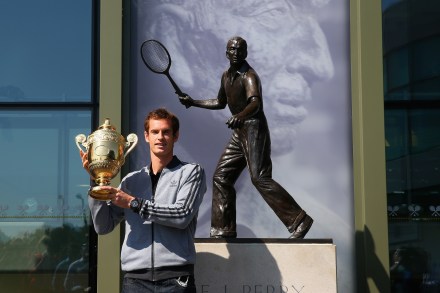
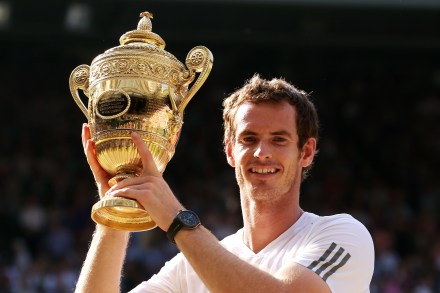
Dunblane yesterday evening and, an hour after Andy Murray has won the men's singles title at Wimbledon, the streets are still thronged with cheerful revellers. Smiles and saltires abound. Locals and visitors cluster for photographs around the golden letterbox commemorating Murray's Olympic triumph last year. Journalists have been despatched to pen colour pieces from Murray's home town. On the Stirling road two young girls, one sporting a saltire as a kind of sari, hold up a poster of the local hero; every passing car honks its horn in celebratory salutation. The boy has done it. Not bad, not bad at all. This morning, acres of newsprint are devoted to Murray's victory. It is, as you might have heard, the first time in 77 years that a British man has won Wimbledon.

Why do words and cricket go together?

From our UK edition

‘Words and cricket,’ wrote Beryl Bainbridge, ‘seem to go together.’ Why should this be? The Ashes series starting next week might not be the most eagerly anticipated of recent times, due mainly to the Aussies having developed a taste for self-destruction rivalling that of Frank Spencer. But still the words come. Broadsheets and blogs alike are bubbling with pieces about the urn. There are new books too, such as Simon Hughes’s Cricket’s Greatest Rivalry: A History of the Ashes in 10 Matches. It’s just as entertaining and informative as the ex-Middlesex bowler’s previous books, displaying his customary eye for the memorable detail.

Mourning Julia Gillard with the greatest wine ever to come out of Australia

From our UK edition

My Australian friend was in mourning over the removal of Julia Gillard, the country’s first female prime minister. She had been everything a leftist politician ought to be: ineffectual and un-electable. I concurred; sacking Labour leaders just because they could not win an election sets a very bad example to the rest of the world. For solace, he had decanted a bottle. Something in the nonchalance with which the glass was poured aroused my suspicions, which were strengthened when the nose reached halfway across the room (he is, shall we say, well off). I sipped, savoured splendour, and speculated. ‘I think I’ve had this before, to celebrate when a girl called Mary Wakefield joined The Spectator. It wasn’t quite ready then. It is now.

Alex Salmond Drives into a Muirfield Bunker

From our UK edition

Unlike some politicians who profess an interest in sporting matters, Alex Salmond's enthusiasm for golf, tennis and horse racing is genuine. He even supports the right football team. Nevertheless, the First Minister has bunkered himself this week. This is the subject of my latest Think Scotland column: Which brings me to the summer stramash of Alex Salmond and the Honourable Company of Edinburgh Golfers. The First Minister has let it be known - nay, has trumpeted – the fact that he will not attend this year's Open Championship because it is being held at Muirfield and Mr Salmond will not break bread with an organisation that excludes the good women of Scotland from membership.

Amateur fantasies and professional realities

From our UK edition

As was to be expected, it rained. Drizzle was in the air at times yesterday when the Authors XI turned out to mark 150 years of The Wisden Cricketers’ Almanack (the latest edition of which the Spectator reviewed here). Sebastian Faulks, Ed Smith and Kamila Shamsie were among the players, all of whom were dressed in Victorian garb and wore joyous grins. The Author’s XI has a book out; an account of their tour recent of England. It is a gently beguiling book, revealing something of life, the writers and, of course, cricket. It’s a perfect match. As Sebastian Faulks puts it in the foreword: ‘Amateur cricketers tend to be vain, anecdotal, passionate, knowledgeable, neurotic and given to fantasy. So do writers.

Geoffrey Wheatcroft’s diary: Peter King, terror hypocrite, and the joys of Longhorns

From our UK edition

As we landed at Houston, I suddenly thought of my first visit to America, in 1965 during what we didn’t then call my gap year. Forty-eight years does seem a long time, but my fascination with this country is undimmed. The occasion of this trip was to talk at the British Studies seminar at the University of Texas, which has become a regular gig over the years, and Austin is now a nest of old friends. This time I made a new pal. Holly McCarthy is a graduate student, who became my cicerone, offering to take me across Austin on the back of her motor-scooter. After a deep breath, I cheerfully accepted. Really, it’s much the best way to see the town. With all my American friendships and happy professional connections, on every visit I think yet again of what G.K.

Spectator sport: Here’s hoping Sachin Tendulkar has an Indian summer after 40

From our UK edition

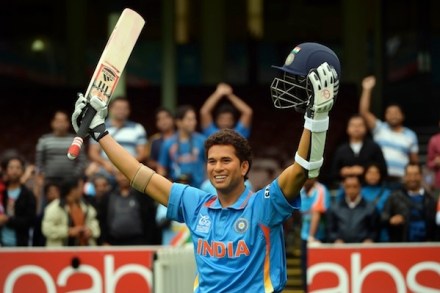
Sachin Tendulkar did not have the happiest of 40th birthdays last week. The man who has been worshipped as a god in India for most of his career lasted only six balls, playing for Mumbai in the Indian Premier League, before being clean bowled by a young West Indian off-spinner who was only a year old when Tendulkar made his international debut. His dismissal silenced the huge crowd who had turned out for him in Calcutta, disappointed the TV executives who know that Tendulkar at the wicket means higher ratings, and left him plenty of time to eat some of the 40lb chocolate birthday cake presented to him before the match. His longevity is remarkable.

Cricket is more than a game

From our UK edition

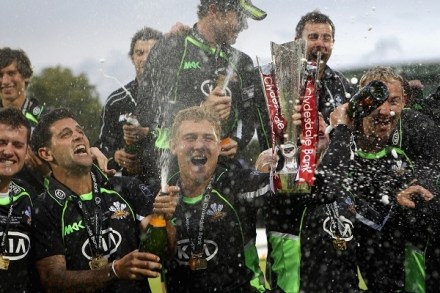
Does this advert ring a bell? It showed a handsome young man hitting a cricket ball far into the distance. It appeared on the Tube last spring. The tagline read: ‘How far can you hit it, Rory?’ The advert said that the young man was Rory Hamilton-Brown, captain of Surrey County Cricket Club. It urged commuters to watch his team play. It suggested glamour and clamour; neither of which is associated with stolid county cricket. Something was afoot. Hamilton-Brown had been appointed three years earlier, aged 22, to rejuvenate Surrey, a once great club wandering in the wilderness. He was the youngest captain in the country, and one of the most famous, despite not having played for England – the traditional mark of success.

Mike Denness and an All-Time Scottish Cricket XI

From our UK edition

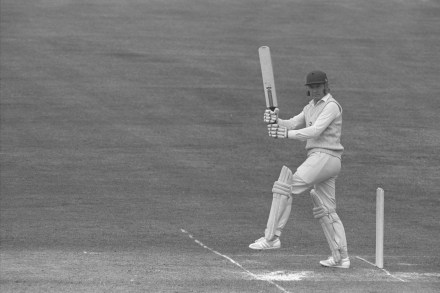
Mike Denness, who died yesterday, could credibly claim to be the finest Scots-reared cricketer of the past 50 years. That is not, at least not quite, as small a claim as you may think. Cricket in Scotland is a game of perseverance played on the edge of possibility. Even the most devoted flanneled-fool sometimes wonders if all the shivering and frustration is really worth it. In a nation scarcely over-freighted with sunshine of either the figurative or literal variety, cricketers cannot avoid being optimists. The climate and, it must be said, the culture is against them. Few things vex the Scottish cricketer more than the accusation that there is something suspicious about being a cricketer in Scotland.

Wisden finally merits the epithet ‘Cricket Bible’

From our UK edition

The man who christened Wisden ‘The Cricket Bible’ had little religion. Wisden is an unprepossessing sight: a 1,500 page tome surrounded by a flame-yellow dust jacket covered in mud brown lettering. The book’s content often matches its artless appearance; thousands of statistics and scorecards that read like the turgid genealogical passages of Genesis. Abraham begat Isaac; Jack Hobbs scored 61,760 runs. A record of the chosen people is important; but it does not inspire belief. The record tells you nothing of how Abraham raised Isaac; neither do Hobbs’ stats tell you how he scored his runs. Bald facts contain little mystery, and what do those know of God who know nothing of mystery? The 150th edition of Wisden defers to its forbears, at least in appearance.

Blonde ambition

From our UK edition

Seems a little weird to be rabbiting about sport at a time when a malign confederacy of sanctimonious do-gooders, vengeful politicians, hypocritical celebrities and hatchet-faced lefties has brought about the biggest threat to press freedom since Uncle Adolf started on his European adventures. But at least we have this fine journal which has refused to sign up to any new system of state licensing of the press. How long before a newspaper has the guts to follow the Spec’s lead? As more than one commentator has pointed out, try to imagine reading the following sentence in the New York Times: ‘The Senate and House of Representatives last night agreed on a new system of press regulation and legislation will be introduced in the next few days.’ Yeah, right!