Sport

Blessed are the goalscorers

From our UK edition

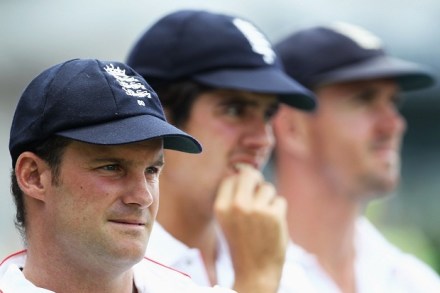
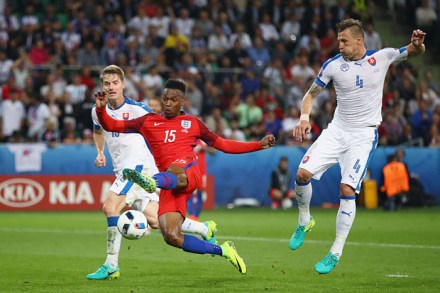
‘I am grateful to the gaffer for the opportunity and to God for letting me score,’ said Daniel Sturridge after his last-minute winner for England against Wales in Euro 2016 last week, a goal that certainly made me seriously question the Man Upstairs: I had invested quite heavily in the draw. What an enviable feast of attacking options Roy Hodgson has available at his fingertips for that tricky meeting in the round of 16 on Monday: Harry Kane, Raheem Sterling, Jamie Vardy, Marcus Rashford, Sturridge himself, of course, and God. Not to mention Wayne Rooney, who is better used in a deeper role, but could be pressed into service up front. Though not as an impact substitute for the last quarter, as against Slovakia: that might be a role more easily filled by God.
Jeeves and the Cap that Fits

From our UK edition

The Secret Service said it would investigate Donald J. Trump’s longtime butler over Facebook posts laced with vulgarities and epithets calling for President Obama to be killed. — New York Times, 12 May 2016 I had only just risen from a deep slumber, when in shimmied Jeeves with the cup that cheers. ‘Does the day look fruity, Jeeves?’ I yawned. ‘Indeed, sir,’ he assented, opening the curtains to an expanse of cloudless sky, ‘decidedly clement.’ ‘Perfect conditions for a perusal of the racing form in the long grass, would you say?’ ‘I would, sir. However your aunt has asked me to inform you that she desires you to entertain a guest this morning.’ ‘A guest? What guest?

Beware the Lycra louts

From our UK edition

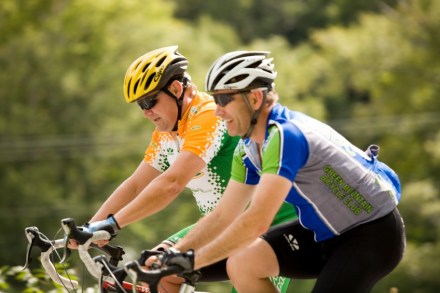
Spring is here and the air is alive with the sound of sweaty manmade materials rubbing together, as middle-aged cyclists fill every road, dressed head to toe in Lycra. They whizz along, jumping red lights, weaving in and out of the path of trucks, screaming at pedestrians and taxi drivers; barely evading death three times a morning. Lycra isn’t just a fabric; it’s a state of mind. At work, these often portly, always angry, red-faced individuals might be mild-mannered middle managers who work in marketing. But in their cycling kit they are superheroes who happen to swear a lot. The double Olympic champion Laura Trott was once asked to help with a safety campaign which involved riding around the capital to highlight the dangers cyclists face on the roads.

The fairytale factory

From our UK edition

It’s one of the oldest stories of them all, deeply embedded in our nature and our culture. In some ways it’s the story that defines our humanity and we have told it a thousand times in a thousand different ways. It’s in the Bible with Joseph and his coat of many colours, it’s King Arthur pulling the sword from the stone, it’s the ugly duckling, Cinderella, Great Expectations, Moll Flanders and Jane Eyre. It’s Clark Kent becoming Superman, it’s Harry Potter leaving the cupboard under the stairs to become the greatest wizard of them all. It’s Rags to Riches. And it’s the tale of Leicester City. Sport retells all our most ancient and archetype-crammed stories and does so again and again, providing us with a living mythology.

How to do better at darts – and life

From our UK edition

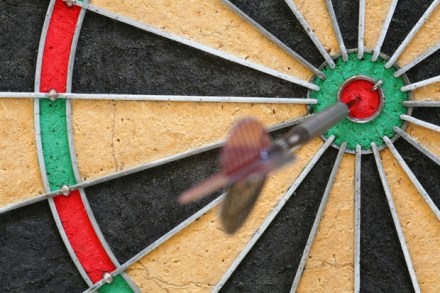
I have always been intrigued by the scoring systems for different sports, and the degree to which they contribute to the enjoyment of any game. As a friend of mine remarked, had tennis been given the same scoring system as basketball it would be tedious to play, and even worse to watch. Once you glanced at your TV and saw Djokovic leading Murray ‘by 57 points to 31’, you would shrug and change channels to something more gripping, like an unsubtitled version of Last Year at Marienbad. Tennis scoring isn’t quite socialist — one player can demolish -another — but in such cases the contest is over in a mercifully short time.

The brain-damage game

From our UK edition

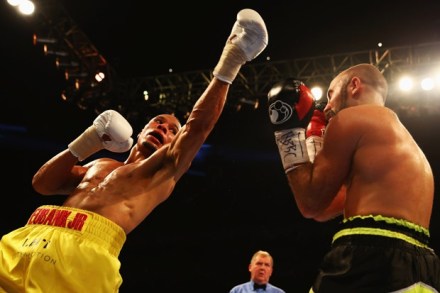
In the course of a queasy hour in Harley Street 30 years ago I learned a great deal about the brain — what Woody Allen called ‘my second favourite organ’ — and altered the course of my life in sports writing. Dr Peter Harvey concluded: ‘Boxing is a contest in which the winner seems often to be the one who produces more brain damage on his opponent than he himself sustains.’ Last weekend, after a boxing match for the British middleweight title, Nick Blackwell was in an induced coma with bleeding to the brain. Things would have been a good deal worse if his opponent, Chris Eubank Jnr, had not been told by his corner to stop hitting Blackwell in the head and confine himself to body shots.

Barometer | 17 March 2016

From our UK edition

Name that town The representative of Slough in the UK Youth Parliament called for the town’s name to be changed to rid it of negative connotations. Other towns with an image problem which have done a Stalingrad (now Volgograd) and changed their identity: STAINES Now Staines upon Thames KILIWHIMIN, HIGHLANDS Now Fort Augustus ALLIGATOR VILLAGE, FLORIDA Now Lake City WANKIE, ZIMBABWE Now Hwange PILE O' BONES, SASKATCHEWAN Now Regina Residents in the Austrian village of FUCKING voted against a name change in 2004 Over a barrel During the referendum campaign, Alex Salmond proposed that Scotland would become independent on 26 March 2016, and said it would have £7.5 billion of oil revenues. How have the estimates for 2015/16 revenue changed over time? June 2010 £9.

Why did Maria Sharapova allow herself to get caught?

From our UK edition

Maria Sharapova topped the list for the world’s highest earning female athlete for 11 consecutive years. Not that she has ever been the world’s best female athlete. She isn’t even the best in her own sport. You measure tennis players by their grand-slam singles titles: Sharapova has five, Serena Williams 21. But Sharapova pulled off the win-double of the bimbo-champion, and that’s where the money is. Williams could win another hundred slams and still lag behind Sharapova as an earner, because she’s not even a bit blonde. Before Sharapova won Wimbledon at 17, Anna Kournikova had shown how it was done. Kournikova earned pots more than infinitely better players because she was a world-class pouter.

Left without pleasures

From our UK edition

At a party recently I started talking to a friendly, charming woman and we established early on that she was left-wing. We chatted about this and that and for some reason I asked her if she played golf. ‘Oh no,’ she replied. ‘As I’m left-wing, I am not allowed to play golf.’ I was taken aback. Here was a soul who would go to her grave without ever experiencing the thrill of watching her drive soar into the air and race more than 200 yards down the middle of a fairway. A feeling akin to pity brushed across my mind. Concerned, I asked if there was anything else she was not allowed to do. ‘I suppose I am not allowed to play bridge, either.

Barometer | 11 February 2016

From our UK edition

Matters of life and death Lord Lucan is now officially presumed dead. How do you have someone declared dead? In England and Wales, under the Presumption of Death Act 2013… — Anyone can apply to have anyone else declared dead, but if the applicant is not a spouse, civil partner, parent, child or sibling of the presumed deceased they must show they have a significant interest. — The person should have been missing for at least seven years, but it is possible to have someone declared dead earlier if the court is convinced they have died. — It costs £480. — An order can be revoked if the person later turns up alive, but that will not reinstate a marriage or civil partnership. — The act cannot be used in the instance of a missing monarch.

Six Nations rugby

From our UK edition

Back in 1882, exactly 100 years before I was born, the Four Nations rugby competition was formed. It was originally contested between England, Wales, Scotland and Ireland, and the fortunes of the different teams have varied through the years. Scotland and England shared early successes, but with the turn of the century came numerous changes. Four became five with the addition of the French — but the team didn’t have the same flair that we know well from the modern game. The French struggled, winning only once in their first five years — how my heart bleeds for them! War left the Five Nations on the sidelines, but when it resumed in 1947 there was a slight change of the guard.

Game over | 28 January 2016

From our UK edition

[audioplayer src="http://rss.acast.com/viewfrom22/whysexmatters-thedeathofsportandistheeusinkingwhetherbrexithappensornot-/media.mp3" title="Simon Barnes and Alex Massie discuss the crisis in sport" startat=830] Listen [/audioplayer]Like religion, sport can take any amount of passion in its stride. It’s indifference that’s the killer. Sport can be bubbling with incontinent hatred, poisonous rivalries, ludicrous injustice and the most appalling people doing the most appalling things: but as long as people still care, as long as the sporting arguments still echo, as long as newspapers are read from back to front, then sport’s future is safe.

This could be the year that sport dies of corruption

From our UK edition

Like religion, sport can take any amount of passion in its stride. It’s indifference that’s the killer. Sport can be bubbling with incontinent hatred, poisonous rivalries, ludicrous injustice and the most appalling people doing the most appalling things: but as long as people still care, as long as the sporting arguments still echo, as long as newspapers are read from back to front, then sport’s future is safe.

Why the new match-fixing claims could rock the world of tennis

From our UK edition

The world’s tennis elite is up in arms. Roger Federer wants to see proof, demanding that the people behind “allegations that match-fixing is rife” should name names.  Andy Murray has criticised the practice of betting companies sponsoring tournaments. And Murray’s former coach Mark Petchey thinks that betting on lower-grade tournaments should be outlawed - although it isn’t clear how he proposes to enforce that on syndicates in Hong Kong. They are all missing the point. Perhaps that’s because (or why) the entire media cohort did the same thing yesterday, running story after interview about the possibility that tennis matches get thrown for money.

Never mind the Tyson Fury uproar. Boxing brings huge benefits to communities

From our UK edition

Just as one Muslim doesn’t represent Islam, Tyson Fury doesn’t represent boxing. But that hasn’t stopped liberal commentators and the morally-outraged Twitterati, who have used the BBC Sports Personality furore to attack the sport. Julie Bindel (who claims boxing is ‘not a sport but a sadistic spectacle performed by men’) wrote in the Guardian: ‘If your job is to knock somebody unconscious, it’s unlikely that they have been raised to think that solving an argument with their fists is wrong. The ethos behind this can also breed dangerous attitudes towards women.’ Does this mean a tennis player will try to solve an argument with a racket? Or a golfer with a club?

From the dismal to the delightful: the year in sport

From our UK edition

So long, then, to another thrilling year of sport in which the full range of human possibility — from the dismal frailties of the recidivists who run world football to the brazen brilliance of Japan’s rugby players — made for an intoxicating mix. It began and ended with two epic highs. Back in January, Tommy Caldwell and Kevin Jorgeson made the first free ascent of the Dawn Wall in Yosemite, the most difficult route in rock climbing, taking 19 days in all. A truly awesome achievement. Most of us could barely get off the ground; Yosemite is 3,000 ft high. Then, almost at year’s end, another high: the only people who recall Great Britain’s last Davis Cup victory are at least 90 years old. Now all of us have something to tell the grandchildren.

Sir Ian Botham is a hero – and a fool

From our UK edition

In 1981, when I was ten and Ian Botham was 26, I thought he was God. Now, the week after Botham turned 60, the 44-year-old me thinks he’s an arse. And that makes me sad. The world is a simple place when you’re ten. There are heroes and villains, victories and defeats. The very best victories are the ones that were nearly defeats. Headingley 1981, for example. No need for the details — you know them already, not just from the match itself but from the hundreds of documentaries made about it since. I still lap them all up like an addict, silently mouthing along as Richie Benaud describes Botham’s six going ‘into the confectionery stall and out again’.

Barometer | 12 November 2015

From our UK edition

A marathon of cheats Russian athletes may be stripped of the medals they won at the 2012 Olympics, but what of the earliest-known drug-taker in the modern Olympics? Thomas Hicks won the 1904 marathon in St Louis after taking two doses of brandy laced with strychnine. —Hicks collapsed on the finishing line and had to be revived. There being no rule at the time against drugs, he was allowed to keep his gold medal. — Not so a man who reached the finishing line ahead of him, fellow American Fred Lorz. He was disqualified after admitting that he had taken a car most of the way. Police, camera, revenue The police and crime commissioner for Bedfordshire is thinking of turning on speed cameras on the M1 24 hours a day. On which roads do most fatalities occur?

High life | 12 November 2015

From our UK edition

Those who forget the pasta are condemned to reheat it, tweeted Jon Ronson, a man I’d never heard of until his quip about spaghetti. I read about the tweet in a newspaper, as I’ve never used social media — Twitter, Facebook, Instagram — and hope that I never will. Why would I, unless I wanted to make trouble for myself? Not everyone needs to know what you’re doing all of the time. Or any of the time, for that matter. They say that the most destructive four-letter word in the digital domain is ‘send’. (Just as the scariest three words in American literature are Joyce Carol Oates.) I recently received an email from a young woman I’ve occasionally taken out to dinner calling me all sorts of names.

Of course there’s no morality in top-level sport

From our UK edition

Why do transgendered people need separate toilets? I thought, according to the prevalent orthodoxy, that the new gender they had acquired was every bit as authentic as the one they had jubilantly renounced. So a separate toilet is surely otiose. And not just that, but the suggestion that they might need a separate toilet for micturition through their surgically emended private parts is surely offensive. The Speaker of the House of Commons, John Bercow, may be in trouble, then, for announcing his intention to install these mysterious receptacles throughout the Palace of Westminster to service the hordes of transgendered workers wandering around with extravagant beehive hairdos and outsize stiletto heels.