Sport

Wimps aren’t welcome at the Winter Olympics

My family skied a lot. We did it home-style, with packed lunches and Mars Bars on the lifts, my brother and me following my expert Milan-raised father down terrifying drops of ice in the twilight. We took our chances on low or no visibility, scraping round mountainous moguls and – my least favourite – careering through the root, stone and tree-stuffed terrain of the arboreal American off-piste. We wore the least trendy gear imaginable: huge foam-rimmed goggles already years old in the Nineties and never any hint of a helmet. Nobody but over-protective, scaredy-cat dorks wore helmets then. This background gave me two things. One: an intimate physical knowledge of

The lost brilliance of football’s Pink ’Un newspapers

If you can remember Pink ’Un newspapers and the days when FA Cup shocks really were shocks, then God bless you, you’ve got a few miles on the clock. Pink ’Uns (occasionally Green ’Uns, as in Sheffield and Bristol) were Saturday evening regional newspapers carrying results and reports of Football League matches that, in a miracle of newspaper production, mesmerising to behold, were on sale on the streets while spectators were still leaving the grounds after the final whistle. All closed now of course, along with the demise of the Saturday 3 p.m. kick-off. Who needs papers anyway when football fans can discover the state of play in matches at

Can Arteta hold his nerve?

The second half of the Premier League season is brimming with stories and subplots. Hundreds of players are hoping to secure places in their national team squads ahead of the World Cup; Sunderland and Leeds are trying to buck the trend for promoted teams to head straight back to the Championship; Manchester United’s permacrisis has entered its next phase; and BlueCo’s financial revolution at Chelsea has moved into a new gear with the appointment of one of their own as coach – Liam Rosenior, from also-BlueCo-owned Strasbourg. More than anyone else, however, the next six months matter to the Arsenal manager, Mikel Arteta. After seven years in the job and

The rise and fall of the football presenter

What does it mean to be a ‘good’ sports presenter? Really, it should mean nothing. They aren’t important. They should have a sense of perspective, a sense of remembering that they are peripheral to the most popular consumer product and human activity that we have come up with. Of course, it doesn’t work like that. Look at Gary Lineker. The BBC paid him £1.3 million to ask Danny Murphy things like ‘Bournemouth look to have run out of steam a little bit?’ for 75 minutes a week. Such is our infatuation with sport that we end up really caring about who asks this kind of question. That person gets to

Does running 42 Lakeland fells in less than 24 hours really bring ‘serenity’?

‘We continue to grapple as a species,’ writes Carl Morris, ‘with a knotty philosophical divide between anthropocentric and biocentric approaches to the natural world. Our bodies are both transcendent – seemingly beyond nature and capable of rationalised enhancement – but also immanent – that is within nature and therefore subject to the same frailties and limitations.’ What is he addressing? Space travel? Diving to the bottom of the Mariana Trench without oxygen? Not quite. He is talking about the process of human locomotion. He is talking about running. Stay with me. Books about running can be as dull as a ten-mile road race in the Illinois flatlands, and I say

Don’t blame Ben Stokes

So what was the best bit of this dispiriting Ashes series? Lucky you if you’ve found one, but for me – at the time of writing, before Jacob Bethell was belatedly allowed to unfurl his brilliance – it was the moving homage to the heroes of the Bondi massacre at the start of the Sydney Test. It was flawlessly executed, unlike a great deal of the cricket: a group of first responders, including paramedics, lifeguards, police and Ahmed al-Ahmed, the shopkeeper who disarmed one of the terrorists, were given a guard of honour as applause and cheers flooded the ground. If it didn’t bring a tear to the eye, check

Labour is doing all it can to kill off horse racing

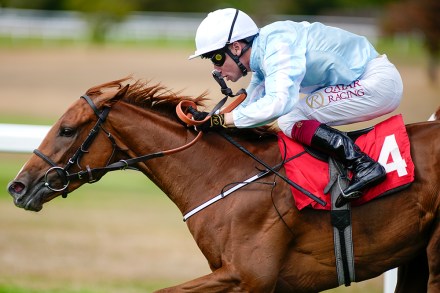
In July, Victoria, Lady Starmer was photographed at Royal Ascot, celebrating with friends after backing the winner of the Princess Margaret Stakes. Lady Starmer, whose grandmother lived near Doncaster racecourse, is a keen follower of flat racing, a passion she apparently shares with her husband. In 2024, the Prime Minister flew home from Washington D.C. to attend Doncaster’s St Leger meeting and told reporters: ‘There aren’t many better days out than the races in the sunshine.’ So it’s odd that Keir Starmer and his government appear to be doing all they can to kill off horse racing. Swingeing tax rises on the gambling industry, introduced in Rachel Reeves’s Budget, have

I’ve been duped by the Toby hoaxers

Going to see QPR on Boxing Day has become a tradition in the Young household – and not because we hold out much hope of winning. The Hoops have only won 19 of the 71 Boxing Day fixtures we’ve played since 1882, when the club was founded. The last time was in 2018, when we beat Ipswich 3-0 at home, and we haven’t won away since 1967. But going to watch our team, however poorly we play, beats festering at home in that fallow period between Christmas Day and 1 January, so my three sons and I piled into the car for the 150-mile round-trip to Fratton Road in Portsmouth.

Football is a masterclass in monogamy

Back in the early 1990s, I was a teenage visitor to an array of dilapidated Victorian cow sheds masquerading as third and fourth division football grounds as I supported my team, Wrexham FC, on their travels. There were still many pre-Hillsborough fences in place, some of which (most notably in the away end at Crewe Alexandra’s Gresty Road ground) successfully blocked around 90 per cent of the view of the pitch for visiting fans. The catering usually only extended to ‘botulism in a bap’ burger vans and it was always, always cold. But what I remember most clearly from those far-off days was the voice register of the fans when

My advice to Ben Stokes

In preparation for the 2005 Ashes series, the late Graham Thorpe, a man I looked up to enormously, turned to me and uttered the immortal words: ‘Straussy, there is Test cricket and Ashes cricket. They are completely different things.’ Never has a truer sentence been spoken. The Ashes breaks out of the normal cricket bubble. It means more than cricket: this is a biennial arm-wrestle with the respective sporting reputations of two enormously proud nations on the line. The prize is a little urn but also bragging rights for the next two years. The result of the Ashes, whether positive or negative, invokes an intense emotional response. It makes people

Could two great managers bring us two World Cup wins?

Maybe it’s the time of the year, or maybe it’s down to my sad little life, but surely I can’t be alone in feeling my spirits lifted by the example that Steve Borthwick and Thomas Tuchel are setting. The managers of England’s rugby and football teams have displayed courage, vision and a higher morality that could usefully be followed in other areas – politics, certainly, or business. Both came under fire in the early days of their management and stood resolutely firm. Model stuff surely. What Tuchel has done with his England side is a proper lesson for life. He has decided on a course of action – picking the

Ben Stokes’s run-in with Aggers

There’s tetchy, and then there’s Ben Stokes ‘tetchy’ – pulling out his mic and stomping off cursing, or so I’m told, after Jonathan Agnew asked a disobliging question. Admittedly it’s hard not to feel some sympathy for Stokes, an inspirational leader on the pitch who had just seen his team skewered in two days in Perth in one of the most brutal (and thrilling) Ashes Tests in history, and then had to do a live BBC interview. But this was the ever-courteous Aggers, for heaven’s sake, the nearest thing to a secular saint for TMS.  There’s no need for a four-letter outburst. He was asking what were standard if faintly

Ben Stokes will go down as the greatest captain of modern times

And so it begins, as Donald Trump likes to say, though not usually about cricket. He was offering his thoughts on the New York mayoral elections, which is not as much fun as the Ashes. Pleasingly, the goading is reaching volcanic levels as the Perth Test gets ever closer. Who needs Trump? The West Australian is not a paper many readers will be familiar with but its pages have been plastered with pictures of English players making their way through arrivals at Perth airport. A large photograph of Ben Stokes pushing his luggage trolley was headlined ‘BAZ BAWL’, with the subheading ‘England’s Cocky Captain Complainer, still smarting from “crease-gate”, lands

Why I’d take a close Ashes defeat over an easy victory

The Ashes start this week. If, as an England supporter, you were given the following two choices, which would you pick? First: England win the series 5-0. Second: the series ebbs and flows, the teams arrive in Sydney locked at 2-2, the match goes down to the final hour of the final day, and England lose. If you went for the second option, you’re my kind of fan. I’ve always preferred to see my team (or player) lose narrowly than win easily. Sport is there to entertain us. This is the supporter equivalent of ‘It’s not the winning, it’s the taking part that counts’. As a fan, you get excited

In defence of American sport

This afternoon, just shy of 75,000 fans of American football will flood in to watch the Atlanta Falcons take on the Indianapolis Colts, in what is set to be the Colts’ largest attendance for a home game this season. A few weeks ago, more than 86,000 turned out to watch the Jacksonville Jaguars face the LA Rams in what was the Jaguars’ best-attended home game this year. The most surprising thing about this? Both games were taking place more than 4,000 miles from the NFL’s heartland – one in Berlin, one in London. Recently, Sean Thomas claimed on Spectator Life that America has failed to export its ‘laughable’ sports. As

The maverick magnificence of Henry Pollock

‘Gosh he seems full of himself’ was how my friend’s wife reacted when she came in to see Henry Pollock celebrating his stunning try against the Aussies at the weekend. And she was spot on too: 20-year-old Pollock, England rugby’s latest prodigy, whips up emotions, not least the desire from anyone who has played against him – and plenty who haven’t – to give him a good belting. He’s swaggering, confident, brash, with rockstar charisma and a bleached blond mop, and he can wind up opponents until they need a bomb disposal expert to calm them down. Referees might soon want to tell him to rein it in. That’s youth

A great comedy about a terrible sport

I’m trying to think of things I’m less interested in than American football. The plant-based food section? Taking up my GP’s offer of a free Covid booster? Ed Miliband’s nostril depilation regime? No, apart from maybe baseball, I can’t think of anything so soul-crushingly tedious as a rigged game where men in shoulder pads and portcullised helmets shout numbers, bash into one another, then wait half an hour while the referee decides whether or not they’re allowed to throw a spinny ball and maybe one day end up being Taylor Swift’s latest boyfriend. So you’ll never guess what the subject is of my favourite new American comedy series, Chad Powers…

From South Africa to Saracens, two rugby stars are born

Moments when a 24-carat superstar bursts on the scene are few and far between, but always something to cherish. And we rugby fans have had two in the past few weeks. First came the dazzling performance by Sacha Feinberg-Mngomezulu, the Springbok No 10 who tore apart a powerful Argentina side in Durban in September, scoring a record 37 points with three tries, eight conversions and two penalties. With his effortless running and velvet touches all over the field, he suddenly gives the traditional raw power of the Boks an explosive new dimension. He is compellingly watchable, only 23, and will soon be as much of a benchmark of rugby excellence

Bring back elitism

Elitism has had a bad press in recent years. The concept has, alas, been tainted by its association with the numerous elites who have corrupted it by allowing self-interest and prejudice to become self-perpetuating. It’s been sullied by its association with old school ties and masonic-style handshakes – by closed networks which work to exclude those who happen to fall outside the pre-determined in-group. So no wonder we don’t like it any more. Who would? But its gravest sin of all has been its role in pulling up the drawbridge to protect privilege in general, through a kind of unspoken fish-knife test. If you don’t know what it’s for, you

Does it matter that the BBC lost the Boat Race?

So we won’t be watching the Boat Race next year on the BBC, but on Channel 4. Never again will we hear the likes of John Snagge commentating on the fogbound 1949 race: ‘I can’t see who’s in the lead but it’s either Oxford or Cambridge.’ It’s a funny thing the Boat Race: an eccentric contest between the country’s two most distinguished academic institutions, rowed against the flow of the Thames along a tidal stretch with winds as ungovernable as a nursery school class, taking place at a time of year when the water can be in ferment. It’s a cranky British institution whose natural home should be the Beeb,