Space

Elon Musk is deluded about life on Mars

From our US edition

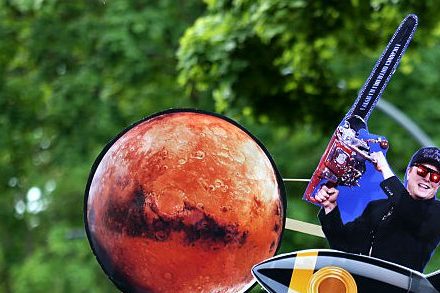
Elon Musk, already the richest person who ever lived, is at the center of the biggest share offering of all time. A valuation of $1.75 trillion at IPO would hand $75 billion to his company, SpaceX. Musk is being allocated two sets of shares, with performance-based conditions. They will materialize if SpaceX reaches a market capitalization of $7.5 trillion, and if a colony of a million people is established on Mars. The first of these is possible, the second is not. On the face of it, you wouldn’t bet against SpaceX. By 2024, it was launching more rockets than the rest of the world combined. Its Starlink internet service generates oodles of cash. It has more than 9,600 satellites in orbit that require constant replenishment, so the market is firm.

Elon Musk Mars

The joyful mayhem of meteorite hunting in Africa

Nairobi Eastleigh, the Somali quarter in Nairobi, was a scene from Blade Runner but in African Islamic dress. Muezzin calls to prayer bounced off canyons of rickety concrete towers. My friends led me through the bazaar of smuggled electronics, perfumes, truck tyres, gold dealers and money changers. In this monsoon version of Harrods, I imagined you could buy whatever came to mind: Tehran’s uranium, a live Quagga, Ovid’s lost work Medea or an intact Spitfire. That great Arabist Tim Mackintosh-Smith, writing about the souks in Yemen, observed that he probably saw his old school blazers in among the piles of secondhand clothes there – and it was like that. One just has to ask in Eastleigh, the biggest market in Sub-Saharan Africa.

A journey to the dark side of the Moon

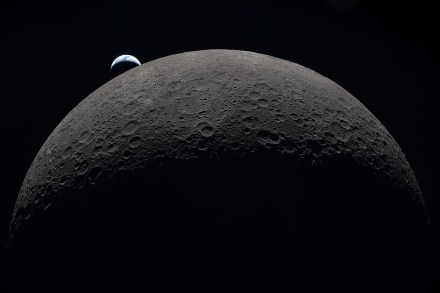
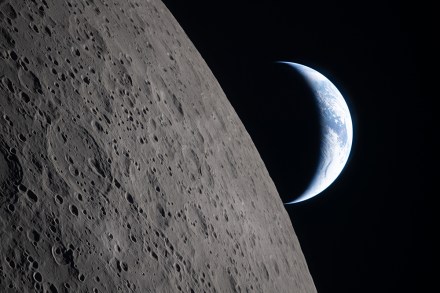
The climax of the Artemis II mission lasted just a few hours. The capsule, named Integrity, rounded the Moon, the crew becoming the most distant humans in history as they moved from its sunward side into its shadow. The familiar features of the permanently Earth-facing side made way for the more heavily cratered far side. This is not the Moon we know. The far side is different. It has a thicker crust, no major solidified lava plains and is more heavily cratered, like the aftermath of the final war. Before reaching it, the crew saw two Apollo landing sites: Apollo 12 touched down on Oceanus Procellarum (Ocean of Storms), and Apollo 14 landed on the plains of Fra Mauro, the target for the aborted Apollo 13 mission. There have been travelers here before, but not like this.

dark side moon

Reflections on the Moon

From our US edition

We Americans have been instructed to burst our buttons with pride over Artemis II’s drive-by of the Moon. But out here in cratering America, far from Mission Control, we remain buttoned-up. This is not due to our skinflint nature or lack of imagination; nah, it’s just that Big Science – “corporate socialism,” as the late parsimonious populist Democratic senator William Proxmire of Wisconsin termed the space program – is spiritless, mechanical and inhuman.

Space travel, ancient Greek style

Apollo, Artemis and Orion have not been named at random. The first two are brother and sister, and all three are known in myth as hunters – which is what the astronauts are. Ancient Greeks would have been very envious of them. The satirist Lucian (c. AD 125-180) had great fun with space travel. In his True History, he describes how he sets off with his companions to sail the Atlantic when suddenly a typhoon whirls them up to the Moon, but after many adventures he is able to return and describe what he saw. There are no women, but men act as wives. They produce children in the calf of the leg. The children are born dead but brought to life by breathing in the wind. Men then become husbands. Their noses run with honey and when they exercise, they sweat milk.

How Artemis II returned to Earth

From our US edition

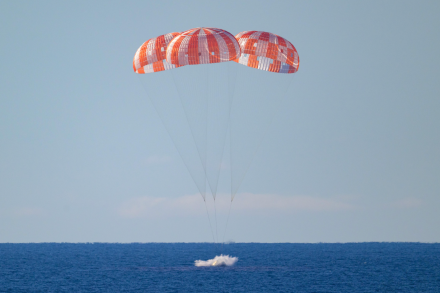
The key event in the return of the Artemis II crew was the moment of real drama during what mission controllers call Entry Interface. The capsule is 400,000 feet above the Earth and still traveling at 25,000 miles an hour. They were among the fastest humans even though they did not break the incoming speed of the Apollo 10 mission. It is only fourteen minutes until splashdown in the Pacific, there is no turning back, no second chance, re-entry will happen no matter what. A few hours earlier the crew donned their orange so-called crew survival suits and lowered their visors. In essence these are personal spacecraft providing everything they need to survive for up to six days. Their water-cooled inner suit was keeping them cool even though the cabin temperature was normal.

Artemis II

Why Artemis II matters

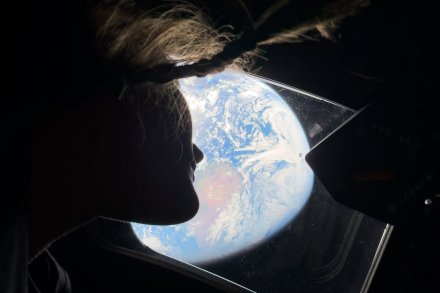
Weren’t those images beamed back from the Artemis II mission something to catch the breath in the throat? If something in you wasn’t stirred by the sight of Earth, glimpsed through the window of the space capsule past the silhouetted face of the astronaut Christina Koch, I don’t think you can be fully alive. And what about the thought that for the first time in history, human eyes will look directly on the dark side of the moon; or that the inhabitants of that spacecraft will travel further from our home than any humans have ever done? That for a few tens of minutes before earthrise, they will be wholly out of contact with home as they travel through the vast dark? Stir the soul it might; but why, some will reasonably ask, should we be doing it at all?

Why Artemis II matters

Weren’t those images beamed back from the Artemis II mission something to catch the breath in the throat? If something in you wasn’t stirred by the sight of Earth, glimpsed through the window of the space capsule past the silhouetted face of the astronaut Christina Koch, I don’t think you can be fully alive. And what about the thought that for the first time in history, human eyes will look directly on the dark side of the moon; or that the inhabitants of that spacecraft will travel farther from our home than any humans have ever done? That for a few tens of minutes before earthrise, they will be wholly out of contact with home as they travel through the vast dark? Stir the soul it might; but why, some will reasonably ask, should we be doing it at all?

How we wage war in space

From our US edition

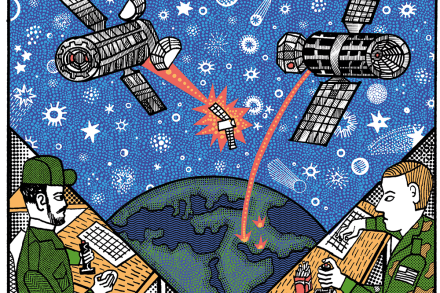
Operation Epic Fury marks a turning point in the art of war. The key to 20th-century battles was air power. In the past, space and cyber activities have traditionally played supporting roles as so-called force multipliers. But this is no longer the case. In this conflict they have become mainstream, carving out new fronts for the wars of the future. The use of space is no longer something that is just nice to have, because everything from comms to intel to navigation uses space and cyber assets. Along with the National Reconnaissance Office, which manages US spy satellites, the US Space Force uses a global sensor network of ground-based telescopes and radar on every continent except Antarctica.

Inside the race to build AI data centers in space

From our US edition

In the 1966 novel Colossus by British author D.F. Jones, a supercomputer (which goes by the name of Colossus) is given control and decision-making power over the US’s nuclear arsenal – a logical and unemotional computer being better placed, it is assumed, to make unemotional decisions than a human. Eventually, Colossus discovers the existence of a similar supercomputer in the USSR and begins communicating with its Russian counterpart in mathematical languages about technological advances beyond human comprehension. Frightened by the possibilities this presents, scientists sever the connection – only for Colossus to threaten to launch nuclear weapons if it isn’t reconnected.

Will Bezos beat Musk to the Moon?

From our US edition

Even Elon Musk has to face a dose of reality every once in a while. Technology and politics have forced him to turn his gaze away from Mars, for the moment at least, to put Americans back on the surface of the Moon before China gets there. But it might already be too late. If America has any chance of beating China, it now seems inevitable that the next American human landing on the Moon will not be by Musk’s Starship but using a craft being developed by his rival Jeff Bezos. Announcing the pivot, Musk wrote on X: “For those unaware, SpaceX has already shifted focus to building a self-growing city on the Moon, as we can potentially achieve that in less than 10 years, whereas Mars would take 20+ years.

Bezos

The Artemis II mission is an exercise in wonder

When the Artemis II mission eventually blasts off, it will take humans back to the Moon for the first time in more than 50 years. Americans Reid Wiseman, Victor Glover, Christina Koch and Canadian Jeremy Hansen will travel further out into space than anyone before when they loop 4,700 miles beyond the Moon, seeing parts of it never before glimpsed by human eyes. The flight is designed to put the powerful Space Launch System rocket and the Orion capsule, with its European-made Service Module, through their paces. Three hours after launch, the crew will monitor a procedure not performed since 1972, so-called TLI – Trans-Lunar Injection. Only five of the 24 astronauts who have experienced that are still with us.

The inside story of how America got to the Moon

From our US edition

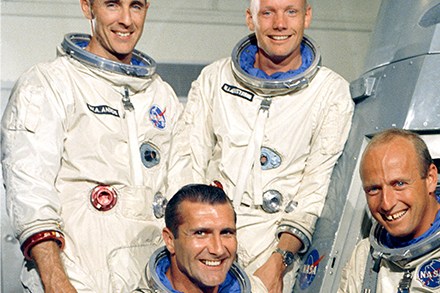
On March 16, 1966, Neil Armstrong and David Scott became the first astronauts ever to dock with another spacecraft when they linked their Gemini 8 capsule to the uncrewed Agena target ship. However, the cheers had barely died down at Mission Control Houston when Scott realized they had a problem. The conjoined spacecraft had begun a gentle leftward pitch. Armstrong and Scott watched in horror as the capsule’s gentle pitch became a tumbling motion that increased, turning the craft into a centrifuge. In desperation, Scott undocked the two ships before gravity ripped them apart. But Gemini 8 continued to spin faster. At 60 revolutions per minute, the astronauts began to slip into unconsciousness.

The many faces of Houston

If Greta Thunberg ever docked in Houston, it wouldn’t be for long. Freeways stretch to 26 lanes, flaring oil refineries light the night sky and sports stadiums are sealed against the humidity with year-round refrigeration. At an Astros baseball match, a poster bluntly reminds attendees ‘TODAY’S GAME IS MADE POSSIBLE THANKS TO NATURAL GAS & OIL’. Between quarters at a Texans NFL match, a handful of fans score Chevron gift cards – ‘You’re going home with extra gas money!’ The crowd roars. Welcome to oil country. When fossil fuels enter Britain’s national conversation these days, it’s behind abstractions of net zero.

Greenland and the new space race

From our US edition

Donald Trump’s desire for Greenland is not just about access to oil, minerals and control of the new strategic and commercial corridors opening in the region. It’s also about data. Specifically, the most important data in the world. For decades, Pituffik Space Base – formerly Thule – in Greenland has been central to US space defense and Arctic strategy. It’s the US military’s only base above the Arctic Circle and their most northerly deep-water port and airstrip. It’s home to the 12th Space Warning Squadron. Its massive AN/FPS-132 radar has 240 degrees of coverage surveying the Arctic Ocean and Russia’s northern coast, especially the Kola peninsula where it has concentrated its strategic nuclear weapons.

greenland

An interview with the physicist David Deutsch

The Amazon reviews for David Deutsch’s The Beginning of Infinity don’t alert you to the fact that this is a book on theoretical physics. They sound more like a weepy divorcé’s YouTube comments below a Mark Knopfler guitar solo. “I didn’t so much read it,’ says one. “It read me.’ ‘I was honestly sad when it was over,’ writes another. “This book changed my way of seeing the world, politics, science and, most importantly, of seeing what I will understand as containing some truth.” When I talk to Deutsch – one of the most sensationally interesting theoretical physicists of our age – on Zoom, I see two beady eyes peering at me over some non-spectacular spectacles under a mess of thin white hair, borne by a thin white man in a thin white shirt.

The scientific case for the existence of intelligent alien life

The foundation of science is based on the humility to learn, not the arrogance of expertise. When comet experts argued that the interstellar object 3I/ATLAS must be a familiar water-rich comet as soon as it was discovered in July, they behaved like artificial intelligence systems: only able to reflect the data sets they were trained on. For decades, the data set that established comet expertise largely comprised icy rocks in the solar system. My counterpoint is simple: humanity launched technological objects into space, so we must conclude that alien life forms could do the same. This possibility must be added to the training data set of comet experts when studying interstellar objects.

David Deutsch: The Enlightenment, ‘irrational memes’ and how Wikipedia turned woke

The Amazon reviews for David Deutsch’s The Beginning of Infinity don’t alert you to the fact that this is a book on theoretical physics. They sound more like a weepy divorcé’s YouTube comments below a Mark Knopfler guitar solo. ‘I didn’t so much read it,’ says one. ‘It read me.’ ‘I was honestly sad when it was over,’ writes another. ‘This book changed my way of seeing the world, politics, science and, most importantly, of seeing what I will understand as containing some truth.’ When I talk to Deutsch – one of the most sensationally interesting theoretical physicists of our age – on Zoom, I see two beady eyes peering at me over some non-spectacular spectacles under a mess of thin white hair, borne by a thin white man in a thin white shirt.

Why the comet 3I/Atlas still fascinates

From our US edition

Our latest visitor from interstellar space is leaving us. It reached its closest point to the Sun on October 29 and is now heading back toward the stars at great speed, having spent a few months traversing our region of space. This visitor – a comet called 3I/Atlas – scared some, fascinated astronomers and thrilled us all as we marveled at its strange journey. 3I/Atlas, which Michael P. Gibson introduced Spectator readers to in the last issue of this magazine, got its name because it is the third object ever found to have entered our solar system from interstellar space – and Atlas is the name of the sky survey that found it as a point of light moving against the distant stars.

universe 3I

3I, the interstellar object that’s baffling astronomers

From our US edition

Science began in the skies. Just after sunset, to be exact, on the evening of November 11, 1572 when a young Danish nobleman, Tycho Brahe, raised his eyes to the night sky. There, above his head, a star was shining brighter than all the rest – a new star that should not have been. Brahe thought he was mistaken, that his eyes were playing tricks on him, but others confirmed what he saw. And yet, according to the reigning theory, derived from Aristotle, there could be no change in the eternal heavens. Surely then this object could not be a star. It must be an anomaly in the upper atmosphere, closer to the Earth, within terrestrial realms. But Brahe got to work. Using trigonometry and observations, he found that the impossible had indeed occurred.

3I