South africa

A black and white issue

From our UK edition

Last time I was in South Africa I spent two weeks deep in the Karoo, that desiccated wasteland in the Northern Cape which is home only to a handful of jackals, the occasional springbok and supporters of the Afrikaaner Resistance Movement. I had been visiting Orania, a smallish town in which no black people are allowed. Set up by the son-in-law of Hendrik Verwoerd, its existence now is very grudgingly protected by the South African government under regulations which preserve minority cultures — ah, the irony. I was doing a documentary, the gist being: ghastly, ghastly, racist white people. I have to admit that I, as a white supremacist bigot, was a little more equivocal about the issue than the rest of the crew, which is perhaps why the programme never got on TV.

Can South Africa’s new president clean up Jacob Zuma’s mess?

From our UK edition

In recent years, living in South Africa has been a bit like having cancer. The malaise eating us from within was corruption and there seemed to be no cure, which is why there was no dancing in the streets when our dreadful president, Jacob Zuma, was finally eased out of office on Valentine’s Day. For me, it felt as if the entire nation was hobbling out of hospital after a long and painful stay, almost too weak to walk, but very surprised and grateful to discover that it had somehow survived. So I didn’t dance in the streets. But I did spot a local ANC leader standing in the sun outside the general store. I hobbled over and shook his hand. ‘Comrade,’ I declared. ‘Well done!

Hit and miss | 24 August 2017

From our UK edition

Truman Capote should have been called Truman Persons. His father, Archulus, abbreviated his first name and introduced himself as Arch Persons. ‘And that,’ scoffed his son, ‘sounded like a flock of bishops.’ The young scribbler was thrilled when his divorced mother married a rich Cuban, Joseph Capote, whose zippy and eccentric name he gladly adopted. He got a job at the New Yorker and found the magazine’s celebrated wits, including Dorothy Parker and James Thurber, were embittered molluscs who hated each other. Capote’s literary life, as related by Bob Kingdom, is a parade of inspired bitchiness. He had the knack of getting to a character’s core problem. For Gore Vidal it was the knowledge that he had never written a masterpiece.

In Woolf’s clothing

From our UK edition

Martin Amis once said that the writer’s life is half ambition and half anxiety. While one part of your brain is jabbering away to the effect that, with proper application, you might be the next Jane Austen, George Eliot, Virginia Woolf, a larger part — almost always more tenacious and assertive — is busy insisting that you don’t have it in you to pick up a pen. In Fiona Melrose’s second novel, which follows the subtle and reflective Midwinter of 2016, this confluence of aspiration and unease can be felt with unusual force. The book takes place over the course of a single day — 6 December 2013 — in Johannesburg, the city in which Melrose was born and in which she still spends much of her time.

English cricket is too glass half-empty for its own good

From our UK edition

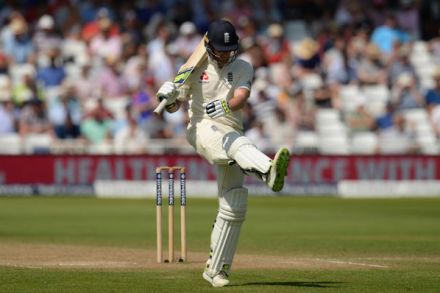
There is, let us be honest, a certain kind of England supporter who derives some cheerful satisfaction from disaster and weak-minded capitulation. Many England cricket supporters - for it is summer and time to put away minor matters such as Brexit and concentrate instead on more substantial civilisational matters - are naturally crepuscular, forever looking forward to the dying of the light. And why not? There is much to be said for being an Eeyore, especially if - as sometimes seems to be the case - being a Tigger is the only available alternative. Nevertheless, it is always a mistake to take things too far. Today’s miserable collapse at Trent Bridge, where England have been beaten by 340 runs, losing twenty wickets inside 100 overs, is a case in point.

Letters | 12 January 2017

From our UK edition

Freudian slap Sir: In his Notes (7 January), Charles Moore explores the uncharacteristic reaction of Matthew Parris to the referendum result. What is most puzzling about Parris and so many others like him is that their present outrage has so little in common with their rather tepid support for the EU in the run-up to the vote. Such a mismatch of cause and effect suggests a Freudian explanation may be appropriate. When an impulse is felt to be so dire that it cannot be expressed, a new object is substituted and the feelings are thus ventilated. Yet what original threat could be so catastrophic as to provoke such end-of-our-world hysteria in the first place?

Not cricket | 5 January 2017

From our UK edition

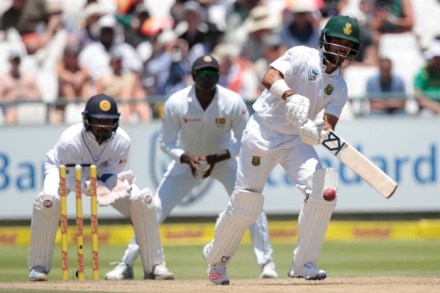
Sport is a serious matter. If you have any doubts on that score, shed them now, because this is to be a South African year. The South African cricket team comes to England in the summer to play four Test matches, three one-day internationals and three Twenty20 games, and as they do so they will ask a million questions — not only about cover drives and reverse swing, but also about the way to make a society, about the way to redeem a society, about idealism versus practicality, about short-term advantage versus long-term goals and about the nature of justice. There is an argument doing the rounds. It goes like this: South Africa should be banned from participation in international sport because of the government-level discrimination against white athletes.

Hit for six | 5 January 2017

From our UK edition

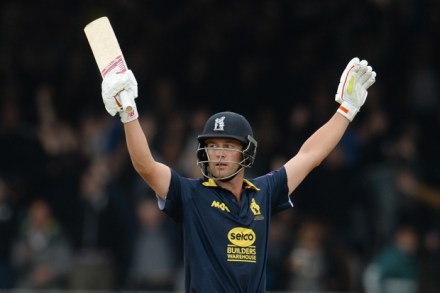
Frankie Howerd, the great, if troubled, comedian, was once asked whether he enjoyed performing. ‘I enjoy having performed,’ he replied. Many top-level sportsmen would say something similar. The satisfaction often comes from having done, not always from doing. Performing offers great rewards, but it can also leave scars that heal slowly, and sometimes not at all. Jonathan Trott was a good cricketer in a strong England team that beat Australia in three successive series between 2009 and 2013. Batting at No. 3, he made a century on his Test debut, and became a dependable, if minor-key player in the side that vanquished the Aussies Down Under two winters later. Then, frightened by the view, he fell off that high wire.

You’ve lost that loving feeling

From our UK edition

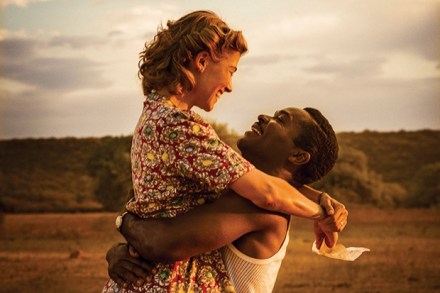
A United Kingdom is based on the greatest love story you probably didn’t have a clue about. I know I didn’t. It’s based on the true story of Seretse Khama, heir to the African kingdom of Bechuanaland (now Botswana), and Ruth Williams, a typist, who fell in love in 1940s London and married despite everyone and everything trying to separate them, including a vicious colonial British government. But this, sadly, is not the greatest film about the greatest love story you didn’t have a clue about. It’s OK. It does the job. It’s serviceable. It won’t be the biggest disappointment in your life. The story’s too good for it to get away completely.

Blithe spirit

From our UK edition

Lady Anne Barnard is a name that means almost nothing today, but her story is a remarkable one. She defied all the expectations governing the behaviour of upper-class women in 18th-century society, yet she made a success of her life. She died leaving six volumes of unpublished autobiography with a stern injunction that her papers were never to be published. For 200 years her memoirs have languished in the family archive, and Stephen Taylor is the first biographer to reveal her secrets. Anne was the daughter of a threadbare Scottish peer, Lord Balcarres, and she grew up the eldest of 11 children in a prisonlike tower house in Fife. Pushed by her mother to contract a conventional arranged marriage, trading her breeding for newly-gained wealth, Anne dug in her toes.

Science Must Fall: it’s time to decolonise science

From our UK edition

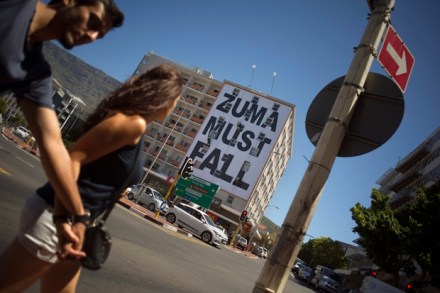
First we had Rhodes Must Fall, now it's the turn of Science Must Fall. Students at the University of Cape Town in South Africa have taken issue with the science faculty -- or science in general, to be more exact. The issue? Science as it is currently understood is colonial and ought to be abolished. At a meeting on the pressing issue, students gathered to air their grievances with some claiming that witchcraft holds just as much merit as Isaac Newton's theory of gravity— they are both ways of explaining the world: 'Decolonising the science would mean doing away with it entirely and starting all over again to deal with how we respond to the environment and how we understand it.

Saintly sins

From our UK edition

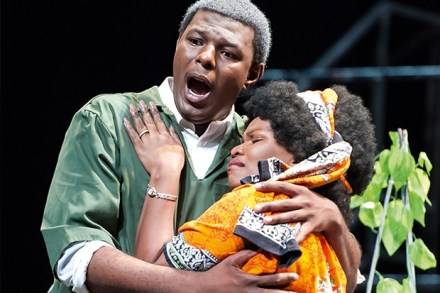
They say that the devil gets all the best tunes, and on the basis of this week’s opera-going it would be hard to disagree. Performances by Cape Town Opera and Opera Rara turned their attention on two historical icons: South Africa’s anti-apartheid campaigner and president Nelson Mandela, and ancient Assyria’s murderous and would-be incestuous queen regent Semiramis. No prizes for guessing who came out on top. When it comes to art, evil takes it nearly every time. Who wouldn’t choose The Rake’s Progress over The Pilgrim’s Progress, Don Giovanni over Don Ottavio, sex over sanctity? For a good man, Nelson Mandela has inspired a lot of really, really bad art.

The rainbow election

From our UK edition

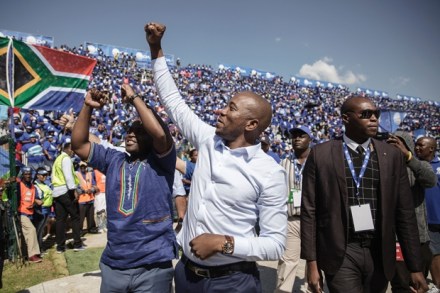
 Cape Town South Africa has just seen her most encouraging election results ever. The general election of April 1994, which brought full democracy, was important in itself but its results were a foregone conclusion — the black majority voted for the ANC, as expected. The local elections this month were different and immensely hopeful. There has been a large vote against the ruling party, the ANC, bringing an end to the great curse of post-colonial Africa under which the people keep voting for the ‘liberation’ party however corrupt and incompetent it is. The ANC still won 54 per cent of the votes, but this is the first time its share has fallen below 60 per cent.

Ntokozo Qwabe has his final say on #TipGate: ‘there is, in reality, no freedom of speech in a black body’

From our UK edition

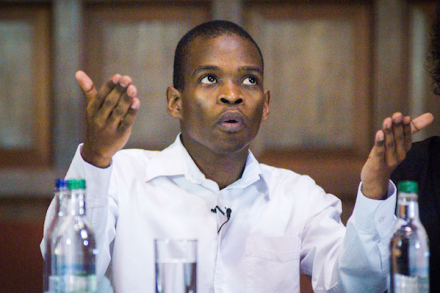
Last month Ntokozo Qwabe made the news after he wrote of his happiness at making a waitress shed 'white tears' when his friend refused to tip until she 'returned the land'. Since then, a crowdfunder was set up to raise money to compensate the waitress for the incident, while Qwabe -- who is a key figure in Oxford's Rhodes Must Fall movement -- has made several comments that suggest he feels little remorse over the debacle. Now back in Oxford, the postgraduate student has offered his 'final say' on the incident after being greeted with a host of death threats on return.

Long life | 31 March 2016

From our UK edition

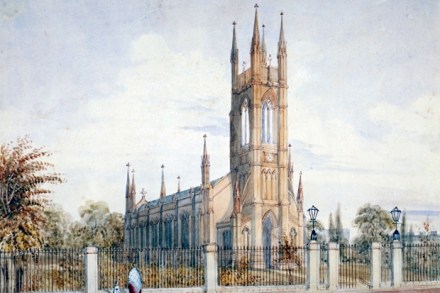
The Parish Church of St Luke in Sydney Street, Chelsea, is enormous. Vaguely reminiscent of King’s College Chapel, Cambridge, it was built in the 1820s to accommodate a congregation of 2,500 people and was one of the earliest Gothic Revival churches in London, with a higher nave than any church in the capital other than St Paul’s Cathedral and Westminster Abbey. It was built at great expense with the help of a government subsidy as a result of the Church Building Act of 1818, by which Parliament allocated funds for building new churches in the urban areas of Britain where populations had greatly outgrown the facilities for Christian worship.

Lost in translation | 31 March 2016

From our UK edition

Trencherman was first published in Afrikaans in 2006 and translated into English for a South African readership shortly afterwards, but has only now found a UK publisher. Eben Venter — one of the notable voices in white South African writing post-Apartheid — has been ‘temporarily’ based in Australia for more than two decades, but returns to his home for stories. You can see why. After Disgrace, J.M. Coetzee emigrated to Australia — and hasn’t published a decent novel since. He evacuated his subject. For Africa-born whites, the one thing worse than staying is leaving. The left brain urges you to settle in a safe economy with prospects, where the right brain dies.

South Africa’s promise now lives in a cage

From our UK edition

I went back to see my old house in Cape Town last week, and they’d put a cage around it. Otherwise it was unchanged; broad, plantationish and oddly ill-suited to the slim, cluttered suburban street on which it sat. Yet the whole thing, from the eaves where our little flat was to the porch where we all used to sit and smoke, had been wedged into a box of bars. As though it were about to go diving with sharks. This was where I lived for the best part of a year, about a decade and a half ago, and not really for any good reason. Ostensibly I was following my girlfriend, now my wife, as she kick-started a travel journalism career by writing guidebooks.

South Africa

From our UK edition

There are plenty of places to fly to for winter sun, but only one place that offers five-star hotels for the price of a B&B in Lyme Regis. South Africa has always been good value for British visitors, even five years ago when there were 11 rand to the pound. Now that figure is closer to 23 rand. For visitors, an entire country is half price. This freak situation may not last; so there might never be a better time to visit. The choices are almost overwhelming — safaris, Anglo-Zulu battlefield tours, scenic drives in the Drakensberg mountains — but Cape Town is a wonderful place to start. There’s a comfortingly British feel to the city: the surfer dudes and the beachside bars and restaurants of Camps Bay wouldn’t look out of place on Cornwall’s north coast.

Add Ben Stokes to the world’s greatest batsmen

From our UK edition

On Sunday morning a friend texted: ‘You watching the big bash, or the domestic stuff down in Australia?’ On one channel, you could be in Cape Town as Ben Stokes slaughtered the bowling attack of the world’s No. 1 side; one click and you were in Brisbane at the Gabba to see the Heat play the Sydney Thunder in the Big Bash T20 League. What a joy to be in South Africa — well, via TV — for the most extraordinary innings of this century. It was quicker than most T20 matches and much more brutal. I thought there were just three great batsmen in the world right now: Steve Smith, Joe Root, and A.B. de Villiers. With Kane Williamson thereabouts. But now add Ben Stokes.

Fear, loneliness and nostalgia: a return to Johannesburg

From our UK edition

Oddly enough, the cabin service people on the plane are constantly eating during the night, helping themselves to the first-class snacks. They are bulging out of their uniforms. They cannot pass each other in the aisles without difficulty. This is the sort of thing you notice during a long flight; at least the sort of thing I notice. I arrive in the morning at Johannesburg after an 11-hour flight from Heathrow, to promote my new book, Up Against the Night. I am met by a minder who turns out to be the wife of an admiral in the South African navy. He is stationed in Pretoria. I point out that there is no naval base within a thousand miles of Pretoria. She says her husband has noticed this. The book tour is a strange institution.