South africa

Death and dishonour: The Promise, by Damon Galgut, reviewed

From our UK edition

If death is not an event in life, as Wittgenstein observed, it’s a curious way to structure a novel. But since death is certainly an event in other people’s lives, Damon Galgut’s family saga, shrunk to the moments of passing, is ingenious. That the narrative takes great leaps over time yet also gives a firm sense of continuity is impressive. The various deaths in the Swart family take place over decades of political change in South Africa, which they barely register on their remote farm. Theirs is a mostly unexamined life, with white rule a given, practically ordained by God. The first death, that of Rachel, or ‘Ma’, is not unexpected.

What’s behind the South African riots?

From our UK edition

South Africa is ablaze once more. In the provinces of KwaZulu-Natal (formerly Natal) and Gauteng (which includes Johannesburg and Pretoria), the cities are burning. Shops and businesses have been turned to ashes; trucks are on fire; mobs of excited young men are smashing and looting; a Durban ambulance, trying to take a critically ill patient to hospital, was attacked; in the middle of a crippling Covid-19 lockdown, pharmacies have been plundered and vaccination sites have been suspended; motorways have been closed; over 70 people have been killed. The South African president, Cyril Ramaphosa, has called out the army. These rioting young men lead wretched lives, mainly because of the ANC government, which has ruled South Africa for 27 years.

How to overcome the new fear of flying

Back in another lifetime when I was getting certified to become a yoga instructor, my teacher always asked us, ‘Is this a fear that’s keeping you alive or a fear that’s keeping you from living?’ She would pose this question as we hesitated to try a headstand or a handstand. It was a hard question to answer then. It’s even harder now, in the middle of a global pandemic when your most irrational fears could be justified. In early January of this year I was going insane. We were approaching almost a full year of lockdown here in California, the state with arguably the most stringent lockdown measures in the nation. At the time, all the restaurants were closed. You couldn’t get a haircut. Again.

flying

Memories of Stellenbosch and South Africa’s finest wines

From our UK edition

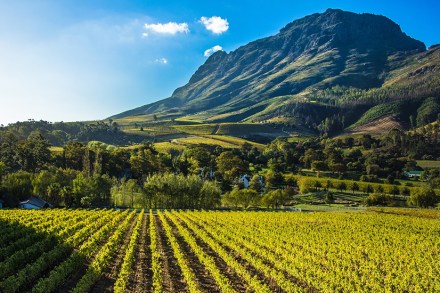
Lockdown provides time to think, and to reminisce. A South African friend, trapped in Amsterdam, phoned the other day. Had I written about the David and Nadia wines from Swartland we had tasted at the end of last year? Not yet: I was awaiting further particulars, which may have been remiss of me. Justerini and Brooks is a major stockist and they are some of the best wines coming out of South Africa, which is saying a lot. Wines have been produced in South Africa since the Huguenots settled in vine-friendly lands not far from Cape Town. Stellenbosch, Paarl and the aptly named Franschhoek are well known. Swartland is catching up. The names take me back to so many evenings in the 1980s, drinking wine in Stellenbosch and discussing the future.

What we know about the Brazilian Covid variant

From our UK edition

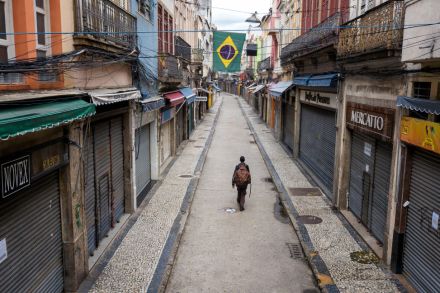
The World Health Organisation’s appeal to stop naming variants of Covid-19 after geographical locations evidently cut no ice with the Prime Minister, who warned MPs yesterday about a new Brazilian mutation of the Sars-Cov2-virus. Chief scientific adviser Sir Patrick Vallance later suggested to ITV News that the changes identified in the new variant ‘might make a change to the way the immune system recognises it but we don’t know. Those experiments are underway.’ According to Pfizer last week, its vaccine still offers protection against the newly-identified Kent and South African variants of the Sars-CoV-2 virus. But should we now be worrying that the Brazilian variant will creep through our defences?

Trekking towards the future

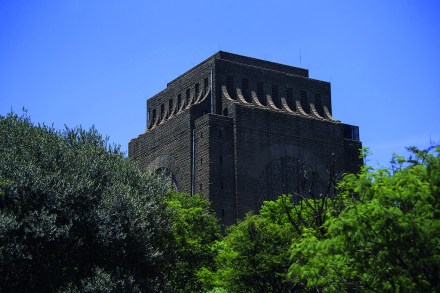
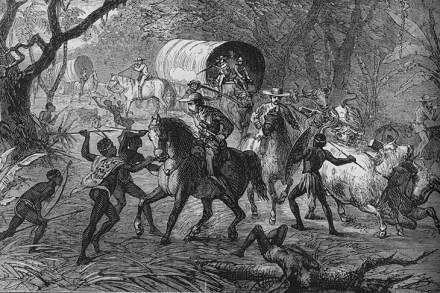
The Voortrekker Monument sits on a hill on the outskirts of Pretoria, South Africa’s administrative capital. During apartheid (‘apartness’) this brooding tower symbolized the Afrikaners’ belief in their manifest destiny and journey to self-empowerment. The place, whose name means ‘Great Trekker’, was popular with school groups, politicians and the armed services. Today it is well maintained but feels forlorn. It is an embarrassing reminder of the past. To get there is a short drive along the highway from Sandton, the northern suburban city which has largely replaced Johannesburg’s decaying central business district.

voortrekker

Prue Leith: My carbon footprint should put me in jail

From our UK edition

I made the mistake of saying I thought insects might help feed the world. They are high-protein, cheap to farm (they breed like rabbits and grow like Topsy), require little water and energy and probably wouldn’t mind being factory-farmed. Now my post is full of mealworm powder and cricket flour and invitations to champion bug farms. Being an adviser to the hospital food review has been surprisingly uplifting. The panel members are mostly NHS professionals who are champing at the bit to improve matters and have already led changes in their own hospitals, so know it can be done. In one hospital, lunch was as good as the best home cooking. Yes, some hospital food is dire, and reform will be a huge task and take years.

The long death of South Africa’s political centre

From our UK edition

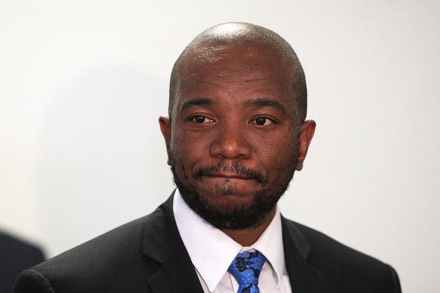
 Cape Town Last Sunday, when South Africa beat Wales to go through to the rugby World Cup final against England, was the last day of a black week in South African politics. The valiant Democratic Alliance, the official opposition, the proud liberal party that fought both apartheid and the abuses of the ANC, fell into strife and ignominy. Its leader Mmusi Maimane resigned and there was furious infighting about its governance and policies. Enemies of liberalism gloated. The election of the dominating figure of Helen Zille as the party’s chair was at the centre of the storm. Africa can prosper only if it follows liberal policies: clean and limited government, the rule of the law, free enterprise, equal opportunities, no discrimination based on race or anything else.

Claret, dogs and nothing to grouse about

From our UK edition

What do you get if you cross a dyslexic, an insomniac and an agnostic? Someone who wakes up at 4 a.m. and says: ‘Is there a dog?’ There was a lot of dog talk this weekend, and about the tributes they bring to their owners in the shooting field. A South African who had just enjoyed his first days at the grouse, walked up and driven, was incoherent with joy, especially as he had made a respectable contribution to the bag. The Afrikaners have always been an embattled race. God usually directs them to the windy side of the hill. When they do find some refuge to enjoy a settled life, perhaps planting a few vines, they often become lyrical about hemel en aarde: heaven on earth.

How to boil a frog

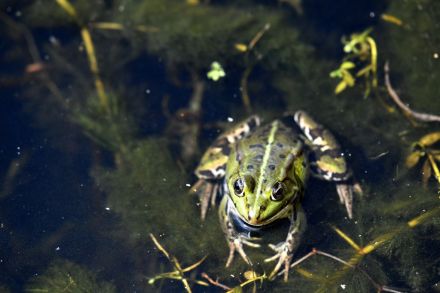
Back in the early 1990s Cyril Ramaphosa, South Africa’s president, outlined the new ANC government’s strategy to deal with the whites: 'it would be like boiling a frog alive, which is done by raising the temperature very slowly. Being cold-blooded, the frog does not notice the slow temperature increase, but if the temperature is raised suddenly, the frog will jump out of the water.' As Dr Oriani-Ambrosini put it, 'He meant that the black majority would pass laws transferring wealth, land, and economic power from white to black slowly and incrementally, until the whites lost all they had gained in South Africa, but without taking too much from them at any given time to cause them to rebel or fight.

frog

King of a wild frontier

From our UK edition

Red Dog is an ambitious hybrid of a book. It was published in South Africa to wide acclaim in 2014 and has been expertly translated by Michiel Heyns, who has retained the cadence and some of the vocabulary of the original Afrikaans — the mongrel tongue that evolved in the Dutch East India Company’s Cape colony. Willem Anker brings South Africa’s bloody birth to life through the story of Coenraad de Buys. The priapic founding father of a nation of bastards, he is a pillager and survivor, a rapist and husband, a colonist and outlaw, a rebel and hero. With his numerous wives and children, he is the gargantuan progenitor at the centre of this sprawling tale, pushing those with whom his life intersects — his intimates and his enemies — to the periphery.

Brutish Brits

From our UK edition

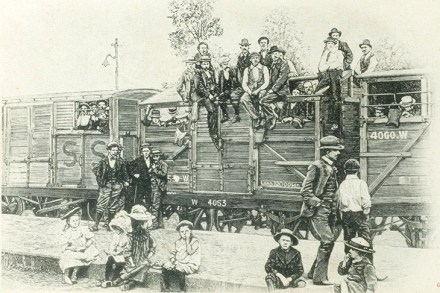
Damian Barr explains the upsetting genesis of his impressive debut novel, You Will Be Safe Here, in his acknowledgements: This story began with a picture of a boy in a newspaper. That boy was Raymond Buys and he’d been killed in a camp not unlike New Dawn. He was just 15. This book is dedicated to him. So the novel opens with a prologue in which a boy, Willem, is left at the New Dawn camp, south of Johannesburg, in 2010. Then Part One takes us back to 1901, to the diary entries of Mrs Sarah van der Watt, about to be taken from her farm — which she watches burn under the British scorched earth policy — to a concentration camp near Bloemfontein.

High life | 17 January 2019

From our UK edition

Gstaad   Do any of you know what cisgender is? I just found out. Cisgender is a term that describes someone whose gender identity matches the sex they were assigned at birth. Amazing, isn’t it, that we now need a pleonasm for saying that someone’s a man or a woman? I sometimes envy my low life colleague Jeremy when I read about his conversations with normal people while living inside a French cave. I can no longer converse with anyone who is ‘with it’ — you know the type, the ones who think you’re a Paleolithic hunter gatherer if you say you’re hungry, what with there being so many famine victims in Africa.

Their finest hour

From our UK edition

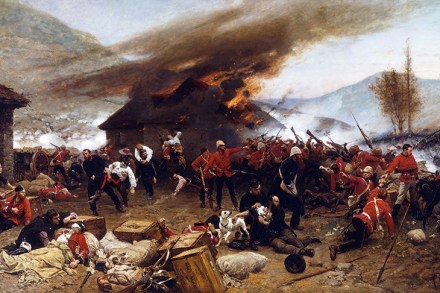
On 22 January last year, the entrance whiteboard at London Underground’s Dollis Hill carried a brief factual statement: On this day in history On the 22–23 January 1879 in Natal, South Africa, a small British garrison named Rorke’s Drift was attacked by 4,000 Zulu warriors. The garrison was successfully defended by just over 150 British and colonial troops. Following the battle, 11 men were awarded the Victoria Cross. A female passenger complained that it was ‘celebrating colonialism’. The board was wiped clean and a suitably opaque quote from Martin Luther King substituted: ‘We are not the makers of history. We are made by history.

Durban Notebook

From our UK edition

No one likes uncertainty and in Britain we’ve got more than our fair share. But spare a thought for South Africa, where the uncertainty is in danger of morphing into national paralysis. ‘What are your plans for the future?’ I ask a friend who lives near Durban. ‘We have no plans. We might be packing up next year and heading out.’ A lot rests on next year. The general election appears to be set for May and with every day the pressure on President Cyril Ramaphosa increases. The 65-year-old millionaire is stuck between the rock of his more militant ANC supporters and the hard place of those impatient for root-and-branch change.

High life | 13 September 2018

From our UK edition

A letter from a reader in South Africa mentions that the writer’s father insisted a white dinner jacket was permissible only in Palm Beach, Biarritz or on the Riviera. I agree and stand corrected, having worn one at the Duke of Beaufort’s bash in July. A heatwave is my excuse. England was a frying pan, I was planning to drink it up, and a new Anderson & Sheppard dinner jacket was hanging Circe-like in my closet. The letter also said that if the Duke is a rock star, as I described him in my July column, then all is forgiven. My South African correspondent would have got a surprise had he been there. There I was, looking like a Grecian version of Fred Astaire, surrounded by terribly young people dressed as if they were going to a formal rave in the Congo.

Smuts-shaming at the University of Cambridge

From our UK edition

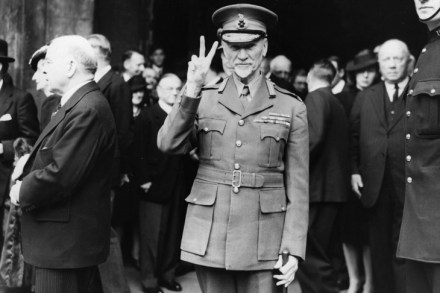
One should not rise to the bait, but the latest little ‘Rhodes must fall’ type story makes it hard. Cambridge University, of which Jan Smuts was once Chancellor, has removed his bust from public display. According to John Shakeshaft, the deputy chairman of the university’s governing council, Smuts has ‘uncomfortable contemporary significance’, as ‘part of the system that led to apartheid’. No mention that the party that Smuts led was the fierce opponent of the National Party, which introduced apartheid in South Africa. True, Smuts, like virtually every white leader of his generation, did not want full democratic rights for black people in South Africa, but there are other things to be said.

Diary – 17 May 2018

From our UK edition

The family ranch, which my father acquired when I was about six years of age, lay along the banks of the Kafue river in northern Rhodesia. Immediately above the river it was swampland. Then it rose up into ranching country where there were good, thick strands of what was then known as Rhodesian grass — a sweet, sweet grass, very nutritious to cattle and to any feeding stock. My father built a lovely old Rhodesian-style house with a thatched roof, adobe walls, and whitewashed verandas. I would come home from boarding school in July and August, which was winter and the best time to be in the African bush: not too hot and not too rainy. I was expected during that holiday period to work for five days on the ranch, doing anything my father decided I had to do.

Winnie Mandela and her legacy of unwelcome truths

From our UK edition

The death of Winnie Madikizela Mandela has come at a delicate time for South Africa. The country's new president, Cyril Ramaphosa, has taken over, yet politics remains in a state of flux. Jacob Zuma's corruption trial, set to take place in June, will see an airing of dirty laundry sure to paint the country's political class in a bad light. Yet Mandela's death has seen South Africa's leaders try to outdo themselves in a different exercise: giving the most nauseating panegyrics to “Mama Winnie”. At Mandela's funeral today, these tributes – which ignore the darker side of her legacy – are sure to continue if her memorial service this week is anything to go by.

Wild life | 5 April 2018

From our UK edition

Laikipia, Kenya Erupe is a Kenyan farmer. He owns a smallholding of a few acres not far from my own place. When we meet our talk is usually about the vagaries that preoccupy farmers: crops, rain, livestock diseases and market prices. On his little patch he built a dwelling from mud and wattle with a corrugated iron roof. Inside, a picture of Jesus on the wall stared down on the poor but growing family, their only possessions a couple of beds, a chair, a radio and some faded photographs of relatives. Outside the hut my friend grew an avocado tree, bananas, a guava and a small patch of blue gums for shade and firewood. Beyond that he and his wife had tilled the soil with jembe mattocks. They planted maize and beans.