South africa

Cape Town, the epicenter for African arts

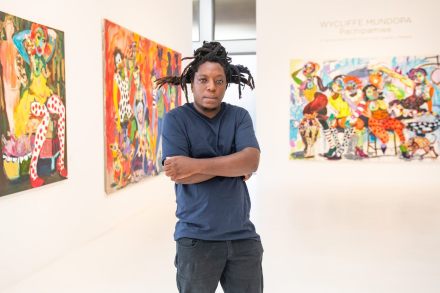
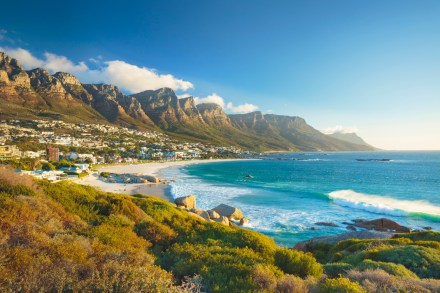
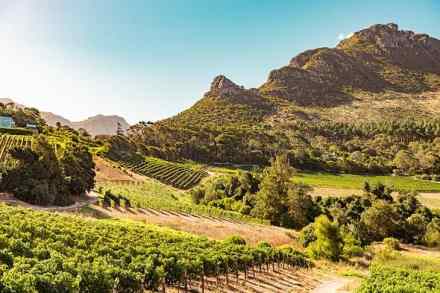
In January of this year, I joined the yearly flight of "swallows" who descend on Cape Town. Thousands of pasty Europeans swap their own chilly hemisphere for a few weeks in technicolor paradise. A day in, I was sold. Mountains to climb, waves to surf, open-toe shoes, a completely unworn jacket. Everyone I met seemed to make this a yearly thing, and I could see why. I spent a few days gaping at the sublime natural beauty before something else caught my eye: the art scene. Cape Town is the epicenter for African arts. Boutique hotels and restaurants are beautifully appointed with painstakingly handmade creations everywhere you look. Museums and commercial galleries abound with exhibitions spanning the whimsical and politically charged.

cape town african arts

Why South Africa is cozying up to Russia and China

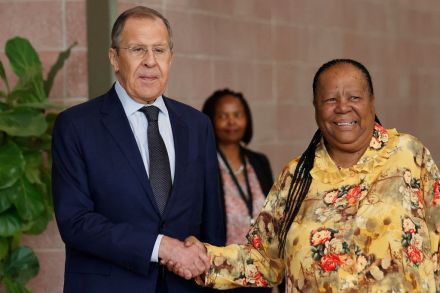
Vladimir Putin’s invasion of Ukraine opened the most dramatic divide between East and West since the Cold War. Most of these divisions were clear beforehand — Hungary and Turkey were longtime thorns in the side of NATO, for example. Yet South Africa’s warming ties with Russia and China seemed to come out of nowhere. South Africa's initial reaction to the invasion was the same as much of the Western world, demanding that Russia leave Ukraine. That did not last, however. South African President Cyril Ramaphosa said on March 17 that “The war could have been avoided if NATO had heeded the warnings from amongst its own leaders and officials over the years that its eastward expansion would lead to greater, not less, instability in the region.

How to escape the cold without jet lag

From our UK edition

My mum yelped. The kayak bucked back and forth as we both mouthed: ‘Dolphins!’ The pair zigzagged around us while we tried to paddle after them. Afterwards, we were paddling back towards land for a busy afternoon of exploring coffee shops and wine bars when a penguin bobbed its head up from the water. In moments like these it's hard to believe you're in a city – but there was Cape Town spread out on the shore ahead of us. The taxi driver who met us at the airport had summed it up: ‘In Cape Town, you can do everything.’ There’s nature in spades (from antelope to whales), incredible food, culture, world-class wine and, according to our kayak guide, ‘some of the best hiking and biking trails in the world’.

The Zulu’s new king brings peace, for a moment

From our UK edition

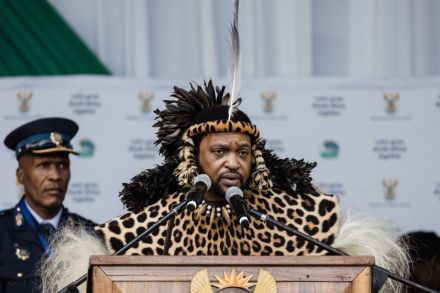
A new king of the Zulu was crowned at the weekend. Thousands in South Africa went to Durban to watch the coronation of Misuzulu kaZwelithini. The city was sunny, which meant the Zulu ancestors were happy. The coronation, held at the Moses Mabhida stadium, was a celebration of Zulu tribal dominance. While South Africa’s president, Cyril Ramaphosa, who handed over the certificate recognising Misuzulu as the Zulu monarch, was booed by the audience, his predecessor, Jacob Zuma, was cheered. Ramaphosa comes from the tiny Venda tribe, on the border with Zimbabwe. Zuma is a Zulu. Zulus don’t care much about the accusations against their former president.

Brilliant and distinctive but also relentless: William Kentridge, at the RA, reviewed

From our UK edition

William Kentridge’s work has a way of sticking in the mind. I can remember all my brief encounters with it, from my first delighted sight of one of his charcoal-drawn animations, ‘Monument’ (1990), in the Whitechapel’s 2004 exhibition Faces in the Crowd to my awestruck confrontation with his eight-channel video installation I am not me, the horse is not mine (2008) in Tate Modern’s Tanks in 2012. That marked a high point for the Tanks, since when they’ve tanked.

Homage to Sydney Kentridge, South Africa’s courtroom giant

From our UK edition

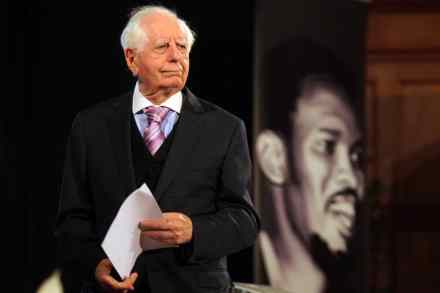
Sydney Kentridge, the protagonist of Thomas Grant’s superb legal saga The Mandela Brief, is that trickiest of biographical subjects: a great man. Grant acknowledges ‘it is rare that, on closer acquaintance, a person touted as a “great” man or woman conforms to the initial description’, but the South African lawyer has been described by countless barristers as the greatest courtroom advocate they had ever seen. Notable for the apartheid cases he conducted as a defence lawyer of especial distinction and passion, Kentridge has also been admired for his calm and assured bearing in court.

The lost world of the Karoo

From our UK edition

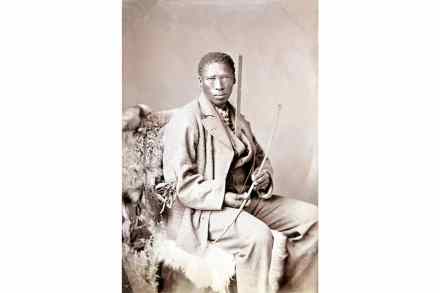
Julia Blackburn’s Dreaming the Karoo is the diary of a very bad year: from March 2020, when a research trip to South Africa was cut short by the sudden emergence of Covid, to March last year. Blackburn had gone to Cape Town, and then into the dry interior, the Karoo, to explore the lost world she had found in an obscure volume that she had once chanced upon in the London Library. Specimens of Bushman Folklore, by the linguists Wilhelm Bleek and Lucy Lloyd, published in 1911, contains the texts – life stories, origin myths, tales about animals, accounts of murders of women and children by the encroaching colonists – given by many of the /Xam, a Bushman group of hunter-gatherers. These informants were captives, hundreds of miles from their homes.

A belter of a podcast, featuring a mad South African: Smoke Screen reviewed

From our UK edition

I go back and forth on tobacco companies. On the one hand, they are merchants of death. On the other, cigarettes are fun and delicious. On the one hand, they push cigarettes on children, which is unconscionable. And on the other, I remember how I would gather in the park with other children to collectively venerate a ten-pack of Marlboro Lights, our soft, pink fingers shivering and struggling with the lighter mechanism, our untutored lips puffing ineffectually at the speckled filter, all of us beginning to grow woozy from the acrid smoke filling our virgin lungs as we stood there and thought: this is the life. Luckily, Smoke Screen sidesteps this question to focus more squarely on corporate espionage within the tobacco industry.

Why I was almost thrown out of South Africa

From our UK edition

On my 2 p.m. arrival for a week-long work trip to South Africa a fortnight ago, an immigration agent flapped my passport while inquiring as to the purpose of my visit. ‘To appear in the Franschhoek Literary Festival’ clearly meant nothing to this woman, but hey, lit fests aren’t exactly Glastonbury. I only grew, shall we say, concerned when she announced that because my passport lacked two sequential completely clean pages, she was denying me entry to the country. ‘You’re kidding me,’ I said – quietly; I didn’t shout. Yet this reflex expression of disbelief was all it would take for the entire team of Cape Town’s gatekeepers to blackball me as a reprobate with a bad attitude. ‘You think I am joking you?

Is Omicron now falling in South Africa?

From our UK edition

Man makes Covid predictions and God laughs. Yet with the stakes this high in Britain, every bit of real-world data is useful. That’s why South Africa is so important: it’s a country with a well-digitised healthcare sector that we have to thank for sequencing the Omicron variant, and has been first to experience the impact. That’s why its figures, released daily, are being watched so eagerly world over. Right now, there are two questions: is Omicron now falling? And if so, what conclusions can we draw? The epicentre is Gauteng province: home to Johannesburg, Pretoria and about a quarter of South Africans.

omicron fear

Inside the Omicron fear factory

In March 2020, a profile of the typical Covid victim emerged from Italy. The average decedent was eighty years old, with approximately three comorbidities such as heart disease, obesity or diabetes. The young had little to worry about; the survival rate for the vast majority of the population was well over 99 percent. That portrait never significantly changed. The early assessments of Covid out of Italy have remained valid through today. And so it will prove with the Omicron variant. The data out of South Africa, after five weeks of Omicron spread, suggest that Omicron should be a cause for celebration, not fear.

The promise of South Africa

From our UK edition

‘Earth has not anything to show more fair.’ One can admire the view from Westminster Bridge and feel near the epicentre of a great civilisation, but still believe that Wordsworth was exaggerating. His line came to mind when I was thinking about Christmases past, two of which I was fortunate enough to spend in the Cape. That scenery really is hard to rival. In the 1980s, the Cape offered five of life’s greatest pleasures. Landscape, politics, shooting, wine — and about 120 miles from Cape Town, there is an enchanting village called Arniston, or Waenhuiskrans, not far from Cape Agulhas, the southernmost point of Africa. Its inhabitants are Cape Coloured fishermen, living in charming white cottages and speaking only Afrikaans. My companion could translate.

The hidden victims of the South African shutdown

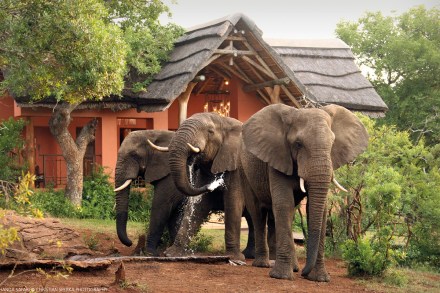
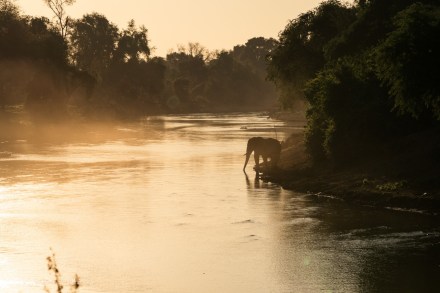
I sit in a National Park in South Africa, looking at an empty restaurant in which a robust staff, hired on for the peak international travel season, stand idle and bored. Many will likely be let go next week as the tourism declines yet again. Many were out of work for a year and only just hired back. The ripple effect of the latest travel shutdown is felt immediately here. Many parks in Southern Africa lost 80 percent of funding through the last shutdown, which in South Africa was one of the most severe. We work here with the Rangers, tasked with protecting the last great population of rhino and elephant, and they cannot afford boots, let alone salaries to pay the staff who work without pause.

south africa shutdown

Escaping from South Africa during the Omicron panic

One of the most gripping scenes in the classic film Casablanca is at the very beginning, when many of the characters who would feature in the story are seen together in a busy city plaza. Suddenly silent as a small Lisbon-bound plane passes overhead, they all look up, and the audience can see in their faces the cumulating stress of not knowing when, or even if, they would get out of wartime Morocco and fly to America. I never imagined I would experience anything remotely like that until just a few days ago when my twenty-eight-year-old son Zachary and I were wrapping up a long-planned and, due to the coronavirus, frequently postponed vacation to South Africa.

omicron

Comparing Fauci to Josef Mengele seems ill-advised

Cockburn always thought Thanksgiving was the holiday designated for sharing madcap political views that one day you'll regret saying aloud. So kudos to Fox Nation's Lara Logan for extending the tradition into advent, by offering a comparison between Anthony Fauci and Nazi doctor Josef Mengele on Monday's edition of Fox News Primetime. Logan, a former war correspondent, was invited on to discuss the Omicron variant. Presumably the logic behind the booking was that the variant emerged from her home country, South Africa. Here's the expertise she chose to provide: On Dr. Fauci, this is what people say to me. He doesn't represent science to them, he represents Josef Mengele. Dr. Josef-the Nazi doctor who did experiments on Jews in the second world war and in the concentration camps.

lara logan

How 19th-century gold rushes led to a distrust of China

From our UK edition

For a brief moment three summers ago it seemed that the clear Idaho air wafting through the Sun Valley Literary Festival had become tainted with the smoke and soot of Nuremberg. Here was Thomas Friedman, bloviator-in-chief to America’s chattering classes, standing before a rally of thousands, delivering a powerful philippic about the ascent of the Asiatic East. As he warmed to his theme, he decided for some messianic reason to demand that his audience chant the phrase that he suggested now dominated the American economic landscape. Come on, he urged like a latter-day Elmer Gantry, yell out with me the words: ‘Everything. Is. Made. In. CHINA!

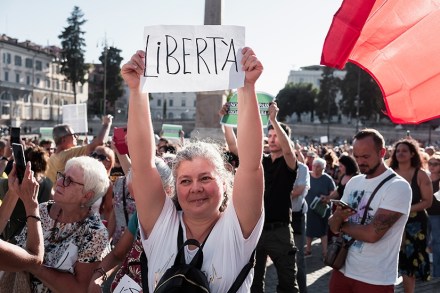
Letters: Why aren’t Italians fighting for their liberty?

From our UK edition

Wage concern Sir: Martin Vander Weyer’s call for higher wages to end the shortage of British HGV drivers (‘Your country needs you at the wheel of a lorry’, 7 August) should be extended to other hard-pressed economic areas which have lost cheap labour from the poorer EU countries. For far too long, farming, hospitality, construction, care homes and other vital services have failed to recruit and train local staff or pay a decent wage. Low wages at the bottom of the economy increase the cost of social welfare benefits, bring in less or no money from income tax and VAT and thus adversely affect the whole economy.

Letters: The problem with the ‘alpha migrants’

From our UK edition

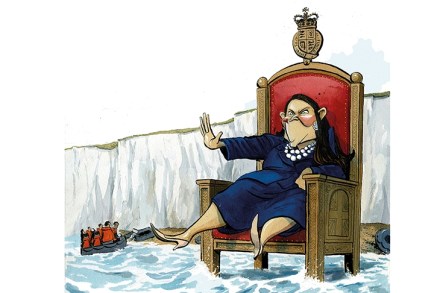
Here illegally Sir: Unfortunately, Charlotte Eagar misses the point (‘The alpha migrants’, 31 July). The Channel migrants may be ‘bright and brave’, and may repay what they gain from the benefit system. But they are here illegally, thus riding roughshod over the immigration system and those who are still waiting to have their asylum applications processed lawfully. This farce must not be allowed to continue as a taxpayer-funded taxi service for people-trafficking gangs.

The case for travelling abroad

From our UK edition

I’m off. In the week when you may read this, my partner and I will be winging our way to the European mainland, exploring, visiting friends, and immersing ourselves in new places, among new people who speak languages other than our own. Even as I write this, I can anticipate a sour response from some who read it. Over the past year I’ve learned that any mention of travelling abroad draws from certain quarters three types of disgruntlement. Three, in fact, of the Seven Deadly Sins. The first is Envy. ‘Oh, bully for you!’, ‘It’s all right for some’, etc. This I disregard.

The real reasons for South Africa’s riots

From our UK edition

Sixty-eight years ago, when I was four, my Scottish father and English mother took me from London to South Africa, to a seaside town 20 miles south of Cape Town in the Western Cape. This is Fish Hoek (pronounced ‘fishhook’). I was brought up here, and after working in England and elsewhere in South Africa, I have returned. I have lived through the rise and fall of apartheid, and the 27-year rule of the ANC. I watched the terrible recent events, which seem to have subsided. We are sifting through the ruins and wondering what happened, and why. South Africa has nine provinces. Two of them, KwaZulu-Natal (KZN, formerly Natal) and Gauteng (with Johannesburg and Pretoria), have been devastated by violent riots.