South africa

Hope against hope

From our UK edition

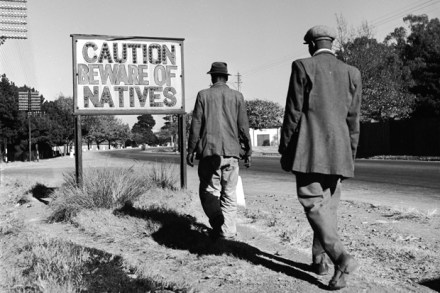
At the eye of apartheid South Africa’s storm of insanities was a mania for categorisation. Everything belonged in its place, among its own kind, as if compartments for scientific specimens had been laid out across the land. Or, as Christopher Hope puts it in his caustic new satire, people were ‘corralled in separate ethnic enclosures, colour-coded for ease of identification’. Reminding us that ‘Jim Fish’ was a derogatory term for a black man in South Africa, Hope thrusts his eponymous hero, who fits no racial category, into this mad system of classification. To some, Jimfish appears ‘as white as newly bleached canvas’, to others ‘faintly pink or tan or honey-coloured’. Nonetheless, racist whites treat him as ‘not the right sort of white’.

Rhodes to nowhere

From our UK edition

‘Rhodes must fall!’ shouted angry black students at the University of Cape Town. The problem is — and it is the profoundest problem of race relations — they were also demonstrating by their every action and desire that they want Rhodes to rise even higher. Last month a black 30-year-old student, Chumani Maxwele, in a great blaze of publicity, threw ‘human excrement’ over the statue of Cecil John Rhodes on the steps to the university’s upper campus. It was followed by similar acts and protests across South Africa against symbols of white imperialism and colonialism. At UCT itself, black students stormed into a council meeting chanting, ‘One settler, one bullet!

School trips go global

From our UK edition

To an older generation a school trip was something to be endured as much as enjoyed. It meant an expedition to peer at frogspawn in Epping Forest or, for the recklessly profligate, maybe a coach to Skegness. Over recent decades, however, as top schools have raised their fees in line with the international oligarchy’s ability to pay them, school trips have come to resemble the work of chichi travel agents. Designed to build character, they now build air miles. The trend was already well under way when I was at school in the austere early noughties. Twice a year we went on ‘expeditions’.

Marlene Dumas at Tate Modern reviewed: ‘remarkable’

From our UK edition

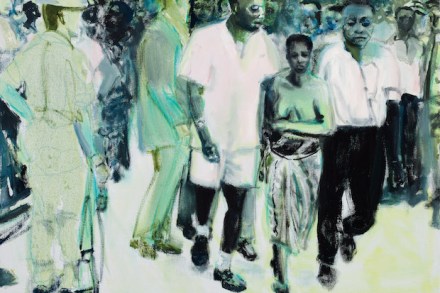
‘Whoever wishes to devote himself to painting,’ Henri Matisse once advised, ‘should begin by cutting out his own tongue.’ Marlene Dumas — whose work is the subject of a big new retrospective at Tate Modern — has not gone quite that far (and neither, of course, did Matisse). On the other hand, she does not hand out many clues as to what her work is all about. On the contrary, when Dumas says anything about her painting, it is inclined to be a self-deprecating paradox. ‘I paint because I am a woman,’ she states on her website. ‘(It’s a logical necessity.) If painting is female and insanity is a female malady, then all women painters are mad and all male painters are women.

Refugees and resilience: a story of Africa

From our UK edition

I would love to sit in on a Jonny Steinberg interview. Over the years this South African writer has perfected a form of reverse ventriloquism, in which he becomes the mouthpiece for the Africans whose lives intrigue him. I’d like to know how he does it. The process must require relentless badgering, as interview is piled on interview, memory upon memory. One suspects his subjects occasionally come to regret agreeing to cooperate. As a reader, I can only thank them for their patience. For the results are true, relevant, modern narratives conveyed with such eloquence and poignancy they acquire almost Shakespearean gravitas. In his previous books, Steinberg told the stories of South African mobsters, beleaguered Afrikaner farmers, Aids sufferers and exiled Liberian refugees.

Low life’s Limpopo legend

From our UK edition

‘You’ve got a lot to live up to,’ said the ranger. ‘The last Spectator journalist who stayed here was Jeremy Clarke. He made quite the impression.’ Like some sort of Zulu legend, our ‘Low life’ columnist’s time at Shambala game reserve is now talked about around the campfire — or braai as it is known in South Africa. ‘I heard he commandeered a safari vehicle and set off to find a drinking hole,’ said one of the camp staff. ‘He held a wet T-shirt competition,’ said another. ‘All the local women were very impressed.’ Apparently even Douw Steyn, who owns the reserve, still reminisces about Jeremy’s time there. You might not have heard of Steyn, but you will know his work.

Norman Mailer’s wife comes out of the shadows

From our UK edition

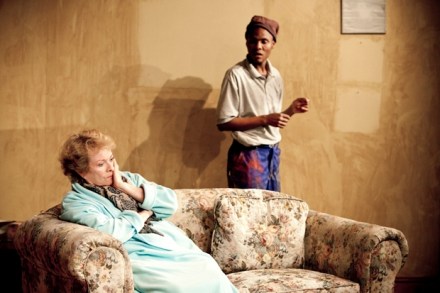
‘It’s not as bad as I thought it would be,’ said Norman Mailer to his wife, Norris Church, after reading the first chapters of a novel she wrote in the 1970s. It took her decades to recover from this accolade and the book remained unpublished until 2000. Here’s a two-handed drama she drafted in the 1980s. The setting is a New York strip joint. A social anthropologist finds a girl in a booth and hires her to describe her daily life. He feeds her banknotes through a slot, like a zoo-keeper giving peanuts to a caged marmoset, and she prattles away at him earning a dollar every 60 seconds. She strongly suspects he’s not a scientist but a self-deluding voyeur who disguises his carnal appetites as an intellectual investigation. Happens a lot, she says to him.

Portrait of the week | 30 October 2014

From our UK edition

Home The last British combat troops turned over Camp Bastion in Helmand to Afghan forces and withdrew from Afghanistan after 13 years and 453 deaths. Michael Fallon, the Defence Secretary, spoke of ‘whole towns and communities being swamped by huge numbers of migrants’. He later withdrew the word ‘swamped’, but David Blunkett, a former Labour home secretary who used the word 12 years ago, said: ‘I believe that both Michael Fallon and I were right to speak out.’ This came after Angela Merkel, the Chancellor of Germany, responded to an idea of David Cameron, the Prime Minister, that European Union migration could be renegotiated; she said: ‘Germany will not tamper with the fundamental principles of free movement in the EU.

It takes an elephant to get my teenage son up early

From our UK edition

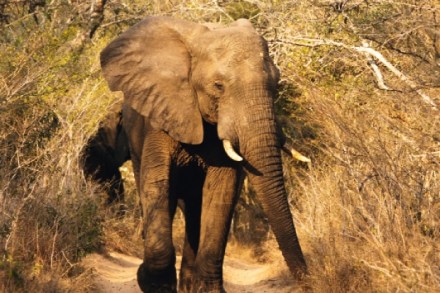
Having just turned 13, my boy Ferdy doesn’t really do early mornings. Indeed, during the summer hols we rarely glimpsed him before noon and then only fleetingly whenever he chose to assemble himself a triple-decker jam and Nutella sandwich and flee back upstairs to his darkened room and repeats of Top Gear on his iPad. I saw more of our neighbours’ kids than I did of our own. But there Ferdy was at 5.30 a.m., bright-eyed, bushy-tailed and raring to go. ‘Come on, daddy, for heaven’s sake shake a leg, everyone’s waiting!’ I hardly recognised the boy. We were staying at Phinda Forest Lodge in KwaZulu-Natal, south-east of Johannesburg, for three days’ safari and some father-and-son bonding, and it was time for the first early-morning game drive.

At least South Africa has the world’s best murder trials

From our UK edition

 Johannesburg I was astonished, in London the other week, to discover how closely you Britons were following the Oscar Pistorius trial. I was invited to Rosie Boycott’s breakfast club, which meets on Friday mornings in a west London coffee house. The table was full of charming old geezers of approximately my vintage, all clearly Oxbridge men of the most civilised variety and yet as taken with the Pistorius drama as any Hello! magazine subscriber. Why did the Oscar trial grip the world’s imagination? Some say it is because of the blade runner’s novel handicap. Others put it down to feminism — women everywhere were pissed off by what they took to be the cold-blooded murder of ‘one of us’.

Why squash deserves a place in the Olympics

From our UK edition

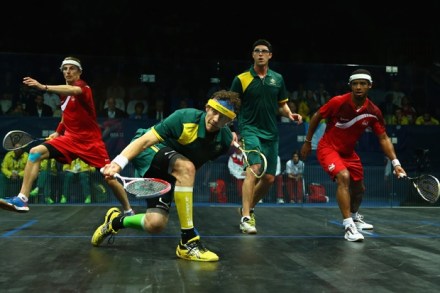
Thank god for the Commonwealth Games: at least they gave us a brief respite from football transfer stories. Instead of having to read about an 18-year-old defender being bought by Overambitious Wanderers for the GDP of a medium-sized African nation, we could delight in Norfolk Island beating South Africa at lawn bowls, Kiribati and Nauru winning medals in weightlifting or Sri Lanka sharing a rugby pitch with England and Australia. It was a reminder of the brotherhood (and sisterhood) of sport and made me nostalgic for the days before the money men took over football, rugby and cricket. (Yes, especially cricket: have you noticed we don’t have a drinks break any more but a Buxton hydration break, and tea is now the Yorkshire Tea interval?

I think I’ve found the new Maria Callas

From our UK edition

Some of my most enjoyable evenings, when I reviewed opera weekly for The Spectator, were spent at the Royal College of Music, in the tiny but elegant and comfortable Britten Theatre. The performers, onstage and in the pit, are mostly current students of the RCM, led by one or another expert but puzzlingly little-known conductor. Repertoire is reasonably adventurous, but Handel, Mozart, Britten are perhaps the backbone. One of the pleasures of those performances is spotting the singers that one is sure will go on to big operatic careers, if they choose to. I spent a lot of time doing that, and almost always got it wrong. You have to remember that voices that sound well there may not prosper in Covent Garden or other theatres of comparable proportions.

Cultural boycotts are ineffective and wrong

From our UK edition

Scotland’s national poet Liz Lochhead has been at it again. Two years ago she was petitioning against a dance company from Tel Aviv, this year it’s an Israeli theatre company that’s set to play the Edinburgh Fringe. Both companies are 'guilty' of being in receipt of state funding. So, we have another letter and another long list of high-profile signatories calling for boycott. However, we all know – as Lochhead must know – that a boycott won’t, of course, happen (it’s about being seen to take a 'principled stand', d’oh). The nature of Incubator Theatre’s production is irrelevant – I gather it’s some 'film noir-type hip-hop musical'.

Nadine Gordimer, 1923-2014

From our UK edition

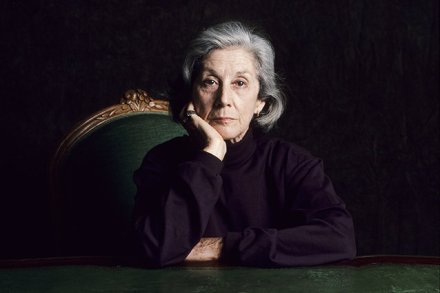
Spectator reviewers over the years have had a difficult time with Nadine Gordimer’s books. Gordimer (1923 - 2014), who won the Nobel Prize for literature and was one of the leading campaigners against apartheid, has died at the age of 90. Her books are passionately political and sometimes maddeningly abstract; some found them poetic, others were infuriated. Livingstone’s Companions in 1972 was a great book, Douglas Dunn wrote at the time. 'There is so much intelligence being brought to bear in her work that revulsion or criticism is never pious or direct but almost invisibly balanced by ironies, by the natural moral of fiction itself. Indignation is constantly being toned down by sympathy for the general human condition.

Politically correct wines worth drinking

From our UK edition

When the editor of this special suggested I might try some wine for him (did he need to ask twice? No!) it’s fair to say that New World wines weren’t my first pick. ‘How about Eastern Europe?’ I said, with an eye to Macedonia. Or failing that, Germany? It’s far too long since I’ve tasted Frankenwein and you can’t get the best stuff here for love nor money. I was perfectly game for English wine. But nope. Everyone else had got the Old World stuff first; it was the New World for me, and I am one who feels subconsciously that things have been going downhill since 1492. Private Cellar, who supplied my case, were keen I should try a couple of South African growers. This brought a different set of preoccupations into play.

Is democracy flourishing in South Africa?

From our UK edition

This week South Africa has held events to mark 20 years of democracy. Simon Jenkins, writing after the first election that included black people, was deeply moved: Democracy is an unromantic ideology, but the old girl can still draw a tear. I have never witnessed a political event to compare with the South African election, not even the fall of the Berlin Wall. The silent queues snaking for miles across bush and township were mesmeric…Streets that saw gunfights, burnt homes and necklaced corpses were graced with orderly lines in their Sunday best… Twenty-five million blacks got up one morning, and decided to put their faith in democracy. Nobody foretold this.

I hope and pray that bookshops will survive – somehow

From our UK edition

When writing a novel, there comes a time, in the process of gestation and planning, when other books are required. It is almost as though, Middlemarch-like, your little attempt at writing cannot be separated from what others have written. The world is a great web. Books speak to books. They cry out, call, whisper. I find it very strange. When writing a novel, when so much is held in your heart and your head, certain books quietly announce themselves. Usually, I have found, that happens in bookshops - those rapidly-diminishing repositories of paper and card and ink. It is not the same online, on the electronic web. Yes, I know that Penguin Random House has just publicised plans to build platforms that will enable readers to share their thoughts on good books.

We’re all just bewildered apes – my financial adviser proves it

From our UK edition

Depressed and demoralised after the defeat of his nation of farmers in the second Boer war, Eugène Marais, an Afrikaner patriot, lawyer, naturalist, poet, lifelong morphine addict and journalist, went to live with a troop of baboons in the then remote Waterberg area of South Africa. He camped in their vicinity and was gradually accepted by them and afforded a place in their society. His books about his experiences, My Friends the Baboons and The Soul of the Ape, have subsequently made his name as the father of the scientific study of the behaviour of animals. In The Soul of the Ape he proposed a theory of the evolution of the human psyche that runs approximately as follows. Man and all the higher primates are in a state of bewilderment. Why?

Why shouldn’t people have a flutter on the Pistorius trial?

From our UK edition

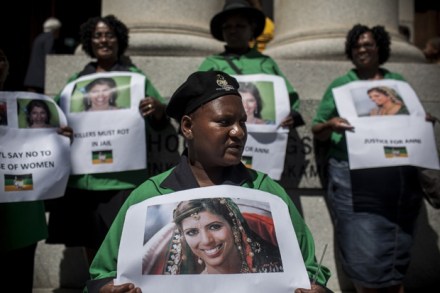
You can bet on all manner of scummy things on Paddy Power: when Fergie and Andrew will remarry; how Julian Assange will leave the Ecuadorian embassy (odds for him leaving in a diplomatic bag are currently 20/1). Now you can also bet on the outcome of the Pistorius trial. I’ve got a fiver on the Blade Runner getting off. I jest. But given the extensive coverage lavished on the trial so far, is it any wonder that people are starting to have a flutter. The scrutiny has been astonishing – with live television and radio broadcasts available for anyone who cares. South Africa even has a 24-hour TV channel devoted to coverage and commentary of it.

Why America’s ivory ban won’t help elephants

From our UK edition

The Duke of Cambridge deserves credit for bringing his influence to bear on the growing tragedy of the elephant, whose population is being decimated by poaching. But his advisers should have been quicker to dissuade him from one aspect of his campaign: the threat to dispose of his grandmother’s ivory collection. That Africa’s elephant population is in peril from poachers is not in doubt. Of a total of 400,000 living in the wild, around 50,000 were illegally killed last year, way beyond the numbers which the population could naturally withstand. The future is looking bleak, too, for wild rhino, 1,000 of which were poached in Africa last year out of an estimated total of 25,000.