Andrew Kenny

Trump was right to snub Johannesburg’s G20 summit

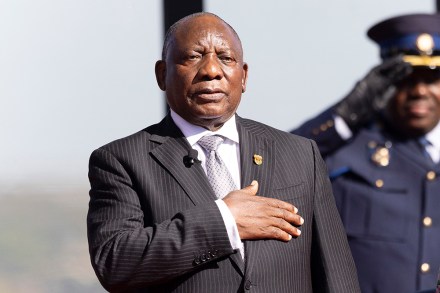
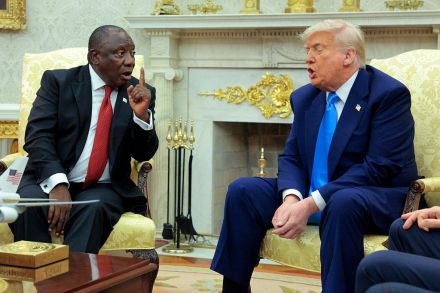
The rule of the African National Congress (ANC) in South Africa since 1994 has been marked by a widening chasm between poor black people, the majority and a tiny black elite, who get richer and richer. A quarter of our children are so badly malnourished that their brains are stunted for life. Amid this terrible hunger, President Cyril Ramaphosa lives in fabulous splendor. He is said to be worth 6 billion rand (around $350 million). He has mansions in the rich parts of South Africa. He has a fleet of luxury cars. He owns a game farm of 11,120 acres. Yet before the G20 meeting of international leaders in Johannesburg, he wrote in his newsletter, “Inequality is one of the most pressing global issues of our time.
south africa

The sorry farce of Afrikaner ‘refugees’ fleeing ‘white genocide’

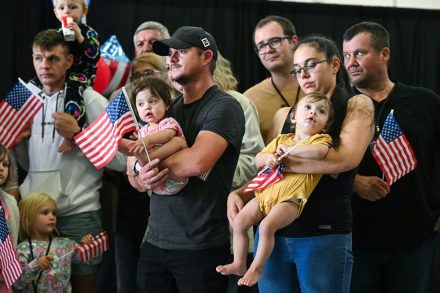
The worst victims of South Africa's African National Congress are not white Afrikaners, even if they are a vulnerable group. The worst victims are poor black people, the majority of South Africans, who have been deliberately impoverished by the super-wealthy ANC elite. These blacks live in stinking squalor with 42 percent unemployment, with water and sanitation failing, terrorized by violent crime and stricken by malnutrition. If any South Africans should be welcomed into the US as refugees, it is they. So it was a sorry farce when 49 Afrikaner “refugees” were greeted as heroes by senior US officials at Dulles Airport in Washington Monday. Trump is talking nonsense about “white genocide” in South Africa.

Afrikaners

James Heale, Andrew Kenny, Lara Prendergast, Ysenda Maxtone Graham and Nina Power

From our UK edition

41 min listen

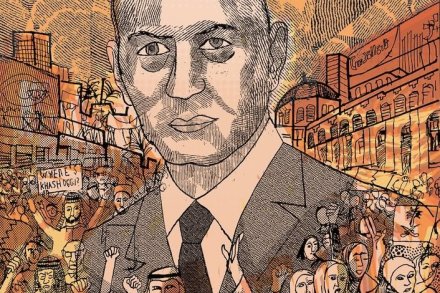
On this week’s Spectator Out Loud: James Heale wonders what Margaret Thatcher would make of today’s Conservatives (1:28); Andrew Kenny analyses South Africa’s expropriation act (6:13); Lara Prendergast explores the mystery behind The Spectator’s man in the Middle East, John R Bradley (13:55); Ysenda Maxtone Graham looks at how radio invaded the home (30:13); and, Nina Power reviews two exhibitions looking at different kinds of rage (35:13).  Produced and presented by Patrick Gibbons.

The dark heart of South Africa’s Expropriation Act

From our UK edition

Cape Town How damaging will South Africa’s Expropriation Act be? The legislation, which allows the state to seize private property without compensation, was signed late last month by President Cyril Ramaphosa. The act is consistent with the Marxist ideology of the South African Communist party, an ally of the ruling African National Congress (ANC). It’s claimed it will ‘redress the results of past racial discrimination’ and ‘undo the legacy of apartheid’ (among other platitudes). The reality, however, is that this legislation will likely do nothing to help the country’s majority black population who live in grinding poverty.

What the end of sole ANC rule means for South Africa

From our UK edition

Election day on 29 May was a tumultuous, wonderful day for South Africa. 30 years of corruption and ruin under the sole rule of the African National Congress (ANC) party came to an end. The ANC, which won 63 per cent of the vote in the first democratic election in 1994, and 70 per cent in 2004, now only won 40 per cent. When the ANC took power in April 1994, South Africa had the strongest economy and the best infrastructure in Africa. We had a plentiful supply of the world’s cheapest electricity and the world’s greatest mineral treasure. The horrible apartheid laws had been scrapped by the last white government. We were the darling of the world, which was eager to trade with us. We had bountiful advantages.

Country strife: the covert campaign against field sports

From our UK edition

41 min listen

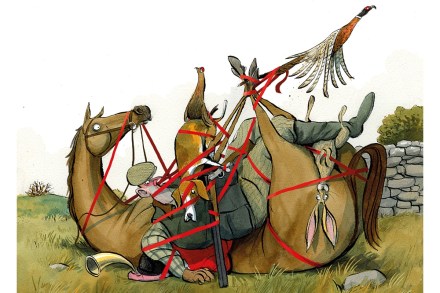
This week:  It’s a special episode of the Edition podcast because our very own William Moore writes The Spectator’s cover piece, on how rural pursuits are being threatened by lawfare from countryside groups. Jonathan Roberts, who leads the external affairs team at the Country Land and Business Association, joins us to discuss whether disillusioned rural Tories could look to Labour at the next election.  Also this week:  In his piece in The Spectator, journalist Andrew Kenny writes about the rise of Julius Malema and his Economic Freedom Fighters.

Beware South Africa’s rising star

From our UK edition

Cape Town ‘Shoot to kill! Kill the Boer, the farmer! Kill the Boer, the farmer! Brrrr! Pah! Pah!’ These were the words chanted in fine voice by Julius Malema to a rapturous crowd of 100,000 at South Africa’s biggest stadium in Johannesburg on Saturday 29 July. Malema was celebrating the tenth birthday of the EFF, the political party he founded and leads. EFF stands for Economic Freedom Fighters. It is dedicated to fighting economic slavery. It declares itself Leninist--Marxist, wants to seize private property (as Malema’s hero Robert Mugabe did in Zimbabwe), plans to nationalise the banks and the mines and enforce total state control. The EFF is the fastest-growing political party in South Africa and Malema the most forceful political leader.

The real reasons for South Africa’s riots

From our UK edition

Sixty-eight years ago, when I was four, my Scottish father and English mother took me from London to South Africa, to a seaside town 20 miles south of Cape Town in the Western Cape. This is Fish Hoek (pronounced ‘fishhook’). I was brought up here, and after working in England and elsewhere in South Africa, I have returned. I have lived through the rise and fall of apartheid, and the 27-year rule of the ANC. I watched the terrible recent events, which seem to have subsided. We are sifting through the ruins and wondering what happened, and why. South Africa has nine provinces. Two of them, KwaZulu-Natal (KZN, formerly Natal) and Gauteng (with Johannesburg and Pretoria), have been devastated by violent riots.

What’s behind the South African riots?

From our UK edition

South Africa is ablaze once more. In the provinces of KwaZulu-Natal (formerly Natal) and Gauteng (which includes Johannesburg and Pretoria), the cities are burning. Shops and businesses have been turned to ashes; trucks are on fire; mobs of excited young men are smashing and looting; a Durban ambulance, trying to take a critically ill patient to hospital, was attacked; in the middle of a crippling Covid-19 lockdown, pharmacies have been plundered and vaccination sites have been suspended; motorways have been closed; over 70 people have been killed. The South African president, Cyril Ramaphosa, has called out the army. These rioting young men lead wretched lives, mainly because of the ANC government, which has ruled South Africa for 27 years.

The long death of South Africa’s political centre

From our UK edition

 Cape Town Last Sunday, when South Africa beat Wales to go through to the rugby World Cup final against England, was the last day of a black week in South African politics. The valiant Democratic Alliance, the official opposition, the proud liberal party that fought both apartheid and the abuses of the ANC, fell into strife and ignominy. Its leader Mmusi Maimane resigned and there was furious infighting about its governance and policies. Enemies of liberalism gloated. The election of the dominating figure of Helen Zille as the party’s chair was at the centre of the storm. Africa can prosper only if it follows liberal policies: clean and limited government, the rule of the law, free enterprise, equal opportunities, no discrimination based on race or anything else.

Winnie Mandela and her legacy of unwelcome truths

From our UK edition

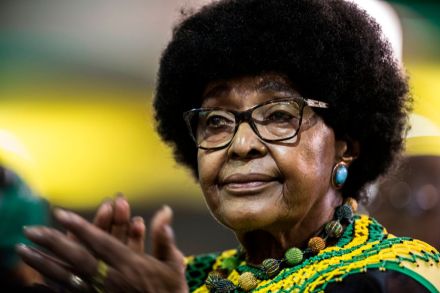
The death of Winnie Madikizela Mandela has come at a delicate time for South Africa. The country's new president, Cyril Ramaphosa, has taken over, yet politics remains in a state of flux. Jacob Zuma's corruption trial, set to take place in June, will see an airing of dirty laundry sure to paint the country's political class in a bad light. Yet Mandela's death has seen South Africa's leaders try to outdo themselves in a different exercise: giving the most nauseating panegyrics to “Mama Winnie”. At Mandela's funeral today, these tributes – which ignore the darker side of her legacy – are sure to continue if her memorial service this week is anything to go by.

Winnie Mandela, martyr and tyrant

From our UK edition

Lest we forget: Winnie Madikizela Mandela (1936 - 2018); Age: 81; Cause of death: illness James “Stompie” Seipei (1974 - 1989); Age: 14; Cause of death: murder, throat slit South Africa is in mourning over Winnie Madikizela Mandela who died on Monday. The official mood is of sadness and eulogy. The unofficial mood is quite different and rather confused. Any hard look at her life brings up all sorts of disturbing questions about her and about South Africa’s transition from apartheid to democracy. The official message seems to be: “Don’t look too hard”. Of course, Winnie Mandela endured many wrongs under the apartheid regime. She was held without trial and denied a family life as a result of her husband Nelson's unfair imprisonment.

The rainbow election

From our UK edition

 Cape Town South Africa has just seen her most encouraging election results ever. The general election of April 1994, which brought full democracy, was important in itself but its results were a foregone conclusion — the black majority voted for the ANC, as expected. The local elections this month were different and immensely hopeful. There has been a large vote against the ruling party, the ANC, bringing an end to the great curse of post-colonial Africa under which the people keep voting for the ‘liberation’ party however corrupt and incompetent it is. The ANC still won 54 per cent of the votes, but this is the first time its share has fallen below 60 per cent.

Rhodes to nowhere

From our UK edition

‘Rhodes must fall!’ shouted angry black students at the University of Cape Town. The problem is — and it is the profoundest problem of race relations — they were also demonstrating by their every action and desire that they want Rhodes to rise even higher. Last month a black 30-year-old student, Chumani Maxwele, in a great blaze of publicity, threw ‘human excrement’ over the statue of Cecil John Rhodes on the steps to the university’s upper campus. It was followed by similar acts and protests across South Africa against symbols of white imperialism and colonialism. At UCT itself, black students stormed into a council meeting chanting, ‘One settler, one bullet!

The grim state of South Africa one year after Nelson Mandela

From our UK edition

 Cape Town Nelson Mandela was so much the father of our new democracy that when he died a year ago South Africans felt like orphans. The joyful moment when he became our president 20 years ago has been replaced with a sombre mood now. South Africa has political stability, a fairly healthy democracy and has lifted millions of her people from the lowest rungs of poverty, but economic growth has been pitifully low, unemployment is at 37 per cent, and dreadful levels of violent crime terrorise the whole population, particularly the poor. The education of black children is among the worst on earth. The civil service, central and local, is bloated, incompetent and corrupt. State hospitals, state electricity supply and the state airline are failing.

Nelson Mandela: South Africa’s Churchill

From our UK edition

Like Winston Churchill, Nelson Mandela had one shining hour that eclipsed everything else and made the world better. Nelson Mandela belongs to a very rare class of great men.  Such men are remembered not only for their great deeds, not only for making our world better, but for bearing a special grace that transcends the business of their age.  They are the stuff of folklore. In the 20th century I can think of only two examples: Mahatma Gandhi and Nelson Mandela. But even Gandhi was susceptible to pious humbug. ‘It takes a lot of money to keep Gandhi in poverty,’ said one of his advisers. Mandela was never seduced by the grandeur of humbleness. Among men who attained power, he is probably unique in the past hundred years.

Which kills more: ideology or religion?

From our UK edition

The sun set on the 20th century more than four years ago but you can still see a blood-red glow on the horizon. The century that saw unprecedented technological progress also saw unprecedented slaughter. Previously, religion had served mankind’s deep needs for explanation, order, spiritual comfort and transcendental meaning. Now a new and hideous thing was summoned up to serve the same needs. The thing was ideology, and in a few decades it caused more bloodshed than millennia of religion. It was darker and more irrational, and contained within it something unknown to all the Religions of the Book: a death wish. Religious leaders, however bad they may be, however prone to hubris and hatred, are constrained by fear of God above and by ancient tradition and wisdom.

Another form of racism

From our UK edition

Andrew Kenny says that the National party has met its logical end — in the bosom of the racist ANC Last week an Afrikaans man with a plump face, large spectacles and the nickname of ‘Kortbroek’ (Short Pants) announced that he was joining the ANC. Thus ends the 90-year history of the most radical and notorious political party in the history of South Africa. Thus ends the National party of apartheid. The writer J.G. Farrell once said that the greatest phenomenon of his age was the decline of the British empire. The greatest political experience of my life in South Africa has been the decline of Afrikaner power, which saw its zenith under apartheid.

Black fascism

From our UK edition

Cape Town Anyone who wants to understand the inner workings of South Africa should pay careful attention to a speech made by President Mbeki at an official funeral in the Eastern Cape on 22 June. Surrounded by powerful black leaders of the new, liberated South Africa, Mbeki gave a eulogy for the departed man and urged the nation to rally behind his dream and to carry on his work. The deceased was the leading black supporter of apartheid, Kaiser Matanzima, the former president of the Transkei 'homeland', Pretoria's ultimate stooge in the days of white minority rule. The two key figures in the formation of 'Grand Apartheid' were Hendrik Verwoerd and Kaiser Matanzima.