Social media

Have we reached peak ‘curation’?

Are we all curators now? From the hotel chef offering an artfully curated cheeseboard to the fashion world’s curated capsule collections, the sound curators (DJs) and the luxury tour operators flogging seamlessly curated travel experiences – and don’t forget the curated (actually, algorithm-generated) lists from Substack – nowhere is safe from the scourge of the contemporary curator. The actor Idris Elba sees himself less as a conventional musician, ‘more of a curator of music’. In 2023, he curated the Nigerian musician Fela Kuti’s Box Set 6, in case you’re not up to speed on your Afrobeat vibes. The American rapper and songwriter Kanye West identifies as an ‘inventor or maybe curator’, possibly

Mumfluencers and the return of the cottage industry

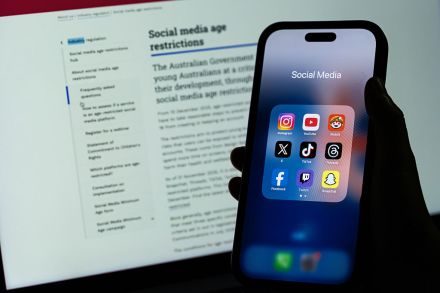
Soon, social media may be banned for under-16s. But the real addicts are mums. I was a sitting duck for the doomscroll as I fed my baby through the day and night. I was firmly pulled into the orbit of the ‘mumfluencers’: content created by and for mothers. Instagram has been a faithful companion through my whole pregnancy, birth and post-partum period. The algorithmic gods sent me helpful videos for late-pregnancy back pain, which were sorely needed, and less helpful videos of eight-week-olds sleeping through the night, which sent me into despair. At every stage, mumfluencers offer an endless loop of advice, warning and encouragement — difficult to resist when

The rise of toxic femininity

At the end of last year, the government announced a programme designed to tackle the radicalisation of young men in schools. Teachers will be trained in how to spot misogyny in the classroom and children deemed to be at fault sent on ‘toxic masculinity’ courses – an attempt to ‘re-educate’ white working-class boys that’s guaranteed to spawn 1,000 memes. It was billed as a key component of the government’s strategy to halve violence against women and girls by 2035. Don’t worry about the grooming gangs – the real predators are the knuckle-dragging teenagers, as per Adolescence, which was festooned with Golden Globes by the Hollywood Foreign Press Association last week.

No, the internet is not bad for your child

The forces arranged in favour of banning social media for under-16s are powerful and wide-ranging. The unlikely alliance includes the leader of the Tory party, more than 60 Labour MPs, Big Suze from Peep Show and the patron saint of all bad ideas – His Majesty King Charles III. It seems probable that when amendment 94A of the Children’s Wellbeing and Schools Bill is voted on, it will receive support from all these quarters, as well as from Sir Keir Starmer, who has, true to form, launched a consultation on the issue. A handful of mental health charities will tell him that he must really get on with banning social

Revenge of the invisible woman: Other People’s Fun, by Harriet Lane, reviewed

Do you have one of those friends who is uncannily conscious of the most subtle signs of insincerity; who quietly witnesses selfish and narcissistic behaviour and drily expresses their observations with devastating wit in a few well-chosen words? Well, Harriet Lane is like that friend, and you don’t have to know her to enjoy her deliciously bitchy awareness of fakery. Her first novel, Alys Always (2012), told the story of a silently sour sub-editor who seizes her chance to better her lot through a tragedy. She inveigles her way into the life of a recently bereaved male writer and exploits the situation to enjoy new-found power and material benefits. A

Inside the mind of a modern-day heretic

When I was growing up, it was generally accepted (unless you were a football hooligan) that, however much you disagreed with someone, they were entitled to their opinion. You listened, occasionally interjecting, and then made your case – sometimes forcefully. In the end, you might agree to disagree, but you didn’t harbour any enmity. These days, the idea that a person is free to hold their own beliefs, especially if they run contrary to your own, is considered laughably old-fashioned. The aim now is to silence that individual. If necessary, you eviscerate them, figuratively – usually online. Sometimes, tragically, their views are deemed so unpalatable that they’re silenced for good.

Hex appeal: the rise of middle-class witches

In King James VI of Scotland’s Daemonologie, written in 1597, he vigorously encourages witch-hunting and, in particular, the tossing of witches into the sea. Only the innocent would sink. As a way of identifying witches, it was clear and presumably efficient. These days, we have no such clarity. But witches walk among us. I’m not talking about women in black pointy hats, but something far scarier: the middle-class witch. In the past, she might have been called a depressive, a spinster or a divorcée. Now, she’s probably a middle-aged woman in the Home Counties with a TikTok account, a litany of spells and deep trauma. Modern witchcraft has always invited

When two worlds collide: Well, This is Awkward, by Esther Walker reviewed

Esther Walker, an established journalist and writer of non-fiction, opens her debut novel in the business world but segues into the concerns of balancing children and career. It’s a page-turner, silly yet serious; and, as with many good comedies, the humour comes from pain. Mairéad Alexander is a childless 44-year-old social media exec in London, caught in the hamster wheel of corporate work, hair bleaching and ‘buzzkill’ bad dates, when her life is tripped up by the unexpected arrival of Sunny, her 11-year-old niece. When we meet Mairéad she has recently sold her social media business for a packet and is now a consultant for the company that bought it.

Motherhood is tougher and lovelier than I could imagine

My son’s first birthday has arrived, which feels like a much bigger milestone for us than it is for him. I had to let go of any expectations around motherhood early. At eight months pregnant I learnt that I could not have the calm, candlelit water birth I had planned (does anyone actually have one of those?). It transpired that I had a condition called placenta previa, and so would need a planned caesarean. The midwife cheerily told me not to worry about him ‘coming out the sunroof’ – a rather grating expression as it implies an easy way out, when I am, as it happens, a car without a

What’s really behind Reform’s rise

It is the question dominating bars and fringe debates this party conference season: what exactly is driving Reform UK’s popularity? Various explanations are proffered: the collapse of the two-party system, fickle voter tastes, the rise of populism across the West. But these are symptoms of a much greater shift: the new information age, unleashed by the internet. In a nation whose politics have long been characterised by venerable institutions, Reform, born in 2020, can claim to be Britain’s first successful e-party. Like most apparent overnight successes, Reform has in fact been years in the making. For much of the 2000s, Nigel Farage struggled to get anywhere with his Eurosceptic messaging.

The rise of performative reading

‘To be or not to be’ may be the question but when it comes to eliciting answers, I’ve always preferred Mr Darcy’s epic conversation starter: ‘What think you of books?’ Two hundred years on, it has become harder than ever to find out what anyone actually thinks of books – and not just because our attention spans have been so corroded by dopamine addiction. There are more books published today than ever. TikTok creates relentless literary sensations, and the day after the murder of Charlie Kirk, AI-produced histories were available on Amazon giving ‘the full story’.  If social media is to be believed, everyone is reading so much it’s impossible

Back-to-school photos have become a vulgar wealth flex

How was National Standing on Doorsteps Week for you? For most, it’s a case of grabbing a picture two or even three days after la rentrée, when you remember that you’ve missed the annual obligation to record the progress of what Mumsnetters call the ‘DCs’ (darling children). Assemble them by the front door, roar at the one who’s kicking off to SMILE and look at ME, lament that you failed to get your sons’ hair cut before they went back as overnight they’ve come to resemble Hamburg-era Beatles, press the button and then bundle them into the car. Later, you ping the picture around the family WhatsApp group and stick

The coming crash, a failing foster system & ‘DeathTok’

45 min listen

First: an economic reckoning is looming ‘Britain’s numbers… don’t add up’, says economics editor Michael Simmons. We are ‘an ageing population with too few taxpayers’. ‘If the picture looks bad now,’ he warns, ‘the next few years will be disastrous.’ Governments have consistently spent more than they raised; Britain’s debt costs ‘are the worst in the developed world’, with markets fearful about Rachel Reeves’s Budget plans. A market meltdown, a delayed crash, or prolonged stagnation looms. The third scenario, he warns, would be the bleakest, keeping politicians from confronting Britain’s spendthrift state. We need ‘austerity shock therapy’ – but voters don’t want it. To discuss further, we include an excerpt

The unsettling rise of DeathTok

For teenage girls on TikTok, the makeup routine is an almost sacred ritual. Manicured fingertips dart around at virtuosic speed, applying dabs of foundation, blush and highlighter with precise artistry. Normally the commentary is about the nuances of brushing and blending – but Sophie, a bewitchingly pretty 18-year-old from New Zealand, has something more pressing to discuss. ‘I’d been having headaches for about two months,’ she says, placing dots of concealer under her blue eyes. ‘And then one night – it was my [high school] graduation – I was having a few drinks, which you’re not meant to do when you have glandular fever, which is what we all thought

Lives upended: TonyInterruptor, by Nicola Barker, reviewed

‘Is it any good?’ a friend asked when he saw I was reading this book. ‘Yes,’ I said, ‘but it’s full of wankers.’ By that stage I was only up to page 24, but the remaining 184 pages did nothing to fundamentally alter my view. There is nothing intrinsically wrong with this. The works of, say, Geoffrey Chaucer and Jane Austen, not to mention thousands of others, would be considerably poorer if all the tiresome people were filtered out. But it does make it hard to read TonyInterruptor for more than 30 pages at a stretch. One has to pinch the bridge of the nose and go for a little

Clapping, going grey, getting naked: how to break your phone habit

I’ve been having trouble with my phone recently. I noticed it particularly while in France a few weeks ago. I’d flop on the sunbed with a book and then spend half an hour scrolling through ridiculous videos online. But then I do it at home, too – go to bed early thinking ‘Ooh good, nice early night with my book’. And then I see a video of a dog jumping into a swimming pool, or a chef cooking a Japanese omelette, or someone removing blackheads from their nose, or a clip of something that might be a cake but also might be a shoe, or someone else offering an improbable

The Catholic influencers spreading the word of God

Vatican City In an auditorium just outside St Peter’s Basilica, the Vatican’s Secretary of State, Cardinal Pietro Parolin, sat solemnly in the front row as a young crowd sang, danced and hopped around to a pop hymn. The cardinal, who is 70, was widely expected to become the pope earlier this year. Instead, he inaugurated the Catholic Church’s first social media influencer conference. Around 1,000 influencers attended last week’s Jubilee of Digital Missionaries and Catholic Influencers. In his opening remarks, Parolin described social media as not just an instrument of communication, but ‘a way of living in the world’. The division between the real world and the virtual world is thinning,

Lunch with Thomas Straker, the chef the restaurant world loves to hate

‘It was a heavy week,’ sighs Thomas Straker, explaining why he recently ended up on a drip in New York. He’s been nicknamed Britain’s ‘bad boy chef’, and his fans love him. He owns two restaurants in Notting Hill and has 2.6 million Instagram followers: not far off Nigella. Another restaurant is coming in Manhattan, so he has been spending a lot of time there. ‘Post-service, out late, every night,’ he says. ‘So I was in Soho at 3 a.m. the day before I ran the London marathon… I got carried away’ Straker Industries has many divisions: he runs a YouTube channel, has a butter range and is about to

How ice cream got cool

In the depths of winter last year, an ice cream and wine bar opened in Islington. The Dreamery serves ice creams and sorbets in silver goblets with tiny vintage spoons. On the ceiling is a glowing mural of happy cows and a sun with a face, resembling a child’s finger-painting (the artist is Lucy Stein, daughter of Rick). Outside, neighbours whisper about a recent Dua Lipa spotting. The Dreamery is inspired by the Parisian ice cream and wine bar Folderol, and makes fairly sophisticated flavours such as salted ricotta blueberry and Greek mountain tea. It is TikTok chic – a gamble, after Folderol unwillingly became a viral sensation and ended

Is nothing private any more?

How did the UK become a place where young people think it’s permissible to record a relative at home and make that recording public? Why has privacy been so easily discarded, and why have people welcomed its demise so they can control the behaviour of others? A few years ago, when I taught at university, a student who lived with their parents told me they had argued with their mother about what they described as ‘queer identity’. The student had secretly recorded the argument and wondered what I thought about them using it for a piece of writing. I think their assumption was that because I’m a journalist I would