Short stories

Sometimes one story is worth buying a whole book for. This is one of those times

From our UK edition

Any new book by Lorrie Moore is a cause for rejoicing, but her first collection of short stories for 16 years demands bunting, revelry and tap-dancing. She is one of a handful or two of writers (I’d nominate Anne Tyler, William Trevor, Martin Amis, Kazuo Ishiguro among the rest) whose work is always worth buying. With lesser authors a tepid review might discourage purchase, but Lorrie Moore can fall foul of critics yet still be immensely entertaining. So it is with Bark. The book begins with an absolutely marvellous long story, ‘Debarking’, in which almost every paragraph contains a fresh delight, something so funny and so true that the reader must exclaim aloud.

The food of love | 3 January 2014

From our UK edition

The Albek Duo are two astonishingly beautiful and talented Venetian musicians, Fiona and Ambra, who are identical twins. Hearing the sisters perform inspired Christopher Ondaatje to create this book. He tells a story — ‘Love Duet’ — in which he imagines what would happen if the twins both fell in love with the same man. They agree that one should marry, and they should carry on as before. For the sisters, abandoning their music or each other is unthinkable. This is an anthology of stories on the theme of music and how it can govern our lives and express our emotions. You don’t need to be a concert-goer to enjoy this book — all the pieces assembled here are accessible and absorbing.

Ann Patchett’s new book will win you over, in spite of yourself

From our UK edition

Ann Patchett’s novels revel in the tightly constructed ecosystems imagined for their characters: an opera singer besieged among diplomats in the Orange Prize-winning Bel Canto; State of Wonder’s pharmacologist in the Amazon; a fugitive wife hiding in a home for unwed mothers in The Patron Saint of Liars. In this new collection of personal essays collated from publications including the New York Times, Vogue and Granta, Patchett maps out her own life, her own constructed universe. From a post-divorce stint at TGI Friday’s and an early writing career in women’s magazines (a world where some of the greatest writers cut their teeth, not least Jorge Luis Borges), we move towards bestseller lists and the recent opening of her own independent bookshop.

Shire, by Ali Smith – review

From our UK edition

Pastoral elegy is not what you expect to find in a collection of short stories, but then Ali Smith is a wonderfully unexpected writer. In the first story, ‘The Beholder’, which was shortlisted for the Sunday Times Short Story Award, a patient develops a growth on her chest — ‘woody, dark browny, greeny, sort-of circular, ridged a bit like bark, about the size of a two pence piece’. The doctors are mystified, but a gypsy recognises it as ‘a young licitness’, a pun of mishearing later revealed to be ‘a Young Lycidas’, a rose named after Milton’s pastoral elegy.

The Spoken Word: Short Stories, Volume II – review

From our UK edition

Largely unheard since their original performances or BBC broadcasts between 1939 and 2011, these readings of 12 short stories by their authors are a treasure trove. * E.M.Forster’s 1948 reading definitely conjures up a past era. His philosophical debate in ‘Mr Andrews’ concerning two souls in ‘interspace’ — of a righteous Englishman and a Turk who has slain his enemy ‘whilst fighting the infidel’ — is as academic as the 70-year-old author’s voice. Similarly the irresistible opening to Osbert Sitwell’s ‘The Staggered Stay’ immediately takes us back to the Forties: ‘Miss Mumsford always put her aunt away upstairs, even in summer, before she came down to dinner...

Questioning tales

From our UK edition

Tessa Hadley’s previous book, The London Train, was one of the best novels of last year, though overlooked by prize committees. It concerned the gently disentangling lives of a pair of middle-class couples, and found its strengths in numinous revelations of the everyday. These short stories (all previously printed in magazines such as Granta and The New Yorker) explore, with a questioning intelligence, a mostly similar territory. Here people try to shore up their lives as best they can in the face of vicissitudes. They do so by reaching out to others, often in the face of convention; and by trying to square life with the worlds that they create in their heads, and that are created around them in the forms of fiction.

The call of the wild | 27 August 2011

From our UK edition

Christopher Ondaatje is best known as a member of the great and the good and a generous patron of the arts, notably the National Portrait Gallery. The pieces collected in this book give glimpses of another, quite different life as a traveller and writer. Ondaatje’s family were long-established Dutch tea planters in Ceylon. In 1947 Christopher was sent to Blundell’s School in the West Country, a ‘sallow, thin, frightened’ 13-year-old; transplanted from the ‘carefree wilderness life’ of his father’s tea plantation, he was lonely and bullied. He had been banished from the Garden of Eden. Independence for Ceylon came in 1948, and his father’s descent into alcoholism and debt followed soon after. He never saw his father again.

Flouting all those pieties

From our UK edition

If not equal to his best novels, Kingsley Amis’s short stories are still wonderfully entertaining, says Philip Hensher Some writers of short fiction — there doesn’t seem to be a noun to parallel ‘novelist’ — are dedicated craftsmen, like Chekhov, Kipling, William Trevor, Alice Munro or V.S. Pritchett. Others, like Evelyn Waugh or E.M. Forster, are more haphazard, producing stories to commission, or as a sketch, to try something out in moments when an idea on a small scale seems to be all that inspiration can supply. The result, when the collected edition finally surfaces, is generally more varied in surface than the works of the specialist — just think of Dickens’s stories, written for odd occasions and generally at short order.

Morality tales

From our UK edition

Francis King celebrates Margaret Drabble’s distinguished career and vividly recalls their first meeting I first met a youthful Margaret Drabble when, already myself an established author, I was working at Weidenfeld and Nicolson as a literary adviser. The editorial director was an Australian woman called Barley Allison, sister of an MP, who constantly boasted of having ‘grabbed’ (her word) yet another new author for her distinguished list. Her latest ‘grab’ was a sometimes pensively grave and sometimes energetically argumentative woman, an admired actress when up at Cambridge, with the totally unsuitable surname Drabble. ‘You must meet her,’ Allison told me. ‘Quite remarkable.

The villain as hero

From our UK edition

Juvenilia is an unfortunate word, with its connotations of the derogatory ‘juvenile’. Juvenilia is an unfortunate word, with its connotations of the derogatory ‘juvenile’. When they reach adult estate, most writers prefer their early work to be forgotten. But publishers have long ferreted about to unearth the juvenilia of anyone with half a name.Though the reading public has never been so easily conned, such works are appreciated mainly by scholars of an author’s entire ouevre, wanting to trace early influences. So, if you could buy only one book this week, would it be The Doll, which contains a dozen very early short stories by Daphne du Maurier, and one rather later one (published in 1959)?

Dark, moral and lyrical

From our UK edition

A story in Edna O’Brien’s new collection — her 24th book since 1960 — shows us a mother and daughter who are thrilled to be taking tea with the Coughlans, posh new arrivals in their rural west of Ireland parish. A story in Edna O’Brien’s new collection — her 24th book since 1960 — shows us a mother and daughter who are thrilled to be taking tea with the Coughlans, posh new arrivals in their rural west of Ireland parish. But the afternoon is a washout: their haughty hostess has a neck rash and is too distracted for chit-chat. Trudging home, the girl suddenly craves tinned peaches. No, says her mother, ‘it would be an extravagance’; perhaps another day.

Cross-cultural exchanges

From our UK edition

The 18 stories, each around a dozen pages long, in E.C. Osondu’s Voice of America seem to have poured out of him like water. They have a fluency, an evenness of tone and texture, that creates an illusion of transparency and simplicity. The 18 stories, each around a dozen pages long, in E.C. Osondu’s Voice of America seem to have poured out of him like water. They have a fluency, an evenness of tone and texture, that creates an illusion of transparency and simplicity. There’s great comedy — and also artistry — in this because almost every story actually describes some degree of false consciousness, wrong-headedness or pathetic illusion.

The gentle touch

From our UK edition

My main disappointment with this collection of stories was that I had already read six of them, in publications ranging from the New Yorker to the Guardian. This, however, only goes to prove the eagerness with which I seize upon Julian Barnes’ intelligent and subtle writing wherever it may first appear. Barnes’ two previous collections of short stories were loosely linked by a theme, though this was never overbearing: Cross Channel explored Anglo-French relationships, while The Lemon Table circled bleakly around old age. The stories in Pulse are more tenuously linked — except in so far as this is a collection about the tenuousness of links within human relationships.

Christmas Short Story: Carcassonne

From our UK edition

In the summer of 1839, a man puts a telescope to his eye and inspects the Brazilian coastal town of Laguna. He is a foreign guerrilla leader whose recent success has brought the surrender of the imperial fleet. The liberator is on board its captured flagship, a seven-gun topsail schooner called the Itaparica, now at anchor in the lagoon from which the town gets its name. The telescope offers a view of a hilly quarter known as the Barra, containing a few simple but picturesque buildings. Outside one of them sits a woman. At the sight of her, the man, as he later put it, ‘forthwith gave orders for the boat to be got out, as I wished to go ashore’.

BOOKENDS: In the bleak midwinter

From our UK edition

Salley Vickers name-checks (surely unwisely) the granddaddy of all short stories, James Joyce’s ‘The Dead’, in the foreword to her first collection, Aphrodite’s Hat (Fourth Estate, £16.99). Salley Vickers name-checks (surely unwisely) the granddaddy of all short stories, James Joyce’s ‘The Dead’, in the foreword to her first collection, Aphrodite’s Hat (Fourth Estate, £16.99). However, the less desirable influence of Roald Dahl seems to preside more tellingly in many of these yarns, which recall Tales of the Unexpected in their predictable twists and spooky presences.

Positively Kafkaesque

From our UK edition

This is a companion to a collection published earlier this year of Nadine Gordimer’s non-fiction, called Telling Times. This is a companion to a collection published earlier this year of Nadine Gordimer’s non-fiction, called Telling Times. Short stories are, of all her endeavours, the most successful. Their heyday was in the Seventies, when they perfectly realised the awful but fascinating contrasts of South African life. As a boy I lived in Johannesburg just two streets away from Gordimer. She was a towering figure, known to be very close to the ANC. Her presence cast a certain penumbra over our modest house.

A fragile beauty

From our UK edition

Colm Tóibín’s short stories hinge on lonely figures seeking what one of his narrator’s describes as ‘the chance… to associate with beauty’. Colm Tóibín’s short stories hinge on lonely figures seeking what one of his narrator’s describes as ‘the chance… to associate with beauty’. Either that, or mourning the loss of that chance. It’s a fine subject, and in the nine stories collected in The Empty Family, Tóibín’s first publication since last year’s wonderful Brooklyn, he addresses it in narratives of remarkable scope and variety.

A world in a handful of words

From our UK edition

Though Lydia Davis probably first came to the attention of English readers through her translations, she has been making a substantial reputation for herself in America with sharp, inventive and demanding short stories. Her field is awkwardness, social ‘leakage’, as sociologists say, and the often bad fit between acts and speech, language and meaning. There is a certain delectable inappropriateness in the fact that some readers (like me) will first have encountered her as one of the translators of Penguin’s 2002 Proust. She did an accurate job, but as a writer herself she could not be much further from that great but voluble and frequently casual writer (your punctuation, Marcel, your punctuation).

Frustrating but enjoyable

From our UK edition

If we didn’t already know that Milan Kundera is one of Craig Raine’s literary heroes, then it wouldn’t be too hard to work it out from his first novel. If we didn’t already know that Milan Kundera is one of Craig Raine’s literary heroes, then it wouldn’t be too hard to work it out from his first novel. As in Kundera’s later fiction (Immortality, Slowness, Identity, Ignorance), there’s the stark one-word title laying out the theme to be interrogated. There’s the same relentless erudition — so that even Raine’s two-page thematic scene-setter finds room for Dickens, Beckett, Auden and Henry James.

I smell a rat

From our UK edition

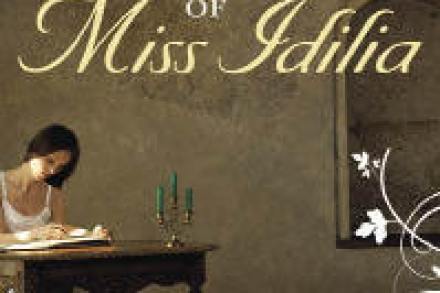
The Diary of Miss Idilia presents the reader with an unusual problem. The writing is entirely comprehensible, the tale it tells couldn’t be easier to follow. The tricky bit, though, comes with trying to work out what on earth the book is. In 1851, 17-year-old Idilia Dubb was on holiday in the Rhineland with her middle-class Edinburgh family when one morning she disappeared. A lengthy search found nothing, and her parents returned home. Then, in 1860, workmen restoring Lahneck castle outside Coblenz discovered her remains at the top of a seemingly inaccessible tower.