Francis King

Morality tales

From our UK edition

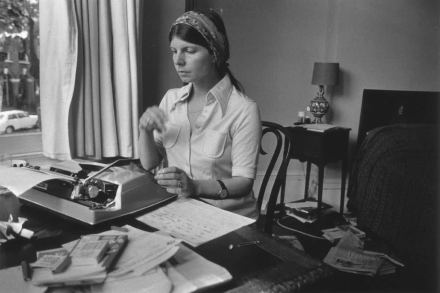
Francis King celebrates Margaret Drabble’s distinguished career and vividly recalls their first meeting I first met a youthful Margaret Drabble when, already myself an established author, I was working at Weidenfeld and Nicolson as a literary adviser. The editorial director was an Australian woman called Barley Allison, sister of an MP, who constantly boasted of having ‘grabbed’ (her word) yet another new author for her distinguished list. Her latest ‘grab’ was a sometimes pensively grave and sometimes energetically argumentative woman, an admired actress when up at Cambridge, with the totally unsuitable surname Drabble. ‘You must meet her,’ Allison told me. ‘Quite remarkable.
A constant delight

From our UK edition

With knobbly hands, shoulders bowed under the burden of arthritis, the little old woman tested the hasp of the front door and then turned to me, the last remaining guest from her tea party of that week. ‘Well, that’s someone who knows how to behave well,’ she said of the female guest who had just left. The little old woman also knew how to behave well, invariably writing me a stiffly formal Collins on the morning after I had taken her out to the theatre or dinner. But her way of behaving well was totally different from that of her female guest. If Ivy Compton-Burnett seemed unnaturally starched, as though she had to brace herself for the task of good behaviour that she set herself on these occasions, her guest, Sybille Bedford was totally relaxed.

Miracles of compression

From our UK edition

In the course of a lifetime of fiction reviewing, I have come to the conclusion that, though my colleagues are prepared doggedly to persevere with the reading of a novel from its muddled opening to its inconsequential end, they will read no more than four or five stories in a collection. What always guides them in this lazy choice is that one of the favoured stories will be the title one and another the most substantial. Since the title story is also the most substantial — in effect a novella — in Allan Massie’s Klaus, one can be absolutely certain that it will be the one on which every reviewer, including myself, chiefly concentrates.

The odd couple

From our UK edition

Some years ago now I bought from the artist Robert Buhler a pastel portrait of the composer Lennox Berkeley (reproduced above). Since I knew neither of the two men well (although in the case of each I admired the work without having an irresistible enthusiasm for it), even today people often ask me why I made the purchase. The answer is that in that one work Buhler shows so much more than his usual blithe accomplishment; he is perfect not merely in his portrayal of his sitter’s outward features but also in conveying an inner character of brooding spirituality. Tony Scotland’s book performs the same feat.

The witch in the machine

From our UK edition

If one asks Albanians who is their greatest living writer, the immediate answer is Ismail Kadare, winner of the inaugural Man Booker International Prize in 2005. But the tone of any discussion that follows is all too often grudging or even hostile. The books themselves are hugely popular, their author far less so. The reason for this is that throughout a period when many Eastern European writers were suffering persecution for their opposition to Stalinist regimes, the worst that ever happened to Kadare was an embargo on his work for three years. A Marxist, he managed to remain on friendly terms with the Albanian dictatorship until two months before the toppling of Enver Hoxa. It was only then that he announced his surely long overdue defection.

Why, oh why?

From our UK edition

In my many years as a judge for the J. R. Ackerley Prize for Autobiography, I have been constantly surprised by the high proportion of books that deal with the subject of adoption. It is usually a melancholy story of young people who, as their 18th birthdays approach, become obsessed with the need to meet their natural parents, only eventually to find themselves being entertained by families with which they have nothing in common; of couples who suddenly discover that the children that they had come to regard as their own have now abruptly given precedence in their affections to total strangers; and of women who, having made the terrible sacrifice of surrendering a child, now only agree with extreme reluctance to have their past shame, guilt and anguish revived for them.

Not as sweet as he seemed

From our UK edition

There are already three biographies of E. M. Forster: P. N. Furbank’s two- volume, authorised heavyweight; Nicola Beauman’s less compendious, more engaging middleweight; and my own bantamweight, little more than an extended essay. There are already three biographies of E. M. Forster: P. N. Furbank’s two- volume, authorised heavyweight; Nicola Beauman’s less compendious, more engaging middleweight; and my own bantamweight, little more than an extended essay. For readers who want a coherent, psychologically penetrating, well-written account of the life, with a minimum of critical analysis, this new biography is the one that I now recommend. Most people would regard the writing of his novels as the dominant preoccupation of Forster’s life.

Short and sweet | 22 May 2010

From our UK edition

This little book of limericks, some as hard and glittering as shards of mica but a few surprisingly pallid and limp, at once presents a puzzle: the real name of an author is no more likely to be Jeff Chaucer than the real name of the author of a play would be Billie Shakespeare. The first task that I therefore set myself was to attempt to discover the real identity behind the pseudonym. Accompanying the title there is also the name of Robert Conquest, writer of an introduction that, while I was reading it, seemed to be familiar, and that eventually turned out to be a revised version of a review for the TLS of a book on the limerick by William Baring-Gould.

A great novelist

From our UK edition

In a remarkable way the trajectory of Ivy Compton-Burnett’s reputation after her death in 1967 parallels that of George Meredith’s in 1909. In a remarkable way the trajectory of Ivy Compton-Burnett’s reputation after her death in 1967 parallels that of George Meredith’s in 1909. A recipient of the OM and held in awe by such younger novelists as Henry James, Hardy and Stevenson, Meredith was generally regarded as one of the greatest writers of his time. But now, apart from his poetry — which he himself rightly thought superior to his prose — he is little read, even though every history of English Literature contains a lengthy entry for him.

Home thoughts from abroad | 8 July 2009

From our UK edition

The subtitle, ‘The Anglo-American Gardens of Florence’, of this engaging and elegantly produced book, is misleading. The reclusive and narcissistic chatelaine of the Villa Gamberai in the days of its glory, Princess Catherine Jeanne Keshko Ghika, was not an Anglo-American but a Romanian. Similarly, Lady Paget, indefatigable not merely as a custodian of her superb garden at Torre di Bellosguardo but also as a lady scribbler, was born a Saxon princess, Walburga (‘Wally’ to her friends) Helena de Hohenthal. Katie Campbell also from time to time strays beyond her geographical parameters.

Quite contrary

From our UK edition

Eleven years after Jean Rhys’s death in 1979, Carole Angier published a monumental biography, a model of its kind, with 70 pages of notes and seven of bibliography. Lilian Pizzichini’s ‘portrait’ of Rhys is a book of a wholly different kind. The best way to describe it is that it bears the same relationship to Angier’s work as Beryl Bainbridge’s novel According to Queeney to Boswell’s Life of Samuel Johnson. Both Pizzichini’s and Bainbridge’s books rely for their potent fascination not on extensive research but, to a remarkable degree, on empathy and imagination.

A delicate talent

From our UK edition

When, 15 years ago, Nicola Beauman embarked on this life of ‘the other Elizabeth Taylor’, the novelist and not the film star, she had been deprived of documents that would certainly have been of tremendous use to her. These were the letters that, over a period of some three decades, Taylor wrote regularly and at length to the novelist Robert Liddell, living in self-exile in Greece. Aware that she was terminally ill, she asked him to burn her side of their correspondence, and no less regrettably then destroyed his. Was he right to obey this injunction from a woman whom he himself described as the best letter-writer of the 20th century? I myself, as I told him at the time, thought not; but others, perhaps morally more scrupulous, approved.

Opposites attracted

From our UK edition

Privately printed books are now all too often castigated as ‘vanity publishing.’ But at a time when publishers pay vast advances for the ghosted memoirs of people ‘celebrated’ for kicking balls around or howling into microphones but refuse to take a minuscule financial risk on one as elegantly written and entertaining as this one, that old pejorative must surely be abandoned. Lord (Anthony) Quinton is a distinguished academic, the breadth of whose interests is indicated by the title of a previous book of his, From Wodehouse to Wittgenstein. His American wife Marcelle is a talented painter.

Culture-clash on the campus

From our UK edition

Chicago, by Alaa al-Aswani Because I spend part of each winter in Egypt, friends from time to time ask me to recommend, not a guide, but a book that will give them the ‘feel’ of that country. Invariably my choice has been The Cairo Trilogy of Naguib Mahfouz, the only Arab writer to have won the Nobel Prize. But since the English publication of Alaa al-Aswani’s The Yakoubian Building in 2007, it too has become, for me, an instant recommendation. This is a remarkable work, in which the goings-on in a venerable residential block, still in actual existence, is brilliantly presented as a microcosm of Cairo life.

More nattering please

From our UK edition

There are writers so prolific that one wants to shout, ‘Oh, do give it a rest!’ There are others so costive that one wants to shout, ‘Oh, do get a move on!’ It is into the second of these categories that Francis Wyndham falls. This 403-page volume contains all the fiction, three books in total, that he has produced in more than half a century. It is sad that there has not been far more. The first book is a collection, Out of the War, published in 1974, but originally written during the second world war, when the still teenage author had been invalided out of the army with TB. It is amazing that he should have produced stories so accomplished at so early an age. ‘They seemed to have been written by someone else’, he remarked on their exhumation.

A Soho stalwart

From our UK edition

Like Angus Wilson, Julian Maclaren-Ross immediately grabbed the attention of Forties reviewers and readers with a series of short stories at once ruthlessly observant and irresistibly entertaining. However, unlike Wilson, admirably self-disciplined in the organisation of a career that eventually carried him to the centre of the literary establishment, Maclaren-Ross, alcoholic and wasteful of his gifts, soon drifted to its periphery. It is only recently that he has come once more to be recognised as a writer of the stature of Saki or Firbank, minor certainly but no less certainly a cherishable joy. It is clear from this selection that the people who kept his letters were rarely those who, their lives as itinerant as his, were closest to him.

Tangerine dreams

From our UK edition

In 1926, Tessa Codrington’s maternal grandfather, Jack Sinclair, once British Resident in Zanzibar, decided to buy for his wife a house on the ‘New Mountain’ in Tangier. One of Muriel Sinclair’s many eccentricities was that she had no wish to see her grandchildren. In consequence it was not until the old woman’s death that Tessa Codrington, then nine, first visited the house. Subsequently her mother was to give her a smaller house, built by Jack Sinclair, originally an architect, in the spacious grounds of the main one. An eager amateur photographer from her earliest years, Codrington is now a professionally accomplished one. As one turns the pages of this photograph album, one is repeatedly arrested by some striking image.

Deep, dark truths revealed

From our UK edition

A few nights ago I was at a dinner party at which all those present knew each other far better than I knew them. For what seemed an interminable time their sole topic of conversation was the tempestuous relationship of a couple of whom I had never even heard. The story, in as far as I could piece it together, was fascinating; but with its oblique references to long-past events and to people merely indicated by their first names, it also exasperated me. I had the same experience during my reading of this novel. When we meet one of the two main characters, Lewis, he is looking down on a lake from his high perch on a builder’s ladder. All at once he suffers a hallucination of an arm raised out of the lake, a forefinger pointing. Subsequently there are references to a Manny and a Carl.

Thriving in adversity

From our UK edition

This book takes up the story, told so memorably in his Clouds of Glory, of Bryan Magee’s early years in working-class Hoxton. In the first chapter, the now nine-year-old Magee, always precocious in his search for knowledge, is learning about the facts of life from one of his chums. Soon after, separated from his family as a wartime evacuee, he is learning the facts of provincial life first in a remote Sussex village where only two people own cars, and then in Market Harborough where a high percentage of the inhabitants have never travelled farther than to Leicester. At the age of 11, the already intellectually robust, ambitious youth wins a scholarship to Christ’s Hospital, an ancient foundation far wealthier than Eton, where he enters a totally different world.

The subtle art of suggestion

From our UK edition

Prematurely, John McGahern published his Collected Stories 14 years before his death early this year. To prepare this Selected Stories he obsessively polished and ruthlessly cut stories that, even as they then stood, for the most part seemed already perfect. He also added two stories, one of which, ‘The Country Funeral’, strikes me not merely as the best that he ever wrote but also as the one that most accurately epitomises the sort of subject that he chose and his unsparing way of dealing with it. Three brothers, though long since transplanted to metropolitan settings, are still emotionally connected to the seaside hamlet in which, as fatherless children, an uncle invited them, as an act of grudging charity, to spend their summer holidays on his estate.