Short stories

More curious canine incidents: Dogs and Monsters, by Mark Haddon, reviewed

From our UK edition

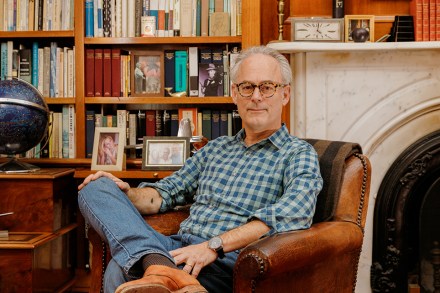
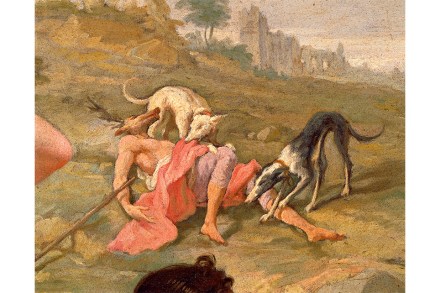
Mark Haddon’s latest collection of short stories, Dogs and Monsters, uses myth and history as springboards into mesmerising accounts of isolation, tragedy and, of course, dogs, which are a motif throughout, from the hounds who mistakenly tear apart their owner Actaeon, to one who befriends St Antony at his lowest point. Haddon monitors the borderlines between man and beast, divine and mortal, and what’s real and what isn’t. In ‘The Mother’s Story’, a reimagining of the Minotaur myth, the action is transported to quasi-medieval England. The first-person narrator is Pasiphae (though unnamed), whose ruthless husband has locked up her son Paul, born ‘a moon calf’.
Tales with a twist: Safe Enough and Other Stories, by Lee Child, reviewed

From our UK edition

Lee Child has sold more than 200 million books. He reckons his royalties at about a dollar per book. He doesn’t write short stories to make money. He contributes to anthologies, largely pro bono. ‘Fabergé eggs they ain’t,’ he says, in the introduction to this collection of 20 stories, but they are real gems nonetheless. With no global readership to worry about and no commercial interests involved, Child was free to have fun. And fun he has with the short story form, shooting from the hip – ‘no need’, as he says, ‘to save anything for Chapter 17’. The trademark economy of style is faultless, each cop, hitman, fixer or judge fully fleshed out in just a few words; the scaffolding for each narrative constructed with the absolute minimum of material.

Small mercies: Dead-End Memories, by Banana Yoshimoto, reviewed

From our UK edition

Tasty meals and epiphanies: that’s what Banana Yoshimoto mostly deals in. It’s no accident that her most famous book is entitled Kitchen. Sometimes the epiphanies come by way of the tasty meals; at other times they are triggered by effects of light playing over rivers, trees, landscapes, as if we had suddenly found ourselves inside a print by Hiroshige. And loneliness. She’s the supreme poet of solitude, and how it can grip even in the middle of one of the world’s busiest cities; even alongside a loving partner. And sudden death. But that’s making Yoshimoto’s graceful work sound far too depressing. There are always the epiphanies, and cake, and chicken with rice, but most of all the tiny kindnesses from other human beings that make life worth persevering with.

An insight into the American Dream: Table for Two, by Amor Towles, reviewed

From our UK edition

Amor Towles was a Wall Street banker before he published his first novel, Rules of Civility, in 2011, at the age of 46. Since then, his books have sold six million copies, and the second, A Gentleman in Moscow (2016), has been made into a Paramount + series starring Ewan McGregor. Towles’s success in banking and publishing has perhaps given him a particular insight into the American Dream. The six stories and one novella that make up his stylish and confident new collection, Table for Two, all feature characters in pursuit of an ambition that puts them in varying degrees of peril – protagonists tasked with missions of differing seriousness.

Stephen King’s You Like it Darker shows a master at his peak

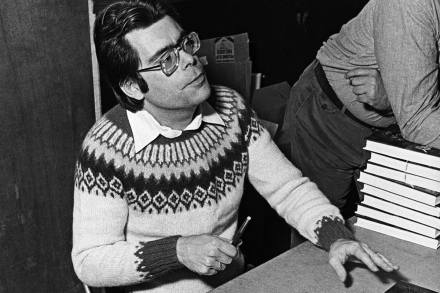
It is not hyperbole to call Stephen King the most influential horror writer alive. Across page and screen alike, nobody else can claim to have had such an expansive and lasting impact on popular culture. King’s name has become so commonplace that it’s easy to take it and him for granted, and to forget that behind the ultrafamiliar and now-ubiquitous branding there lies, in fact, a wild and strikingly original mind and a beating, bloody, passionate heart. You Like It Darker, King’s latest offering, is a highly accomplished and masterful collection of twelve short (and not so short) stories, all blistering examples of King’s powers. Though some have seen the light of day elsewhere, most are published here for the first time. All are worth the purchase.

King

The wry humour of Franz Kafka

From our UK edition

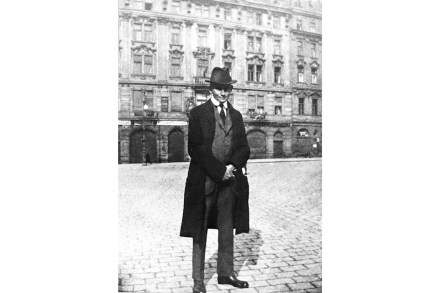
How do you see Franz Kafka? That is, how do you picture him in your mind’s eye? If you are Nicolas Mahler, the writer and illustrator of a short but engaging graphic biography of the man, you’d see him as a sort of blob of hair and eyebrows on a stick. The illustrations of Completely Kafka may look rudimentary, but they work. In fact they’re similar in style to the doodles Kafka himself would make in his notebooks. If you were Kafka, you’d see yourself as a spindly man, head on desk, leaning on your hands, arms bent, in a posture of defeat and exhaustion. That image is chosen for the cover of a translation by Mark Harman of Selected Stories.

Exploring the glorious literary heritage of Bengal

From our UK edition

The first time I went to India, nearly 30 years ago, I was sent as a young novelist by the British Council. Unusually, my first encounter with the country was Kolkata, a city I loved instantly. At the first event, after I had finished reading, an audience member gently asked if I liked Indian novels. I thought I was prepared, and mentioned R.K. Narayan, Salman Rushdie, Anita Desai and Vikram Seth. The questioner smiled. ‘Those are all writers in English,’ he said. ‘What about writers in Indian languages?’ I was stumped. Perhaps many people of generous reading habits have the same block without knowing it.

Grotesque vignettes: The Body in the Mobile Library and Other Stories, by Peter Bradshaw, reviewed

From our UK edition

There’s a face I found myself making again and again when reading Peter Bradshaw’s short stories, and it was not pretty: top half screwed up in incredulity; lower half slack with bovine confusion. What, my expression said, just happened? What indeed? Bradshaw is best known as the Guardian’s chief cinema critic, but this isn’t his first foray into fiction. The collection comes in the wake of three novels; but he’s admitted that ‘the short story form has always obsessed me’. That fascination with the form has given him the confidence to play with it, and us, and my confusion was deftly engineered from the start. In the opening story ‘The Kiss’, boy meets girl in a Hendon pub in 1951. Then what? Nothing really.

Caught in a Venus flytrap: Red Pyramid, by Vladimir Sorokin, reviewed

From our UK edition

Interest in Vladimir Sorokin’s works in translation tends to focus on their extremism and dystopia – trademarks of his fantastically-rendered observations of the Soviet Union and contemporary Russia under an infinite bureaucracy. Less emphasis is placed on the empathy that elevates the stories from violence and a pre-occupation with bodily fluids to a discomforting sense of familiarity. In his introduction to Red Pyramid, Will Self writesthat Sorokin’s detractors accuse him of peddling pornography. But its relevance is without question. If reality is said to be stranger than fiction, Sorokin’s fiction goes further, to make the point that the pornographic, as he writes it, is a way of bearing witness to the past and present.

The skull beneath the skin: Ghost Pains, by Jessi Jezewska Stevens, reviewed

From our UK edition

Hell, according to Jean-Paul Sartre, is other people. Jessi Jezewska Stevens would nominate parties. Social catastrophe can stem from the invitation: ‘Email!’ she laments. ‘The way all modern tragedies begin.’ She homes in on the space between what a woman thinks and says and does. Her anti-heroines can be relied on to make wrong decisions – men, marriage, nipple-piercing and, of course, parties. The choice invariably ends in failure. Ghost Pains is a collection of 11 stories, sardonic and elegant, imbued with a sense of isolation and self-awareness. Stevens’s women throw spectacularly disastrous parties. And attend them.

Everyday life in the Eternal City: Roman Stories, by Jhumpa Lahiri, reviewed

From our UK edition

The middle story in this compassionate collection follows disparate folk loosely linked by a set of steps. Among them, there’s the mother who climbs them first thing in the morning, the girl who descends them at two in the afternoon and the screenwriter who lives at the foot of them, and who stays home nearly all day. Together, these men, women and children represent a cross section of society. One comes from ‘a faraway tropical city’; another compares the grubby sight of graffiti to hearing ‘foreigners talking on the street’. Yet, here they are, existing side by side in a Roman neighbourhood, going about their ordinary daily routines. Which is what the Pulitzer Prize-winning Jhumpa Lahiri does so well: pays attention to the everyday.

Shades of Kafka: Open Up, by Thomas Morris, reviewed

From our UK edition

Thomas Morris has a knack of writing about ordinary things in an unsettling way and unsettling things in an ordinary way. He described his debut collection of ten stories set in Caerphilly, We Don’t Know What We’re Doing, as ‘realism with a kink’. Open Up, a slimmer second offering of five stories, amps up the Kafka. One is narrated by a seahorse, another by a vampire. Morris’s attitude towards his characters remains central: while displaying their darkest secrets, you sense he’s on their side. Here, the narrators are all male. From a young boy to a thirtysomething, they negotiate masculinity’s contradictory demands, accused of being distant, passive and unambitious.

Tales of the Midwest: The Collected Works of Jo Ann Beard, reviewed

From our UK edition

Jo Ann Beard has said that one of the stories in this collection, although she does not specify which, took her more than 20 years to write and that there was a gap of eight months – during which she was working on the piece five days a week – between two of its sentences. It is true that her writing is remarkably condensed, not least in ‘Cheri’, the story of a real woman who had a particularly hideous case of terminal cancer (exacerbated by the fact that all pain medication made her vomit). Cheri Tremble contacted Jack Kevorkian, a euthanasia expert sometimes nicknamed ‘Dr Death’, so that he could help her end her life. As she begins to die, Cheri, in Beard’s version, wryly reflects: ‘The fear of dying tonight is nothing...

Life is a game of cards: Burning Angel and Other Stories, by Lawrence Osborne, reviewed

From our UK edition

This compelling and unnerving collection of stories is Lawrence Osborne’s first, coming in the wake of recent critically acclaimed novels – including The Forgiven, adapted into a film – and earlier works of memoir, essays and travelogue. Born in England, currently residing in Bangkok, Osborne has earned comparisons with Graham Greene for his portraits of flawed white characters in foreign settings, and Patricia Highsmith, thanks to the menacing noir atmosphere. These nine stories, written over the past decade, do not disappoint. Osborne removes his protagonists – English or American, on the young side of middle age – from their native environments and transplants them into exotic, perilous locations.

Bizarre images: I Hear You’re Rich, by Diane Williams, reviewed

From our UK edition

‘What am I – I wonder, dear god – now best known for?’ It is a question asked at the end of ‘Gladly!’, one of the American author Diane Williams’s mercurial, light-footed short stories. The narrator in existential crisis has just bumped into a man she ‘once engaged with for years, amid scenes of nearly religious significance’; has found a discarded, brand new pair of ‘canvas All Star high tops’; and witnessed a boy picking up nuts that were ‘meant for squirrels’, and decided that in later life he will be renowned for either ‘gluttony’ or ‘enterprise’. The drama of these occurrences and the self-questioning take place over no more than two pages. The story, and the lives it tells, could be read in the time it takes to gulp some coffee.

A cabinet of curiosities: You, Bleeding Childhood, by Michele Mari

From our UK edition

Michele Mari is one of Italy’s most eminent writers. A prize-winning novelist, poet, translator and academic, he is hardly known to anglophone readers, but that is about to change. You, Bleeding Childhood, a collection of 13 stories written over a period of 30 years, offers a portal into Mari’s surreal, unsettling world: a place of childhood memories, obsessions and a passion for literature and science fiction.         Mari inhabits Borges’s labyrinthine territory. His prose style shares the gleaming formality of Nabokov, but he’s his own man, nonchalantly mixing high and low culture: the literary canon and classic comic books, Dante and pulp.

Tales of the unexpected: The Complete Short Stories, by Patrick O’Brian, reviewed

From our UK edition

The publishers of this handsome volume hint at high adventure – and period adventure at that. In the blot left by an antique quill pen swirls a breaking wave. Ah, the high seas! And here we are again with Aubrey and Maturin picking weevils out of ship’s biscuits and foiling Napoleon’s naval plans. So I had better warn readers that this isn’t really representative. The first story in the collection, ‘The Return’, is about a man returning to childhood haunts and fishing for trout. The second, ‘The Last Pool’, is different in that this time the fish are salmon (although the protagonist starts out looking for trout).

Scenes from domestic life: After the Funeral, by Tessa Hadley, reviewed

From our UK edition

The cover image of Tessa Hadley’s fourth short story collection is Gerhard Richter’s ‘Betty’ (1988), a portrait of the artist’s daughter facing away from the viewer. It’s an apt choice for Hadley’s work, which turns on the fundamental unknowability of human beings. The titular tale, about a widowed mother and her two daughters confronting reduced circumstances, is loosely inspired by Mavis Gallant’s story ‘1933’. Its climax, which pulls off the feat of being both shocking and inevitable, is a testament to Hadley’s skill as a storyteller. Some of the stories’ incidents are entirely internal: in ‘Cecilia Awakened’, a teenaged girl on a family holiday in Florence wakes up ‘inside the wrong skin’, suddenly aware of her parents’ shortcomings.

Spirit of place: Elsewhere, by Yan Ge, reviewed

From our UK edition

This collection of stories is so assured, and delivered with such aplomb, that it’s hard to believe it’s a debut – and, as it turns out, that’s because it isn’t. Although Elsewhere is Yan Ge’s first book written in English, she is a seasoned novelist in China, where she has been publishing fiction for more than 20 years. For the past decade, Ge has lived in Britain and Ireland, and the collection captures the spirit of both her birthplace and her adopted homes in a variety of registers. The stories set here have a whiff of autofiction to them, but transcend their origins with style and wit.

Life’s survivors: The Angel of Rome and Other Stories, by Jess Walter, reviewed

From our UK edition

Anyone who has read Jess Walter’s Beautiful Ruins will want to turn straight to ‘The Angel of Rome’, the title story in this second collection by the versatile American author. Like the novel that elevated Walter from an underrated writer of police procedurals and thrillers to one capable of bestsellers, ‘The Angel of Rome’ is set in Italy and features a filmset and glamorous actors. Both are also partly based on real life. In Beautiful Ruins, Walter plays with what happened during the filming of the 1963 epic Cleopatra. Here he bases the story on an episode in the life of Edoardo Ballerini, an actor who read Beautiful Ruins.