Short stories

Helpless human puppets: Liberation Day, by George Saunders, reviewed

From our UK edition

George Saunders’s handbook published last year, A Swim in a Pond in the Rain, gave masterclasses on seven short stories by four Russian masters of the form: Tolstoy, Turgenev, Chekhov and Gogol. His critical observations can be taken as the manifesto for his own work. (The winner of the 2017 Man Booker prize with his first novel, Lincoln in the Bardo, he is still best known as a short story writer.) It’s fair, then, to apply his stated rules to the pieces in his new collection. The last story, ‘My House’, although briefer, holds up well against Chekhov’s ‘In the Cart’. The title immediately contains a twist, because it’s not the narrator’s house, even though the historical building is for sale and he can easily afford the asking price.

The deathly malaise that’s crippling Russia

From our UK edition

Now is a difficult time to empathise with Russians – which is why we need Maxim Osipov. We need him to bring alive to us what it means to live in Putin’s Russia – how the system finds ways to crush all but a very few. Even more, we need him to remind us of the kaleidoscope of qualities that a country like Russia inevitably contains – the humanity and generosity as well as the stupidity and cruelty. An author of great subtlety, Osipov would no doubt wince at such grandiose claims for his writing. Yet when the world is deciding how to deal with the aftermath of Putin’s (eventual, but surely inevitable) defeat, I hope Kilometer 101 will be admitted in the Russian people’s defence.

Mary Gaitskill and the body electric

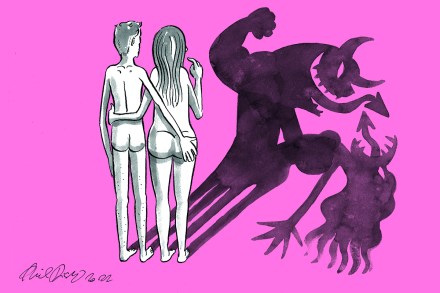
A man bites a woman’s breast with the aim of drawing blood, before taking a cigarette lighter to her stomach. The woman’s lack of arousal at this cruelty causes the man to enquire angrily why she lied when she told him she was “a masochist.” A young secretary is spanked by her boss for mistakes in her typing, before he masturbates over her naked behind. In a conversation between two young adulterous lovers, a woman casually admits to “flirting... like wild” with a man after she discovered he had “broke his girlfriend’s jaw.” These snapshots of masochism, warped desire and sexual depravity made Mary Gaitskill famous when her short story collection Bad Behavior first appeared in 1988.

Gaitskill sex pill sex

Women behaving badly: Ghost Lover, by Lisa Taddeo, reviewed

From our UK edition

Lisa Taddeo’s Three Women established her as a narrator of female desire in all its complexity. Her study of three real women and their sexual choices became a bestseller on both sides of the Atlantic, showing how women sometimes collude in relationships that are destructive, or make decisions they later regret. Power imbalance, coercion and past trauma as well as lust were distilled in the essence of their desires. Of course, sexual relationships can be complex for both sexes, but Taddeo’s project repudiated the easy 1990s stereotypes of ‘ladettes’ as being replicas of sex-without-ties lads. Animal, her fiction follow-up, depicted the raw anger and vengeance that loss and frustration may beget.

Lonely voices: Dance Move, by Wendy Erskine, reviewed

From our UK edition

‘The drawer beside Roberta’s bed contained remnants of other people’s fun’: so begins ‘Mathematics’, one of 11 stories in this outstanding collection by the Belfast author Wendy Erskine. The opening is Erskine in miniature: the wry, unostentatious prose; the sad interiors with their charged objects (‘a small mother-of-pearl box inlaid with gold, a lipstick that was a stripe of fuchsia, a lucky charm in the shape of a dollar sign’); a character’s casual curiosity about the intimate affairs of others. A bereaved mother scours Belfast with a paint scraper, removing the ‘missing’ posters of her dead son Dance Move might also have been titled Other People’s Fun.

Confused lives: It’s Getting Dark, by Peter Stamm, reviewed

From our UK edition

The Swiss writer Peter Stamm’s inscrutable, alienated outsiders make bizarre choices to escape stifling mundanity. Their discontent suggests malaise, something Stamm accentuates in his spare prose. The result is a distilled essence of unease: the reader is uncomfortable, but can’t look away. This masterful combination of fundamental themes, explored without embellishment through confused lives, has won the author numerous prizes. His 2020 novel The Sweet Indifference hinged on the possibility of seizing lost chances and allowing events to unfold differently. In this collection of short stories, the narrator of ‘Marcia’ is a recluse who ponders about an ex from whom he beat a callously precipitate retreat.

Culture clash: Things We Don’t Tell the People We Love, by Huma Qureshi, reviewed

From our UK edition

Apart from what the title tells us, these stories are about a fundamental difference in cultures. Huma Qureshi writes like a psychotherapist, considering, analysing, explaining, seeking out conflicts, evasions, and discomforts. The clash is between London and Lahore, Britain and Pakistan. The girls who appear in these tales are westernised, but still hostages to their heritage. The narrator of ‘Superstition’ escapes the shalwar kameez that she has to wear at family dinners on Saturday evenings in suburban London. She is smitten with a boy at a neighbour’s house, and then endures a conspiracy of male, religious dominance: ‘All this happened over an unfortunate teenage kiss.

There is nothing cosy about Penelope Lively

From our UK edition

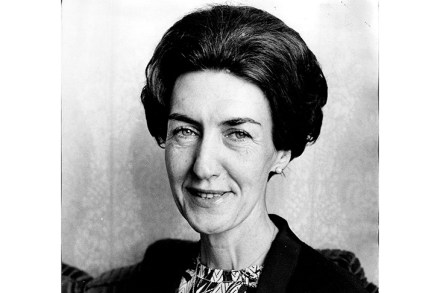
At one time, Penelope Lively was routinely shortchanged by critics. Her protagonists are often middle-class professionals — historians, archeologists, scriptwriters and the like — and her Booker-prizewinning Moon Tiger was notoriously dismissed as the ‘housewife’s choice’. Now, gods, stand up for housewives! Lively is not a cosy read. The word which keeps coming to mind to describe these stories is ‘beady’ — though I may be influenced by ‘The Purple Swamp Hen’, in which the narrator is a wise old bird in the garden of a household in Pompeii (AD 79). A bird’s gaze is bright, speculative and disconcertingly dispassionate.

Orcadian cadences: celebrating the reclusive poet George Mackay Brown

From our UK edition

Few journalists can have conducted such a dismal interview as mine with George Mackay Brown in the summer of 1992. The Times had sent me to Orkney, and the night before we met I sat up in my B&B reading his poetry, spellbound. So much to ask him! But that first meeting was a disaster. Brown was so shy he answered my questions in monosyllables. After five minutes he sat back and rested his lantern jaw on long hands, silent. Seamus Heaney called Brown ‘the praise singer’. There was no singing that afternoon. But the next day I ran into Brown at Mass (he was that rare thing, an Orcadian Catholic). He invited the whole congregation — five of us — to tea. In familiar company he was transformed: a generous host, a brilliant raconteur.

Mrs Badgery

Wilkie Collins’s ‘Mrs Badgery’, rarely seen since its first publication in Dickens’s Household Words magazine in September 1857, is an enchanting little chip off the block. Like a lot of British short stories, it is absurd, very funny, and in uproarious bad taste. British writers have often enjoyed stories of making a home, and also the theatrical trappings of grief. (George Bernard Shaw commented on the national enthusiasm for requiems.) Here they collide, with richly enjoyable results. The narrator is clearly stuck with Mrs Badgery forever. In time, he might even regard her as a picturesque addition to his home, like an indoor and rather saline water feature.

mrs badgery

Labyrinthine tales: We All Hear Stories in the Dark, by Robert Shearman, reviewed

From our UK edition

When the estimable Andy Miller, the host of the Backlisted podcast, recommended a new collection of short stories on Twitter, he said just enough about it to pique my interest. Online booksellers didn’t seem to have heard of it and I had to buy it directly from the publisher. I’m very glad I did. Robert Shearman’s We All Hear Stories in the Dark, running to three volumes and 1,750 pages, is the most original and impressive new fiction I’ve read this year. You have to find your own way through it. It takes its form from an outdated but fondly remembered series of paperbacks for children, the Adventures of You, invented by the American author Edward Packard.

Poise and wit: The Collected Stories of Shirley Hazzard reviewed

From our UK edition

Shirley Hazzard was in her late twenties when, in 1959, somewhat diffidently, she submitted her first short story to the New Yorker. It was, William Maxwell remembered, ‘an astonishment to the editors, because it was the work of a finished literary artist about whom they knew nothing whatever’, and he immediately accepted it for publication. Hazzard’s arrival as a fully formed and refreshingly cosmopolitan writer was a result of her peripatetic and often unhappy early life. ‘By the time I was 25, I had emerged from a lot of trouble,’ she recalled. ‘I had also, more interestingly, lived for appreciable periods in six countries and diverse languages.

Lacrimae rerum: That Old Country Music, by Kevin Barry, reviewed

From our UK edition

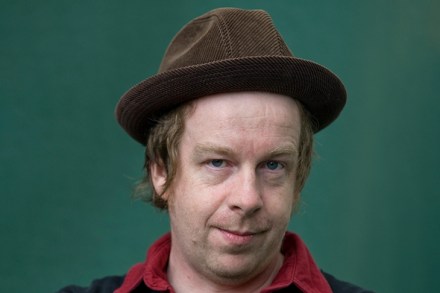
Some of my happiest fiction-reading hours have been spent in the company of Kevin Barry: two short-story collections, both prize-winners, and three captivating novels. First, the baroque mayhem of City of Bohane, characters exploding on the page flashing knives and fancy footwear, its vernacular veering from Clockwork Orange argot to Joycean dazzle. A world away from the beguiling charm of Beatlebone, which imagined a stressed-out John Lennon driving across Ireland to check out the uninhabited island he’d bought years earlier as a future bolthole. Barry’s triumphant third novel, Night Boat to Tangier, long-listed for the Booker, opened with two old crims waiting at the ferry terminal of a Spanish port for the girl who links their lives, reminiscing endlessly as they wait.

Sad and beautiful: The Dear Departed, by Brian Moore, reviewed

From our UK edition

Short story writers often find it irksome to be asked when the novel is coming out, as though their work was just rookie preparation for something more substantial. (That said, many do go on to write that novel.) The Dear Departed is, amazingly, the first selection of Brian Moore’s short stories to be published. Written between 1953 and 1961, they prefigure most of Moore’s 20 highly acclaimed novels, three of which were shortlisted for the Booker Prize. One can certainly appreciate how the stories of this collection display the concerns that would preoccupy the Belfast-born Moore throughout his career — those attempts to abandon the values and constraints of the past, to escape conservative, authoritarian homes.

His latest disturbing short stories show Richard Ford very much on song

From our UK edition

Sorry For Your Trouble (Bloomsbury, £16.99), Richard Ford’s 13th book of fiction, shows a writer still very much on song. The mainly male middle-aged protagonists of these nine stories seem often to be assessing their regrets but coming to terms with them. In ‘Second Language’, a man is enchanted by his glamorous second wife but able to accept when, after two years, she tells him (for no clear reason) that the marriage is over. Alongside multiple divorces, there are plenty of sudden deaths here — not least that of a wife who simply lays her head on her hands and stops breathing. A doctor later diagnoses cancer, but the conclusion is: ‘Dying was likely the only real symptom she’d experienced.

The Literary Disco podcast made me want to throw my laptop at the wall

From our UK edition

One of the stranger things that happened in the period just before lockdown was the sudden disappearance of audiences from TV and radio shows. Late-night hosts told jokes to silent rooms in front of a white background, dutifully pausing for a laugh that never came; panel shows were broadcast without so much as the sound of tumbleweed. Punchlines flopped, charisma evaporated. It was as if Earth’s comedians had been banished to some purgatorial realm, where they would be forced to tell jokes to no one as a form of penance. Comedy needs an audience. It’s not clear that the same is true of short stories. In Selected Shorts, well-known actors read short stories to a room full of people.

Short stories to enjoy in lockdown

From our UK edition

In these circumstances there’s a temptation to reach for the longest novel imaginable. If you’re not going to read Proust now, as the days stretch ahead and the horizons shrink to an hour’s walk a day, when is it going to happen? But it seems much more likely that reading is going to contract, and the most you’ll realistically manage is a short story a day. Fortunately, some of the greatest literature of the last couple of centuries has come in the shape of the short story. Here are nine long-standing favourites of mine that manage to repay repeated re-reading — the definition of a classic. Kafka’s The Metamorphosis is one of those classics that most people think they know but which infallibly surprises.

Ill-disciplined and self-indulgent: The Guilty Feminist podcast reviewed

From our UK edition

With theatres shut, radio must lighten the darkness. The Guilty Feminist is a wildly popular podcast performed by Deborah Frances-White and guests. In the episode of 23 March, the presenter hoped the superbug would cure our mania for business trips to ‘Philadelphia for a meeting about key performance indicators… Don’t fly to see people you hate. Fly to see people you love.’ She was probably unwise to dabble in medical predictions. ‘I hope Boris catches coronavirus so badly he needs to be sequestered on a desert island with no loo roll.’ Her co-presenter, Sindhu Vee, mocked her children’s frailties and her own. One of her young daughters announced her intention to become a feminist lawyer while the other said she wanted to be a mermaid.

The King of Christmas: A short story by Owen Matthews

From our UK edition

The Christmas King steps slowly from his house and sniffs the evening’s chill. His tread is dainty, for all his heft, and his handsome head swings proudly as he surveys a kingdom of carrot tops and mud. He smells woodsmoke, the sows’ reek, the night’s damp rising from the river. From the kitchen door he hears the teasing voices of boys, the clatter of scullions’ ewers loaded with his dinner. On the hill, Wytham Wood hisses like the sea. All summer Harry has dined on sour curds and burned crusts, lettuce roots and swedes, and the rich scrapings of the pottage pot. Now winter brings him even greater plenty. A mess of oats and gravy bones cooked special for his Majesty.

The good sex award goes to Sarah Hall: Sudden Traveller reviewed

From our UK edition

Sarah Hall should probably stop publishing short stories for a while to give other writers a chance. If she’s not the best short story writer in Britain, then — but why even finish that sentence? Her novels are good, but it’s in the short form that she excels, with strange, unsettling tales that have made her the only author to be shortlisted three times for the BBC National Short Story Award. (She won it once.) Her greatest gift is, through a blend of the carnal and the cerebral, to invoke a physical response, something atavistic, in the reader.