Short stories

Another collection of Harper Lee’s writings arises

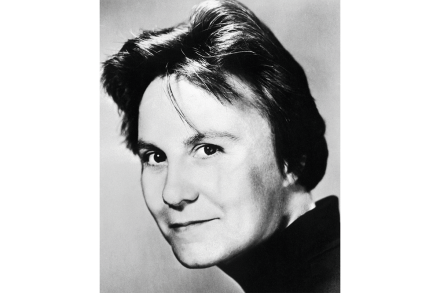
Harper Lee’s To Kill a Mockingbird hardly needs an introduction, as I expect everyone in the world has read it, or has seen the film starring Gregory Peck. (If you haven’t read it, perhaps you should.) Lee, incidentally, went to visit the film set, and had this to say about Peck: “an inspired performance. In some mysterious way, Gregory Peck’s Atticus Finch transcended illusion.” If that seems a tad clichéd and not especially insightful, then I’m afraid to say that this is the general tenor of the nonfiction pieces in The Land of Sweet Forever, alongside eight previously unseen short stories. Go Set a Watchman, a novel which was largely viewed as To Kill a Mockingbird in embryo, appeared ten years ago, to not much acclaim.

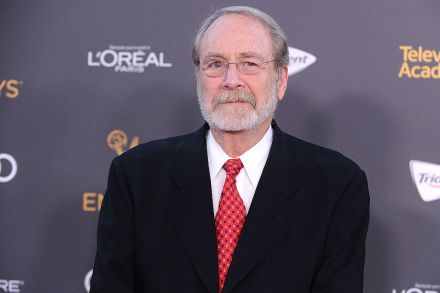
Martin Mull’s short stories bring levity to serious themes

Books of short stories are among the most difficult for writers to sell. Which is odd, as they’re often where the best writing is. A short story is rarely boring. It has to pack everything in, grip the reader right away, unfold its plot and make its point – a cultural truism or a subtle universal or a moral profundity – elegantly. It’s the one kind of writing I’ll always read when a friend says they’ve tried their hand at it.

Mull

The Life of Violet catches a side of Virginia Woolf that has been obscured

She was Adeline Virginia Stephen, then. Signing her letter “AVS”, in August 1907 the 25-year-old who became Virginia Woolf complained to her friend Lady Robert Cecil: “The effort it is to write… I feel like one rolled at the bottom of a green flood, smoothed, obliterated, how should my pockets still be full of words?” Long before the masterpieces that would make her name, she was working on a series of literary exercises. These attempted to remold the biographical form into one that could encompass and celebrate the lives, not of famous men, but of unfamous women and combine what she called the granite and rainbow of “life-writing”: stony fact and iridescent fantasy. Her letter continues: If you keep The Life, or Myth, don’t quote it – see my vanity!

Woolf

The life and legacy of Mavis Gallant, an American in Paris

"God help the English if she ever starts on us,” remarked Jonathan Keates in a blurb for Mavis Gallant’s Paris Notebooks. Far from being the ubiquitous “love letter” to a city, the essays and reviews within revealed people and their lives as they were, not as ideals. What Keates didn’t realize was that in Gallant’s short stories, everyone, regardless of nationality or gender, was fair game for her sometimes vicious, often dryly funny, always unblinking gaze. When she died in 2014, aged ninety-one, an obituary noted her profound irritation at her critics’ focus on The Collected Stories of Mavis Gallant: “Everyone who has reviewed it so far mentions exile.

Gallant

Stephen King’s You Like it Darker shows a master at his peak

It is not hyperbole to call Stephen King the most influential horror writer alive. Across page and screen alike, nobody else can claim to have had such an expansive and lasting impact on popular culture. King’s name has become so commonplace that it’s easy to take it and him for granted, and to forget that behind the ultrafamiliar and now-ubiquitous branding there lies, in fact, a wild and strikingly original mind and a beating, bloody, passionate heart. You Like It Darker, King’s latest offering, is a highly accomplished and masterful collection of twelve short (and not so short) stories, all blistering examples of King’s powers. Though some have seen the light of day elsewhere, most are published here for the first time. All are worth the purchase.

King

Mary Gaitskill and the body electric

A man bites a woman’s breast with the aim of drawing blood, before taking a cigarette lighter to her stomach. The woman’s lack of arousal at this cruelty causes the man to enquire angrily why she lied when she told him she was “a masochist.” A young secretary is spanked by her boss for mistakes in her typing, before he masturbates over her naked behind. In a conversation between two young adulterous lovers, a woman casually admits to “flirting... like wild” with a man after she discovered he had “broke his girlfriend’s jaw.” These snapshots of masochism, warped desire and sexual depravity made Mary Gaitskill famous when her short story collection Bad Behavior first appeared in 1988.

Gaitskill sex pill sex

Mrs Badgery

Wilkie Collins’s ‘Mrs Badgery’, rarely seen since its first publication in Dickens’s Household Words magazine in September 1857, is an enchanting little chip off the block. Like a lot of British short stories, it is absurd, very funny, and in uproarious bad taste. British writers have often enjoyed stories of making a home, and also the theatrical trappings of grief. (George Bernard Shaw commented on the national enthusiasm for requiems.) Here they collide, with richly enjoyable results. The narrator is clearly stuck with Mrs Badgery forever. In time, he might even regard her as a picturesque addition to his home, like an indoor and rather saline water feature.

mrs badgery

Too much American angst: the latest short stories

In ‘A Prize for Every Player’ — one of 12 stories in Days of Awe, a new collection by A.M. Homes (Granta, £14.99) — Tom Sanford, shopping with his family in Mammoth Mart, soliliquises (loudly and nostalgically) about the America he remembers, and finds himself with an audience of shoppers who nominate him as the People’s Candidate for President. Absurd? Not quite so absurd perhaps as in pre-Trump days. Days of Awe (the title comes from Rosh Hashanah, the ten days of repentance in the Jewish calendar) is Homes’s third collection and her first book since winning the Women’s Prize for Fiction in 2013.

american short stories

David Sedaris, the current king of humourists, is often not funny at all

Since the 17th century, a ‘humourist’ has been a witty person, and especially someone skilled in literary comedy. In 1871, the Athenaeum said that Swift had been ‘an inimitable humourist’. But in modern usage the term seems to describe a specifically American job title: someone who specialises in writing short prose pieces whose only purpose is to be funny. The current king of humourists is David Sedaris, and his books are essentially scripts for his sell-out reading tours. But is he funny? On a line-by-line basis, he sure can be. He helps push someone’s broken-down car, ‘and remembered after the first few yards what a complete pain in the ass it is to help someone in need’.

American Histories, by John Edgar Wideman, reviewed

This new collection of John Edgar Wideman’s short stories comes across the pond as one of four handsomely packaged volumes from Canongate. Little known in this country, he towers large in his native States; a MacArthur Genius fellow, a PEN/Faulkner Award winner twice, winner of the Prix Femina Etranger last year, endorsed by Richard Ford and Caryl Phillips…. Old now, he has a lengthy list of publications behind him, and, on this latest evidence, carries a flame of rage against American injustice and prejudice that yet burns magma-hot.