Science

Dreaming of wide open spaces

From our UK edition

On the website of the Australian National University in Canberra, emeritus professor of history Barry Higman lists his research interests as food sciences, cultural studies and historical studies, with a particular interest in The world history of food over the last 5,000 years; the global history of domestic servants in the modern world; the history of the Jamaican landscape; the history of Australia as a flat place; and the history of islands and insularity. This rather unusual breadth of interests suggests either that Professor Higman is a very curious man indeed or a complete academic fraud. Fortunately, for the sake of the future of higher education in south-eastern Australia, it’s the former. Flatness is the uneven, fascinating work of a true scholar enthusiast.

What will you do in the gene-editing revolution?

From our UK edition

The only time I ever saw a wolf in the wild, a small one, I was so frightened that I closed my eyes. It was a useful insight into the depths of my own cowardice. Every day, with each new story about the exciting breakthroughs we’re making in genetic engineering, I feel that same shameful urge to shut my eyes. Far faster than anybody thought, we’re working out the genes responsible for all manner of traits in all creatures great and small. Far more easily than anyone expected, we’ve moved from standard gene therapies to figuring out how to actually edit our own DNA, to ferret around inside living cells, snipping out duff genes and replacing them. Until recently it was mostly mice at (or under) the cutting edge of this new technology.

Snap, crackle and pop

From our UK edition

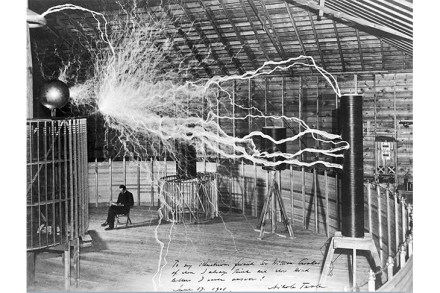
As you go into the new Wellcome Collection exhibition, Electricity: The Spark of Life, you might have in mind a sentence from Mary Shelley’s original electrifying novel Frankenstein; Or, the Modern Prometheus: ‘I collected the instruments of life around me, that I might infuse a spark of being into the lifeless thing that lay at my feet.’ A copy of the 1831 edition of her book, with its startling anatomical frontispiece, awaits you, among many other wonders. The exhibition, a collaboration between the Wellcome, the Teylers Museum of Haarlem and the Museum of Science and Industry, Manchester, is packed with electrical instruments, together with models, artefacts, books, film loops and pictures.

Cheating death

From our UK edition

2016 was probably the year even the most optimistic of us — those who can genuinely square the new populist politics with a bright future for truth-seekers, scientists and rational thinkers — gave up on the possibility of time travel. Surely, on every rally stage there should have been at least one white man from the future (it’s generally a white man for the simple statistical reason that if you’re a woman or a non-white man and go travelling in time, there’s only about 0.

Thoughts on the human condition

From our UK edition

This past autumn has felt more uncomfortable than usual to be a woman looking at men looking at women. From Hillary Clinton’s ‘overheating’ episode (‘Does she have Parkinson’s? Is she wearing a catheter?!’) to Donald Trump’s assessment of female limbs as if they were building materials, election season finished with the male members of our new first family peering over the voting booth to check on their wives. Siri Hustvedt has long been interested in how the way we look at the world privileges certain political, gendered, artistic and scientific agendas, while excluding others. These dynamics are at play between a reader and a writer, a doctor and a patient, a neuroscientist and the brain she studies.

Don’t ask the experts

From our UK edition

Michael Gove never intended to make his most famous remark. In an interview during the EU referen-dum campaign, the then justice secretary was told that the leaders of the IFS, CBI, NHS and TUC all disagreed with him about Brexit. He had tried to reply that people have ‘had enough of experts from organisations with acronyms saying that they know what is best and getting it consistently wrong’. But he was picked up mid-sentence by his appalled interviewer. ‘Had enough of experts? Had enough of experts?’ Gove’s partial quote was held up to ridicule, as if it embodied Trump-style populist rage; the battle of emotion against reason.

Weird and wonderful | 29 December 2016

From our UK edition

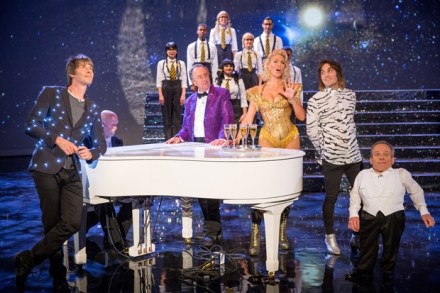
As you’ve probably noticed, TV critics spend a lot of their time trying to identify which other programmes the one they’re reviewing most resembles. Sadly, in the case of BBC2’s The Entire Universe, this noble quest proved futile. Written and emceed by Eric Idle, the show did contain plenty of familiar television elements: songs, dance troupes, Warwick Davis making jokes about how small he is, a lecture by Professor Brian Cox on the nature of the cosmos. Yet the way it mixed them together was so unprecedentedly odd that it may well have made the average Boxing Day viewer feel they must be drunker than they thought.

The descent of man

From our UK edition

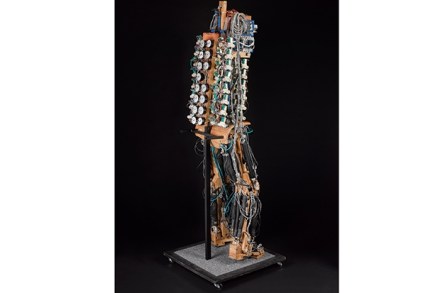
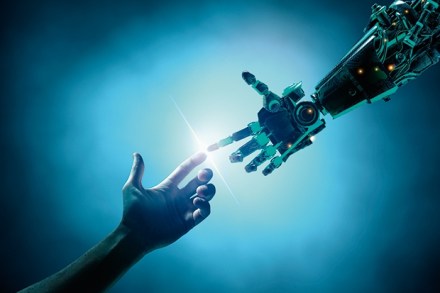
Why do humans want to build robots? It seems, on the face of it, to be a suicidal endeavour, destroying jobs and, ultimately, rendering our species redundant as more intelligent and effective beings take over. Lacking, as we now do, an agreed metaphysical justification for human specialness — for example, the soul — it must only be a matter of time before we submit to the machine ascendancy. So far, it has been a subtle, incremental process that conceals any wider significance. Take satellite navigation. This was first introduced in the 1980s and is now more or less universal. Maps have become quaint. As a result, we walk or drive without a visual model of where we are. This may be a small loss of human agency but it’s a loss nonetheless.

Secrets of the universe

From our UK edition

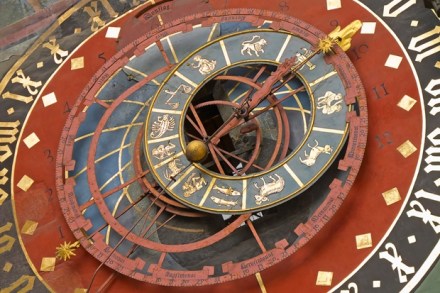
A few years ago, in Berne, I visited the apartment where Einstein wrote his theory of special relativity, which changed our understanding of the world forever. It’s a small apartment, plain and nondescript. The best thing about it is the view. From the window you can see Berne’s huge medieval clock, the Zytglogge. It was this clock which inspired Einstein’s great breakthrough. At the end of every humdrum day, in his dead- end job at Berne’s patent office, he took the tram home, past the Zytglogge, back to this apartment. As he gazed at that clock through the tram window, he wondered: what if his tram could travel at the speed of light? Logically, the light from the Zytglogge should never overtake him.

Blinded with science

From our UK edition

We’re continually assured that government policies are grounded in evidence, whether it’s an anti-bullying programme in Finland, an alcohol awareness initiative in Texas or climate change responses around the globe. Science itself, we’re told, is guiding our footsteps. There's just one problem: science is in deep trouble. Last year, Richard Horton, editor of The Lancet, admitted that "much of the scientific literature, perhaps half, may simply be untrue." In his words, "science has taken a turn toward darkness." Medical research, psychology, and economics are all in the grip of a 'reproducibility crisis.' A pharmaceutical company attempting to confirm the findings of 53 landmark cancer studies was successful in only six instances, a failure rate of 89pc.

His and her healthcare

From our UK edition

When I started this book, I have to admit, I did not think it would be as absolutely fascinating as it turned out to be. It’s by a professor of obstetrics and gynaecology, and it’s about the medical differences between men and women. There are lots of medical differences between men and women — something doctors in general should bear in mind during treatment. But they don’t, says Dr Glezerman — or, at least, not enough. This is all in the realm of the fairly interesting.

Towards the best of all possible worlds

From our UK edition

The flour is what matters, and not the mill, Georg Christoph Lichtenberg wrote in his notebook in 1799. ‘When we ask what time it is, we don’t want to know how watches are constructed.’ A telling assertion, considering Lichtenberg’s place and time. For nearly two centuries, the ‘mechanical philosophy’ had ground down tradition and metaphysics into reason and material processes. Enlightenment metaphors were mechanical: God as the divine watchmaker; or, in Leibniz’s image, the Cartesian mind and body as two clocks, synchronised but separate. As an experimental physicist, Lichtenberg practised the Enlightenment method, experiment and induction. But his frustration with matter and reason was Romantic.

Tomorrow’s world | 1 September 2016

From our UK edition

It may be difficult to believe when you think of Donald Trump, but the age of super-humans is almost upon us. Some people are confident that over the next century genetic engineering, electronic implants, new drugs and the medical defeat of ageing will give rise to a race of beings with capabilities far beyond our own. And what will they do with them? What will clichéd fears about ‘playing God’ mean to our descendants who, by comparison with us, will effectively be gods? Such questions exercise the historian authors of these two books.

The key to a hidden kingdom

From our UK edition

It’s a modern pastime to hypothesise about what makes a good relationship. One evening not long ago in a Berlin bar, I listened to a friend diagnose how things were going with his partner: ‘We might have become a bit too symbiotic.’ Surprisingly earnest perhaps, but that’s what you get when a sociologist dates a psychoanalyst. On the way home, I wondered why symbiosis, apart from the obvious dangers of parasitism, might not be that desirable coexistence all our theories point toward. After all, the OED recommends that this ‘interaction between two different organisms living in close physical association’ is ‘typically to the advantage of both’. The darker side of symbiosis, I suppose, is the risk of losing yourself.

Trees of life and death

From our UK edition

Was it perhaps the landscape historian Oliver Rackham who gave rise to our present preoccupation with old trees through his pioneering works on ancient woodland? He certainly pointed out more than 40 years ago that 10,000 centurion oaks ‘are not a substitute for one 500-year-old oak’. Since then, shelves of books have been written on these veterans, and in The Long, Long Life of Trees Fiona Stafford makes a welcome and entertaining contribution. She draws on material from fields including folklore, natural science, literature, cultural history, European art, ancient mythology and modern medicine to illuminate such trees’ central place in western civilisation. Sometimes all of these are skilfully blended in her accounts of different species. The yew is a good example.

Everything is illuminated

From our UK edition

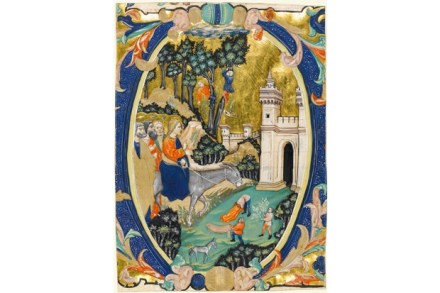
One could honour God with prayer, of course, and build cathedrals, amass treasuries, turn choirs into stained-glass jewel boxes, carve portals with saints and sinners. But for the medieval monks bent over vellum in chilly scriptoria colour, too, was devotion: offertories of lapis lazuli, azurite, cinnabar, silver and gold, gold and more gold. Silver tarnished on the page, but gold remained exquisite, inviolable, and monks and scholars found a dragonish greed for it. War, weather, revolution, Henry VIII, Oliver Cromwell, acquisitive magpies, trophy-hunters and time have stripped gold and pigment from sculptures and ivories.

And your point, Professor?

From our UK edition

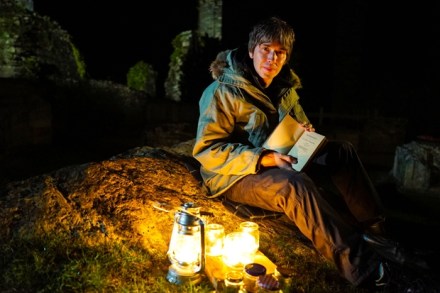
Pop idol turned top boffin Brian Cox doesn’t shy away from the big issues. With programmes such as Wonders of the Solar System, Wonders of Life and Human Universe, Cox, the heir apparent to His Eminence Sir David Attenborough, has dared to dream on a cosmic scale. Are there any limits to his mighty intellect? In his latest adventure, Forces of Nature (BBC1, Monday), the ambitious prof boldly seeks to illustrate the workings of ‘the underlying laws of nature’. As wistful electronic music tinkled Eno ishly in the background, he assured us, in a metaphysical tone, that ‘the whole universe, the whole of physics, is contained in a snowflake’.

Reasons to be cheerful | 30 June 2016

From our UK edition

Noel Malcolm It may sound both Pollyannaish and paradoxical to say this, but leaving the EU will enable us to have stable, friendly, cooperative relations with all our EU neighbours. Being cooped up in a dysfunctional system, where so much depends on backroom arm-twisting and competing for favours in a zero-sum game, doesn’t produce stable friendships. For those of us who feel (as I do) like real Europeans, it will be so much better to be the friendly next-door neighbour than the unwanted in-law in the quarrelling family home. Noel Malcolm is a Senior Research Fellow of All Souls College, Oxford.

Money for nothing | 30 June 2016

From our UK edition

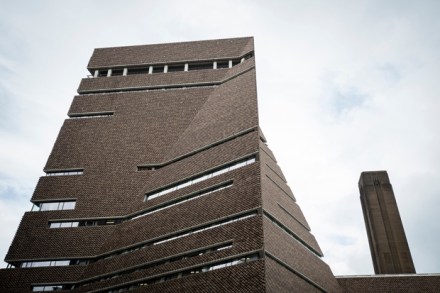
Tate Modern’s new Switch House extension in London has been greeted with acclaim. It is a building designed in the distorted geometry of neo-modernist cliché, and offers a breathtaking array of piazzas, shops and cafeteria, with the added attraction of a free panorama of London that is much better than the adjacent Shard’s. There has been criticism of the contents, which are more appropriate to an experimental Shoreditch warehouse than a national gallery of 20th-century art. But who cares? The Tate attracts almost five million visitors a year. League tables now dictate how we judge London visitor attractions, just as exam results are used to evaluate schools and waiting times hospitals. Last year the British Museum drew 6.8 million visits, the National Gallery 5.

The slow death of environmentalism

From our UK edition

Would you describe yourself as an ‘environmentalist’? I would, mainly to annoy greenies, but also because it’s true. If your definition of an environmentalist is someone who loves immersing himself in the natural world, makes a study of its ways and cares deeply about its future, I’m at least as much of one as David Attenborough. But I can see why many fellow nature lovers might balk at the term, especially now that it has become so grievously politicised. That would explain the recent Gallup poll — it was taken in the US but I suspect it applies to Britain too — showing how dramatically this label has plunged in popularity. In 1991 the majority of Americans self-identified as environmentalists — 78 per cent of them.