Science

Wings of desire

From our UK edition

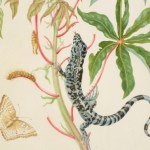
Maria Sibylla Merian was a game old bird of entrepreneurial bent, with an overwhelming obsession with insects. Born in Frankfurt in 1647, she sacrificed her health and financial stability in pursuit of her passion. It carried her halfway across the globe and earned her lasting renown among a handful of cognoscenti. Merian was 15 when Jan Goedart published the first of his three volumes of Metamorphosis et historia naturalis insectorum and is unlikely to have seen the book until later. Goedart’s purpose, based on close observation of a range of insects, was a fuller understanding of insect life cycles. It was the same purpose to which Maria Merian devoted herself — even resorting to selling snakes, lizards, a tortoise and a crocodile to fund her compulsion.

A clash of two cultures

From our UK edition

‘They fuck you up, your mum and dad.’ Philip Larkin’s most famous line has appeared in the Spectator repeatedly, and there has even been a competition devoted to its refutation. Steve Jones, though, thinks it too coarse to be quoted in what he himself describes as a popular science book. This is just one of many indications of the way in which this book is haunted by C.P. Snow’s two cultures. I was a bit shocked to see Jones describe his book as popular science because I had been under the impression that he thought it was, in part at least, a history book. As a popular science book, it’s quite good. As history, not. Jones begins by looking out over Paris from the Eiffel Tower and identifying places where important science was done.

Is it art or science?

From our UK edition

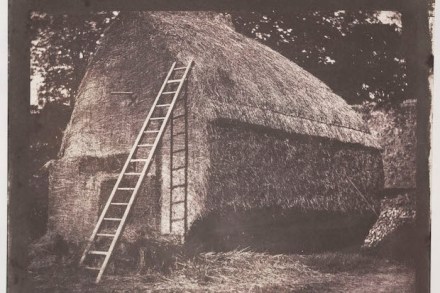
William Henry Fox Talbot had many accomplishments. He was Liberal MP for Chippenham; at Cambridge he won a prize for translating a passage from Macbeth into Greek verse. Over the years he published numerous articles in scholarly journals on subjects ranging from astronomy to botany. One thing he could not do, however, was draw well — and it was this inadequacy that changed the world. While on holiday in Italy in 1832, he became so frustrated by his failure to draw Lake Como satisfactorily using a pencil and a drawing aid known as the camera lucida — his efforts were well below GCSE art standard — that he resolved to find another way to preserve such views. The results are on show in an exhibition at the Science Museum, Fox Talbot: Dawn of the Photograph.

No hiding place | 17 March 2016

From our UK edition

My first courtroom murder case could have come straight from one of Andrew Taylor’s novels. A gruesome crime — the death of a child. And the murderer was brought to justice by exquisite detective work: police established that the killer had dug a grave but then abandoned it. They also found a witness. That was 20 years ago. The prosecution for cases that I’m involved in now have changed beyond recognition. Take number-plate-recognition technology. Most murderers drive to their victim, but now cars are tracked by cameras across the country. The police can list vehicles seen near a crime scene, then trace them back. That’s how, in 2006, they caught Steve Wright, the man who killed five prostitutes in Ipswich.

Why Joan Bakewell must be right about anorexia

From our UK edition

You can always tell when a public figure has said something with the ring of truth about it by the abject apology and recantation which arrives a day or two later. By and large, the greater the truth, the more abject the apology. Often there is a sort of partial non-apology apology first: I’m sorry if I upset anyone, but I broadly stand by what I said, even if my wording was perhaps a little awkward. That, however, won’t do — by now the hounds of hell are howling at the back door. Social media is beside itself, wrapped up in its moronic inferno, the cybersphere splenetic with self-righteous outrage.

Frozen beards and hot tempers

From our UK edition

Born in New South Wales in 1888, George Finch climbed Mount Canobolas as a boy, unleashing, in the thin air, a lifelong passion. When he was 14, the family emigrated to Europe. There, as a young man, Finch excelled both as an alpinist and a student, enrolling at the prestigious Zurich Federal Institute of Technology, where he won a gold medal which he subsequently melted down to buy ropes and belays. He was six feet two, with broad shoulders and blue eyes, and he played the piano beautifully. In 1912 he moved to London to work as a research chemist, joining the Fuel and Refractory Fuels team at Imperial College the following year. From the outset, he upset convention in the climbing fraternity.

Humboldt’s gift

From our UK edition

The Prussian naturalist Alexander von Humboldt was once the most famous man in Europe bar Napoleon. And if you judge a man by his friends (as you should), how about Goethe, Schiller, Simon Bolivar, Cuvier, Lamarck, Laplace, Guy-Lussac and Jefferson? And that is only the start of the supper list. So what happened? Why is he forgotten? For the best of reasons: because he contributed so much to so many fields of intellectual interest that are now separate scientific disciplines. And also because most of his ideas that were once startlingly original are now commonplace. We take it for granted that there are vast rivers running through the seas (but at least the Humboldt Current is named after him). He was the first oceanographer. He was the first ecologist.

Away with the angels?

From our UK edition

I remember the shock, like a jolt of static electricity. One day, between taking my degree and beginning my first job, while looking through a 16th-century book about numerology that had once belonged to John Dee in the British Library, I came upon an annotation in his own neat italic hand casting up the numerical values of the letters of his name. The total he wrote down came to 666. John Dee (1527–1609) was a magus, but we must not think that this made him a loony witch. An early Fellow of Trinity College, Cambridge, teaching Greek, he acquired a reputation for learning in mathematics, navigation and astronomy. But his long pursuit was of something he knew was dangerous and which I am not convinced he always thought licit: angelic conversations.

The ringfence cycle

From our UK edition

By now, George Osborne had hoped to have completed his austerity programme. Instead, he finds himself making what is, still, the most ambitious round of cuts of any finance minister in the developed world. The Chancellor is paying the price for the leisurely pace that he decided to take in the last parliament - due to his habit of buying time by deferring pain. The Chancellor still doesn’t seem to be in too much of a rush. In his spending review statement this week, he decided to spend some £83 billion more over the parliament than he said he would at the general election.  Foreign aid is not just protected, but will increase by some £3 billion - more than the budget for the Home Office.

You can’t forget what Will Self says – even if you wish you could

From our UK edition

It lasted for just a few seconds but was such a graphic illustration of the statistics behind the bombing campaign in Syria — and not a word was spoken. Martha Kearney called it an ‘audio graphic’ on the World at One on Monday and explained how Neal Razzell and James Beard for the World Service had been monitoring the number of US combat missions on Islamic State targets in Syria, hour by hour, 24/7, and comparing them with earlier bombing campaigns. Each electronic beat we heard represents one hour, Razzell told us; each beep represents the launch of one combat mission. For Syria, the electronic beeps between each beat were quite far apart — clearly distinguishable. The sound we heard represented two raids an hour, he explained, every day for 450 days.

Are we looking at the end of liberal democracy?

From our UK edition

[audioplayer src="http://rss.acast.com/viewfrom22/parisattacksaftermath/media.mp3" title="Toby Young and Kemi Badenoch discuss the role of integration in the rise of Isis" startat=1470] Listen [/audioplayer]As a graduate student in the Harvard Department of Government in the late 1980s, I became slightly jaded about the number of visiting academics who warned about the imminent demise of the West. The thrust of their arguments was nearly always the same. The secular liberal values we cherish, such as the separation of church and state and freedom of speech, won’t survive in the face of growing religious animosity unless they’re rooted in something more intellectually and spiritually compelling than capitalist individualism.

How Technicolor came to dominate cinema

From our UK edition

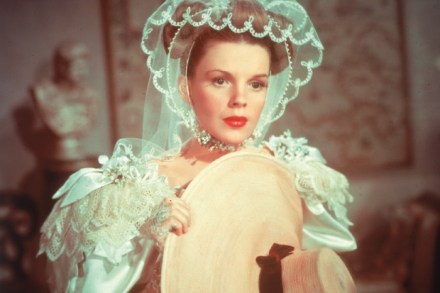
They’ve already found a cure for the common cold. It’s called Technicolor. My first dose of it came during the Christmas holidays when I was about 12. There I was, ailing and miserable, when The Adventures of Robin Hood (1938) came on the television at the end of my bed. Nothing had prepared me for this. A Sherwood Forest that was aflame with green. Clothes that shimmered purple and blue. Olivia de Havilland’s oh-so-cherry lips. Under two hours later I cast off the duvet and leapt from the fug. The sickness had gone. I now know that this medicine, Three-strip Technicolor, was a revolutionary process, the first to properly mix the three primary colours of light — red, green and blue — so that film could capture all of the colours in nature.

Send in the clones

From our UK edition

How much do you love your dog? Do you secretly wish, as he or she grows older, that you could have another just the same? I’ll bet that tens of thousands of Brits feel this way — and soon their dreams could come true. When most of us last thought about it, cloning was an off-putting and futuristic prospect. Dolly the sheep was the poster girl, and things didn’t turn out too well for her. But times change, science creeps on, and last year a Brit called Rebecca Smith had her beloved dachshund, Winnie, cloned in South Korea. The going rate for Mini-Winnie would have been £60,000, but Rebecca won a competition and so — except for the obligation to appear in a TV documentary about the process — Mini came for free.

John Paul Stapp: the fastest man on earth, who saved millions

From our UK edition

There’s a moment in Craig Ryan’s spectacular biography of John Paul Stapp — the maverick American Air Force doctor who, in the 1950s, became the fastest man on earth — where the reader falls inexorably in love with Ryan’s subject. It’s on page 17, when Stapp encounters what his Baptist missionary father had taught his sons to prepare for: ‘The epiphany that would illuminate the nature of their calling.’ Christmas is three days gone, and Stapp’s two-year-old cousin, momentarily alone in front of the fireplace, throws part of the Sunday newspaper over the grate. It ignites, catching the boy’s cotton pyjamas, setting them ablaze. Someone plunges the child into a tub of icy water outside, but the burns are horrific.

Stars in their eyes | 24 September 2015

From our UK edition

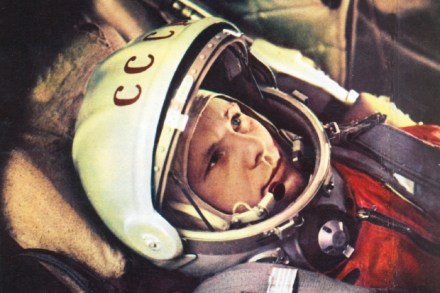
‘The dominant narrative of space,’ I was told, in that strange language curators employ, ‘is America.’ Quite so. Kennedy stared at the moon and saw a promotional opportunity. Nasa’s logo was designed by the flamboyant Raymond Loewy. A PR man wrote Neil Armstrong’s unforgettable lines. Every event at Cape Canaveral (later the Kennedy Space Center) was televised, while, in the USSR, Star City was built in furtive secrecy just outside Moscow. Tom Wolfe glorified the US space programme in The Right Stuff, his boisterous 1979 masterpiece of reportage where the cowboy mentality of the fly-boys co-mingled with the technical marvels of California aerospace, myth-making the while.

The big chill

From our UK edition

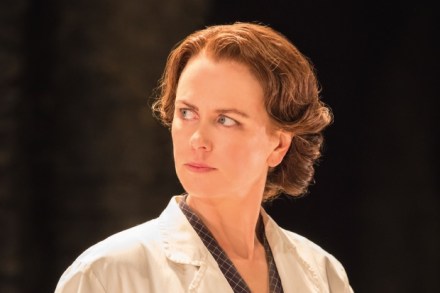
Michael Grandage’s latest show is about an old snap. Geneticists regard the X-ray of the hydrated ‘B’ form of DNA as one of the loveliest images ever captured. To laymen it looks like some woodlice drowning in yesterday’s porridge. The pic was taken in 1951 by the British biochemist Dr Rosalind Franklin but she failed to realise its significance. When James Watson passed through her lab he took one glimpse and instantly twigged that it revealed the helical structure of DNA. With his pal Francis Crick he built the famous double-helix model which bagged them the Nobel Prize. Dr Franklin (played by Nicole Kidman) won nothing. We know all this in advance, of course, so the play lacks any suspense.

Down with slippery slopes!

From our UK edition

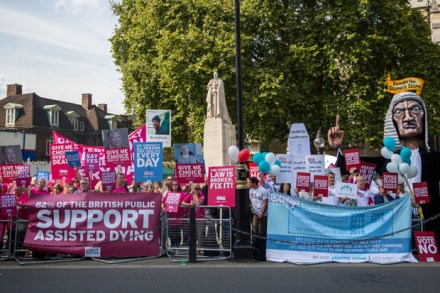
Well, of course the Assisted Dying Bill failed. It mattered not a jot that an overwhelming majority of public opinion urged its success; it was always going to fail and the only surprising thing is that anybody is surprised. I’ll bet my teeth on a few more certainties, too. Last week the required 200,000 people put down their spliffs long enough to sign a petition in favour of decriminalising cannabis and thus, in October, the matter will be debated by MPs. Proponents, however, really should not bother — they will lose, regardless.

Soon we will accept that useless lives should end

From our UK edition

[audioplayer src="http://rss.acast.com/viewfrom22/thedeathoftheleft/media.mp3" title="Matthew Parris and Freddy Gray debate whether assisted dying will ever become accepted" startat=1781] Listen [/audioplayer]Throughout the short life of the Assisted Dying Bill which failed last week in the Commons, the ‘faith community’ (a quaint term for that category of human beings who throughout history have been more assiduous than any other in trying to kill each other) have with skill and persistence deployed an argument of great potency. Such is the argument’s intuitive appeal that the pro-assisted-dying brigade never found a way of countering it. They have resorted simply to denying that what the faith squad say would happen, could happen. But it could.

Diary – 27 August 2015

From our UK edition

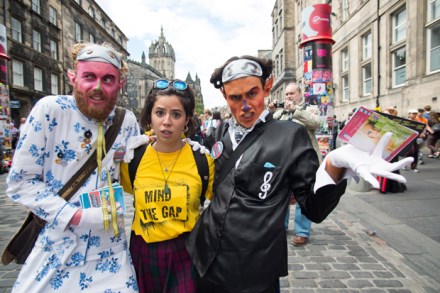
There are many good reasons for being in Edinburgh in August, when the population doubles and nobody looks twice if you walk down the street in a sequinned basque with a man dressed as a leopard on a leash. One of those reasons is a certain kind of lunch — an assortment of natives augmented by visiting actors, writers, journalists and any other good talkers who happen to be passing. And so to the elegant New Town flat of journalist Katherine O’Donnell with campaigner and memoirist Paris Lees, actor Rebecca Root, novelist and journalist Ben McPherson and human geographer Jo Sharp. The first question is, of course, ‘What have you seen that’s good?’ Because that is the only question on everyone’s lips during the festival.

Space case

From our UK edition

The idea that Radio 2 should be sold off by the BBC to a commercial rival is as nonsensical as BBC1 losing Strictly Come Dancing, or Heinz giving up on baked beans. The station, in its former incarnation as the Light Programme, was a core product of the corporation, the home of the Palm Court Light Orchestra, Kenneth Williams, Semprini, Billy Cotton, Sid James and Edmundo Ros. It gave us ‘light’ entertainment — music to dance, exercise or sing to, comedy shows, magazine programmes, dramas of ordinary life rather than Greek tragedy. The comedy programmes on 2 were siphoned off long ago to 4 and then 4 Extra, as were all the dramas, including The Archers, and Woman’s Hour too.