Science

The solving of a biological mystery

From our UK edition

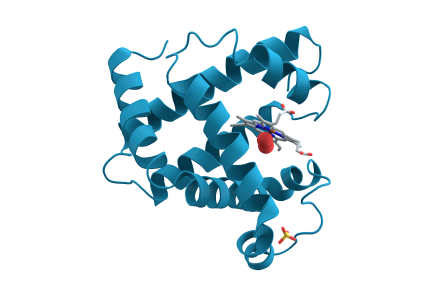
DNA is the blueprint that encodes the instructions to make proteins. Proteins are the building blocks and the machines that power life. And proteins make up the tissue that in turn comprise the organs and muscles that make up us. Considering how crucial proteins are to life itself, there is still so much we do not know about them. But Google’s AI firm Deepmind may just have helped us make a giant leap forward. When a protein is first made inside a living cell, it is merely a chain of connected amino acids — like beads on a string. Yet, it instantaneously folds into unique three-dimensional, beautiful shapes, which enable them to carry out their function.

The dangers of unconscious bias training

From our UK edition

To read the press releases, you would think we’ve found the panacea to racism in the form of unconscious bias training. Numerous organisations, including the Labour party, have announced they would be putting their staff through such programmes. This follows in the footsteps of the civil service, which has required all civil servants to undertake unconscious bias training since 2018, magistrates, for whom the training is compulsory, and the Met police, where it forms part of ongoing officer training. Google, Facebook, the FTSE 100, government departments — including the Ministry of Defence and Ministry of Justice — and non-profits proudly advertise the programmes they put their staff through.

Why I will wear a face mask

From our UK edition

We are enjoined by certain experts to wear face masks while having sexual intercourse. No change there, then, for me. It’s the only way I’m allowed it. I don’t even get to choose my own mask. My wife keeps several in a cupboard under the stairs. If, when I retire to bed, I see the face of Benito Mussolini or Douglas Murray neatly laid out on my pillow — or, for more exotic excursions, the late President Sirimavo Bandaranaike of Ceylon — I know that fun times are ahead. This usually happens twice a year — on my birthday and on Walpurgisnacht. I don’t know if these largely latex creations protect either me or the recipient of my laboured exertions from Covid. Perhaps they do, perhaps they don’t.

How we can overcome Britain’s problem with scientific illiteracy

From our UK edition

It occurs to me that one of the most important lessons we’ve learnt so far during this time of plague is that the majority of the glitterati, TV journalists and armchair epidemiologists on Twitter, are all scientifically illiterate. This is not a new phenomenon. One of my most precious possessions is a copy of CP Snow’s 1959 Rede lecture on the ‘two cultures’ – science and the humanities. At the time he suggested you had: ‘Literary intellectuals at one pole - at the other scientists, and the most representative, the physical scientists. Between the two a gulf mutual incomprehension - sometimes hostility and dislike, but most of all a lack of understanding. They have a curious distorted image of each other.

Do face masks work? A note on the evidence

From our UK edition

Should we, or should we not be compelled to wear face masks during a virus epidemic? It sounds a simple enough question. Indeed the answer seems so obvious to many, including the Mayor of London, Sadiq Khan, that they are questioning why this measure is not already mandatory. Surgeons wear them; they filter the air we breathe; viruses are in the air; let’s get everybody wearing them. Other countries have, so they must be helpful. It seems so straightforward. Unfortunately it’s not as simple as that, and the obvious becomes less obvious the more you look at it.

How deadly is the coronavirus? It’s still far from clear

From our UK edition

In announcing the most far-reaching restrictions on personal freedom in the history of our nation, Boris Johnson resolutely followed the scientific advice that he had been given. The advisers to the government seem calm and collected, with a solid consensus among them. In the face of a new viral threat, with numbers of cases surging daily, I’m not sure that any prime minister would have acted very differently. But I’d like to raise some perspectives that have hardly been aired in the past weeks, and which point to an interpretation of the figures rather different from that which the government is acting on.

How British science can flourish after Brexit

From our UK edition

I’m a Texan as well as a physicist so I hope it doesn’t sound boosterish if I say that no nation has contributed more to basic science than Britain. No other country has such an uncanny aptitude for it. I’m not sure what combination of poetry and pragmatism makes this possible, but I don’t need to go far to find evidence. A few streets from where I work in Mayfair lies the Royal Institution, which earned more Nobel prizes in science than all of Russia. Or consider Newton, Darwin, Faraday, Maxwell, Rutherford, Hardy, Dirac, Fleming, Crick, Higgs, Hawking and Wiles. All are bywords for British originality. They have something else in common: none was concerned about the utility of their work.

A book that could save lives: Adam Rutherford’s How to Argue with a Racist reviewed

From our UK edition

In the award-winning musical Avenue Q, filthy-minded puppets sang about schadenfreude, internet porn, loud sex, the uselessness of an English literature degree — and racism. Or, more specifically, they sang about the ubiquitous human habit of stereotyping people by race: Everyone’s a little bit racist, sometimes.Doesn’t mean we go around committing hate crimes.Look around and you will find,No one’s really colour blind.Maybe it’s a fact we all should face.Everyone makes judgments...Based on race. The puppets were right: everyone makes judgments based on race. Humans are lazy creatures who like mental short cuts. Thinking in shades of grey is more effortful than thinking in black and white.

How close is humanity to destroying itself?

From our UK edition

Humanity has come startlingly close to destroying itself in the 75 or so years in which it has had the technological power to do so. Some of the stories are less well known than others. One, buried in Appendix D of Toby Ord’s splendid The Precipice, I had not heard, despite having written a book on a similar topic myself. During the Cuban Missile Crisis, a USAF captain in Okinawa received orders to launch nuclear missiles; he refused to do so, reasoning that the move to DEFCON 1, a war state, would have arrived first. Not only that: he sent two men down the corridor to the next launch control centre with orders to shoot the lieutenant in charge there if he moved to launch without confirmation.

It’s science, not protest, that will save the planet

From our UK edition

One might expect that the challenge of climate change would encourage many young people to take up Stem (science, technology, engineering and mathematics) subjects at A-level. Yet over the past ten years, with the exception of maths, numbers have risen only very slightly; and for ICT have dropped. Ancient attitudes to what then passed as ‘science’ may suggest a solution. Ancient Greeks were scrupulous about one fundamental breakthrough that remains the cornerstone of all serious research: supernatural explanations were impermissible. The reason was that no human could know the mind of a god. This did not mean Greek ‘scientists’ did not acknowledge the gods; they simply took it as axiomatic that bringing gods into the equation rendered the conclusions valueless.

NASA’s multi-billion dollar Mars reality TV show green-lit for another season

The American businessman and astronomer Percival Lowell first popularized the notion of life on Mars in 1906 when he described vast canals observed on the planet, some spanning the equivalent distance of Boston to San Francisco. He believed an intelligent Martian civilization was in peril, their world drying out and dying, and they had constructed as a planet-wide irrigation system to move water from Mars’s polar ice caps to the rest of the planet.American folklore has it that the idea of Martian intelligent life was so pervasive that a 1938 radio drama of H.G. Wells’s War of the Worlds, about a Martian invasion, ignited mass panic when millions of people believed it was a real newscast.

mars

Radio 4’s The Art of Innovation is a series that — for once — deserves the label ‘landmark’

From our UK edition

Radio 4, how do I love thee? Rather as one loves the flocked wallpaper that came with the house. It isn’t what one would have chosen — but it is home. Yes, even when plangent piano music indicates a meaningful drama is about to begin. Yes, even when said drama is a woefully wooden effort about Amy ‘a typical modern 18-year-old — who happens to be trans’. Sample quote: ‘You’ve had me for 18 years, now I want me for me!’ Sound effect: peevishly slammed door (mine). New trans dramas are, of course, welcome, but Woman’s Hour drama is often a bit miss and miss.

Business is the only area of human activity where you get paid to change your mind

From our UK edition

In 1891, a 29-year-old man moved from Philadelphia to Chicago intending to start a business. With $32 to his name, he began by selling scouring soap. Hoping to boost sales, he gave away small packets of baking powder with every purchase. Soon he found that the baking powder was more popular than his soap, so he quit the soap market and started selling baking powder instead. But now he needed something to give away with his baking powder. Eventually, for reasons I cannot begin to fathom, he took to giving his customers two free packs of chewing gum with each tin of baking powder. And then the same damned thing happened again. He found that the free gum was more popular than the baking powder.

Elon Musk’s brain game

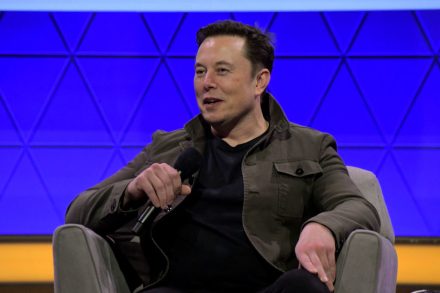
When Elon Musk took to the stage at the California Academy of Sciences on Tuesday, he gave the world the first insight into his vision for mapping and ultimately controlling the brain. Three years ago, Musk formed Neuralink which was specifically created to respond to the threat that Musk’ believes is posed by the imminent threat of thinking machines powered by AI. Musk believes that phase of the information revolution could mark the end of humanity as robots outpace humans in intelligence and pace of evolution. His answer is to fully understand exactly how the brain works and, in the process, he believes that the new science will find the cure for many of humanity’s most deadly illnesses such as Parkinson’s, Alzheimer’s and PTSD.

elon musk brain

Our flexible friend

From our UK edition

Plastics — even venerable, historically eloquent plastics — hardly draw the eye. As this show’s insightful accompanying publication (a snip at £3) would have it, ‘Plastics have no intrinsic form or texture, thus they are not materials that can be true to themselves.’ They exist within inverted commas. They can be shell-like, horn-like, stony, metallic — they do not really exist on their own behalf. Mind you, the first vitrine in Raw Materials: Plastics at the Nunnery Gallery in east London contains an object of rare beauty: a small, mottled, crazed, discoloured sphere that looks for all the world like the planet Venus, reduced to handy scale. It’s a billiard ball, made of the first plastic: cellulose nitrate.

Here comes the sun

From our UK edition

When you see the opening caption ‘4.6 billion years ago’, it’s a pretty safe bet that you’re watching a programme presented by Professor Brian Cox. And so it proved again this week, as his latest exploration of the solar system began on BBC2, with an episode about Mercury and Venus. Being an officially designated ‘landmark’ series, The Planets (Tuesday) has many of the features you’d expect: lush music, an impressive CGI budget, a ten-minute behind-the-scenes segment at the end. More surprising is Cox’s willingness to anthropomorphise the planets — and to regard the ones that aren’t lucky enough to be Earth with a touching level of sympathy. After all, it’s not their fault they’re so lifeless.

Murder will out

From our UK edition

When the 24-year-old Angela Gallop started working at the Home Office forensic science service, her boss lost no time in telling her that ‘a woman’s place is in the home — literally, at the kitchen sink’. Many years later, having contributed to solving some of the UK’s highest profile criminal cases, Gallop may have remembered those words with a smile as she mopped the office floor. This was no display of domesticity; she was in pursuit of a murderer. A man had been accused by his wife of killing his boss. The wife said that the spatters of blood on the wall of the fast-food café where they worked had resulted from her husband’s violent kicks and punches to the owner’s body.

Tables turned

From our UK edition

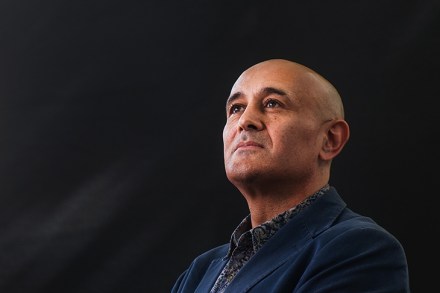
It was odd listening to Jim Al-Khalili being interviewed on Radio 4 on Tuesday morning rather than the other way round. In his series The Life Scientific, Al-Khalili has developed his own brand of interviewing, encouraging his guests to talk about their work in science by leading them from personal biography —how they came to study science, what they were like at school, who influenced them — to the intricacies of their research and why we should know about it. He makes this sound so easy and natural, setting his interviewees at ease, and his listeners, too, with stories from school and university before delving into the complex ideas behind their work.

No, Donald Trump’s climate policies aren’t going to ‘boil the planet’

‘The Trump administration knows the planet is going to boil. It doesn’t care,’ claims Canadian eco-activist Bill McKibben in a Guardian editorial. With enemies as unhinged as this, who needs friends? McKibben is basing his claim on a few paragraphs buried within a 500-page ‘Draft Environmental Impact Statement’ issued by the National Highway Traffic Administration (NHTSA) and subsequently bigged up by the Washington Post as conclusive proof that Trump is the ultimate Gaia-raping super villain. According to the report, on current projections the global mean temperature is going to rise by around 4 degrees Celsius (7 degrees Fahrenheit) by the end of the century.

donald trump’s climate change

It’s not science I don’t trust – it’s the scientists

Everyone knows the real reason people like Donald Trump are sceptical of climate change is that conservatives are fundamentally anti-science. Some doubt science because it conflicts with their religious beliefs; others because its implications might mean radically shifting the global economy in an anti-growth or heavily statist direction, which goes against their free-market ideology; others because, being conservative, they are prisoners of their dogmatism, need closure and fear uncertainty. I hear this all the time from lefties on social media. And there seems to be some evidence to support it.

margaret thatcher roberts scientists