Science

Why doesn’t the CDC care about Chinese biolabs in America?

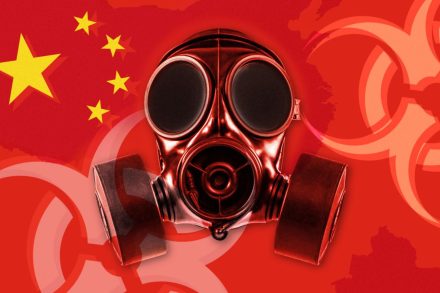
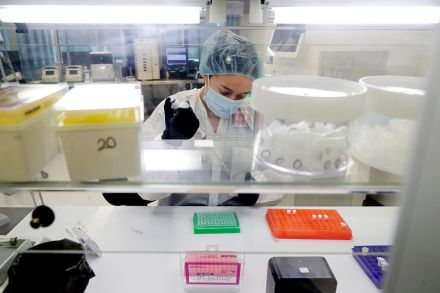
If you rent a cheap Airbnb house in Las Vegas, you might not be altogether surprised to find dead crickets in the garage. But a thousand vials of medical samples in several freezers – and a centrifuge? After the cleaner and one guest fell ill at a property in the city’s Sunrise Manor neighborhood last week, federal agents raided it and found a whole laboratory’s worth of scientific kit of the kind more useful to medical scientists than, say, drug dealers. Curious. Curiouser still, the house belongs to a Chinese national named Jia Bei (Jesse) Zhu. He is currently in prison awaiting trial over a secret laboratory that (it is alleged) he was running in Reedley, California.

Biowarfare

How useful is AI for research?

Late last year, I published the first theoretical physics paper in which the main idea originated from artificial intelligence – from an AI. And my experience working with the most powerful AI models left me both impressed and wary. The most accurate analogy I can offer is that it’s like something familiar to anyone who has done research: a brilliant colleague who is also unreliable. This colleague can produce deep insights at surprising speed – and then, the next second, make an error that ranges from the trivial to the profound. That tension – capability versus reliability – has shaped how I now use these systems in mathematics and theoretical physics. It is also what will shape how they affect scientific research over the next few years.

How mediocrity took over the Grammys

Is music getting worse? Rick Beato is a musician, producer and critic with more than five million YouTube subscribers. His answer would be: yes, pretty much. In a recent video, he compares the 2026 Grammy Song of the Year nominees to those of 1984. There are a few bright sparks among the slate of new songs, but Beato regards most of them as derivative, unoriginal and unlikely to be remembered past the end of the awards show. In contrast, 42 years on, all the 1984 nominees – Michael Jackson’s “Beat It,” The Police’s “Every Breath You Take” and Lionel Richie’s “All Night Long” among them – are firmly embedded in the popular music canon. One could ask the same question about science: has it gotten worse? My answer, I have to say, reflects Beato’s for music.

Is this the end of the cold case?

On March 6, 1959, nine-year-old Candice "Candy" Rogers of Spokane, Washington, went out after school to sell campfire mints door-to-door. Sweet-natured with strawberry blonde curls and a button nose, she was small for her age. Her mother, Elaine, had one clear rule that Candy must be home before dark. But Candy never came home. Her disappearance triggered a 16-day manhunt involving thousands of people, the Marines and the US Air Force. In fact, three airmen lost their lives on the second day when their helicopter hit high tension cables and plummeted into the Spokane River.  After two weeks of searching for Candy, all detectives could find were her scattered mint boxes.

An interview with the physicist David Deutsch

The Amazon reviews for David Deutsch’s The Beginning of Infinity don’t alert you to the fact that this is a book on theoretical physics. They sound more like a weepy divorcé’s YouTube comments below a Mark Knopfler guitar solo. “I didn’t so much read it,’ says one. “It read me.’ ‘I was honestly sad when it was over,’ writes another. “This book changed my way of seeing the world, politics, science and, most importantly, of seeing what I will understand as containing some truth.” When I talk to Deutsch – one of the most sensationally interesting theoretical physicists of our age – on Zoom, I see two beady eyes peering at me over some non-spectacular spectacles under a mess of thin white hair, borne by a thin white man in a thin white shirt.

The peril of playing with viruses

If a military team made a mistake during a nuclear war preparedness exercise and accidentally obliterated millions of people, you would not expect to find some of the very same people merrily admitting a couple of years later that they have carried out the very same kind of exercise with different live nukes and slightly fewer safeguards. Would you? That is roughly what I recently found out has apparently been going on in China. The Wuhan laboratory that conducted risky experiments on bat viruses at inadequate biosafety levels and almost certainly caused the pandemic has now revealed that it has done the same kind of risky experiments on another lot of horseshoe-bat viruses at low biosafety levels. Is accidentally killing millions not enough to give them pause?

The battle to stop US universities aiding Chinese repression

It goes by an innocuous name – “Integrated Joint Operations Platform” (IJOP) – but it’s one of the most sinister components of China’s surveillance state, managing what has been described as a genocide against the Uighurs. The IJOP combines multiple systems of repression – location, messages, contacts, social media and other data from phones, together with information from checkpoints, cameras and biometric records. It then flags “suspicious” individuals for detention and forced labor. Now leading US universities have been accused of extensive collaboration with Chinese laboratories which develop technology that may be deployed or adapted for use in this system.

How scientists misled the world about faith

Sometime in 1953, Dorothy Martin was contacted by aliens. They had bad news and they had good news. The bad: Earth was about to be swallowed up by floodwaters. The good: as the leader of a chosen few, Martin would be saved by flying saucers. Mankind had brought this calamity on itself by following Lucifer’s agents – scientists – and abandoning Christ. Over the next year or so, Martin assembled a little flock of disciples who believed their salvation, and the world’s end, would come on December 21, 1954. A team of psychologists caught wind of Martin’s prediction.

UFOs alien psychology faith

The new eugenics dilemma

What comes to mind when you think about the maximum amount of love a parent can have for their child?For me, I think of Dick Hoyt pushing his son Rick, who had cerebral palsy, in a wheelchair through the Ironman World Championship course. I think of the parents of Nick Vujicic, born without arms or legs, raising Nick with confidence, and cheering him on as he became an international motivational speaker. I think of the mother of a child with Down Syndrome, choosing each day to recognize the absolute gift of their child. I think of the parent at the dinner table comforting a child upset by a ‘C’ on their report card.Noor Siddiqui, founder of Orchid Biosciences, sees things differently.

Eugenics

How justified is climate-change alarmism?

For decades, the picture of Earth’s future – as laid out by journalists and climate scientists alike – has been bleak. By 2070 we will see famine, economic collapse, a sun that cooks us, melted icecaps, flooding, extreme hurricanes and ever-present tropical storms. "Vast swathes" of the planet will be inhospitable for human life. And Greta Thunberg, in her late sixties, will wear a gas mask as she sits on the steps of Swedish Parliament with a cardboard sign declaring, "I told you so." Advocates have poured gasoline on the climate-alarmism fire earnestly, backed by reports declaring, "There really is no serious scientific debate remaining about climate change.

Global Climate Strike on September 20, 2019 in Edinburgh, Scotland (Getty)

What happens when AI surpasses humans?

I recently sat down to dinner with some very smart economists. I am the chief executive of an artificial intelligence company and so the conversation swiftly turned to the value of AI for the economy. The economists had many interesting things to say, both about the advantages of AI adoption and about the displacement effects on jobs. But about halfway through the dinner, another AI chief executive offered an opinion that struck me. He said: “I can’t quite articulate it, but I have a sense that what you are measuring with your GDP analysis is not what I care about. You treat this like an economic question. But it’s more like a geopolitical question.”  At a gut level, I knew exactly what he meant – but I also couldn’t clearly state the distinction.

AI
AI

Should AI have rights?

Mary Shelley was challenged by Lord Byron to write a ghost story during a summer of “incessant rainfall” on Lake Geneva in 1816. She came up with something far more interesting than a mere ghost story: the tale of Dr. Frankenstein, a scientist who creates life by reanimating a corpse. Shelley, who was just 18 at the time, was horrified by her “waking dream.” The thought that man could “mock” God’s creation of life was “supremely frightful.” Some of the scientists building artificial intelligence today believe they, too, might be creating life. The implications are frightening – and not just because an AI might decide to kill us all. What if we could hurt the AI?

In the age of AI, humans must keep learning

This year, colleges stopped teaching students to write. As artificial intelligence chatbots allow students to generate unique essays that can’t easily be vetted for plagiarism, professors have felt the need to replace essay assignments with written examinations in closed rooms. It’s a considerably shrunken version of the kind of university education that was on offer 75 years ago. In June, a study from MIT showed steadily waning brain engagement and originality as student essayists used AI more. The college business model is in trouble: $75,000 for a year’s worth of diversity, equity and inclusion nonsense already struck parents as a bit steep. But at least the kids were being taught something. The new limitations AI places on instruction may do a lot of colleges in.

How China is out-innovating the West

The world received a jolt in 2018 – and it wasn’t from a Silicon Valley whiz or a lab at MIT. It came from Shenzhen, China, where a lanky, unassuming biochemist named He Jiankui did the unthinkable. Using the newly discovered CRISPR-Cas9 toolkit, and asking no one’s permission, He edited the genes of Lulu and Nana, twin baby girls, so that both were born immune to HIV. The scientific establishment gasped, jaws dropped and the moralists clutched their pearls. “Monstrous!” the bioethicists cried. “I was just horrified,” said Jennifer Doudna, who won the 2020 Nobel Prize in Chemistry for inventing the CRISPR gene-editing technique.

The fight to make science great again

If one were looking for dismal assessments of the Trump administration’s contributions to the vitality of American intellectual inquiry, the editorial eructations of Holden Thorp would likely be at the top of the list.   Thorp is the editor-in-chief of Science, the weekly journal of American Association for the Advancement of Science (AAAS). This makes him one of the most influential figures in the academy and in American science as a whole. Few weeks go by without an editorial from Thorp denouncing the havoc wrought by Trump. The May 8 issue is mildly titled, “The New Reality for American Academe,” but the mildness ends there.

science

A new map of the universe may turn gravity on its head

Scientists have released the largest map of the universe ever compiled. Millions of galaxies have been surveyed, stretching back 11 billion years, most of the age of the cosmos. According to many scientists, this data, combined with other observations, presages a major reassessment of what we know about the universe: possibly, for the first time, revealing a crack in Einstein’s theory of gravity. The Dark Energy Spectroscopic Instrument (DESI) is attached to a large telescope at the Kitt Peak National Observatory in Arizona. Each night it measures the positions of and distances to thousands of galaxies. Galaxies exist in groups and their motions are influenced by other, nearby galaxies.

universe 3I
scientists

Why won’t western scientists condemn Wuhan?

“I am officially launching my new company: Cathy Medicine. We will eradicate diseases in future generations through germline gene editing.” This is one of several strongly – and strangely – worded tweets sent in recent weeks from the X account of He Jiankui, a Chinese scientist who served a three-year prison sentence for gene-editing two human embryos. Those embryos are now people: seven-year old twin girls living under the pseudonyms Lulu and Nana. “Good morning bitches,” Dr. He wrote on April 16. “How many embryos have you gene edited today?” “Get in luddite, we’re going gene editing,” he added the next day. He also wrote: “I literally went to prison for this shit.” Is it the real Dr. He? The journalist Antonio Regalado, who first broke the story of Dr.

Will science lead us back to God?

After generations of treating the universe as mere matter to be bent to our will, it seemed inevitable that the future of humanity would be to merge with machines. Billionaires and tech utopians now predict a near future in which the human mind itself might be “downloaded” or transferred into a digital realm, allowing us to overcome death itself by slipping the bonds of our physical existence altogether. Modern-day prophets like Yuval Noah Harari proclaim that we have embarked on a second industrial revolution, though the product this time will not be machines or vehicles or powerful new weapons but human beings themselves. There’s a certain logic to this way of thinking.

science

The death of the American museum

It starts with the promise of skipping school — always an illicit thrill at nine years old. My son and I, seasoned truants, hop the early train to downtown Chicago for what I’ve convinced him is a real education. The day’s agenda: two of the city’s iconic museums — grand, intimidating and, up until recently, somewhat sacred. These sprawling neoclassical behemoths, both originally constructed for the 1893 World’s Columbian Exposition, dot the waterfront like ancient ruins. They once felt like temples to knowledge, where wonder and learning collided, where static displays ignited curiosity. But as we step inside, I can’t shake the feeling that maybe, just maybe, their magic has faded. Can museums as we know them survive my lifetime?

museum

Letters from Spectator readers, June 2024

The rise of reverse gaslighting Sir — To an otherwise excellent article, I have a small correction. In 1860, the Southern states did not keep Lincoln off the ballot. Unlike today, where voting ballots are printed by the states, in 1860, voters were not presented with official ballots at polling stations that allowed them to check off which candidate they were voting for. Instead, a nineteenth-century ballot or “political ticket” was a slip of paper, provided by each party, listing their candidates for whatever offices were up for election. This allowed voters to easily “vote the ticket” for their party without having to know the names of every candidate and office.

letters