Schools

Reopen schools now

From our US edition

My old boss Michael Chertoff, former secretary of the US Department of Homeland Security, went on Face the Nation this past weekend where he opined that K-12 schools should not reopen until there is a vaccine for the Wuhan virus. Now, I have enormous respect for Sec. Chertoff. I believe he is one of the smartest people I’ve ever known. But his opinions on this topic should carry no more weight than mine or yours. The reality is that it is time for the evidence and common sense to determine what states do in the fall in terms of reopening our public schools. Virtually all of the evidence on the Wuhan virus indicates it has little impact on the five-year-old to 18-year-old school age population. Most states have had few, if any, deaths of school-aged citizens.

schools

Letters: When is a sport not a sport?

Save the children Sir: Your leading article is correct that the government should have evaluated the detriment caused by shutting schools, against the risk posed by Covid-19 (‘Class divide’, 16 May). This is not a glib trade-off between protecting lives and allowing children to go to school: the predicament foisted on young people will affect their future for decades. Exams were abruptly cancelled in March. This has left many schools dealing with apathetic individuals. The disparity between disadvantaged and affluent students is widening: middle-class schoolchildren are twice as likely to receive online tuition, and only 8 per cent of teachers in low-income communities report more than three-quarters of work being submitted, compared with 50 per cent in the private sector.

Why schools should stay shut

Has the stock of any politician fallen more sharply, these past three or four years, than that of Shami Chakrabarti? As the leader of Liberty, and an almost weekly performer on the BBC’s Question Time, she was a respected purveyor of leftish sanctimony to the masses, a humourless voice of conscience and, I think, self-regard. The battles she fought then were at least, in the main, on the side of decency — and while we might have found her a little trying and even bumptious, there seemed no doubt that here was a young woman motivated by principle. That notion was swiftly expunged when she accepted a brief from Jeremy Corbyn to whitewash anti-Semitism in the Labour party via an ‘independent inquiry’ headed by herself.

Plato knew that home-schooling can have benefits

Education is cumulative. The idea that it will be lost on a generation because, for one out of 42 terms of schooling, pupils will have to take more responsibility for their own learning, is obvious tosh. Indeed that term may yield considerable benefits for all, especially older, pupils, whatever their future plans. Let Plato explain. Plato’s Seventh Letter (its authenticity has been doubted) deals with his failed efforts to turn Sicily into a Platonic state. Greeks had settled there from about 750 bc, and in the 4th century bc Plato was invited to help turn the apparently willing tyrant Dionysius II into a philosopher king. Plato went over there, but found the court riddled with intrigue.

Reopening schools must be our first priority

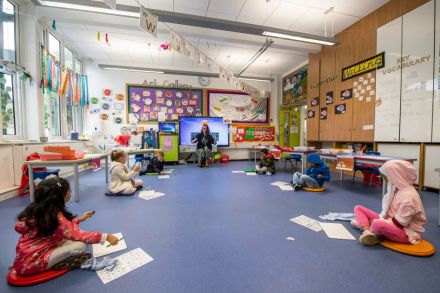
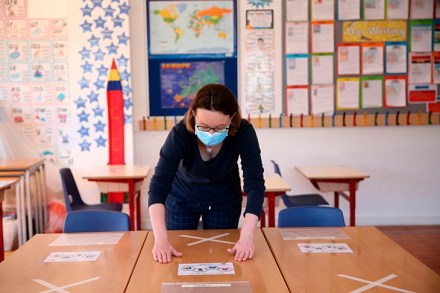
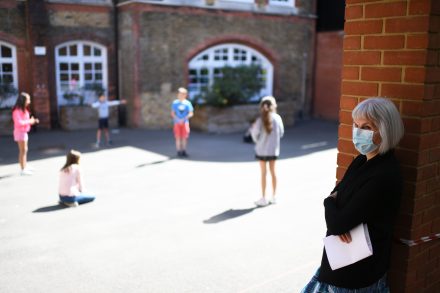
It would be a tragedy if one of the legacies of Covid-19 — a disease which hardly affects children physically — was a widening of the already broad gap in educational attainment between rich and poor. But sadly, the damage is already well under way. Back in March, Britain was the European country most keen to keep its schools open in the face of the then-burgeoning number of Covid-19 cases. Now it is the other way around. In Denmark, primary schools have been open for a month. This week, children began to return to class in Germany, France and the Netherlands. Next week, schools will start to reopen in Belgium. Yet in Britain, the earliest date we have been given for reopening schools is 1 June, and then only for some children in primary schools.

Want to save public schools? Embrace school choice

From our US edition

Debate over school choice has got ugly. A public school district administrator in Kentucky recently suggested he’d delay students’ graduations if the state legislature passes school choice legislation that would give tax credits to private donors who support voucher programs for kids to attend schools of their choice. The proposed program is similar to one in Florida, and the federal government has reportedly pledged up to $70 million in support to the Bluegrass State if it passes the bill.At the heart of the outraged responses to such programs is the assumption that supporting public school students who want to attend private schools will undermine public education and hurt the kids left behind by transferring funds into private hands.

schools

Bloomberg’s education policies deserve much more scrutiny

From our US edition

Mayor Mike Bloomberg didn’t fare so well in his debut appearance in Wednesday night’s Democratic debate in Las Vegas. Every other candidate was intent on exposing various sordid parts of his history, including his mistreatment of women and his former comments on banning the redlining that caused the 2008 financial crisis. But I was surprised that other parts of his record didn’t receive any attention—particularly his comments on K-12 education. After all, Bloomberg once said that if he had things his way, he’d 'cut the number of teachers in half', 'double [their] compensation' and 'weed out all the bad ones and just have good teachers'.

education

Espinoza v. Montana is about families, not religion

From our US edition

These days, 'school choice' has become such a polarizing term that many bristle at the mere mention of it. Up to this point, discussions have centered on public charters vs. traditional public schools, yet talk about religious schools has been largely left to the periphery. But that will soon change, once we hear the outcome of a potentially landmark education case that’s currently before the Supreme Court. And if tradition holds, bitter political arguments over the outcome are certain to overlook the most important stakeholders — the children and their parents.The case, Espinoza v.

espinoza

Should Muslim parents be allowed to challenge LGBT lessons?

We saw two different worlds, or at least two different value systems, collide in the High Court in Birmingham this week. On one side there was Sarah Hewitt-Clarkson, the headmistress of Anderton Park, a little primary school in Sparkhill, a largely Pakistani bit of the city; on the other, two men who represent Muslim parents there. You may well have heard about the case. It has turned into one of those totemic issues: tolerant Britain vs backward religious people. At issue is the question of whether and how children should be taught about gay relationships — and whether and how parents who don’t like it should be allowed to protest about it.

Abolish private schools? Bring it on!

I cannot recall a week in which Britain’s private schools have received better PR. The Labour party has pledged to scrap them because of the huge advantages they confer on their pupils — including ‘lifelong networks for the powerful’, according to Owen Jones. Presumably that’s a reference to Jeremy Corbyn, who, thanks to his private school background, has risen to the top of the Labour party in spite of getting two Es at A-level. Laura Parker, the national coordinator for Momentum, welcomed Labour’s new policy on the grounds that ‘every child deserves a world-class education, not only those who are able to pay for it’. In other words, only private schools are able to provide a ‘world-class education’.

Labour should scrap state schools, not private ones

Shadow education secretary Angela Rayner has promised that if Labour wins the next election it will use its first budget to ‘immediately close the tax loopholes used by elite private schools and use that money to improve the lives of all children.’ This slab of red meat went down well with the class warriors at the party’s conference in Brighton, where there were doubtless plenty of teachers in attendance, but it wasn’t enough. Labour conference not only voted to withdraw charitable status from private schools, but to abolish them altogether. This was described, rather euphemistically, as ‘integrating all private schools into the state sector’ by Holly Rigby of the not remotely euphemistic Abolish Eton campaign.

The rise of the flexi-boarder

Spend a night at Woldingham School in Surrey — with its wellness room, indoor tennis dome and a menu offering cod steak with prawns and tarragon, all just an hour’s drive from London — and you may feel like you’re on an upmarket mini-break. It’s perhaps no surprise, then, that the number of ‘flexi-boarders’ — pupils who stay the night at school just once or twice a week — has grown three-fold since it was introduced three years ago. ‘It’s the perfect solution for us,’ says Siobhan Burgess, who works for the Cabinet Office and whose 14-year-old daughter boards up to two nights a week at the school to fit around sports matches and activities.

Market forces

The left is once again turning its guns on private schools ahead of a possible forthcoming election. Scotland’s SNP government has already announced, in its December budget, that it will charge Scottish private schools business rates, while the Labour-affiliated group Labour Against Private Schools (its Twitter handle is @AbolishEton) is seeking to carry a motion at the party’s conference this month to integrate private schools into the state system. The campaign has the support of leading figures, including Labour’s Ed Miliband and the shadow Treasury minister Clive Lewis.

School portraits: snapshots of four notable schools

      Stoke Newington school  This Hackney school — lovingly known as Stokey School — has a strong reputation for both the creative arts and academia. In 2006, it unveiled its new sixth form, and this year students received record-breaking A-level results, with 83 per cent achieving A*–C grades. In 2002 the school was awarded a Media Arts specialism, and until 2013 it was a designated ‘media arts and science college’. The focus on the arts still lies at its heart, with links to organisations such as the Barbican and the BBC, and extracurricular activities ranging from workshops (including a self-esteem workshop with TV presenter Miquita Oliver, pictured) to theatre and museum visits, and even opportunities abroad.

School houses provide camaraderie, challenges – and a healthy dose of ruthless competition

‘Come on Burghley! That’s it Porter, you can do it!’ It was sports day 2008, and we were winning. Of course we were winning — weeks of tactical diagrams had gone into making sure of it. The runners crossed over the line and a cheer went up from the blue side. ‘YESSSSSSSSSS!’ screamed a gaggle of teenagers, their faces painted blue. An hour later, the house cup was ours, paraded back to school by triumphant sixth formers. They say your school days are the best of your life, but I’d go one further: the days you spent competing for house points — those are the best of your life.

Too cool for school: beware ‘trendy’ teachers

I didn’t know Chris Todd had died until I saw his photo in the newspaper. I hadn’t seen his face for nearly 40 years but he still looked much the same. It was a kind face, decent and dutiful — everything you want from a teacher. I wish I’d known as a schoolboy what I know now — that the Chris Todds of this world are the teachers we recall with real affection, while the teachers we thought were so much cooler we merely remember with contempt. Chris Todd was my form master for several years at my state grammar school. He wasn’t all that strict but he had no trouble keeping order. We all liked him but none of us revered him. We thought he was rather square. He taught chemistry (a subject I hated) and hockey (a sport I loathed).

A parents’ guide to the Eleven Plus

How is Britain seen by outsiders? What marks us out? Humour, self-deprecation, our changing weather, frequent cups of tea. But there’s something else that foreigners say after a spell here: the UK is a place where couples without children worry about where their unconceived children will go to school. As a Scot, I used to think this a bizarre English affectation — until my eldest son announced he’d like to join his friends and take the Eleven Plus set by grammars and private schools. Would I let him? Only then did it dawn on me why prep schools get their name: to prep children for this specific exam.

Talking heads: Roedean’s Oliver Blond on etiquette lessons and luxury boarding houses

It’s hard to open a newspaper without spotting a headline about Roedean. One week it’s lessons in Brexit etiquette; the next, phone-free retreats. Days after I meet 51-year-old headmaster Oliver Blond, the Times trumpets: ‘Let homeless eat steak, says Roedean.’ It’s a blustery walk up the drive to the 134-year-old girls’ boarding school, perched on the South Downs overlooking Brighton Marina. Girls stream through the corridors excitedly. There’s a whoop here, a cheer there — not long to go until the end of term. In his office I find Blond in an armchair. He took up teaching following a degree in English and philosophy from the University of Essex, having been educated at a grammar school in the north-west.

School report: a round-up of recent stories from the front line in education

      Unconditional Offers  In the last Spectator Schools, Ross Clark wrote about the dangers of ‘unconditional offers’, whereby a university offers a student a place irrespective of their exam results. The topic has come back into the news following this year’s A-level results, with headmasters bemoaning the apathy among students that unconditional offers can create. A number of heads blamed unconditional offers for the drop in top A-level results, with Universities Minister Jo Johnson writing that unconditional offers risk ‘undermining the faith which rests in our education system’. Nicola Dandridge, chief executive of the Office for Students, confirmed that it was concerned over the rise in such offers.