Schools

Technical hitch

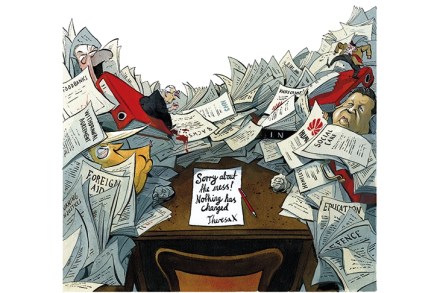
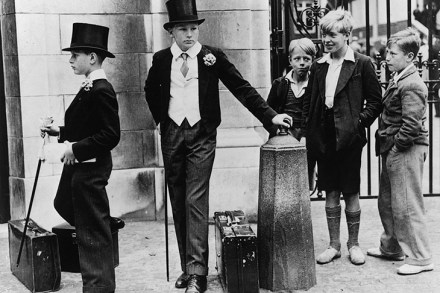
Godwin’s law says that the longer an internet discussion continues, the more likely it is that a Nazism analogy will be used. Grammar school debates have their own law. At some point someone will say: ‘Grammars are fine, but do you also want more secondary moderns?’ It’s a fair point. At the height of their popularity, grammars gave an elite education to around 25 per cent of the population who passed the 11+ exam. Secondary moderns took in the remaining 75 per cent and typically struggled for it. Highly qualified teachers flock to schools with the smartest children. Poorer children, meanwhile, congregate in secondary moderns, and come with a higher

Tory backbenchers toe the line on grammar schools - for now

There were two striking things about today’s urgent question on grammar schools. The first was that MPs were told far less by Education Secretary Justine Greening than the 1922 Committee of backbench Conservative MPs was told by the Prime Minister last night. As James revealed yesterday, Theresa May explained the policymaking process for new grammars to her MPs, but today Greening would merely say that: ‘We are looking at a range of options, and I expect any new proposals to focus on what we can do to help everyone go as far as their individual talents and capacity for hard work can take them. Education policy to that end will

Theresa May's grammar school plans provoke a mixed reaction

Theresa May has told Tory MPs she won’t ‘turn back the clock’ on grammar schools. But she also didn’t rule out some expansion in the system of selective schools. How those two thoughts reconcile with each together will become clearer when the Government reveals its plans for school reform soon (this being Theresa May, we won’t be expecting a running commentary). Yet even the scant details which have emerged so far have provoked a predictably mixed reaction. Shadow Education Secretary Angela Rayner said the plans were ‘shambolic’. You can listen to her criticism here: And Alan Milburn, who chairs the government’s social mobility commission, is perhaps the most outspoken voice this

Editor's Letter

In August the papers were full of smiling pupils clutching their exam results. Now we’re in September, when children and teenagers across the country are taking the next steps in their academic lives, be that starting school, switching to a new one, or moving on to university or college. Navigating today’s education system can be mind-bogglingly complex for parents, so I hope this magazine will help to stimulate debate and shed light on new developments. For this issue we have given Spectator Schools a light facelift, introducing some new columns. In Talking Heads we meet Keith Budge, headmaster of Bedales. And in My School Trip Katy Balls tells of her

Tongue-tied

Picture the scene: an Englishman loudly-ordering food in a Parisian restaurant. The waiter rolls his eyes at the customer’s stubborn commitment to soldiering on in English, and everyone in the-vicinity has the good grace to look suitably embarrassed. This may sound like a tired 1970s stereotype. Except, tragically, it’s just as likely to serve as a prophecy for our future. Three quarters of the UK’s residents are unable to hold a conversation in any language other than English. This reluctance — or lack of interest — is echoed in this summer’s academic results. This year the number of entries to French GCSE exams fell by 8.1 per cent compared to 2015,

School portraits | 8 September 2016

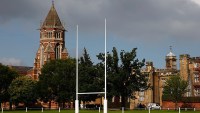
Rugby When Rugby School first allowed girls into its sixth form in 1976, just ten joined. In 1995 it went fully co-ed and today there are 373 female pupils. The ankle-length skirts that form part of the uniform look old-fashioned, but the school’s co-educational aproach is far more progressive. The transition wasn’t all smooth, though. When the first head girl was appointed, some boys hung protest banners in the Warwickshire school’s chapel and boycotted a service marking the bicentenary of former headmaster Thomas Arnold. These days the head girl and head boy work seamlessly together and Rugby performs solidly in the league tables, with IGCSEs in most subjects and 29

Room for inspiration

The curious thing about an art room is that you never remember the look of the place. Each summer, a school art room sloughs its skin: life drawings are unpinned from the walls, maquettes carried home for the holidays, canvases taken off easels, portfolios collected by school leavers, the whole place stripped of colour and finery. The room is white and empty again, a canvas primed for September. What stays from year to year and what lingers in the senses of former pupils is the smell. Chalk and charcoal, oils and turpentine, wet clay and slip mix, Swarfega jelly and Pritt Stick, sugar paper (a smell like damp hymn-books) and

From bored to boarding

Thirty-five years ago, shortly after my 16th birthday, my parents finally got fed up with me and packed me off to boarding school. Now, half a lifetime later, my 16-year-old son is about to follow in my footsteps. The two scenarios aren’t quite the same (back then, it was my parents’ idea — this time, it’s my son who can’t wait to get away), but as I pack his trunk and think how much I’ll miss my one true pal, I can’t help wondering — am I doing the right thing? Naturally, I have no idea — like most of life’s big decisions, it’s a roll of the dice. Yes, I can

Field studies | 8 September 2016

Think back to any time you spent outside at school, and you’re most likely to recall a muddy sports field. At my school, one of the few times we were let loose into the surrounding countryside was when we took our Duke of Edinburgh’s award. Apart from that, the vast majority of our time was spent inside at our desks. Is that a good thing? The official curriculum might not factor in the great outdoors, but many schools have come to realise the benefits — both long-term and short-term — that being outside brings to their students. Traditionally, private schools have led the way in teaching youngsters about the ways

School report

Teaching maths the Asian way English primary schools have received funding of £41 million to embrace the ‘Asian style’ of teaching maths. The method, used in Singapore, Shanghai and Hong Kong — all of which are at the top of Pisa’s study into the school performance of 15-year-olds — is more visual than the ‘normal’ British style of maths teaching, and focuses on children being taught in a mixed-ability group, rather than being divided into streams. The funding, announced in July, will allow 700 teachers to be trained in the Asian method, in addition to the 140 who have already completed their training. At the moment, the UK sits in

Parents willing to pay tens of thousands more to live near a top school

I have no recollection of my first day at school. I was four-years-old so it’s not surprising that I can’t dredge up the memory. I do recall, however, refusing to return to nursery after being scared witless by Father Christmas. Back then (late 1970s), kids were dropped off at a new school and expected to get on with it. Today it’s markedly different. Ahead of my four-year-old niece’s foray into education, she has visited the school at least twice and had a couple of home visits from her teachers. Luxury! But there were still tears this morning, from daughter and mum. And I’ll be fretting all day, desperate to know how

Barometer | 1 September 2016

Behind the cover-up Some facts about Burkinis: — The Burkini was invented by Ahedi Zanetti, a Lebanese-born Australian businesswoman, in 2004 after watching her niece trying to play netball in a hijab. — Muslim lifeguards started wearing them on Sydney beaches in 2007. — According to Zanetti, 40% of her customers are non-Muslim. — Two years ago, several swimming pools in Morocco were reported to have banned them for hygiene reasons. Drowning by numbers Five men drowned at Camber Sands in Sussex after being trapped playing football on a sandbank. Where did the 311 people who drowned in Britain last year die? Coast/beach 95 River 86 Out at sea 26

The Spectator's Notes | 11 August 2016

Those who want to revive grammar schools are accused of ‘bring backery’ — the unthinking idea that the past was better. But many of their accusers suffer from the rigid mindset of which they complain. They say that grammar schools ‘condemned most children to failure at the age of 11’, and that, even at their peak, grammars catered for less than 20 per cent of the school population. Why assume that the return of grammars must re-create either of these things? Grammar schools grew up, historically, in different ways and at different times. Then, in the mid‑20th-century mania for uniformity, they were standardised and, in the later 20th-century mania for comprehensives, almost

The Spectator podcast: David Cameron's purge of the posh | 4 June 2016

To subscribe to The Spectator’s weekly podcast, for free, visit the iTunes store or click here for our RSS feed. Alternatively, you can follow us on SoundCloud. Naming the best columnist in Britain is like naming you’re the best Beatles song: it varies, depending on what kind of mood you’re in. But who would deny that Matthew Parris is in the top three? The quality of his writing is, itself, enough to put him into the premier league but that’s just part of the art. What sets Matthew apart is his sheer range, and his originality. You never know what he’ll be writing about, whether you’ll agree with him, or

The snowflake factory

Another week, another spate of barmy campus bans and ‘safe space’ shenanigans by a new breed of hyper–sensitive censorious youth. At Oxford University, law students are now officially notified when the content of a lecture might upset them. In Cambridge, there were calls for an Africa-themed end-of-term dinner to be cancelled just in case it caused offence to someone somewhere. It all seems beyond parody. ‘What is wrong with these thin-skinned little emperors?’ we cry. But while we can harrumph and sneer at Generation Snowflake’s antics, we miss a crucial point: we created them. First, it is important to note that young people who cry offence are not feigning hurt

The Spectator podcast: David Cameron's purge of the posh

To subscribe to The Spectator’s weekly podcast, for free, visit the iTunes store or click here for our RSS feed. Alternatively, you can follow us on SoundCloud. Naming the best columnist in Britain is like naming you’re the best Beatles song: it varies, depending on what kind of mood you’re in. But who would deny that Matthew Parris is in the top three? The quality of his writing is, itself, enough to put him into the premier league but that’s just part of the art. What sets Matthew apart is his sheer range, and his originality. You never know what he’ll be writing about, whether you’ll agree with him, or

Purge of the posh

Any parents considering Dollar Academy are invited to take their car along its long driveway and park outside what looks like a palace. When I first did so with my parents, I told them that it all looked ridiculously posh. My mum flew into a rage. ‘Posh’ was a word of bigotry, she said, and one I’d best not use if I was going to survive a day in boarding school. My dad left school aged 15 and eventually joined the RAF, which was kindly paying for me to board while he was posted to Cyprus. He’d have loved such an opportunity, and wanted me to see it for what

Barometer | 19 May 2016

Name check 306 business people signed a letter to the Daily Telegraph saying that Britain would be better off outside the EU. Some notable collections of signatures: — 364 economists signed a Times letter about the dangers of monetarism in 1981. — 5,154 physicists signed a paper in Physical Review Letters last year reporting a more accurate recording of the mass of the Higgs boson particle. — 75,000 people signed a petition protesting against the government’s leaflet on why we should vote to stay in the EU. — 540,000 signed a petition demanding a stay of execution for Beau, a Missouri dog accused of killing a duck. — 1m Spaniards

Private fears

I should have known the London prep school scene was a racket from the way parents talk about it. They sound mad. ‘You’re too late!’ I was told by one mother, when my Little Face (not his real name) was nine months old, as if we had, by a whisker, missed the lifeboats at the Titanic. ‘What schools are you considering?’ asked a stranger in the playground. I muttered some names and she, a drab suburban Maleficent, cursed me. ‘You’ll be lucky,’ she smiled, as I dreamed of laying a peculiarly north London curse of my own: ‘May your child fail its A-levels.’ Even so, I put Little Face on