Russia

The utterly idiotic reaction to the Trump-Putin phone call

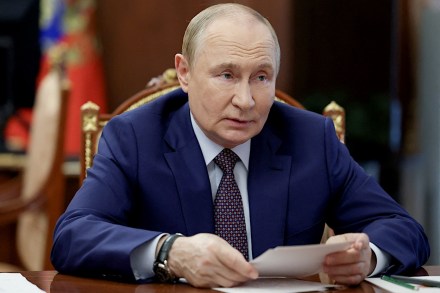
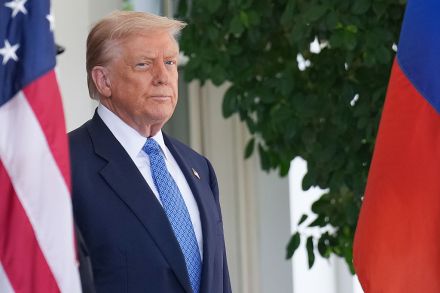
President Donald Trump called Russian president Vladimir Putin yesterday and discussed various topics, including the war in Ukraine, for an hour and a half. According to Trump, the two agreed to begin negotiations on ending the three year-long conflict immediately and even set up preliminary talks about traveling to one another’s capitals. Shortly after the call with Putin, Trump dialed Ukrainian president Volodymyr Zelensky for yet another conversation that reportedly went ”very well.” Trump’s call with Zelensky, of course, wasn’t the controversial part. Nobody had a problem with it. The dialogue with Putin, however, was apparently blasphemy, akin to violating all of the Ten Commandments on the same day.

call

Tulsi caps off a big day for ‘realism and restraint’ in foreign affairs

For the proponents of what they like to call realism and restraint in foreign affairs, it’s been a banner day. President Donald Trump has initiated peace talks with Russia by sidelining Ukraine. And Tulsi Gabbard has been confirmed to become director of national intelligence — overseeing eighteen agencies — on a 52-48 vote. At the White House, where she was sworn in by Attorney General Pam Bondi, Trump declared that Gabbard is “an American of extraordinary courage and exceptional patriotism.”   The sole Republican to dissent from her nomination was Mitch McConnell who has vowed to uphold oldline Republican internationalism during what is more than likely his final term in the Senate.

tulsi gabbard

Why DoGE should scrap the F-35

The Trump administration’s Department of Government Efficiency (DoGE) has set its sights on the Pentagon. Defense secretary Pete Hegseth told Axios that he will welcome “the keen eye of DoGE” to scrutinize Department of Defense (DoD) spending “very soon.”Hegseth also said he’s already talked to DoGE head honcho Elon Musk about ways to make the Defense Department run more efficiently. Though in Hegseth’s view “efficiency” does not equate to funding cuts (he wants DoD spending to increase), one quick and easy way to curb waste right out the gate would be to abandon the F-35 fighter jet, fire every senior person involved in its commission and put in place systems to ensure that such horrors never happen again.

The heterodox cabinet

As Inauguration Day approaches, the second Trump administration is staffing up. The president-elect’s picks are more or less what everyone expected, outside of a few curveballs. To be honest, the lack of outrage from Trump critics is the big surprise: apparently Trump Derangement Syndrome is a passing fever; even many who’ve argued against him seem to see some logic in the administration of outsiders he’s been signaling he’ll pick for years. In Washington, where almost nothing changes from administration to administration, these cabinet picks might actually be able to effect some meaningful disruption. In almost every role that matters, Trump has opted for a nominee who has been an extreme critic of the very body he or she is set to oversee.

cabinet

Trump is already the diplomat-in-chief

The United States only has one president at a time. Until January 20, that’s Joe Biden. But President-elect Donald Trump and his skeleton foreign policy team are waiting in the wings, plotting policy behind the scenes on issues — Ukraine, Gaza, Iran, Middle East peace — that have stymied the Biden administration for the last year. In fact, Trump is already influencing the respective calculations of allies, partners and adversaries before he even steps foot in the Oval Office. And Biden’s advisors seem perfectly fine with it. Trump fancies himself as a master negotiator, somebody who’s inherently skilled at poking, pressuring and sweet-talking the opposite side of the table until he gets what he wants.

diplomat

How Biden is preparing for a Trump presidency

President Joe Biden delighted Kyiv officials and war hawks — and infuriated the incoming Trump administration (and, separately, the Kremlin) — on Sunday by authorizing Ukraine to send long-range missiles into Russia. Ukraine had been begging for approval to conduct strikes deep into Russia with Army Tactical Missile Systems (ATACMs) for years, only to receive the go-ahead in the final months of Biden’s lame-duck presidency. The decision is being reported as a response to Russia importing 10,000 North Korean troops a few weeks ago, but the timing feels curious.

joe biden

Ukraine becomes another battlefront in the American election

They were the odd couple, one lumbering in his trademark oversized Brioni suit, the other ripped in his olive green military attire. The two had been engaged in a kind of mano-a-mano verbal combat before their official meeting in Manhattan at Trump Tower. It was getting ugly. Ukrainian president Volodymyr Zelensky suggested that J.D. Vance’s plan, such as it was, for ending the war between Ukraine and Russia was “too radical.” Add in Zelensky’s visit to an armaments factory together with Pennsylvania governor Josh Shapiro, and Trump and his flunkeys went nuts. House Speaker Mike Johnson wrote a sniveling letter demanding the ouster of Ukrainian ambassador Oksana Marakarova.

zelensky

The end of the Orbán era

Over the headline “Peace Mission,” a recent cover from the conservative Hungarian periodical Mandiner shows an awkwardly photoshopped Viktor Orbán mediating between a bemused-looking Vladimir Putin and a grim Volodymyr Zelensky. Behind Orbán, a map of the world connects Kyiv, Moscow, Beijing, Washington and Budapest. One of these capitals, as they say, is not like the others. Even before Ukraine’s Kursk offensive, the chances of Orbán’s July trips to Kyiv and Moscow producing a peace settlement were slim. The Mandiner cover, however, is a revealing window into the mindset of Orbán’s conservative fans. The idea of a Hungarian prime minister mediating between squabbling great powers is both attractive and plausible to many of Orbán’s fervent supporters.

Orbán

Do polls really matter after Labor Day?

The political pundits like to tell us that general election polls don’t matter until after Labor Day. That, they say, is when the average American actually starts paying attention to what is happening in the election and so you can get a better understanding of which way the electorate is leaning. The only problem with that traditional wisdom is that it’s hard to put much stock into polls when so many are returning drastically different results.Take the Morning Consult poll that dropped this morning that shows Harris surging with a lead in six of the seven battleground states. The poll has her up eight points in Wisconsin, four in Pennsylvania and Nevada and three in Michigan. To be frank, no one serious believes these numbers.

Evan Gershkovich is free

An emotional scene unfolded at Joint Base Andrews last night, with the surprise return of a number of American hostages after a prisoner swap with Russia and Belarus. Among those returned were Wall Street Journal reporter Evan Gershkovich, Pulitzer Prize-winning Washington Post columnist Vladimir Kara-Murza, Radio Free Europe correspondent Alsu Kurmasheva and former US Marine Paul Whelan. The returned hostages were greeted by their families, along with President Biden and Vice President Harris. Harris exchanged what are technically her first remarks with the press since becoming the presumptive nominee: “This is an extraordinary day and I’m very thankful for our president.

A lifesaving prisoner swap with the worst incentives

The massive prisoner swap which led to Russia’s release of prisoners Evan Gershkovich, Paul Whelan and Vladimir Kara-Murza, among many others, is the greatest gift their families and loved ones could ever hope for — in several cases, it is a lifesaving development. But it also serves as an indication of just how much the practice has become a weapon of the world’s great powers. For my family, the news is deeply personal. Vladimir, a longtime dissident imprisoned for the crime of speaking out against the war in Ukraine in remarks to the state legislature of Arizona, was a pallbearer along with me for my father-in-law, John McCain. My wife joined with his, Evgenia, to speak to a bicameral congressional committee earlier this year to advocate for his release.

prisoner

Why Russia is flaunting its ships in the Caribbean

Two Russian ships docked Tuesday in Venezuela’s La Guaira port, twenty miles away from Caracas. The stop comes after military exercises were conducted in the Atlantic, with four vessels stopping in Havana late last month. This is all part of a decades-long “look-at-us” operation, also known as a “show the flag” move, as Russia’s defense ministry puts it. While Russia’s presence in Cuba and Venezuela is not a new phenomenon, conflict in the East has only accelerated their muscle-flexing in the West. These movements mark Russia’s first extensive military exercises in the hemisphere in five years, as well as their first deployment of a nuclear submarine in close proximity to the US since the Cold War.

Russia

Inside the debate over Ukraine joining NATO

NATO’s summit in Washington, DC will be full of pomp and circumstance. The gathering, from July 9-11, is intended in part to celebrate the Alliance’s seventy-fifth anniversary, a symbolic and emotional event for the leaders in attendance. You can expect the red carpet to cover the entire city. Dozens of speeches will be given about how NATO is the oldest and most successful military alliance in history and why the bloc remains a crucial check on Russian expansionism. Some will even claim matter-of-factly that NATO enlargement over the last twenty-five years — NATO has doubled its membership during that period of time — was sound policy and had nothing to do with Russia’s decision-making calculus on Ukraine.

nato

The space race gets serious

We are shifting from the early era of space exploration to a more serious phase extending ever further from Earth’s orbit, focused on key opportunities such as mining and manufacturing as well as military purposes. This newly expanded playing field will determine not only who rules in space, but who ends up dominating Earth. The protagonists include some familiar faces — the US, Russia and the European Union — but much competition will come from emerging powers, notably India and China, both of which look upon the “final frontier” as critical to their economic and military futures. Yet the rise of non-state space entrepreneurs, notably SpaceX, has introduced a fresh and potentially decisive factor to the new space race.

space

‘Trumpists and Communists’ on Ukrainian NGO list fight back

A US government-affiliated Ukrainian NGO, texty.org.ua, published a list last week of all the Americans “impeding aid to Ukraine.” There are 388 individuals and seventy-six organizations on the list, including members of the conservative media Alex Jones, Tucker Carlson, members of Congress and a few Spectator writers. The piece is titled “Rollercoaster: From Trumpists to Communists. The forces in the US impeding aid to Ukraine and how they do it.” “The title of this article oversells the product: it is a substantively thin piece, largely an excuse to smear a large group of Americans who have been skeptical of aid to Ukraine in one form or another,” Senator J.D. Vance and Representative Matt Gaetz wrote in a letter to secretary of state Antony Blinken on Tuesday.

ukraine ngo

Is Venezuela preparing for war?

Earlier this month, two American supersonic fighter jets flew over Georgetown, the capital city of Guyana. The US show of force is not only for the attention of Venezuela’s socialist regime who has been escalating toward a military conflict with its smaller neighbor since at least September 2023 when Nicolás Maduro returned from Beijing. The message of sending two F/A-18 Super Hornets flying from a nuclear-powered aircraft carrier sailing in the Caribbean Sea is also for the Islamic Republic of Iran. At first glance, the Venezuela-Guyana conflict is about a century-old border dispute of a dense territory called the Esequibo that makes up two-thirds of Guyana’s land mass but only 15 percent of its population.

nicolas maduro venezuela

Who actually gets hurt by sanctioning Russia?

The US crackdown on trade finance for Russia from international banks — designed to impede imports needed for the continuing assault on Ukraine — is biting hard, reports the FT, quoting an investor who thinks “the logical endpoint of this is turning Russia into Iran.” Quite right too: sanctions like these are a vital non-military way to hobble Vladimir Putin’s campaign. But war and finance intersect in many different ways. Consider also the fate of 400 western-owned commercial aircraft that were leased to Russian airlines before the invasion in February 2022. Now stuck in Russia or its satellites, unmaintained to western standards and unfit to fly back into our airspace, they’re a potential multibillion loss for their owners and insurers.

Russia

The rise of the sex-positive pro-porn politico

Rising from the ashes of anti-porn laws racked up by hardline Republicans in Texas, Virginia and Oklahoma comes a team-switcher who flipped from flying his freak flag to wiping his history of porn likes on Twitter. Dan Osborn, who is married with children per his website, is the Democrat-turned-Independent running for a US Senate seat in Nebraska this November. He’s leaning heavily on his time helming a local union, but it’s his extracurricular activities that raised Cockburn’s eyebrows — mostly the slew of hardcore gay and straight porn he’s liked on Twitter. The faint-hearted should skip to the next item now...

Lessons from costly wars past

Money is often a substitute for strategy in US foreign policy. We spent $2 trillion in Afghanistan, only to lose the country the minute our troops began to pull out. How much will it realistically cost, then, to beat Russia in Ukraine? Will the next $100 or $200 billion do the trick? This is not a question that supporters of war-spending ask themselves. As in Afghanistan, spending is a way to defer thinking about actually winning — or facing the serious possibility of losing. Our aid buys delay, not results. Ironically, while the specter of World War Two is invoked every time there’s a conflict, our experience then teaches the same lesson as recent attempts to purchase victory.

wars
BRICS

Nixing BRICS: how to counter the China-led alliance

Americans are used to exercising influence through international entities such as NATO, the World Trade Organization or the World Bank. Each of these groups was set up with American leadership or at its instigation; all have been used to advance Washington’s vision of global liberal-democratic capitalism. No comparable international organization or collection of nations has been influential since the Soviet Union’s collapse. That may be changing. The so-called BRICS alliance (its founding countries were Brazil, Russia, India, China and South Africa) recently added new members Iran, Ethiopia, Egypt and the United Arab Emirates.