Russia

What would Livy have made of Trump’s treatment of Harvard?

From our UK edition

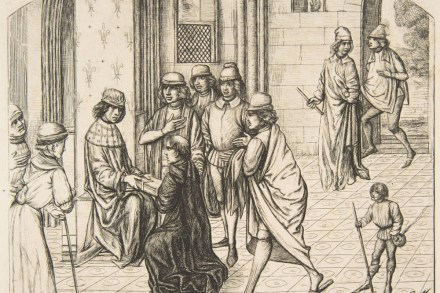
It is not surprising that Donald Trump holds the law in contempt. That is what happens when you have a criminal as President. His treatment of Harvard University is an example: he has cancelled a very large grant, saying Harvard is guilty, as charged, of doing nothing about student riots, on the back not of evidence, but simply a collection of opinions. For nearly 250 years, the Roman plebs (about 99 per cent of the free population) fought a battle to have some say in the way Rome was governed against the wealthy elite who made up the Senate, Rome’s ruling body. Under the kings (753-509 bc), they had no rights at all, but with the inception of the Republic, the real battle began. The story is told by the Roman historian Livy.

There was Easter but no truce on Ukraine’s frontline

From our UK edition

Kramatorsk, Donetsk region In a wooden Greek-Catholic church on the frontline of a warzone, encircled by red tulips and military vehicles, the priest’s sermon is woven through with the war – just like the soldiers’ Easter baskets, packed not only with paska bread, pysanky and sausages, but also with drones, waiting to be blessed. ‘This drone will be at work tonight – enforcing the ceasefire,’ a soldier whispers to me, smiling. The priest looks over a hundred soldiers in front of him, the church so packed that some must listen from the outside, and says that Ukraine will defeat evil, just as Jesus did. ‘The enemy is killing Him in our men and women, they are torturing Him in captivity, our mothers wash their faces with His tears,’ he says.

Has the Kremlin talked Trump out of sanctions?

From our UK edition

After a two-hour phone call last month, Donald Trump and Vladimir Putin announced that an improved bilateral relationship between the United States and Russia ‘has huge upside’, including ‘enormous economic deals and geopolitical stability’. Days later, however, Trump said he was ‘pissed off’ with Russia over its foot-dragging on a ceasefire in Ukraine. Putin’s demand, moreover, that Ukraine’s government be replaced with a transitional one had made him ‘very angry’. Trump warned that if a deal couldn’t be struck, then the US would ‘put secondary tariffs on all oil coming out of Russia… That would be that if you buy oil from Russia, you can’t do business in the United States. There will be a 25- to 50-point tariff on all [Russian] oil.

My DC bunker

Washington, DC My office this week has been the Starbucks on Capitol Hill. Any random subscriber to my Substack can get a half-hour with me if they book a slot. I do this a lot when I travel and oddly, given the rot of this rotting world, I rarely come away with the feeling that here were 30 precious minutes I’ll never see again. I often want to spend an hour or two. And no one yet has killed or even attacked me. A leftist policy wonk did show up without an appointment, but he just wanted to talk about Ezra Klein. One of this week’s characters was a Russia expert at a foreign policy thinktank, who seems to really know his stuff. He filled in important nuances ofthe Prigozhin coup. Yevgeny Prigozhin never meant to overthrow Vladimir Putin, he said.

curtis yarvin dc

‘Trump is a coward’: meet the US soldiers who served in Ukraine

From our UK edition

The Ukrainians of Alabama are not the kind of lobbyists whose visits strike fear into pro-Trump politicians in Washington. They are an ad hoc campaign group of expats and refugees who do their best to put Kyiv’s case politely to representatives of Congress and Senate. They do, however, have a secret weapon, in the form of an ex-US soldier from the town of Tuscaloosa, whose backstory is the kind the Beltway finds hard to ignore. Alex Drueke, 42, is an Iraq veteran whose ancestors served in every major American war since the War of Independence. Appalled at Vladimir Putin’s invasion, he joined Ukraine’s International Legion, only to be captured on his first mission, becoming the first American PoW in Moscow’s hands since Francis Gary Powers in 1960.

How to live morally (according to the Romans)

From our UK edition

‘Make America Great Again!’ cries Donald Trump. ‘Do Britain Down Again!’ (DOBRIDA!) screech our academic historical institutions. That was not the Roman way. In ad 31, Valerius Maximus completed his nine books of Memorable Deeds and Sayings of the Roman world. They were enormously popular and became a sort of handbook of Roman moral standards for imitation. While there were sections that castigated cruel, greedy, treacherous Romans who did not live up to the proper standards, most of the 91 chapter headings concentrate on those men and women who exhibited, e.g. endurance, moderation, generosity, compassion, humility, a capacity for friendship, respect for gods, the ability to face changes of fortune, public spirit, determination and so on.

Steve Witkoff is wrong to see peace in Putin’s eyes

From our UK edition

Kyiv ‘It doesn’t surprise me that they’re abolishing the Ministry of Education,’ my old friend Dima told me. ‘Judging by what Steve Witkoff said on the Fox channel, neither history nor geography are taught in America.’ Team Trump’s energetic but purposefully misdirected attempts to push the negotiation processes forward have left Ukrainians in shock. Each day reveals new depths in the Oval Office’s inadequacy and we can only shrug when we hear things like ‘Putin is not a bad guy’ or ‘I feel that he wants peace’. President Volodymyr Zelensky said something similar after his election in 2019, when he promised to negotiate a peace deal with Vladimir Putin within 12 months or resign. Neither peace nor his resignation materialised.

Donald Trump, Putin and the Concert of Arabia

For Donald Trump and Vladimir Putin, it’s a case of “Today Ukraine, tomorrow the world.” In their much-hyped phone call this week, the Russian leader didn’t seem to give much away: a step toward a sort-of ceasefire, a prisoner swap, and a few other odds and ends. But Putin knows that Trump wants much more than just an agreement on the Donbas. Settling the most significant conflict in Europe since World War Two is merely a prelude to a much bigger deal in the Holy Land — a truly historic arrangement that could fulfill Trump’s desire to be seen as a legendary peacemaker. That’s why Trump sent Steve Witkoff, his special envoy to the Middle East, to Moscow last week to pre-negotiate with Putin.

putin

Trump’s foreign policy isn’t unprincipled

"He [Donald Trump] sees American leadership as merely a series of real estate transactions." That was the verdict of the Democratic senator Elissa Slotkin following the President’s address to Congress. Trump 2.0 does, admittedly, have the appearance of a political version of The Art of the Deal, in which the Donald is prepared to leverage a bilateral compact with every country in the world — so long as the price is right. There are no friends in The Art of the Deal, no permanent friends anyway, only prospective business associates. Ukraine wants the flow of armaments to resume? Sign over the rights to half your natural resources.

Trump

The problem with putting US nukes in Poland

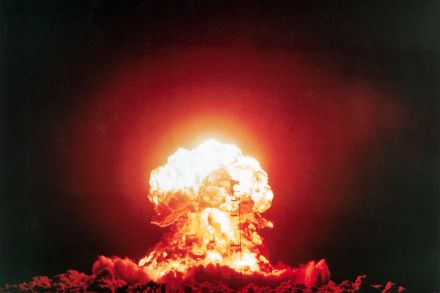
Nuclear weapons are becoming a major issue for Poland. One way or another, both the Polish president and prime minister want their country to host tactical nuclear weapons as a deterrent against President Putin’s Russia. In the latest — but by no means the first — statement on this issue, President Andrzej Duda revealed that he recently discussed stationing American tactical nuclear weapons in Poland with Keith Kellogg, the US special envoy for Ukraine. In an interview with the Financial Times, Duda said: “I think it’s not only that the time has come, but that it would be safer if those weapons were already here.

Will Putin give peace a chance?

At a summit meeting in Moscow, Ronald Reagan was asked about his basic approach. He famously answered, “Here’s my strategy on the Cold War: we win, they lose.” Vladimir Putin has the same strategy for Ukraine. That is certainly his first response to President Trump’s offer to mediate an end to the war and bring a reluctant Ukraine to the negotiating table. If “we win, they lose” is Putin’s final response, then the war cannot end without Ukraine’s surrender or Russia’s collapse. Putin’s initial reply, filled with his maximalist demands, indicates he is still committed to the conquest of his neighbor, whose independence and sovereignty he has long rejected.

putin

‘I had two jobs: to run the country and to survive’: an interview with President Trump

From the moment you enter Donald J. Trump’s Oval Office, you are surrounded, not by staff or Secret Service, but by presidents. In his second term, he has chosen to envelop himself in Americana to an unprecedented degree. He faces Franklin D. Roosevelt whenever he sits at his desk. Looking back are Teddy Roosevelt, Lincoln, McKinley, Polk, Jackson, Jefferson, and alone among them as a non-president, Franklin. Ronald Reagan looks over his shoulder for every decision he makes. “We took them out of the vaults. We have incredible vaults of things,” he tells me. “They have 3,900 paintings.” It’s a roster of the greatest American leaders assembled in an oval around him in their most sterling depictions. They serve as motivation.

Trump wants Putin to win

From our UK edition

It is meet, right and our bounden duty to begin any column about Ukraine with a vigorous expression of the columnist’s distaste for the President and Vice-President of the United States. Consider that done. Donald Trump is a slob, a bully and a liar: a person of low character. J.D. Vance is a nasty and morally confused little snake: a thug’s venomous sidekick. It is also an appropriate preliminary courtesy to state without hesitation that Volodymyr Zelensky is a brave and inspirational warrior whose personal qualities set his country firmly on the path of resistance to an unprovoked attack. Done.

Has Ukraine called Putin’s bluff?

From our UK edition

12 min listen

Last night there was a huge breakthrough in Ukraine peace talks, with Zelensky accepting a US proposal for a ceasefire and placing ‘the ball in Putin’s court’, according to Marco Rubio. While getting Zelensky to accept is a huge diplomatic win, the proposal hinges on Putin agree to the terms of the ceasefire – which will last for 30 days but can be extended by mutual agreement. ‘I’ll talk to Vladimir Putin. It takes two to tango,’ said Donald Trump. Can Putin afford to reject the deal? And could this be the basis for a lasting peace? Meanwhile, Keir Starmer has been getting a lot of credit for his role in the Ukraine peace process and the perception that he has stepped up to meet the crisis.

Putin

Why Putin could reject a ceasefire

With all the good news coming out of the Jeddah talks about a 30-day ceasefire in Ukraine, there’s only one question that needs to be answered: Will President Putin be interested in any kind of deal right now? President Trump is convinced that Putin wants peace. But if the Russian leader truly wants to end his war, will he do so on America’s terms, or will he wait until he achieves one of his main objectives — the total subjugation of the four provinces in eastern Ukraine that he claimed to have annexed in the first seven months of the invasion? At a ceremony in St. George’s Hall at the Kremlin in September 2022, Putin declared that Russia now had four new regions: Donetsk, Luhansk, Kherson, and Zaporizhzhia.

Why Putin could reject a ceasefire

From our UK edition

With all the good news coming out of the Jeddah talks about a 30-day ceasefire in Ukraine, there is only one question that needs to be answered: will President Putin be interested in any sort of deal right now? President Trump is convinced that Putin wants peace. But if the Russian leader really wants to bring his war to an end, will he do so on America’s terms, or wait until he has fulfilled one of his main objectives: the total subjugation of the four provinces in eastern Ukraine that he claimed he had annexed in the first seven months of the invasion? At a ceremony in St George’s Hall at the Kremlin in September 2022, Putin declared that Russia now had four new regions – Donetsk, Luhansk, Kherson and Zaporizhzhia.

Is China serious about ‘war’ with America?

From our UK edition

48 min listen

Freddy Gray is joined with Michael Auslin who is an academic and historian at the Hoover Institute and author of the Substack 'THE PATOWMACK PACKET'. They discuss China's response to Trump's tariffs, whether China is serious about threats of war and how concerned Trump is about China's relationship with Russia.

The MAGA movement is wrong on Ukraine

From our UK edition

How can the right be so wrong? Or at least portions of the right – especially the American right – when it comes to Ukraine? To begin to grapple with this you have to go way, way back to Donald J. Trump’s first term in office. In that time Ukraine came to the public’s consciousness just twice. The first occasion was when Trump and other Republicans began to make hay over the business dealings of Hunter Biden. Since 2014 the then vice-president’s son had been sitting on the board of Ukrainian energy company Burisma. He was earning around $1 million annually to advise a company in a sector about which he had zero expertise. Why might a foreign company want the son of the vice-president on their board?

The weakness of Donald Trump

From our UK edition

Forgive the mordant tone, but this article was written in a desolate post-industrial nightmare girdled by diversionary roads going nowhere aside from away from places. It is somewhere in middle England, where the West Country merges into the Midlands and the north into the south: it is essentially delocated, it is nowhere. There are 15 or so deserted light industrial units, vast metal hangars for storing stuff, acres of car-parking spaces and a few trees suffering from rickets or polio. There are also huge and very bright lamps shining in through my hotel window, betraying no evidence of their purpose other than to keep me awake, and in the foreground a continual mechanical hum, the source of which remains a mystery.

Why Europe needs to take the Putin threat more seriously

Russia’s war on Ukraine presages a dire future for all of Europe unless Vladimir Putin’s military is decisively defeated. That is the powerful and persuasive argument advanced in Keir Giles’s new book. To appreciate fully the importance of his contentions, you must acknowledge not only Giles’s own status as a supremely well-connected senior fellow at the famed Chatham House think tank in London but even more so the all-star cast of international military luminaries who have publicly endorsed his analysis: the now-retired US generals John Allen and Ben Hodges, UK general David Richards, Australian general Mick Ryan, plus former Estonian president Toomas Hendrik Ilves. Giles’s assertions thus should be taken with the utmost seriousness.

Giles