Russia

Trump starts Christmas now

There’s no small irony in the fact that Texas Democratic state legislators, fleeing a congressional redistricting attempt by Texas’s Republican majority, have sought shelter in Illinois. They’re acting like political refugees in what is, in fact, the most gerrymandered state in the country. Look at Illinois District 13, which snakes up from the Missouri border nearly to the gates of Indiana, bisecting the state (and District 15) like Illinois’s small intestine. Chicago is a very populous city, but the state has carved up its Congressional districts like a turducken, giving us as many (D-Chicagos) as humanly possible. The Illinois Democratic machine has had an outsized influence on American politics, much less Illinois politics, for decades.
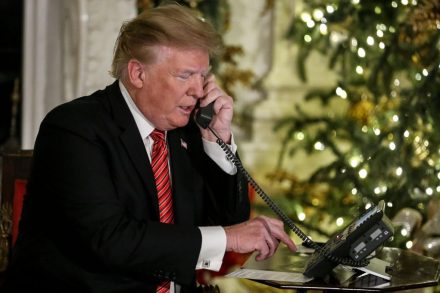
President Trump tracks Santa in 2018 (Getty)

Just how high did the Russiagate farce go?

Tulsi Gabbard's declassification of documents that support the view that the intelligence community engaged in a deliberate conspiracy to target the incoming president with false or dubious claims is truly explosive – unless you deliberately choose to ignore it. Surprise, surprise – the same people who helped manufacture and propagate these claims in the first place are sticking to their guns, with the normal veterans of the CNN octobox.

russiagate

The ‘Russia Hoax’ and other grudges

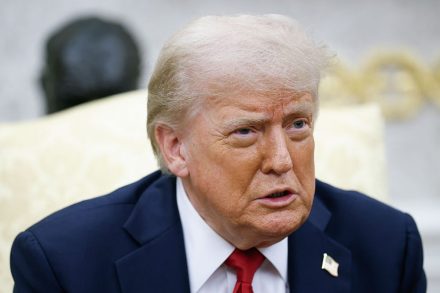
Too long, didn’t read, but late last week Director of National Intelligence Tulsi Gabbard proclaimed that she had in her possession a full ream of intel conclusively proving that the Obama Administration, in its 11th hour, prepared a fusillade of fake evidence designed to defame President Trump as an agent and dupe of the Russian Government. Trump, somewhat on his heels with the Epstein Files scandal, began screeching online about the Russia Hoax. Today he posted a meme showing various Obama Administration figures, including Obama himself, wearing orange prison jumpsuits, holding up cards with their names on them, with the logo “THE SHADY BUNCH” embossed on top. Very hip, Mr. President, retweet a Beverly Hillbillies joke next. “HOW DID SAMANTHA POWER MAKE ALL THAT MONEY???

Trump

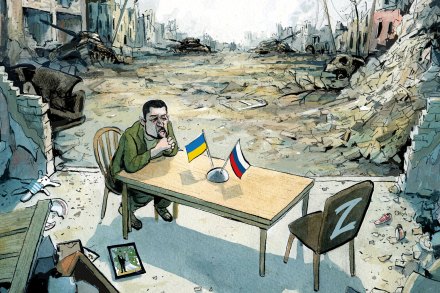
Ukrainians have lost faith in Zelensky

From our UK edition

Donald Trump this week boosted Ukraine’s air defences with new Patriot batteries, threatened Vladimir Putin with sanctions if he does not agree to a ceasefire, and even reportedly gave tacit approval to more Ukrainian strikes on Moscow. Trump’s newfound support for Ukraine is a welcome lifeline. The question is whether his help will be enough to stop Russia’s relentless attacks before Ukraine is engulfed in a critical military, political and social crisis that threatens to destroy it from within. Putin chose war over peace this spring because his spies and generals told him that Ukraine is on the brink of collapse. Alarmingly, they may be right.

The secret life of Agent Melania

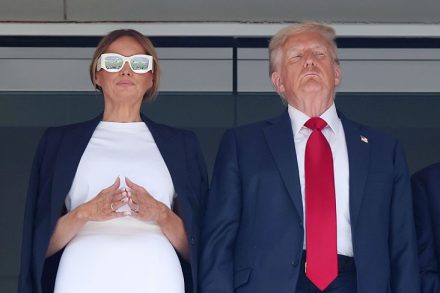
The activities of First Lady Melania Trump have been the subject of much discussion in Cockburn’s circles during her husband’s second term. Where is she? What is she up to? For the most powerful spouse in the world, she keeps an extraordinarily low profile. But now a new theory has emerged: she’s been spying for Ukraine. Over the weekend, an X user named “Kate from Kharkiv” posted a photo of Melania wearing a blue blazer bearing the Ukrainian trident insignia. Melania is also wearing one of her signature wide-brimmed hats, which shield her eyes from enemy view. “Agent Melania Trumpenko,” the caption read. https://twitter.

Melania and Donald Trump at FIFA Club World Cup (Getty)

Has Putin turned Trump into a Russia hawk?

No, President Trump wasn’t referring to Russian president Vladimir Putin when he talked at a White House luncheon today about a “stupid guy” and a “knucklehead.” But he did make it clear that his long-standing bromance with the Kremlin’s big cheese has turned out to be unrequited, much to his distress.   Trump lamented that Putin’s talk about peace was so much rodomontade, amounting to more than a “nice phone call” followed by a bunch of missiles lobbed at Kyiv and other Ukrainian cities. It was Melania, he said, who had noted to him the inconsistency between Putin’s words and deeds. Perhaps Melania, more than anyone else, injected some iron into Trump’s previously anemic posture towards Moscow.

nato putin russia hawk

Kiss goodbye to the TSA’s oppressive shoe removal policy

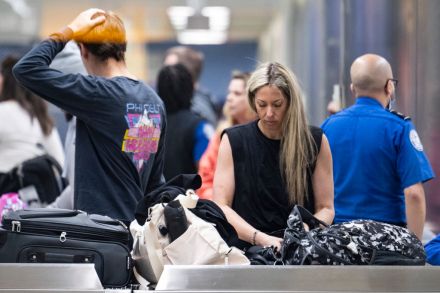
A great travel miracle has occurred – and Cockburn, who flies frequently and disgruntledly, couldn’t be more thrilled. The TSA, as of either yesterday or very, very soon, will no longer require airline passengers to remove their shoes when going through security. Shoes on/shoes off has been the bane of every commercial airline passenger’s existence since British terrorist Richard Reid attempted to detonate his shoe bomb on a flight from Paris to Miami in December 2001. Since then, it’s been federal policy to X-ray your Nikes and, repulsively, your flip-flops. Now either that threat has passed – or maybe it wasn’t ever that much of a threat. Regardless, we are free. Cockburn would like to see some other flying experience changes to accompany this one.

TSA line at Baltimore/Washington International (Getty)

What hope is there for today’s unlucky graduates?

From our UK edition

I’m fresh out of advice for those now leaving university and wondering how on earth they’re going to make a living and live their dreams. This week’s bad news (from the job search website Adzuna) was that graduate and other entry-level vacancies have fallen almost a third since the launch of the AI chatbot. Should this unlucky post-Covid cohort stay on at ‘uni’ for another degree? Or does that mean racking up student debt without enhancing employability? I used to urge everyone to go abroad in their twenties before family responsibilities overtake. But where to now? Hong Kong and mainland China are out; it’s the wrong time to go to America or the Middle East; they’ll need work permits for the EU.

The hidden costs of Angela Rayner’s Employment Rights Bill

From our UK edition

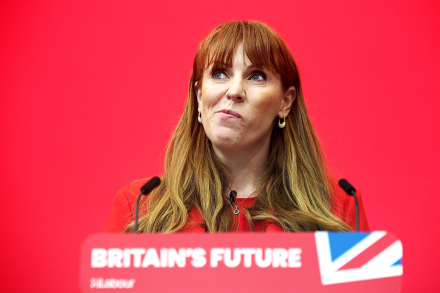
One peril of a sudden adverse turn of global events is that it provides cover for bad domestic government. If confidence is knocked by fear of war, if inflation blips because the Strait of Hormuz is blocked, if demand for defence spending sends budgets awry, voters may easily be persuaded that Middle East conflict, rather than Labour policy, has put the UK economy flat on its back. But that’s no excuse for proceeding with bad legislation as the world darkens – and one such item is Angela Rayner’s Employment Rights Bill, currently under House of Lords scrutiny, which in brief summary confers fearsome powers on trade unions and creates a ‘Fair Work Agency’ to interfere in business in all sorts of other ways.

WATCH: Trump hints Russia should rejoin G7

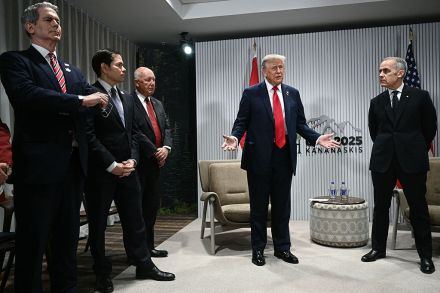
As the annual G7 Summit kicks off in Canada, President Trump told reporters that removing President Vladimir Putin from the group was a mistake, and had they not done so, the Kremlin's over two-year war against Ukraine would not have happened. "They threw Russia out, which I claimed was a very big mistake, even though I wasn’t in politics then. I was very loud about it," Trump said. He reasoned, "You spend so much time talking about Russia, and he’s no longer at the table. So it makes it more complicated – but you wouldn’t have had the war." Canadian Prime Minister Mark Carney appeared somewhat disengaged next to Trump and gazed off into the distance when Trump said the war would have never happened.

Trump and Carney G7 (Getty)

Will Putin help Trump’s Iran deal?

Spectacular. Stunning. Game-changing. These are just three of the adjectives news reporters have used to describe Ukraine’s attack deep within Russia last weekend. There’s no doubt that the “Spiderweb” operation was technologically ingenious, well-concealed and brilliantly executed. Ukraine claimed its 117 drones destroyed or damaged some 41 strategic Russian bombers and caused $7 billion worth of damage to the Russian armed forces. But can an attack really be game-changing if the game doesn’t change? US officials have suggested the strikes hit only 20 Russian aircraft and, while Spiderweb must have shocked Russia’s leadership, the Kremlin is still more than willing and able to continue bombing Ukraine with relative impunity.

Trump

Can Ukraine secure its military survival?

The Trump-Putin honeymoon is over. After three months of lengthy one-on-one phone calls, a handful of false starts on negotiations and flashes of Trumpian boosterism over the prospect of great commercial deals with the Kremlin, a fourth summer of war in Ukraine looks inevitable. Vladimir Putin will pretend to negotiate, while at the same time continuing to pound Ukraine’s cities with missiles and pressing forward on the ground. The Ukrainians will continue to scramble for men and resources with which to defend themselves. And the White House will continue to blame both sides for not reaching a deal. Over these three months of false hope, Putin has made two things very clear.

Ukraine
anti-Semitism

The anti-Semitism algorithm

The White House argues that it is committed to stamping out anti-Semitism in America – on campuses especially. Absent from the discussion, however, are the roles of China, Russia and Iran in fueling Jew-hatred across the US during the height of last year’s student protests and beyond. Organizations in Beijing, Moscow and Tehran have been secretly supporting protests in New York, waging covert online campaigns and cyberattacks and manipulating algorithms to help make Americans more anti-Semitic and to fan discord and violence. These dictatorial regimes have no genuine interest in the rights of any victims in the Middle East. Despite their supposed support of Palestinians, Russia and China have slaughtered and oppressed Muslims when it suits them in Chechnya, Crimea and Xinjiang.

Is Trump’s unified Republican front fracturing over Russia?

For the most part, President Trump hasn’t had to worry too much about the loyalty of his fellow Republicans on Capitol Hill. Sure, he needed to make a trip to the other side of Pennsylvania Avenue to pressure a few Republican holdouts to support his “big, beautiful” package of tax cuts and spending cuts, but the rank-and-file has tended to blindly follow whatever the White House wants.  Yet over the last several days, a slight divide has emerged between Trump and Republicans – or more specifically, Trump and Senate Republicans – on Ukraine and Russia policy.

russia republican

Putin and Zelensky just want to appease Trump

From our UK edition

Ceasefire then talks, or talks then ceasefire? This has emerged as one of the pivotal issues in the diplomacy around the war in Ukraine, even if one could question just how genuine both sides are in their respective positions. The proposed talks in Istanbul on Thursday may help clarify matters, but both sides seem more committed to appeasing the White House than talking peace. On Saturday, the usual suspects of Europe – the leaders of the UK, France, Germany and Poland – met in Kyiv and demanded Vladimir Putin call an immediate 30-day ceasefire, on pain of further sanctions. The usual pattern for peace talks is indeed a cessation of hostilities first, talks later, but there was no serious plan for negotiations in that span.

J.D. Vance makes nice with Munich

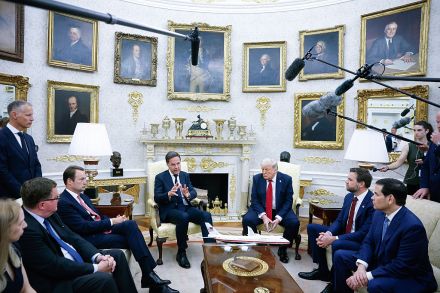
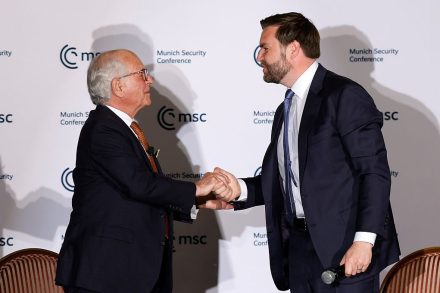
It was an emollient J.D. Vance who showed up at the Munich Leaders Meeting in Washington, DC. Gone was the Vance who dissed the Europeans in Munich on February 15 by complaining that they were practicing censorship of political views and who met with a representative of the far-right Alternative für Deutschland party. Gone was the Cerberus who barked at Ukrainian President Volodymyr Zelensky on the Oval Office on February 24 that he had exhibited a dismaying lack of gratitude toward America for its assistance to his beleaguered nation. Gone was the Ohio senator who declared in July 2024 that he didn’t give a fig about Ukraine’s fate and was more interested in pursuing an Asia First policy.

jd vance
biden russia

Biden has learned nothing from his foreign-policy experience

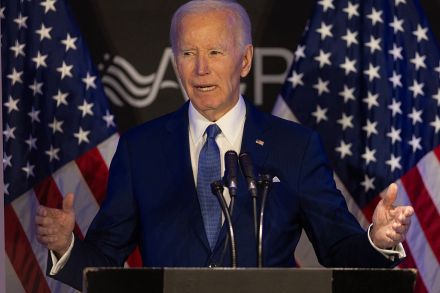
Historically, ex-presidents spend their golden years on the speaking circuit, writing their memoirs or planning for the inauguration of their presidential libraries. What they don’t do is lash out at their successors when they disagree with a policy or decision. Joe Biden, however, has no intention of keeping quiet. A little more than three months after vacating the White House, Biden is unencumbered from conventional decorum and feels free to speak his mind. Last month, he gave his first post-presidency speech in Chicago, where he blasted the Trump administration for taking a sharp hatchet to the federal workforce, including the Social Security Administration.

What does Putin want? Whatever he can get away with

From our UK edition

The US general Mark Clark knew a thing or two about dealing with Russians. In the aftermath of the defeat of Nazi Germany, Clark commanded the American occupying forces in Austria. His Soviet opposite number, and nominal ally, was Marshal Ivan Konev. The two war heroes were tasked with pacifying the conquered and divided country at the dawn of the Cold War. ‘The Russians were not interested in teamwork,’ recalled Clark in his 1950 memoir, Calculated Risk. ‘They wanted to keep things boiling… They were accustomed to the use of force. They were skilled in exploiting any sign of weakness or uncertainty or appeasement. This was their national policy.’ Two things infuriated Clark more than anything.

A mammoth 100 days of Trump’s America First foreign policy

One hundred days into the second Donald Trump presidency, his presence in the Oval Office represents the largest sea change in US foreign relations since the end of the Cold War.  Within the space of fewer than four months, Trump has forced Ukraine to deal with reality, by delivering hard truths about what ending the war will require. He has deployed J.D. Vance to shock the international system, with tough messages to our allies in Europe and Asia. Trump’s declaration of a litany of cartels as foreign terror organizations has kicked off a redirection of our relationship with Mexico, Panama and the Western hemisphere. His close relationship with Israel, a clear break with Joe Biden’s approach, has shifted expectations for the Middle East.

foreign

Will the assassination of another Russian general change anything?

From our UK edition

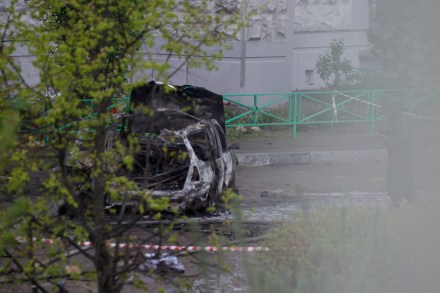
Friday morning, Lieutenant General Yaroslav Moskalik was heading out from his flat in Balashikha, a commuter town east of Moscow, when a car bomb exploded, killing him. There can be little doubt this is an operation by Ukrainian intelligence, another example of their capacity to launch skilful targeted assassinations in the heart of Russia. But will it actually change anything? That is more doubtful. It is hard not to assume this was another killing by the Ukrainians Moskalik was not a high-profile figure, but as deputy head of the General Staff’s Main Operations Directorate (GOU), he was a capable officer and potentially on a career track for even higher office.