Russia

Corbyn shows his true colours

From our UK edition

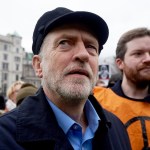
The Tories’ great worry after the last election was that they had effectively vaccinated the electorate against Jeremy Corbyn. They feared that the next time they tried to show that he was extreme, weak on national security and too friendly with the West’s enemies, voters would yawn and declare that they had heard it all before. They would be immune to any attacks on the Labour leader. Compounding this worry was the fear that Corbyn would present himself, as he had quite successfully during the general election campaign, as a more mainstream figure than he really is. If Corbyn had followed this ‘kindly grandad’ approach, the Conservatives would be in deep trouble right now. Labour’s moderates would also lack any obvious cause for complaint.
The Cold War is over – and the Grey War has begun

From our UK edition

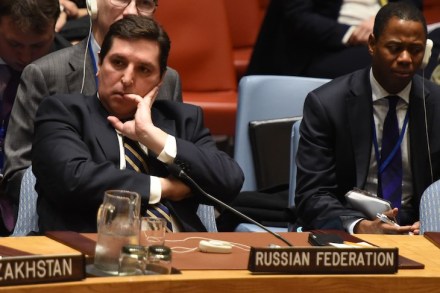
Antonio Guterres, UN Secretary General, announced on Friday that the Cold War is “back with a vengeance”. Although the US and Russia are squaring off militarily in a way that has not been seen for decades, Guterres is wrong. This is not a return to the Cold War. This is something new. His error is partly a challenge of vocabulary. It may appear pedantic in the context of rapidly escalating geopolitical tensions, but naming a phenomenon is intimately linked to our ability to understand it, and to recognise it as a reality. When Tolstoy came up with the title Voyna i Mir, War and Peace, for his vast 1869 Napoleonic and Tsarist epic, he – like his contemporaries – worked on the assumption that the two words, together, are all-encompassing.

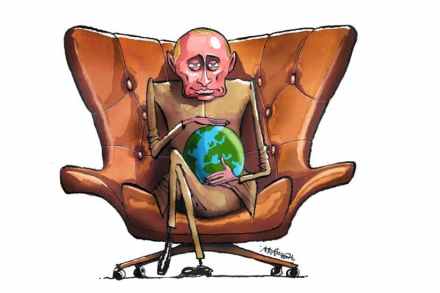
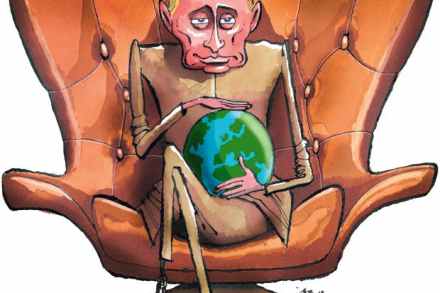
Vladimir Putin and the new Cold War

From our UK edition

In my researches for the final volume of my Thatcher biography, there is plenty, of course, about the Cold War, and its end. A constant bone of contention with the Russians was defection to the West. They were particularly furious about the MI6 exfiltration of the KGB man and British double agent Oleg Gordievsky in 1985. For several years afterwards, despite persistent personal pleas from Mrs Thatcher to Mikhail Gorbachev, the Soviet Union refused to allow his wife and small children to join him in Britain. The KGB persecuted her, and told her untruthfully that her husband had remarried. The family were not allowed out until 1991. But what is striking is that the underlying conversation about wider issues between London and Moscow was well sustained.

What does Russia want?

From our UK edition

With Russian poisoners stalking the streets of Salisbury and the real possibility of a hot war with the Kremlin’s troops in Syria, The Spectator’s debate this Wednesday – What does Russia want? – could hardly be more timely. The line-up of guests we’ve assembled promises to be an explosive mixture. Russian Presidential candidate Ksenia Sobchak, who made a doomed run against Vladimir Putin in March’s elections on a platform of liberal reform, will lead the anti-Kremlin side. Sobchak is more than just a prominent liberal politician – she’s the ultimate political insider. Sobchak’s father Anatoly was an iconic liberal mayor of St Petersburg – and was Putin’s boss and political mentor in the years after he left the KGB.

Theresa May is losing the PR battle on Syria

From our UK edition

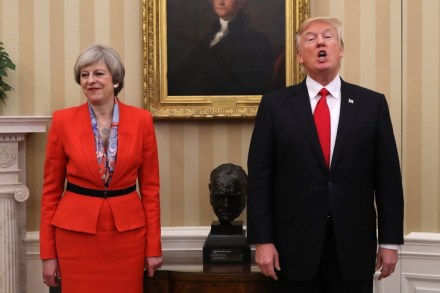
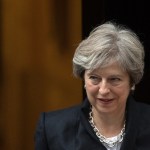
After Theresa May's Cabinet agreed on the 'need to take action' in Syria, it seems a matter of when, not if, military strikes against the Assad regime take place. But the strikes won't be the end of the matter politically. Labour have been quick to stir up trouble, with Jeremy Corbyn describing the government as 'waiting for instructions' from Donald Trump. The British government is also struggling to keep up with a Russian propaganda barrage.

Is Trump the Neville Chamberlain of our time?

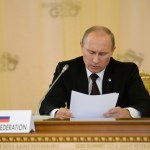
So Britain is responsible for staging the Syrian gas attack? According to Russian Defense Ministry spokesman Major General Igor Konashenkov: “We have evidence that proves Britain was directly involved in organizing this provocation.” Evidence, shmevidence. Next thing you know Moscow will be offering to assist Yulia Skripal. Oh, wait. It already did. Vladimir Putin cannot conceal that his regime is complicit in some very odious deeds—and that it’s feeling increasingly confident about taunting the West. The Russian claim is deliberately preposterous.

How have the Russian oligarchs got away with swaggering around London for so long?

From our UK edition

A decade ago I commissioned an article about Vladimir Putin’s business cronies. Among other lines of enquiry, it sought to finger ‘a coterie of wealthy and politically influential industrialists, many believed to be former or current secret service officials’ who allegedly had shareholdings in Russian companies which, if we or anyone else had been able to prove that they were controlled by the president, might have evidenced a personal Putin fortune of tens of billions. Sensibly, The Spectator’s lawyer would not let me publish — but the US Treasury has now done its own version of the job by imposing sanctions on seven oligarchs and 17 senior Russian officials who are believed to form the innermost presidential clique.

President Erdogan’s Syrian dilemma

From our UK edition

Istanbul It is a bad time to have an ally on the fence. With US military action in Syria looking more likely by the minute, and the West’s frosty relations with Russia in danger of deepening into a new Cold War, Washington is eyeing the actions of Turkey’s President Erdogan with concern. Turkey, a NATO member since 1952, the ally with the second biggest army and the only one to share a border with Syria, has spent the past two years cosying up to Russia. Ankara is part of the Astana troika alongside Moscow and Tehran – an initiative that has snatched the peace-broking lead in Syria from the UN and Western-back Geneva talks.

Sergei Skripal being out of a critical condition doesn’t get Moscow off the hook

From our UK edition

The latest news from the Salisbury attack is that Sergei Skripal is no longer in a critical condition and that his daughter Yulia is now talking and will be well enough to leave hospital at some point. This, obviously, has implications for the investigation into their attempted assassination. Yulia will, presumably, soon be able to tell the police about what happened in the days and hours leading up to them both being found on the verge of death in Salisbury city centre. Internet conspiracy theorists will, I’m sure, declare that the fact the Skripals are not dead is proof that the Russians weren’t behind this. But given that it appears that the Skripals absorbed the nerve agent through their skin rather than breathing it in, it is unsurprising that it was less effective.

Could the Russian economy benefit from some Roman history?

From our UK edition

The Russian economy is not in the greatest of shapes. That being the case, one would have thought friendly diplomatic and economic relations with the West would be a priority for Vladimir Putin, given his need for cash to build weapons against threats from superpowers such as Estonia. A little Roman history would help. As has been well documented, the collapse of the Roman Empire in the west in the 5th C ad heralded something of an economic dark age for Europe for some 200 years. The long-nurtured Roman economic networks extending east as far as China simply could not survive the break-up that would create the beginnings of today’s Europe. The ancient sources, as well as the archaeological record, make clear just how connected that world had been.

There is no crack in Theresa May’s case against Russia

From our UK edition

Theresa May has never published her case blaming Russia for the Salisbury poisoning. She has reason to be wary of Blair-style intelligence dossiers, and she didn’t need to make everything public to win the support of allies. But as things stand, her case against Russia is open to misinterpretation by the Kremlin. As we have seen with this morning’s headlines. Yesterday, Sky News interviewed Gary Aitkenhead, chief executive of Porton Down, who said: “We were able to identify it as Novichok, to identify it was a military-grade nerve agent. We have not verified the precise source, but we have provided the scientific information to the government, who have then used a number of other sources to piece together the conclusions that they have come to.

No 10’s Novichok damage control

From our UK edition

Theresa May's widely-praised handling of the Salisbury poisoning hit a bump in the road this afternoon with the news that British scientists at Porton Down have not been able to establish that the Novichok nerve agent used to poison Sergei and Yulia Skripal was made in Russia. In a clumsy interview, Gary Aitkenhead, the chief executive of the Defence Science and Technology Laboratory at the facility in Wiltshire, said although the nerve agent was identified as Novichok, scientists had not been able to prove it was created in Russia. The government were quick to go into damage control mode - making clear that this was 'only one part of the intelligence picture' and it did not alter their verdict that the only plausible explanation was that Russia was responsible for the attack.

The diplomat expulsion game is a pointless charade

Diplomats are poker chips. The pomp and mystery that accrues to the diplomatic and intelligence services en poste overseas conceal a simple truth: in today’s world, journalists, bankers, NGOs and bloggers are, far more often than not, better informed than diplomats about the countries in which they operate. I know this to be true in Russia – I speak to senior British and US diplomats in Moscow regularly. Believe me when I say that I can think of half a dozen veteran foreign correspondents in Russia who have considerably more extensive, diverse and senior contacts in the Russian establishment than any Western diplomatic mission.

The diplomat expulsion game is a pointless charade

Diplomats are poker chips. The pomp and mystery that accrues to the diplomatic and intelligence services en poste overseas conceal a simple truth: in today’s world, journalists, bankers, NGOs and bloggers are, far more often than not, better informed than diplomats about the countries in which they operate. I know this to be true in Russia – I speak to senior British and US diplomats in Moscow regularly. Believe me when I say that I can think of half a dozen veteran foreign correspondents in Russia who have considerably more extensive, diverse and senior contacts in the Russian establishment than any Western diplomatic mission.

Watch: Labour MP turns on Corbyn in the Chamber over Russia

From our UK edition

Oh dear. It's no great secret that the Parliamentary Labour Party has struggled to get to grips with Jeremy Corbyn's response to Russia over the poisoning of a former Russian double agent on British soil. However, up until now they had refrained from criticising him directly in the Chamber. Today John Woodcock decided to go there following Theresa May's statement on Russia.

May praises ‘solidarity’ from EU and US on Russia, and backs her aide in outing row

From our UK edition

Theresa May covered a fair bit of ground in her statement to the Commons on last week's European Council meeting. She talked about how EU leaders were supporting Britain in the stand-off with Russia following the Salisbury attack, on the agreement that leaders reached on the next stage of Brexit negotiations, steel tariffs, and on allegations that her own political secretary Stephen Parkinson outed his former partner as gay. On Russia, the Prime Minister told the House that 'I have found great solidarity from our friends and partners in the EU, North America, Nato and beyond over the past three weeks as we have confronted the aftermath of the Salisbury incident'.

After the Salisbury attack, who is isolated now?

From our UK edition

No 10 can breathe a sigh of relief this afternoon. Not only has Theresa May's response to the attempted murder of a former Russian double agent on British soil won her plaudits back home, it has also been met by a rigorous international response. With Germany, France, Ukraine and Canada already expelling envoys, today America joined the fold. Donald Trump has ordered 60 Russian diplomats to leave the country in response to Russia's alleged use of a nerve agent in Salisbury. A White House spokesperson said: 'The United States takes this action in conjunction with our NATO allies and partners around the world in response to Russia's use of a military-grade chemical weapon on the soil of the United Kingdom, the latest in its ongoing pattern of destabilising activities around the world.

Octavian’s poison legacy

From our UK edition

Barely a day passes without yet another Russian explanation for the Salisbury nerve agent attack. What’s new? Such disinformation has a very ancient history. After Caesar’s assassination in 44 bc, his old friend Mark Antony and the 18-year-old Octavian, Caesar’s adopted son and heir, emerged as the two contenders for power. In 32 bc, it had become clear that it war between them was inevitable. At this critical juncture, two allies of Antony deserted to Octavian, and revealed that Antony had a will, which had been lodged with the Vestal Virgins. It was illegal to open the will of a living man, and the Virgins told Octavian that they would not touch it.

Diary – 22 March 2018

From our UK edition

I went to a dinner for Toby Young, who has had some troubles of late, at this magazine’s gracious HQ, hosted by the editor. I was slightly dreading being beasted by a reptilian gathering of hard Brexiters, but it was in the diary. So I tipped up last Friday in a somewhat plunging jumpsuit and accepted only water as aperitif, wittering about not having done my column yet and having to do Newsnight later. Half an hour later I was knocking back claret and competing to tell embarrassing stories about Toby and it was still only 7.15 p.m. (the evening started at the ungodly hour of 6.30 p.m.). Over the beef I asked who the greybeard on my left was, across from Douglas Murray and James Delingpole. ‘He was the treasurer of Vote Leave,’ Tobes whispered back. And he seemed so nice!

Russia Today’s useful idiots

From our UK edition

Some people I respect are content to go on the Russian TV channel RT, on the grounds that ‘they let me say what I think’. I’m afraid this is a form of vanity. Of course, RT lets you say what you think: they would be ludicrously ineffective propagandists if they didn’t. The point is that by appearing, you legitimise their platform. You help create the utter confusion about what is true and who is right which is the Russian government’s aim. To reverse the usual expression, your honest opinions allow lies to be surrounded by a bodyguard of truth.