Russia

Jeremy Corbyn’s stance on Russia is bad for Parliament

From our UK edition

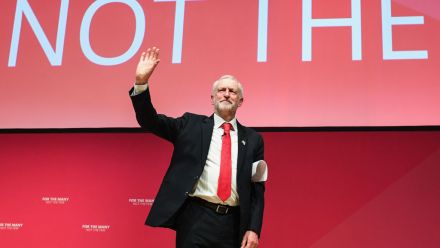
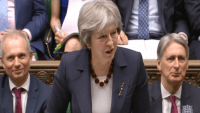
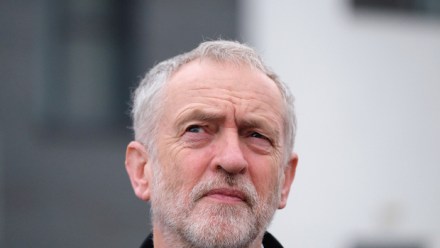
Theresa May did a good job in uniting the House of Commons today, but someone who did an even better job in bringing together MPs to praise the Prime Minister was Jeremy Corbyn. The Labour leader's partisan response to May's statement on the poisoning of Sergei Skripal so antagonised Conservative MPs and so disappointed many on his own side that much of the session was about the failings of the Opposition, rather than the questions for the Government.

Will Theresa May invoke Nato’s Article 5 on collective defence?

From our UK edition

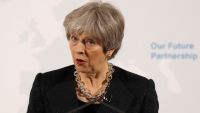
There was a striking use of language in Theresa May's statement to the House of Commons on the Salisbury nerve agent attack. Pointing an accusatory finger at Moscow, the Prime Minister declared: Mr Speaker, on Wednesday we will consider in detail the response from the Russian State. Should there be no credible response, we will conclude that this action amounts to an unlawful use of force by the Russian State against the United Kingdom. And I will come back to this House and set out the full range of measures that we will take in response. This is quite something. It suggests the government is treating this as far more than a murder attempt on a former spy that happened to take place on UK soil. Unless the Russian ambassador can come up with a convincing alibi (e.g.

Theresa May accuses Russia of an unlawful use of force against Britain

Theresa May has given Russia until Wednesday to explain why a nerve agent that it has developed was used in the Salisbury attack. She told the House of Commons that it was ‘highly likely’ that Russia was responsible for the poisoning of Sergei Skripal and his daughter. She said that Boris Johnson had summoned the Russian Ambassador and put it to him that were only two explanations for what had happened, one that the Russian government itself was responsible or that Moscow has lost control of its stock of deadly nerve agents. I think it is safe to assume that no explanation, at least not one that would satisfy a reasonable observer, will be provided before Wednesday.

Jeremy Corbyn’s Russia hypocrisy

From our UK edition

It's safe to say that Jeremy Corbyn's response to Theresa May's statement on Russia has divided opinion this afternoon. The Prime Minister confirmed to the House that a military-grade nerve agent of a type developed by Russia was used to poison Sergei Skirpal, the former Russian double agent. She concluded that this meant it was either a direct act by the Russian State or the Russian government had lost control of this potentially catastrophically damaging nerve agent. So, what did Corbyn have to say on the matter? Well, the Labour leader was keen to use the opportunity to criticise the Tories for being too close to Russia.

With 240 potential witnesses, were Skripal’s poisoners trying to send a message?

From our UK edition

‘Any fool can commit murder, but it takes an artist to make it look like suicide’ the KGB used to say. But whoever put Sergei Skripal and his daughter Yulia in hospital was rather less subtle: police have identified 240 potential witnesses, according to Amber Rudd, and have extensive CCTV coverage to go through.  I write in The Sun this morning that anyone capable of getting hold of the nerve agent used was capable of killing him in a far more subtle manner - with no witnesses and nothing in CCTV. Whoever carried out the attack on Skripal wanted to send a message. They wanted to prove that enemies of Russia are not safe wherever they may be.

Vladimir Putin is innocent until proven guilty in the Russian spy case

From our UK edition

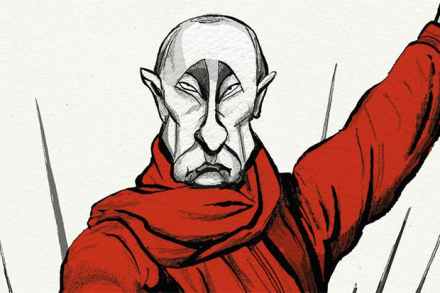
The apparent chemical attack on a former Russian double-agent and his daughter in an English cathedral city could be straight from a cold war thriller. Unfortunately, though, the case is not going to be solved in 500 pages — nor will it be solved by June, when the Foreign Secretary has threatened to withdraw a British delegation of dignitaries, if not the English team, from the opening ceremony of the World Cup. It was inevitable, as soon as Sergei Skripal was taken acutely ill on a bench in Salisbury, that fingers would point at Vladimir Putin. He did, after all, pass a law to give the FSB, the successor organisation to the KGB, powers to execute enemies of the Russian state on foreign soil.

Will Britain stand up to Russia?

From our UK edition

A Russian man convicted of spying for Britain has mysteriously been taken ill due to an ‘unknown substance’ – I wonder who could be responsible? Of course one can’t assume at this point, and the Russians will express bafflement as to why they’re being accused of poisoning Sergei Skripal and his daughter Yulia. No doubt the London Embassy’s perky Twitter feed will make light of western paranoia in that surreal way international politics is conducted these days.

Watch: Bercow bashes Boris

From our UK edition

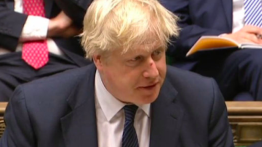
It's safe to say that Boris Johnson is not having a good day. As well as finding himself in a row over whether or not he suggested England could withdraw from the World Cup in Russia, the Foreign Secretary has received a ticking off from John Bercow. The Speaker took issue with Johnson after he arrived late for an Urgent Question on the suspected poisoning of a Russian double agent.

Morally bankrupt sport fans will forgive any abuse

From our UK edition

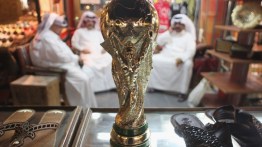
The death of Zac Cox is more than a horrible industrial action but a metaphor for modern sport: the scale of its corruption and the readiness of  its fans to tolerate the intolerable as long as we are entertained. Mr Cox was 40 and working on a World Cup stadium in Qatar when a catwalk collapsed underneath him. He fell 130 ft and didn’t stand a chance. To the authorities he was a nobody, and his death was an embarrassing inconvenience. A report into the accident was completed within 11 days, but the firms building the stadium did not pass it on to his family in Britain. One of the contractors, the German firm Pfeifer, had the brass neck to tell the Guardian it was an internal document and therefore a private matter. That’s the way it rolls in the Gulf.

What the suspected poisoning of Sergei Skripal tells us about Russia

From our UK edition

We live in a strange era when it comes to Russia. On the one hand there are people who seem willing to insist that absolutely everything is controlled by the government and agencies of that country. They claim that Russia has the power to install an American President, to make the British vote Brexit and much more besides. On the other hand – as supporters of Julian Assange seem put on earth in order to remind us – are people who seem to think that the SVR and FSB are quiescent organisations whose erstwhile employees spend their days doodling pointlessly in their offices. Perhaps the appalling suspected poisoning of Sergei Skripal in Wiltshire might help disabuse a few people from inhabiting either of these extremes.

The spying game

From our UK edition

Some of us grew up worrying about reds under the bed, which was perhaps not as foolish as all that if a report on Saturday morning’s Today programme on Radio 4 is to be believed. Amid a cacophony of weird-sounding bleeps and disembodied voices, Gordon Corera, the BBC’s security correspondent (always clear, calm and collected, no matter the brief), told us about the ‘number stations’ that proliferated in the Cold War and are now being brought back to life. Anyone can tune in to them, but only those in the know can understand what they mean, and although the source of the transmissions can be traced it’s impossible to pick up those who are listening in to them, which is why they have come back into use.

Caption contest: Putin in cold water

From our UK edition

Next week at Davos, world leaders – including President Trump and Emmanuel Macron – will gather at the elite meet-up to flex their diplomatic muscles and prove how big a player they are on the global stage. Happily, Vladimir Putin has offered them an early lesson in how to show you're a hard man. The Russian president joined millions of Orthodox believers in plunging bare-chested into icy water – with the temperature below -5C – in a Russian tradition marking the Epiphany. Captions in the comments please.

The Spectator Podcast: The digital inquisition

From our UK edition

On this week’s episode, we examine Twitter’s mob mentality, get to the heart of PTSD, and look at how Russia is preparing for this year’s World Cup. First up: At the end of 2017 it would’ve be hard to guess that the name of everyone’s lips during the sunrise days of the new year would be Toby Young. But thanks to a government appointment and a series of ill-advised tweets, his brief stint at the Office for Students has dominated the news cycle. In the magazine this week, Lara Prendergast writes about how our digital footprints could come back to bite us, whilst Rod Liddle laments the rise of trial by twitter. To debate the issue, we were joined by spiked editor Brendan O’Neill and the Guardian’s Dawn Foster.

Political football

From our UK edition

Authoritarian regimes love grand international sporting events. There’s something about the mass regimentation, the set-piece spectacle, the old-fashioned idea of nation states competing for glory that appeals to leaders who wish to show off the greatness of their country to the world. Berlin ’36, Moscow ’80, Sochi ’14 — nothing says ‘we’re here, get used to it’ better than a giant sporting jamboree. The 2018 football World Cup doesn’t offer quite the same degree of validation as an Olympic Games. But for Vladimir Putin, it’s still a major opportunity to demonstrate not only Russia’s new-found greatness but also its continued membership of the civilised world.

Russian fake news is causing trouble in Latvia

From our UK edition

In the historic heart of Riga, Latvia’s bustling capital, there’s a boulevard that doubles as a timeline of this proud country’s turbulent past. When Latvia was part of Tsarist Russia, it was called Alexander Street. In 1918, when Latvia won its independence, it was renamed Freedom Street. In 1940, when the Red Army invaded, its name was changed to Lenin Street. In 1941, when the Wehrmacht marched in, it became Adolf Hitler Street. When Latvia was swallowed up by the Soviet Union, it became Lenin Street once more, and in 1991, when Latvia regained its independence, it became Freedom Street again. 2018 marks the hundredth anniversary of Latvian independence. There are celebratory events all over Latvia throughout the year.

Books Podcast: How totalitarianism reclaimed Russia

From our UK edition

In this week’s Spectator Books Podcast, I’m talking to Russia’s most prominent dissident journalist, Masha Gessen, about her National Book Award-winning new book The Future Is History: How Totalitarianism Reclaimed Russia. In the book, which she calls a “non-fiction novel”, Masha attempts to give a properly rounded sense — from high politics to the everyday lives of Russian citizens — of why post-Soviet Russia, rather than embracing Western liberal democracy, took a darker turn. We talk about how she put the book together, what went wrong, whether there’s any hope for the future — and what it was like to meet one on one with Vladimir Putin.

England are probably going to win the World Cup

From our UK edition

England, Belgium, Tunisia, Panama: it doesn’t make an acronym as alluring as the ‘England Algeria Slovenia Yanks’ headline The Sun ran at this stage in 2009, but English football fans will have breathed a sigh of relief after being placed in a group we might call BTEC - Belgium Tunisia England Canal folk (Panama) - because it certainly wasn’t the hardest option out there. A cautious optimism must now seep into the England set-up. Encouraging draws against Germany and Brazil proved that this generation are more dour and pragmatic than the extravagant ensemble that preceded them.

Can you distinguish between a bot and a human?

From our UK edition

We’ve all gone a bit bot-mad in the past few weeks. Automated accounts have invaded our civic life – especially pesky Russian ones – and politicians on both sides of the Atlantic have woken up to the fact that a new propaganda war is taking place online. Bots – which is of course short for robot – are essentially accounts which can be programmed to automatically post, share, re-tweet, or do whatever the programmer chooses. Creating a bot is extremely easy, and huge amounts of cheap bots are available on dark net markets for next to nothing. There are millions of harmless bots out there doing all sorts of helpful and funny things, including breaking news stories. But Russia twigged early that bots can also be usefully deployed to influence public opinion.

The riddle of Theresa May’s Russia policy

From our UK edition

It is just a week since Theresa May used her Mansion House speech to launch a broadside on Russia. During a wide-ranging survey of the international horizon, it was Russia she singled out for special criticism and it was her Russia attack that attracted (and was surely intended to attract) the headlines. Just a reminder of what she said. Russia was 'chief' among those who seek to undermine 'our open economies and free societies'. Not only had it annexed Crimea illegally, but it had fomented conflict in the Donbas, repeatedly violated the national airspace of several European countries, and waged a 'sustained campaign of cyber espionage and disruption'. And this was the climax: 'It is seeking to weaponise information.

Putin’s cranks and creeps are winning the day

From our UK edition

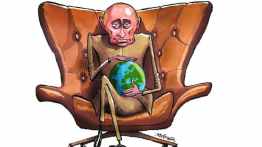
Jeremy Corbyn and his supporters announce themselves to be the leftist of the left: a band of brothers, who have saved the Labour Party from neo-liberalism and neo-conservatism. Yet they happily align with the most right-wing imperialist power in the neighbourhood. All around Corbyn, questions about Russian influence in the US election and the Brexit referendum are exploding. Instead of using the opposition front bench to investigate and denounce, Corbyn and McDonnell show no interest in fighting the right at home or abroad. They prefer instead to join a queue that includes Donald Trump, Nigel Farage and Marine Le Pen and wait in line to plant damp kisses on Vladimir Putin’s firm hand.