Russia

Why Russia – and Putin’s – weakness should terrify us

From our UK edition

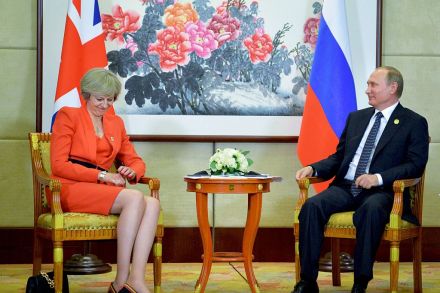
A Russian ship has just rammed a Ukrainian vessel, opened fire on it and captured its sailors. Ukraine has called it an act of war, and legally it may be right. But more than this the act reveals the nature of the true Russia. At this year’s Helsinki summit, some were aghast at how subservient Donald Trump appeared to be toward Vladimir Putin. His behaviour was seen as treasonous and supposedly pointed to the power Russia now wields. For the alt-right, Putin is seen as a model – a “strongman” who is making his country great again. Meanwhile, the Democrats see an all-powerful Russia behind everything. And there is a similar narrative about Russian meddling in the 2016 Brexit referendum. All of this could not be further from the truth.

Meet Jerome Corsi, the conspiracy theorist turned conspirator

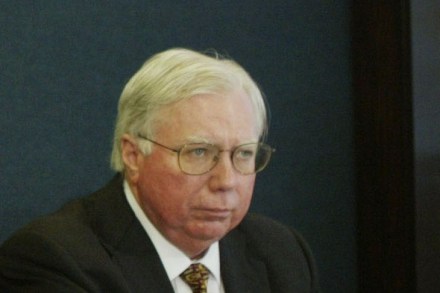
There is a point where one can go from being a conspiracy theorist to becoming an actual conspirator. It seems that Jerome Corsi, who is reportedly negotiating a plea deal with Special Counsel Robert Mueller, may have reached that point during the 2016 presidential campaign. Mueller is zeroing in on the ties between Corsi, Roger Stone, WikiLeaks, and, of course, Mother Russia. Corsi has been at the center of right-wing conspiracy thinking for some years. He has been part of numerous campaigns to vilify leading Democrats, a veteran, so to speak, of the Swift Boat Veterans for Truth’s mission to take down John Kerry in 2004 and the birther contretemps about Barack Obama, which Donald Trump, among others, helped to push.

jerome corsi

The trouble with Interpol

From our UK edition

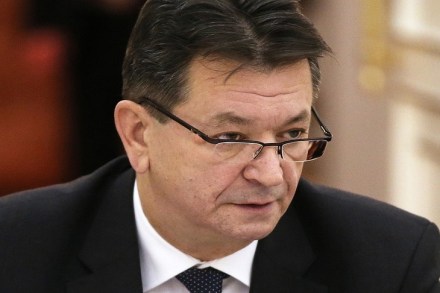
At the last minute, the Russian police general everyone had assumed was a shoo-in to become the next head of Interpol was defeated by the acting head, South Korean Kim Jong-yang. It’s good news for the international police cooperation organisation, for the West and, arguably, for justice – but it’s not the end of the story. The presumed front-runner, major general Alexander Prokopchuk – formerly the head of Russia's Interpol bureau – has been accused of supervising the systematic attempt to apparently use the agency to persecute the Kremlin's political enemies. Nonetheless, until the eleventh hour, everyone saw Prokopchuk as the heir apparent. Moscow certainly seems to have thought so.

What makes a blue wave?

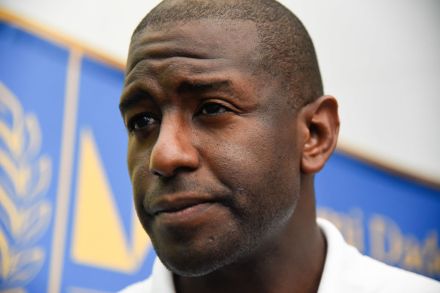
On Tuesday, American voters will give the president his first official performance review. There will be no opportunity to tell Donald J. Trump ‘You’re fired!’ in the reality TV verbiage he relishes – that will have to wait two more years – setbacks for the Republicans in Congress will inevitably be interpreted negatively for The Donald, who has pulled out the stops exhorting his loyal fanbase to the polls on November 6. But will it happen? American political history is filled with stern midterm rebukes for presidents, especially Democrats who get ahead of their skis like Bill Clinton in 1994 or Barack Obama in 2010, when their party lost 54 and 63 seats in the House of Representatives, respectively.

andrew gillum blue wave

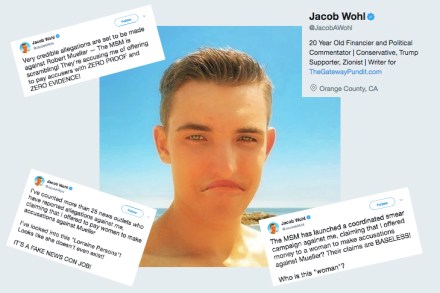
Jacob Wohl and the moronic attempt to #MeToo Robert Mueller

Does Robert Mueller have a secret sex life? A Republican activist named Jack Burkman, who previously touted the conspiracy theory that Democratic National Committee staffer Seth Rich was assassinated by members of the Deep State, has apparently been investigating the past life of Trump’s chief investigator. His aim was to ferret out misdeeds by the G-man whose true interest was supposed to be the G-spot. The amateurish plot against Mueller fizzled out fairly quickly, but it has caught the interest of the FBI. It seems to have centred on a former female paralegal who knew Mueller at the Pillsbury, Madison and Sutro law firm in 1974, though not very well, by her own accounting.

jacob wohl robert mueller

When justice is a PR stunt

Last week the public was informed of the indictment of a Russian citizen, ‘Elena Alekseevna Khusyaynova, 44’, for conspiring to defraud the United States. What had she done wrong? According to FBI Special Agent, David Holt, whose girlish signature appears on the official ‘Criminal Complaint’ submitted to a District Court in Virginia, she had served, since 2014, as an accountant to a firm in St Petersburg that had attempted to influence the American electorate by posting discourteous opinions about US politicians and officials online.

justice virginia

From Russia Today with love

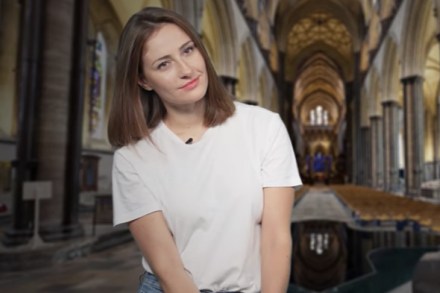
I like to think I’m a journalist like any other. But I work at the RT London office. That’s the Russian state-funded news channel. Four days a week, I’m a straight up news reporter. But, once a week, I do an even more sinister job. On Wednesdays, I ascend an extra couple of floors to a different ‘zone’ within the RT London compound, where I join a stealthy, covert team of online propagandists. There, in the lair of online information warfare, (six sad looking desks and quite a bit of mundane office banter) we record a short, and (we hope) funny and often expletive-laden video on a topic of entirely our choosing, satirizing the sorry state of the world.

polly boiko rt russia today

Don’t be fooled by Putin’s bungling spies

From our UK edition

Suddenly Russian spies seem funny rather than fearsome. 'More Johnny English than James Bond’ as Security Minister Ben Wallace put it, as if the Salisbury pair had not killed on British soil. It’s certainly true that we have seen some big blunders on the part of the GRU, Russian military intelligence: Sergei Skripal’s would-be assassins presenting themselves as innocent sports nutritionists with a taste for thirteenth-century ecclesiastical architecture. Hackers caught in the Netherlands with laptops that had not been sanitised between operations. The names of 305 GRU officers made public because they registered their cars at their base, presumably in order to avoid paying car tax.

Football focus | 27 September 2018

From our UK edition

‘Football holds a mirror to ourselves,’ Michael Calvin asserts in State of Play. Modern football is angrier, more brutal, more unequal and simply more relentless than ever before. The sense of a football club being rooted to its locality has been shattered. Globalisation, and hyper-commercialisation, means that local owners have been replaced by ‘speculators and savants’ from abroad. Locally reared players, victims of football’s global free market in talent, have become rare.

Putin is at it again – this time with the midterms

Like a reckless gambler whose roulette system has worked in the past, Vladimir Putin can’t resist trying to hack US elections. He’s at it once again, in the midterms, one source close to the intelligence community tells Cockburn. ‘The GRU [Russian military intelligence] is up to its usual tricks in the midterms but the NSA [the National Security Agency, responsible for electronic spying] knows and is mitigating.’ Our source says it’s the ‘usual Russian Intelligence playbook’ familiar from the presidential election: propaganda on social media with ‘some GRU active SIGINT [signals intelligence] collection, also known as hacking, in the mix’.

putin russia gun

Corbyn’s Salisbury response is straight from the Trump playbook

From our UK edition

It is deeply weird that Jeremy Corbyn will not condemn Russia for carrying out a chemical weapons attack on British soil. Actually, it’s beyond weird. It’s astonishing. Earlier this year, Corbyn saw the same intelligence that convinced everyone else – including his closest comrade John McDonnell – that the Salisbury novichok poisoning of Sergei Skripal and his daughter Yulia was carried out by Russian agents and approved at the highest levels within the Kremlin. This same evidence was deemed sufficient grounds by 27 countries to expel more than a 150 Russian diplomats.

Jeremy Corbyn and Novichok: what did the Labour leader really say?

From our UK edition

Jeremy Corbyn's spokesman this afternoon caused something of a stir when he insisted to journalists that the Labour leader had always said that the evidence from the Salisbury attack pointed to direct or indirect Russian involvement. This didn't seem quite right: Corbyn attracted a great deal of opprobrium for failing to blame Russia for the attack at the time. It's worth going back over what precisely the Labour leader did say after the attack - and what he didn't. On 12 March, when Theresa May made her first statement to the Commons about the matter, she told MPs that 'the government have concluded that it is highly likely that Russia was responsible for the act against Sergei and Yulia Skripal'.

Desperate Donald

From our UK edition

Donald Trump’s Twitter feed was oddly silent as the news came that his former campaign manager and his former lawyer were going to jail. Perhaps his staff have finally seized control of his phone. Perhaps his lawyers have convinced him that every time he tweets on anything relating to the Russia investigation, he is dancing on a precipice, with special counsel Robert Mueller just waiting to push him off. Whatever the reason, this was the equivalent of Trump entering a stunned, catatonic state, while his world spins out of control around him. The President merely tweeted to note that he was going to a Make America Great Again rally in West Virginia, slipping into a warm bath of affirmation from his most loyal supporters: ‘Thank you West Virginia!

The plight of the returnee

If the 20th century popularised the figure of the émigré, the 21st has introduced that of the returnee, who, aided by a combination of Skype, social media and cheap air travel, doesn’t so much exchange countries as exist between them. ‘I was an émigré. I had left. Now I’d returned,’ announces Andrei Kaplan, somewhat incredulously, in Keith Gessen’s vigorously funny second novel. An inverted Pnin, Andrei is a Russian-American academic, making a living by moderating online discussion groups for a professor who, in due course, compares Pushkin, Gogol and Dostoevsky to Kanye West. Failing to find a tenured job, Andrei moves to Moscow, where he was born, to care for his ailing grandmother. The city is unrecognisable.

You can’t go home again | 16 August 2018

If the 20th century popularised the figure of the émigré, the 21st has introduced that of the returnee, who, aided by a combination of Skype, social media and cheap air travel, doesn’t so much exchange countries as exist between them. ‘I was an émigré. I had left. Now I’d returned,’ announces Andrei Kaplan, somewhat incredulously, in Keith Gessen’s vigorously funny second novel. An inverted Pnin, Andrei is a Russian-American academic, making a living by moderating online discussion groups for a professor who, in due course, compares Pushkin, Gogol and Dostoevsky to Kanye West. Failing to find a tenured job, Andrei moves to Moscow, where he was born, to care for his ailing grandmother. The city is unrecognisable.

The British government must not let Russia off the hook

From our UK edition

On the day that Alexander Litvinenko was poisoned, Arsenal were hosting CSKA Moscow for the second leg of a Champions League group stage match. The game ended a goalless draw with the home side left frustrated by a series of squandered chances. Watching the game that evening from his box above the stands was Boris Berezovsky, the billionaire tycoon who had fled Russia six years earlier and been given political asylum in Britain. Two boxes over and former KGB officer Andrei Lugovoi was also watching the game. As he would later claim, Lugovoi had travelled from Moscow the day before to watch his home team in action. But Lugovoi also had business to attend to in London.

The magnificent Atkinsons: rigours of travel in 19th-century Russia

Russia has always attracted a certain breed of foreigner: adventurers, drawn to the country’s vastness and emptiness; chancers, seeking fortunes and new beginnings in the Russian rough and tumble. Romantics, all of them, men and women in search of soulfulness and authenticity — the experience of life lived on and beyond the edge of the civilised world’s conventions. Thomas Atkinson was all those things — in addition to being a self-taught architect and stonecutter of middling skills, a decent watercolourist, a stoic traveller of apparently inexhaustible curiosity, and a bigamist.

At constant risk of violent death

Russia has always attracted a certain breed of foreigner: adventurers, drawn to the country’s vastness and emptiness; chancers, seeking fortunes and new beginnings in the Russian rough and tumble. Romantics, all of them, men and women in search of soulfulness and authenticity — the experience of life lived on and beyond the edge of the civilised world’s conventions. Thomas Atkinson was all those things — in addition to being a self-taught architect and stonecutter of middling skills, a decent watercolourist, a stoic traveller of apparently inexhaustible curiosity, and a bigamist.

The rehabilitation of Assad

From our UK edition

Amid the confusion and the almost deafening cries of treachery and collusion over Donald Trump’s relations with Russia, few noticed the most tangible outcome of this week’s Helsinki summit. In the lead-up to his face-to-face talk with Vladimir Putin, senior US and Russian diplomats — in close coordination with leaders from mutual ally Israel — brokered a deal among all the warring parties (bar the Islamist terrorists) finally to end the devastating seven-year Syrian civil war. As is often the case with Trump, the hype tends to drown out the message but it was there for anyone paying close enough attention. The US, Russians and Israelis have agreed on a solution to Syria. His name is Bashar al-Assad.

Donald Trump’s fight is against globalisation and the left – not Vladimir Putin

History somehow isn’t moving toward its predetermined end, and this has driven Western liberals completely mad. The theatrical overreaction to Donald Trump’s joint press conference with Vladimir Putin in Helsinki is just the latest proof. Before the Trump-Putin summit, pundits warned that Trump might recognise Crimea as Russian territory. He did nothing of the sort. But he did give Putin the benefit of the doubt when the Russian leader, in a carefully chosen phrase, said the ‘Russian state’ had not interfered in the 2016 election. Trump’s equivocation—‘My people came to me, Dan Coates came to me and some others, they said they think it's Russia. I have President Putin. He just said it's not Russia.