Russia

Erdogan, Trump and other fragile egos: Theresa May’s unenviable foreign policy dilemmas

From our UK edition

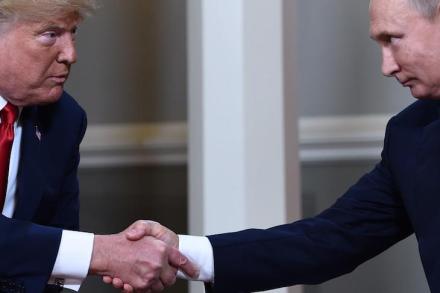
Given the way her Cabinet ministers are behaving at the moment, Theresa May is really rather used to dealing with fragile egos. This will come in handy over the next month when the Prime Minister has to go from what promises to be an extremely tricky Nato summit straight into Donald Trump's visit to the UK. As James says in his politics column this week, the challenges of these events, along with the ongoing problems both in the Cabinet and Parliament over Brexit, will make July one of the hardest months of May's premiership to date. But trying to tell her warring ministers to shut up seems easy compared to the foreign policy challenges that the Prime Minister is facing. They would not be easy for any leader.

England’s diverse World Cup team is something to celebrate

From our UK edition

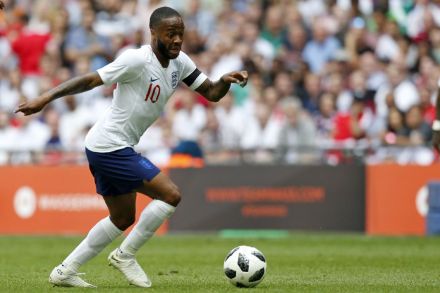
England kick off their World Cup campaign today by putting their faith in youth as they take on Tunisia: Gareth Southgate's squad have the lowest average age and the fewest caps won of any of the 32 teams at the tournament. Only three of the squad – Gary Cahill, Ashley Young and Jamie Vardy – had even been born when Gazza’s tears captured a nation’s hearts at Italia ’90. Yet while the team's youth has been the subject of much hype, another factor about this England squad has not captured any headlines: this is the most ethnically diverse squad that England has ever taken to the World Cup.

How Nato is fighting back against Russian fake news

From our UK edition

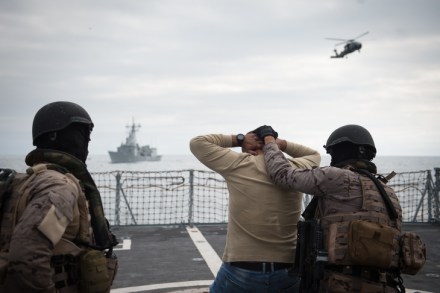
At first, the Spanish marines are just a distant dot on the horizon. A few minutes later their speedboat is on our starboard side. The marines clamber aboard, disarm the irregulars who’ve seized this Romanian frigate, and secure the helicopter landing pad on the windswept stern. Watching from a safe distance, you’d never know this was just a wargame. As a Romanian sailor told me, as I struggled to control my seasick stomach, the way you fight in a real war depends upon the way you train. Welcome to Sea Shield, a naval warfare exercise involving 21 ships and 12 aircraft from seven Nato allies: Bulgaria, Greece, Romania, Spain, Turkey, the US and the UK. And welcome to the Black Sea, the front line in the new Cold War.

The Spectator Podcast: Putin’s Losing Game

From our UK edition

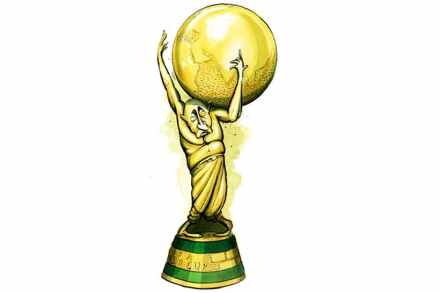
In this week’s episode, we talk about Russia’s hidden fragility, and ask, is Putin surviving on luck? We’ll also be getting to the bottom of Trump’s tariffs – is there really no rhyme or reason to them? And last, with all that’s going on in the world, is kindness what we all need more of? The Russia World Cup is due to start in a week, and as the streets of Moscow are cleaned up in preparation, things seem to be going pretty well for Putin’s Russia. Russia has been asked to fill the void left by Trump in the Iran nuclear deal, Russophile parties are wreaking havoc to the EU establishment across Europe, and Russia’s involvement in Syria has established the country as a serious power broker in the region.

Argentina, why not boycott the entire World Cup? | 6 June 2018

From our UK edition

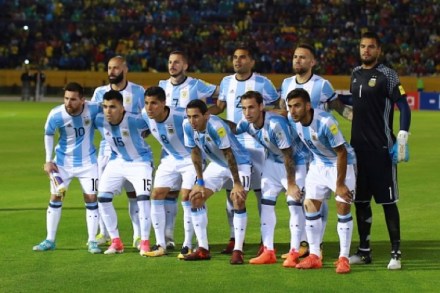
I am all for taking ethical stands, but if you are going to do so it does help to show a little bit of consistency.    Today, Argentina cancelled its World Cup warm-up game against Israel in protest, it seems, at Israel’s occupation of the West Bank.   According to striker Gonzalo Higuain, the players ‘have done the right thing’ in refusing to play – and have been warmly applauded by the Palestinian Football Association. So, the Argentinians will miss out their proposed stop in Israel and proceed directly to the World Cup in, er, Russia.

Roll up, psychos

From our UK edition

Describe the Night opens in Poland in 1920 where two Russian soldiers, Isaac and Nikolai, discuss truth and falsehood. Next we’re in Smolensk, 2010, where some strangers scream at each other about a hire car. Next Moscow, 1931 (or 1937 — the surtitles are illegible), where Nikolai, now a top soldier, asks Isaac, now a successful screen-writer, to audition his wife for a movie. Isaac improvises a scene with the wife and then fondles her bottom as they perform a weirdly sexless dance that is supposed to symbolise something, but it’s unclear what because everything that preceded the dance was indecipherable. Then the interval. I looked for enlightenment in the programme notes and discovered what the play is supposed to be about. It’s fascinating stuff.

America is in the middle of a Russian influence campaign – not at the end

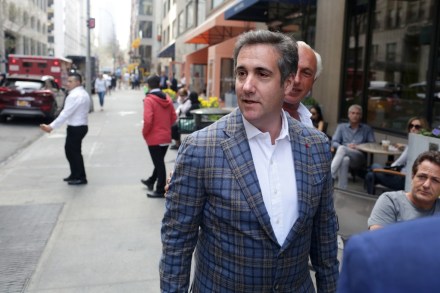
Donald Trump's longtime personal attorney Michael Cohen is playing a starring role in a riveting drama featuring the President, Special Counsel Robert Mueller, Putin-connected oligarchs, shady vory v zakone-adjacent moneymen, and American and Russian corporations seeking influence with the Trump Administration. For Americans, this is a new lurid political drama, but it’s one London has seen up close for two decades. It’s the story of the inevitable consequences that result when Russian money, influence and corruption slither up on Western shores.

Putin shows off his ‘dagger’ on Victory Day

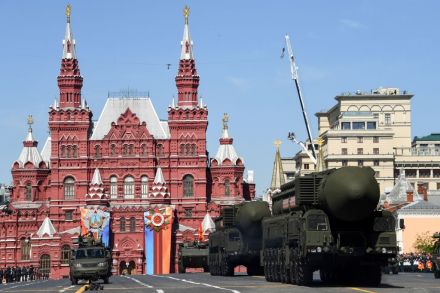
It’s difficult to think of a good comparison from the thousands of public holidays, festivals, galas and pageants around the world by which to describe Victory Day celebrations in Russia. Remembrance Day is too sombre, Bastille Day too jolly.  The day on which Russians remembers the nasally voice of Joseph Stalin coming over the wireless to announce the end of the war is a curious mix of solemnity and jubilation. In St.

High life | 3 May 2018

From our UK edition

New York ‘What do we do with these men?’ thundered a New York Times headline. It was followed by a frothing-mouthed, overwrought hissy fit worthy of an Oscar in the overacting category. The men in question are the usual suspects: media people and Hollywood types who have been accused by the weaker sex of sexual harassment. Oh boy! Is this place going nuts or what? Spring is here, the girls are in their summer dresses — not really, they all wear leggings — and all one hears about is the bestiality of the stronger sex. The question is: who is next? The bookies are having a field day. ‘Under what terms should they be allowed to return to normal life?’ asks a female Times hack. As there is no American gulag, why not shoot the bastards and be done with it?

The 10 graphs that explain Vladimir Putin’s Russia

This is an edited version of a presentation given by Owen Matthews at The Spectator's What does Russia want? event. What I’d like to do is give a run-through of how we got to where we are with Russia. From the end of the Cold War onwards, focusing on the economy – and how the economy, in true Marxist fashion, has shaped the politics and political realities that we see in Russia today. The first metric is the big story of the post-Cold War world. Very simply, the graph above shows what’s happened between the collapse of the Soviet Union and the present day. It’s very clear: America's GDP has gone from $10 trillion to $18 trillion, China is catching up and Russia is flatlining.

Corbyn shows his true colours

From our UK edition

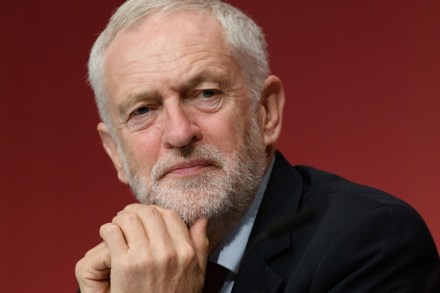
The Tories’ great worry after the last election was that they had effectively vaccinated the electorate against Jeremy Corbyn. They feared that the next time they tried to show that he was extreme, weak on national security and too friendly with the West’s enemies, voters would yawn and declare that they had heard it all before. They would be immune to any attacks on the Labour leader. Compounding this worry was the fear that Corbyn would present himself, as he had quite successfully during the general election campaign, as a more mainstream figure than he really is. If Corbyn had followed this ‘kindly grandad’ approach, the Conservatives would be in deep trouble right now. Labour’s moderates would also lack any obvious cause for complaint.

The Cold War is over – and the Grey War has begun

From our UK edition

Antonio Guterres, UN Secretary General, announced on Friday that the Cold War is “back with a vengeance”. Although the US and Russia are squaring off militarily in a way that has not been seen for decades, Guterres is wrong. This is not a return to the Cold War. This is something new. His error is partly a challenge of vocabulary. It may appear pedantic in the context of rapidly escalating geopolitical tensions, but naming a phenomenon is intimately linked to our ability to understand it, and to recognise it as a reality. When Tolstoy came up with the title Voyna i Mir, War and Peace, for his vast 1869 Napoleonic and Tsarist epic, he – like his contemporaries – worked on the assumption that the two words, together, are all-encompassing.

Vladimir Putin and the new Cold War

From our UK edition

In my researches for the final volume of my Thatcher biography, there is plenty, of course, about the Cold War, and its end. A constant bone of contention with the Russians was defection to the West. They were particularly furious about the MI6 exfiltration of the KGB man and British double agent Oleg Gordievsky in 1985. For several years afterwards, despite persistent personal pleas from Mrs Thatcher to Mikhail Gorbachev, the Soviet Union refused to allow his wife and small children to join him in Britain. The KGB persecuted her, and told her untruthfully that her husband had remarried. The family were not allowed out until 1991. But what is striking is that the underlying conversation about wider issues between London and Moscow was well sustained.

What does Russia want?

From our UK edition

With Russian poisoners stalking the streets of Salisbury and the real possibility of a hot war with the Kremlin’s troops in Syria, The Spectator’s debate this Wednesday – What does Russia want? – could hardly be more timely. The line-up of guests we’ve assembled promises to be an explosive mixture. Russian Presidential candidate Ksenia Sobchak, who made a doomed run against Vladimir Putin in March’s elections on a platform of liberal reform, will lead the anti-Kremlin side. Sobchak is more than just a prominent liberal politician – she’s the ultimate political insider. Sobchak’s father Anatoly was an iconic liberal mayor of St Petersburg – and was Putin’s boss and political mentor in the years after he left the KGB.

Theresa May is losing the PR battle on Syria

From our UK edition

After Theresa May's Cabinet agreed on the 'need to take action' in Syria, it seems a matter of when, not if, military strikes against the Assad regime take place. But the strikes won't be the end of the matter politically. Labour have been quick to stir up trouble, with Jeremy Corbyn describing the government as 'waiting for instructions' from Donald Trump. The British government is also struggling to keep up with a Russian propaganda barrage.

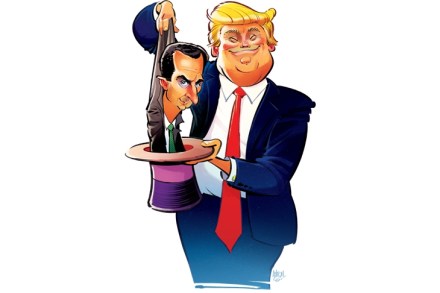
Is Trump the Neville Chamberlain of our time?

So Britain is responsible for staging the Syrian gas attack? According to Russian Defense Ministry spokesman Major General Igor Konashenkov: “We have evidence that proves Britain was directly involved in organizing this provocation.” Evidence, shmevidence. Next thing you know Moscow will be offering to assist Yulia Skripal. Oh, wait. It already did. Vladimir Putin cannot conceal that his regime is complicit in some very odious deeds—and that it’s feeling increasingly confident about taunting the West. The Russian claim is deliberately preposterous.

How have the Russian oligarchs got away with swaggering around London for so long?

From our UK edition

A decade ago I commissioned an article about Vladimir Putin’s business cronies. Among other lines of enquiry, it sought to finger ‘a coterie of wealthy and politically influential industrialists, many believed to be former or current secret service officials’ who allegedly had shareholdings in Russian companies which, if we or anyone else had been able to prove that they were controlled by the president, might have evidenced a personal Putin fortune of tens of billions. Sensibly, The Spectator’s lawyer would not let me publish — but the US Treasury has now done its own version of the job by imposing sanctions on seven oligarchs and 17 senior Russian officials who are believed to form the innermost presidential clique.

President Erdogan’s Syrian dilemma

From our UK edition

Istanbul It is a bad time to have an ally on the fence. With US military action in Syria looking more likely by the minute, and the West’s frosty relations with Russia in danger of deepening into a new Cold War, Washington is eyeing the actions of Turkey’s President Erdogan with concern. Turkey, a NATO member since 1952, the ally with the second biggest army and the only one to share a border with Syria, has spent the past two years cosying up to Russia. Ankara is part of the Astana troika alongside Moscow and Tehran – an initiative that has snatched the peace-broking lead in Syria from the UN and Western-back Geneva talks.

Sergei Skripal being out of a critical condition doesn’t get Moscow off the hook

From our UK edition

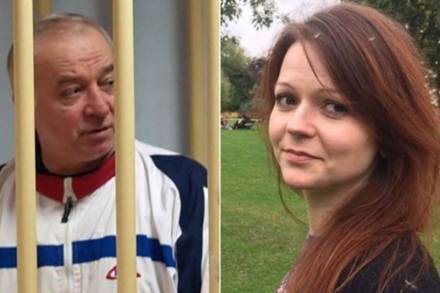
The latest news from the Salisbury attack is that Sergei Skripal is no longer in a critical condition and that his daughter Yulia is now talking and will be well enough to leave hospital at some point. This, obviously, has implications for the investigation into their attempted assassination. Yulia will, presumably, soon be able to tell the police about what happened in the days and hours leading up to them both being found on the verge of death in Salisbury city centre. Internet conspiracy theorists will, I’m sure, declare that the fact the Skripals are not dead is proof that the Russians weren’t behind this. But given that it appears that the Skripals absorbed the nerve agent through their skin rather than breathing it in, it is unsurprising that it was less effective.

Could the Russian economy benefit from some Roman history?

From our UK edition

The Russian economy is not in the greatest of shapes. That being the case, one would have thought friendly diplomatic and economic relations with the West would be a priority for Vladimir Putin, given his need for cash to build weapons against threats from superpowers such as Estonia. A little Roman history would help. As has been well documented, the collapse of the Roman Empire in the west in the 5th C ad heralded something of an economic dark age for Europe for some 200 years. The long-nurtured Roman economic networks extending east as far as China simply could not survive the break-up that would create the beginnings of today’s Europe. The ancient sources, as well as the archaeological record, make clear just how connected that world had been.