Russia

Two spies, an explosion, and the new Czech rift with Russia

From our US edition

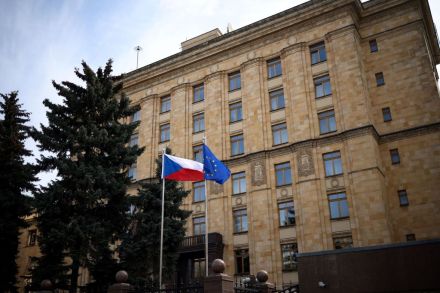
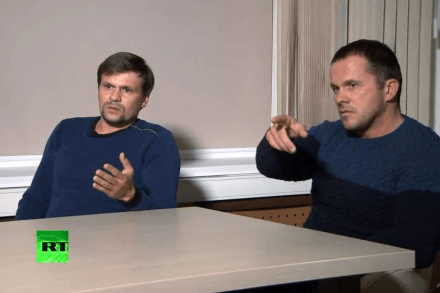
‘Putin is a murderer,’ read the signs carried by protestors outside the Russian Embassy in Prague on Sunday. On Saturday night, Prime Minister Andrej Babiš stunned the Czech Republic by stating that evidence now links Russian GRU secret agents to a massive explosion which killed two people at an arms depot near the Moravian village of Vrbětice in 2014. Czech Minister of the Interior and acting Foreign Minister Jan Hamáček gave 18 diplomats known to be linked to Russian foreign intelligence 48 hours to leave the country, and compared the situation to the Salisbury poisoning in 2018.

A tale of two Afghanistan withdrawals

From our US edition

President Joe Biden announced this week that he was pulling all remaining American troops out of Afghanistan by September 11 — and the media rushed to frame the decision positively. They are technically correct — it makes zero sense to continue to put American lives at risk and spend taxpayer dollars on a decades-long 'war' with no foreseeable end nor desire to 'win'. But as you can guess, when former president Donald Trump announced he would withdraw troops from Afghanistan just last year, the media hysterically warned that he was emboldening the Taliban and making America less safe. 'Trump administration to cut troop levels in Afghanistan despite Pentagon warnings,' the Washington Post reported.

afghanistan rich

Biden’s sanctions send a warning to Putin

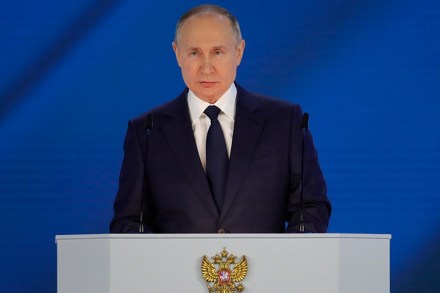
It’s not easy to frame sanctions, these days. They occupy that huge, hazy diplomatic no man’s land between sternly-worded but essentially vacuous expressions of concern – grave concern, if you really want to pretend you’re serious – and sending a gunboat. When it comes to trying to make an impression on Vladimir Putin, who has no qualms about causing the West concerns – and has a good few gunboats of his own – this is a doubly-difficult challenge. The latest US sanctions are a case in point, a mix of the cosmetic and the consequential that are more about political signalling than anything else.

Biden and Putin sue for uneasy peace

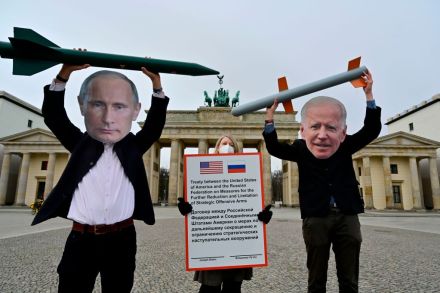
In 2001, US President George W. Bush stared into Vladimir Putin’s eyes and said he saw his soul. Joe Biden, on the other hand, famously claimed to have told the Russian leader, 'I’m looking into your eyes, and I don’t think you have a soul.' Now the new incumbent of the Oval Office might have a second chance to check again in the flesh. On Tuesday, Biden held a rare and, by all accounts cordial, telephone call with his counterpart in Moscow to discuss the increasingly tense situation on the border with Ukraine. For months, Kiev's forces in the Donbass region have clashed with troops loyal to two Russian-backed breakaway republics, with numerous reports of drone strikes and civilian casualties.

The Kremlin’s strategy to undermine Britain

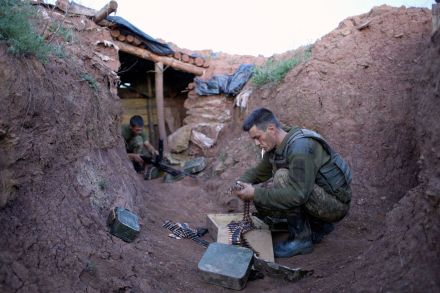
The past week has seen the war in Ukraine, which has been simmering for the last seven years, once more come to the boil. According to Kiev, Russia has massed as many as 85,000 troops near its border, while Moscow has actively talked-up the possibility of full-scale war and warned that it ‘would mean the beginning of Ukraine’s end’. Is such a war likely? You can forgive Kiev for worrying so — Vladimir Putin is already getting his excuses ready. The Kremlin claims to have an obligation to protect the residents of the Donbass if tensions continue to rise (just like it claimed to have an obligation to the residents of Crimea, in 2014, prior to annexing the peninsula).

The truth about Russia’s hidden Covid deaths

The secret is out: the Russian government has been lying to its people. Officially, Russia’s coronavirus death toll for last year — as reported on state television and logged at the World Health Organisation — was an impressively low 86,498 for a population of 146 million. In his traditional December press conference Vladimir Putin proudly reeled off statistics on how quickly Russia’s economy was recovering from the pandemic, and last month he made a triumphant address to a packed public concert to celebrate the anniversary of the annexation of Crimea in 2014. ‘Today is a holiday for our entire vast country,’ Putin told an 80,000-strong, maskless crowd at Luzhniki stadium. ‘Please, take a deep breath and answer this: Do we love Russia?

How the West can respond to Putin’s military build-up

In the last few weeks, Russia has been flaunting its military build-up in and around Ukraine, sending 20,000 extra troops, artillery convoys, and trains heaving with weaponry to Crimea. To avoid this escalating into full-scale war, a more robust and consistent response is needed from the international community, as well as new fora and strategies to avoid repeating the same mistakes. Ever since Russia’s invasion of Ukraine in 2014, France and Germany have assumed leading roles in mediating the conflict. They are part of the ‘Normandy Quartet’ and mediators for the Minsk Protocol.

Biden is wrong on Putin

From our US edition

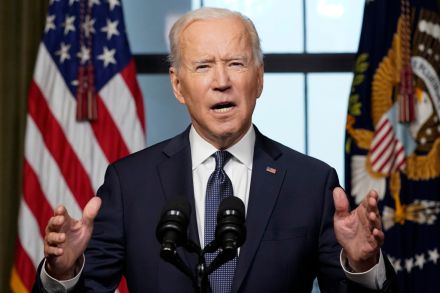
I am no fan of Trump, but what Joe Biden said in a recent interview with George Stephanopoulos made me almost nostalgic for some aspects of the last presidency. When Biden was asked if he believes Putin to be a killer, he replied, 'I do.’ He also confirmed reports that in 2011, while serving as vice president, he personally told Putin that Putin does not 'have a soul’. Putin’s reply was quick and masterful: he wished Biden best health and inviting him to a public debate about big existential and ethical issues on Zoom. Biden’s strong words stand in sharp contrast to Trump who, in 2017, when the Fox News host Bill O’Reilly called Putin a 'killer’, suggested that America’s conduct was just as bad as that of the Russian president.

biden putin

Russian sabre-rattling over Ukraine demands a different response

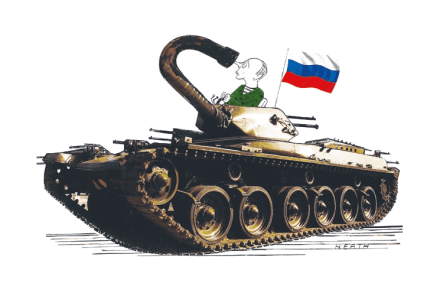
Russian heavy armour is on the move, and Moscow is making no move to hide it. Is this the prelude to a new upsurge in fighting in south-eastern Ukraine, or especially brutal sabre-rattling? The problem is that we don’t know – and this challenges our usual responses. The war in the Donbas – neither civil war nor straightforward foreign intervention, but a messy and toxic mix of the two – has tended to flare up at the end of winter. As thick spring thaw mud begins to dry, campaign season begins. Politically, it already has.

Is Russia about to invade Ukraine?

With occasional artillery duels and sporadic exchanges of small arms fire, Ukraine's long-running civil war was never quite extinguished. However, the embers of the last five years, which have seen dozens killed in skirmishes each month, could now reignite as eastern Ukraine risks becoming an open battleground once again. Around 25,000 Russian troops have been positioned on Ukraine's disputed borders, movements which were followed by artillery bombardments and firefights that have already resulted in casualties for both sides. Further escalation between Kiev and Moscow is now frighteningly possible. In previous cases, most notably Georgia in 2008, a sudden build-up of Russian forces signals the beginning of a carefully planned assault.

Biden’s backhanded bid to kill Nord Stream 2

Washington, D.C. is universally known as a town divided, a place where compromise and dialogue are often sacrificed at the altar of competing agendas. But on one issue, at least, there is consensus: the 764-mile Nord Stream 2 pipeline that will pump Russian natural gas into Germany is a project that must be stopped. And the United States needs to use all of the economic and diplomatic tools at its disposal to do it. In both congressional testimony and in meetings with Nato allies, U.S. Secretary of State Antony Blinken has reiterated the official U.S. view that Nord Stream 2 is 'a bad deal' for Europe, a potential cash windfall for Russia, and a potential geopolitical coup for Vladimir Putin.

Berlin has been bounced into accepting Sputnik

Munich has had enough of the vaccine chaos in Berlin and Brussels. In a surprise announcement on Wednesday, Bavaria’s minister president Markus Söder stated that he would sign a preliminary purchase agreement for the Russian Sputnik vaccine. The leader of the Bavarian Free State explained that he would pre-order two and a half million doses of Sputnik V in the hope of receiving these by July. Söder, who is a potential candidate to replace Merkel, was keen to stress that this was dependent on regulatory approval by the European Medicines Agency.

After Putin: an interview with Navalny’s exiled chief of staff

Even with Alexei Navalny imprisoned, Russia’s opposition continues to struggle against Vladimir Putin and his quarter-century of Kremlin rule. This already daunting task has been made harder by the fact that key figures are now imprisoned or in exile: the opposition leader’s principal aides Vladimir Ashrukov and Leonid Volkov have fled to London and Vilnius respectively, while Navalny himself is serving a three-year prison sentence for supposed fraud. Still, his inner circle continues to plan Putin's downfall from beyond Russia’s border ­— and they now believe they have the support to succeed. The first stage, Volkov tells me, is mass protests. Already Navalny's movement has led to thousands of people rallying in public since January.

The EU’s decline is self-inflicted

In 1991, at the height of the first Gulf War, the EU demonstrated to the world its divisions and helplessness, as Belgium infamously blocked the export of munitions to the UK, then at war in the Gulf. They quickly came to regret it. The Belgian Foreign Minister subsequently remarked tellingly: ‘Europe is an economic giant, a political dwarf and a military worm’. It seems these days that little has changed, save that even the EU’s claim to be an ‘economic giant’ is eroding with the loss of the world’s fifth largest economy, a dwindling share of world trade and a catatonic growth rate, even before the pandemic. Worse still, much of its relative economic decline is self-inflicted.

REVEALED: the Pentagon’s amazingly silly anti-Russia meme

From our US edition

After 20 years, a peak of 100,000 troops and trillions spent, the American military was unable to defeat the Taliban or even stop them from running half of Afghanistan. But that isn’t the only war America has been losing. We’re also losing the Meme Wars. That’s the lesson from a truly ghastly discovery by the intrepid reporters at VICE, who obtained 23 pages of internal documents from the Pentagon about an anti-Russia meme it deployed last October. The meme (see above) in question was created by US Cyber Command’s Cyber National Mission Force, as part of its invisible war against Russian hackers. Their goal: expose the fact that Russia has hackers (gasp!) and make them look dumb in the process.

meme

The truth behind Putin’s hit lists

If we are to believe the gossip, Vladimir Putin draws up death lists the way ordinary people jot down their shopping. And bang on schedule, as Joe Biden makes a point of labelling him a ‘killer,’ not one but two death lists materialise from parts unknown. This weekend the Daily Mirror — not, it has to be said, usually a Kremlinologist’s ‘must-read’ — claimed that Putin is ‘now beside himself with rage’ and is drawing up lists of would-be victims, saying ‘we have long arms. No scum can hide from us.’ The quotes come from an unnamed office of Russia’s much-feared Federal Security Service (FSB), which is apparently planning how to execute Putin’s laundry list of kidnappings and murders.

Boris’s Russia review will delight Putin

The strategy outlined within the integrated review lacks the urgency, agility, and need for ambiguity needed to take on the country it deems our ‘most acute threat’: Russia. Described as the ‘biggest review of our foreign, defence, security and development policy since the end of the Cold War’, in fact — when it comes to Russia — much of the IR reads more like a literature review than a 21st Century ‘Long Telegram’. Russia is referenced only fourteen times directly, and then with a great deal more descriptive analysis than comprehensive plans of action. Much of the content is welcome: one section deals with Russia under the new term of ‘state threats’.

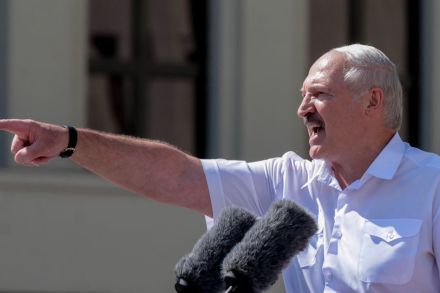
What does Belarus’s opposition leader want?

There is an assumption that those fighting tyranny must instead want Western-style democracy, that the arc of history bends towards liberal representative government, allied inevitably to Washington and Brussels. Many former Soviet Union countries saw their politburos overthrown by young middle-class people espousing the desire for this kind of politics — from the Rose Revolution in Georgia to the Orange Revolution and Euromaiden protests in Ukraine (whether or not they eventually received that form of government is a different matter). But there is no logical imperative that connects dissatisfaction towards an autocrat with the kind of government and geopolitical order that will replace him, whether in Eastern Europe or elsewhere.

Russian sanctions are futile

During the 2020 presidential campaign, Joe Biden promised to approach Russia and its irascible President Vladimir Putin with a new sense of toughness and purpose. Now calling the shots in the White House, President Biden appears to have made good on that promise — at least symbolically. On Tuesday, the Biden administration announced several sets of sanctions against Moscow for last summer's attempted assassination of the Russian activist Alexei Navalny, a plot that involved the Soviet-era nerve agent Novichok. The sanctions, taken in concert with the European Union’s own measures, included asset freezes and travel bans on seven Russian officials deemed responsible for the poisoning, imprisonment, and prosecution of Navalny.

A defeated Armenia descends into turmoil

Ever since its disastrous military defeat at the hands of Azerbaijan last year, Armenia has suffered from a wave of political unrest, with rallies and protests continuing sporadically. The principal demand of the protestors has been the resignation of the incumbent Prime Minister, Nikol Pashinyan, whose agreement to a ceasefire favourable to Azerbaijan following his country’s defeat in Nagorno-Karabakh was viewed as a national betrayal. However, the most serious declaration of opposition to the Prime Minister came on Thursday, when the general staff of the armed forces, Onik Gasparyan, joined in the calls for Pashinyan to resign.