Russia

From Russia with love: 12 films set in the former Soviet Union

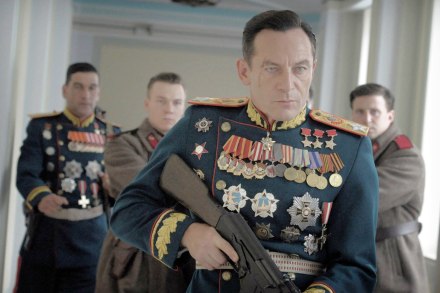
With Russia back in the news yet again, it’s interesting to note how comparatively few English language movies are set in the country. Admittedly in TV there’s been an uptick lately, with two recent series on Catherine The Great in youth/middle age, the Andrew Davies version of War & Peace, McMafia and the multi award-winning Chernobyl. But in terms of film, depictions of Russia are often confined to WWII, Cold War and other (surprise surprise) spy-related themes. Here are a few of the most memorable: Enemy at the Gates (2001, Amazon Rental/Buy) https://www.youtube.com/watch?v=4O-sMh_DO6I File this under ‘could have been better’.

Alexei Navalny: a profile in courage

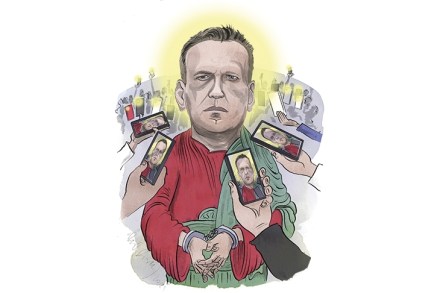
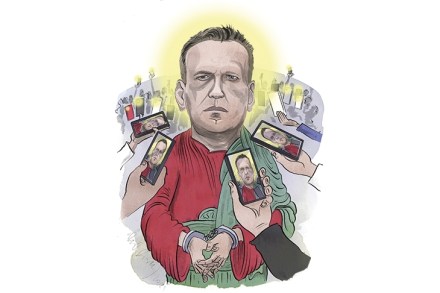
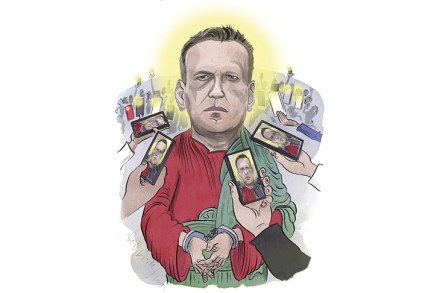
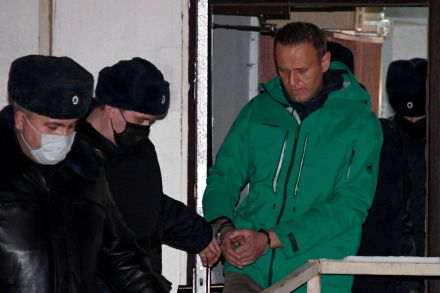
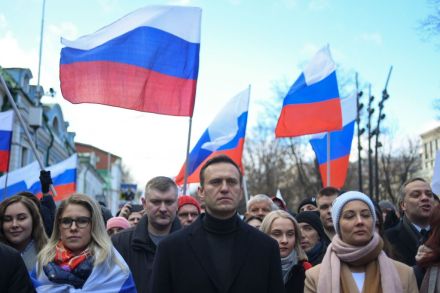
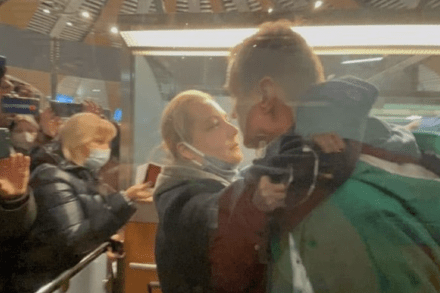
Vladimir Putin likes his opponents in exile: it makes them easier to portray as defectors who have turned their back on Russia. It suited him to have Alexei Navalny, the most prominent opposition leader in Russia, hiding in Germany fearing he’d be arrested (or worse) if he returned. But now, Navalny has flown back to Moscow – and was duly arrested at passport control. Every stage of his return – his flight out, his arrest, his goodbye to his wife – has been vividly documented on social media with images already making their way around Russia and the world. Navalny has made a swap: he has sacrificed his liberty to leave no doubt about his commitment to his country. And no doubt about how Putin operates.

Is Joe Biden’s administration fit for the 2020s?

Joe Biden’s Cabinet nominees have been warmly received by the massed ranks of anti-Trumpists in Washington. But the warmth stateside is nothing compared with the rave notices the incoming administration is receiving in much of Europe. There is particular delight in the UK, where the special Boris-Donald relationship evaporated within seconds of Biden’s election victory. The enthusiasm derives partly from a sense that, as some have put it, the adults are back in the room. The image of Trump as ‘toddler-in-chief’ was projected on to his whole volatile administration. Now the line-up announced by the incoming President looks and sounds serious, sober and a lot more like US administrations are supposed to be.

What Boris should do about a problem like Putin’s Russia

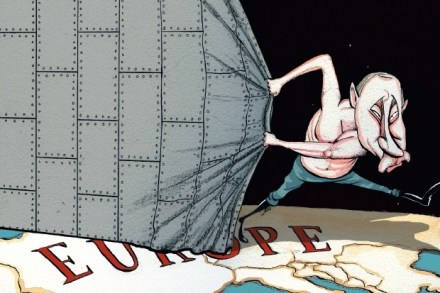
With Brexit, the arrival of a new US administration, and trade deals like the Trans-Pacific Partnership, the government’s foreign policy docket for 2021 will likely be pretty full, but in the odd spare moment, perhaps when he’s walking Dilyn, Boris might want to give some thought to his Russia policy. The great virtue is, after all, that there is pretty much nowhere to go but up. Putin’s Russia is an antagonist, and although the threat is primarily through disinformation, espionage and subversion, the first necessity is a continued firm reaffirmation of the UK’s commitment to Nato. This is, after all, not just or even mainly as a source of common military defence, but a powerful statement of solidarity.

Putin is finally waking up to Russia’s climate change problem

The snow is falling in Moscow, but that is after the warmest autumn there on record. Meanwhile, perhaps reflecting that with the arrival of vaccines, there is at least the prospect of an end to the Covid-19 crisis, the climate change debate is rekindling – and with a particular geopolitical angle. Much of the conventional wisdom is that it is a perverse boon to Russia. Representative of this perspective, for example, has been a recent study that led the New York Times to predict that Moscow will ‘win the climate crisis’ – while its partner, ProPublica, warned that ‘Russia could dominate a warming world.’ Stirring stuff, and no doubt music to Vladimir Putin’s ears.

Heads will roll following the Navalny prank call blunder

From vicious tragedy to outright farce, the saga of the poisoning of Russian opposition leader Alexei Navalny has acquired a surreal new chapter. Pretending to be an aide to the powerful secretary of Russia’s Security Council, Navalny actually rang up one of his would-be assassins and got him to confess, on tape. It’s hilarious; it’s astonishing; it’s embarrassing. Does it prove that Russia’s security agencies are the Keystone Kops of the intelligence world? Citizen investigator outfit Bellingcat and the Russian journalists of the Insider recently published the results of an extraordinary inquiry into the attempted assassination in August 2020, when he was on a campaign visit to Tomsk, in Siberia.

The fight for liberalism

From our US edition

The world has many island nations, and sometimes the United States counts itself among them. We have water on either side of us, and though we share our big island with Canada and Mexico, neither poses any threat. America is immune to invasion, a castle surrounded by the safest of moats. This wasn’t always so, and it isn’t really true today, unless we forget about Hawaii and our Pacific and Caribbean territories, most of which would be easy prey for other states if they weren’t under our sovereignty. In the earliest days of the republic, we shared the North American continent with outposts of Europe’s leading powers: France, Russia, Spain and Britain.

liberalism

Putin’s festive message: the world’s naughty, but I’m nice

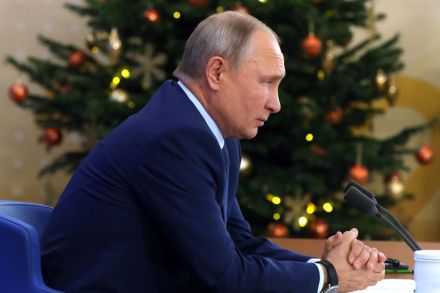
It’s the most wonderful time of the year. When a reclusive figure comes bearing gifts, when the air is full of familiar golden oldies, and when time itself seems to stand still. I am talking, of course, of Vladimir Putin’s annual marathon press conference this week. Stretching for hours – four-and-a-half in this case – these carefully choreographed events have in the past been opportunities for Putin to present himself in a variety of roles: the omnicompetent chief executive; the caring father of the nation; the stern defender of the Motherland. This one was much the same, but somehow the magic has been slipping away. The coronavirus precautions probably didn’t help.

Cold war: Russia’s bid to control the Arctic

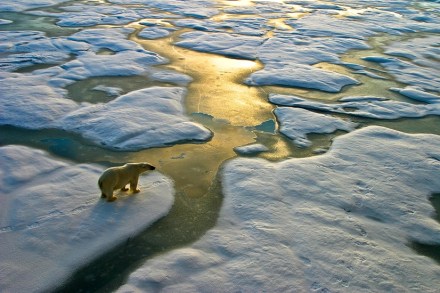
It may be time for Father Christmas to look for a new home, before the Russians kick him out. ‘This is our Arctic,’ declared the Russian explorer Artur Chilingarov when he went to the North Pole in 2003. Four years later, another Russian expedition, again led by Chilingarov, planted a titanium flag on the seabed 2.5 miles below the Pole. It was a symbolic gesture of a geopolitical ambition. The jingoistic Chilingarov proclaimed: ‘Our task is to remind the world that Russia is a great Arctic and scientific power.’ Since 2013, Russia has invested heavily in seven military/naval bases along its Arctic coast to strengthen the country’s power and influence.

Netflix’s Barbarians taught me those Romans had it coming

Of all the times and places to have been on the wrong side of history, I can’t imagine many worse than to have been a Roman legionnaire in the Battle of the Teutoburg Forest in the year 9 AD. It was the Romans’ Isandlwana — a devastating defeat inflicted by native forces on what was theoretically the world’s most sophisticated, best trained, and almost insuperable military power. Over the years since I first learned about arrogant, tricked, doomed Roman commander Varus and his three legions (about 20,000 men, almost none of whom got out alive), I’ve often mused pityingly on how it must have felt: trapped in the gloomy forest, hemmed in by a bog, waiting to be slaughtered by hammer, axe or javelin by the hairy, painted, blood-crazed Germanic barbarians.

Russians are wary of Putin’s vaccine

Never one to let a bandwagon pass by, Vladimir Putin launched his own national vaccine programme the moment Britain said it was starting its roll-out. Given how badly Russia has been hit, you would expect it to be a popular move. But Russians themselves seem cautious, not least because they mistrust the Kremlin. On Thursday, Russian health officials announced a new record of more than 28,000 coronavirus cases reported in a single day, bringing the total caseload to almost 2.4 million. Russia has the world’s fourth-worst case numbers, behind only the USA, India and Brazil, with over 41,000 deaths to date. Or at least 41,000 according to official statistics — confidential documents leaked to the press suggest the real figure is at least 75,000.

Biden’s Brezhnev vibes

From our US edition

Like many other Americans who had the misfortune to live under socialism, I’ve been having lots of flashbacks lately. In particular, I find that the presumptive President-elect Joe Biden gives out serious Brezhnev vibes. The general secretary of the Soviet Union from 1964 to 1982, Leonid Brezhnev was not a healthy man. He was a chain-smoking workaholic who’d been appointed to a series of very stressful positions — you try to rise in ranks under Joseph Stalin. He served in World War Two, when he was wounded, and suffered a concussion. Brezhnev’s mind and body took a toll; his first, minor stroke happened in 1951, when he was still in his forties.

brezhnev

Look east, old man

From our US edition

A deadly viral pandemic, viciously infectious, inflicting rapid death without fear or favor: gosh, where on earth did the makers of To the Lake get that idea? Not from the Chinese coronavirus, obviously. For one thing, this Russian series was made last year, when COVID-19 was still but an evil glint in Anthony Fauci’s eye. And for another, look around: do you see people dropping dead in the streets, as they should be, if this thing were living up to its inflated reputation as our Spanish flu? All that aside, the timing could scarcely be more perfect for this hugely exciting, gripping and involving series about a disparate group of family and friends struggling to survive in lawless, brutal, post-outbreak Russia.

to the lake

Can you really blame Trump supporters for refusing to accept the election result?

From our US edition

It's been a week and a half since Election Day and the results are still not certified — some votes counts, like in Georgia, are close enough to require a recount, and there are numerous legal challenges put forth by the Trump campaign. Still, because the mainstream media has 'called' the race for Joe Biden, the left has arrogantly told Trump supporters to just concede already. The allegations of voter fraud, fact checkers claim, are unsubstantiated and baseless. Some of them may very well be, but it was a pretty well accepted fact in America (until Donald Trump brought it up, that is) that people cheated in elections. In fact, Biden's newly minted chief of staff, Ron Klain, tweeted in 2014 that 68 percent of people believe elections are rigged 'because they are.

refusing election result

Erdogan’s game: why Turkey has turned against the West

Six years ago, at the celebratory opening match of the new Basaksehir Stadium in Istanbul, an unlikely football star emerged. The red team’s ageing, six-foot tall centre-forward lumbered toward the white team’s goal; a delicate chip over the advancing keeper brought a goal that sent the stadium into ecstasy. The scorer was Prime Minister Recep Tayyip Erdogan. It was the run-up to an election in which he expected to become his country’s 12th president. For Erdogan, a former semi-professional footballer, it was brilliant self-promotion.

Why did Balakirev’s beautiful, inventive works go out of fashion?

Anyone who invited the Russian composer Mily Balakirev to dinner had to be jolly careful about the fish they served. How had it died? Balakirev — mentor of Mussorgsky and Rimsky-Korsakov and regarded as the founder of the Russian nationalist school of music — would want to know. If the fish had perished on a hook, then he wouldn’t touch it. But if it had been clubbed on the head, fine. The many eccentricities of Balakirev (1837–1910) were regarded with amusement, horror and dismay by his contemporaries. Though, to be fair, the fish thing wasn’t a mad obsession of his own. Formerly an atheist, in his thirties he converted to an ultra-strict Russian Orthodox sect with firm views on the proper way to kill fish.

Sunday shows round-up: This week is ‘moment of reckoning’ for EU trade deal

Dominic Raab - This week is 'the moment of reckoning' for EU deal The Sunday interview shows return this week to general fanfare across the nation... The first government guest to join Sophy Ridge was the Foreign Secretary Dominic Raab, who was asked about the prospect of the UK reaching a satisfactory trade deal with the EU by the end of the year. James Forsyth has written this week about how Downing Street puts the likelihood of a deal down to 30 to 40 per cent, but Raab professed a greater optimism that an agreement could be reached, citing the thorny subject of fisheries as one of the few remaining 'bones of contention': https://twitter.com/RidgeOnSunday/status/1302526946019020800?ref_src=twsrc%5Etfw DR: This week the negotiations will be really important...

The West doesn’t know best

I’d always rather liked the Finns, until I came across the conductor Dalia Stasevska. When I asked my mother what they were like, back when I was five or six and enjoyed staring at a globe of the world, she described them as ‘drunken and stupid, but very brave’. This was, by Mother’s standards, an extremely kindly benediction. Most of her descriptions of the world’s various people did not contain commendations. There were a few exceptions — Trinidadians were ‘drunken and stupid, but very cheerful’, for example. But by and large, to her the world comprised people who were drunken and stupid, apart from the Muslim world, where people were merely ‘stupid’.

Portrait of the week: BBC drops songs, museum drops Sloane, and KFC and John Lewis drop slogans

Home Nicola Sturgeon, the First Minister of Scotland, made pupils wear face-coverings in school corridors. It didn’t take long for the UK government to follow suit in England, for secondary pupils in areas of high transmission. The chief medical officers of England, Scotland, Northern Ireland and Wales said that the fatality rate for those aged five to 14 infected with coronavirus was 14 per million, lower than for most seasonal flu infections. Sally Collier resigned as chief regulator of Ofqual, which had been caught up in the chaotic assessment of A-level and GCSE candidates. It was ‘vitally important’ for children to go back to school, said Boris Johnson, the Prime Minister.

Trump should pardon Edward Snowden

Edward Snowden says that he didn’t mean to end up in Russia when he fled after leaking secrets from his job at the United States National Security Agency (NSA). He writes in his autobiography, Permanent Record, that he agonised about where to go. Europe was impossible because of extradition. Africa was a ‘no-go zone’ because the US ‘had a history of acting there with impunity’. Eventually, he went to Hong Kong and after hiding out there for a short time, he made a dash for Ecuador in hope of getting asylum. But the US cancelled his passport and, in what we’re told was an unfortunate coincidence, he got stuck in Sheremetyevo airport in Moscow as he changed planes.