Russia

Portrait of the week: Truss in, Johnson out and Nord Stream 1 off

From our UK edition

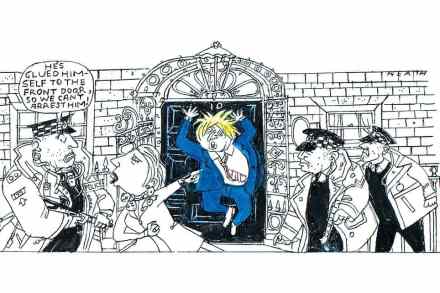
Home Liz Truss, the new Prime Minister, said in a speech outside 10 Downing Street: ‘Boris Johnson delivered Brexit, the Covid vaccine and stood up to Russian aggression. History will see him as a hugely consequential prime minister.’ For her part: ‘I am confident that together we can ride out the storm.’ Earlier, on being elected leader of the Conservative party, she had said: ‘I know that we will deliver, we will deliver, we will deliver.’ She had been elected by party members ahead of Rishi Sunak by 81,326 votes to 60,399 (57.4 per cent to 42.6). Turnout was 82.6 per cent.
The missing Biden foreign policy

What is Joe Biden's foreign policy? It's a trick question, because he has no actual policy, no plan, no careful set of chess moves a step ahead of his adversary. America suffers for it. Biden's foreign policy initially began and ended in Afghanistan with the disastrous withdrawal that left refugees strewn across the globe. There were years, then months, then weeks, then days to plan the NEO — the noncombatant evacuation order — and plenty of planning books for one sitting on desks in places like Seoul.

Ukraine turns the tables on Russia

Russia’s brutal war on Ukraine has moved into a new phase, a very encouraging one for Ukraine and its western allies. In Phase 1, Russia tried — and failed — to seize the capital city of Kyiv with a blitzkrieg assault. The idea was to decapitate the Zelensky government quickly and install a puppet regime, subservient to Moscow. After that failed, Russia focused on taking the Donbas region of eastern Ukraine and forming a “land bridge” to Crimea, which Russia seized in 2014. Russia has had some success in this Phase 2 of the war, at very high cost, but movement along that front has now stalled.

Why the Baltics fear Russia

From our UK edition

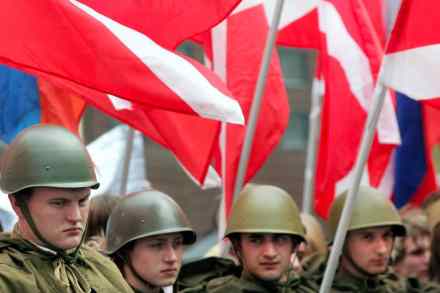
In the historic heart of Riga, Latvia’s lively capital, there is a building that reveals why the Baltic States remain so wary of the Russian Bear. From the street, it doesn’t look like much – just another apartment block on a busy boulevard full of shops and cafes. Only the discreet sign outside gives the game away: ‘During the Soviet occupation the KGB imprisoned, tortured, killed and morally humiliated its victims in this building.’ Most passers-by barely give it a second glance. They know this story all too well. The KGB vacated this apartment block in 1991 when Latvia regained her independence, but over 30 years later the memories remain raw. As we step inside my Latvian guide, Edgars, tells me his father was summoned here twice for interrogation.

Will energy bills kill off working from home?

From our UK edition

‘The jury’s out’, was Liz Truss’s pert response to the question ‘Macron: friend or foe?’ at last week’s Norwich hustings. ‘I’ll judge him on deeds not words.’ In a video clip of the event you can see a bald bloke in the second row applauding wildly, as if she had just delivered from memory the whole of Henry V’s speech before Agincourt. Hard to know which is worse: whether as Foreign Secretary she thinks it’s shrewd diplomacy to cast doubt on the bona fides of our nearest ally and Europe’s only current statesman; or whether, even with victory in the bag, she’ll say anything to win the vote of every last backwoods xenophobe in the Tory party.

Will Russians soon realise how remarkable Mikhail Gorbachev was?

From our UK edition

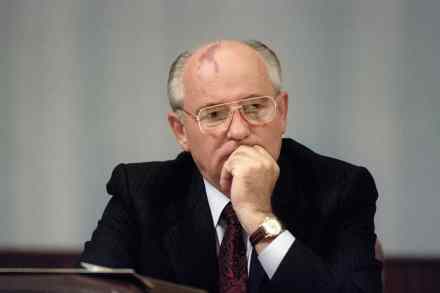
Mikhail Gorbachev, the final president of the Soviet Union who died last night, was remarkable both as an international politician and as a domestic reformer. I first met him when he came to London in December 1984, when Mrs Thatcher said that she liked him and could do business with him. He was open, friendly, and spoke without notes: the opposite of his predecessors. Some of Thatcher’s own officials suspected that he was merely an old-fashioned communist who had learned new tricks, and that his charm was seducing her from her clear view of the Soviet threat. Thatcher was right, and the sceptics were wrong. By that time, the Soviet system was in serious trouble. It could just about keep up with American military technology.

Gorbachev was no saint. But he was a kind of hero

From our UK edition

Mikhail Gorbachev is dead at the age of 91, and in a way I feel orphaned. I became fascinated by what was still then the Soviet Union in its late years of sclerosis, when one moribund geriatric at the top of the system succeeded another (the dark joke at the time went as follows: a KGB guard stopped someone at one of the state funerals and asked him if he had a pass – ‘oh,’ came the reply, ‘I’ve got a season ticket’). But my early years as a Russia-watcher were during his time as General Secretary, and if my seniors had become used to the idea that the USSR was a stagnant, unchanging police state, for us, the thought that there could be change, even change for the good, was baked into our assumptions.

Moscow

From Moscow to Kyiv and back again

During the best of times, I left New York for gonzo journalism in Moscow; and during the worst of times, I fled a jingoistic wartime Moscow for the post-Covid euphoria of a resurgent New York City. My life in a sense has come full circle: I left New York for Russia in my freewheeling, bohemian twenties in search of future adventure and returned in my fifties when the rose-tinted dreams of the future that fueled Russia’s hedonistic capital were snuffed out in a murderous rage. That rage of a crumbling empire also engulfed lovely Ukraine in flames, battering its gorgeous capital Kyiv, where I had spent a blissful decade. With two of the three cities that I had called home caught up in a fratricidal zero-sum war, New York is once again King of the Hill.

It’s time to kickstart North Sea oil

From our UK edition

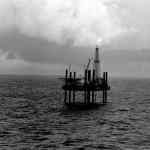
It is reported this morning that one of Liz Truss’s first acts as prime minister, assuming she wins the Conservative party leadership election, will be to grant new licences for North Sea oil and gas extraction. But will it be enough – and quick enough – to alleviate the energy crisis? There are still substantial known oil and gas reserves in the North Sea left to be exploited. According to a report produced by the Oil and Gas Authority last September, known reserves of oil and gas in the North Sea at the end of 2020 amounted to 4.4 billion barrels of oil equivalent (BOE). This is just a tenth of the 45.9 billion BOE which have already been extracted. However, that ignores that exploration for oil is an ongoing business.

Ukraine stuns Russia with a counter-offensive in Kherson region

From our UK edition

The southern city of Kherson, which fell to Russian forces in the first few days of the war, is one of the places Ukraine would need to liberate if Putin’s army is to be repelled. But what realistic chance is there? Many argued that the Russian occupation is a one-way process: that having taken Crimea, Putin would extend his reach northwards and westwards – with the only question being how long Ukraine could hold off an offensive from its far-bigger enemy.  But that conversation is changing, and fast. This morning, the Ukrainian army broke through the first line of the Russian defence in Kherson region – a move that was only recently seen to be beyond the capability of Ukrainian troops.

Why Crimea could be key to Ukraine winning the war

From our UK edition

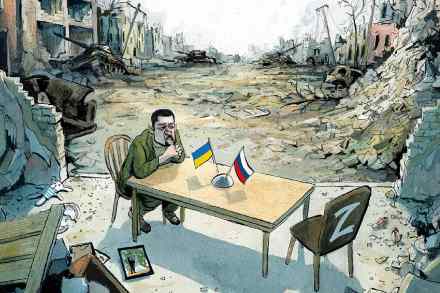
Over the six months since Russia invaded Ukraine, the ambitions of President Zelensky and his compatriots have only grown. From an early readiness to engage in talks – first in Belarus and then in Istanbul – Kyiv has progressed to an insistence that Ukraine can win, and from there to a definition of victory that includes not just a return to the status quo before the war, but the restoration of Ukraine’s post-independence borders, and now also the recovery of Crimea. Zelensky himself has often seemed slower than some in his entourage to expand the mission. But he has been adding his voice to those calling for the recovery of Crimea for a few weeks now, with Independence Day prompting these ringing words: ‘Crimea is Ukraine. And we will return it.

How high will energy prices go?

From our UK edition

When dozens of energy companies started going bust in 2021, the government knew it had a crisis on its hands. The rise of the energy price cap from £1,277 to £1,971 in April – an increase of nearly £700 – led to not one but two emergency support packages. By the end, £15 billion worth of subsidies and support broadly covered the price rise for Britain's eight million poorest households. This, it now seems, is just the start of what’s needed to get them through winter. Starting in January, the price cap will be updated every three months instead of every six months to better reflect the wholesale price of energy This morning, Ofgem has announced the cap will rise from £1,971 to £3,549: an 80 per cent increase.

Are sanctions against Russia actually working?

Six months ago this week, the United States and its European allies enacted one of the most comprehensive, stringent sanctions regimes against a major economy in history. Russia’s unprovoked invasion of Ukraine on February 24 not only shocked the West’s sensibilities, but pushed Washington and Brussels to take actions that would have been unthinkable only a few weeks prior. As far as the West is concerned, Vladimir Putin’s Russia is nothing less than a dangerous pariah state — and its aggression against a neighboring country meant it had to be treated as one.

Letters: How to reform the GMC

From our UK edition

Overhaul the GMC Sir: Max Pemberton’s cogent criticism of the GMC (‘Unfit for purpose’, 20 August). is one of the more nuanced and on the nose of those that I have read. A client of mine was reprimanded and subjected to a fitness-to-practise investigation after an attempted suicide following a financial crisis. The experience worsened his mental health, which then prolonged the investigation. Other clients have been forced to sell their homes or relocate. Some initial steps I implore the GMC to take include limiting the length of investigations, improving mental health reporting, providing more support for doctors about fitness-to-practise issues, and overhauling how evidence is handled.

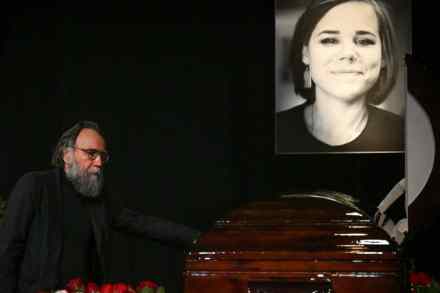
Daria Dugina has become a martyr for Putin

From our UK edition

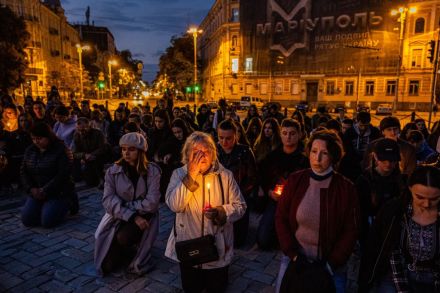
There was something menacing yet vaguely absurd about the Tuesday memorial service held to commemorate the life and fascist times of the prominent ultra-nationalist Daria Dugina, the daughter of the Kremlin propagandist Aleksandr. The 29 year old Daria Dugina, who died in a car explosion on August 20, was put on display in an open coffin, with guards wearing black and red armbands by her side. The sombre attendees filed past.

The stalemate in Ukraine won’t last forever

From our UK edition

Addressing the vexed question of who is winning the war in Ukraine, six months on, is a task to challenge military strategists, geopolitical analysts – and semanticists, because so much depends on what ‘winning’ means. On one level, after all, one could suggest everyone is losing. That said, we cannot escape the fact that both Moscow and the West had essentially written Ukraine off at the start of the war. The conventional wisdom was that it would take perhaps a fortnight for Vladimir Putin’s much-vaunted war machine, the product of two decades of heightened military spending, to defeat its Ukrainian counterpart.  Instead, the Ukrainians proved determined and disciplined in the defence, and imaginative and impassioned in the attack.

Ukraine is the first streaming service war

Russia has invaded Ukraine, and the images are all over the news. CNN has gone to round-the-clock coverage of bombs falling near Kyiv, refugees pouring into Hungary, Putin’s war machine rolling down a misty highway. We’re outraged by this, roused to action, as we righteously hang a blue-and-yellow Ukrainian flag off the porch and learn to spell the names of places like Kherson and Mariupol. The West, listless and fractured, seems suddenly united again as opposition to Russian imperialism grows and... ...and it’s summer. The weather is warm and a gentle breeze is tinkling through the chimes. The kids are off from school, horsing around the kitchen, and the lawn isn’t going to mow itself.

war

The strange morality of sponsoring weapons

From our UK edition

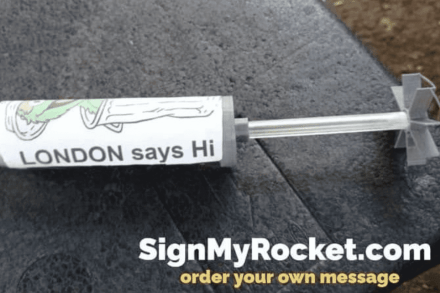
Forget fund-raising concerts donating spare clothes and offering your spare room to a refugee family. There’s a better way of showing your sympathy for Ukrainians: you can now sponsor weapons, and arm it with your very own message. For up to £2,500, Brits can send a personalised message to the crowdfunding site Sign My Rocket, who will then write it on a missile destined for the Russian army. Sending hostile messages to the enemy, of course, is not new, and may be as old as war itself. Dropping black propaganda leaflets from planes for the benefit of the enemy beneath has long been standard practice. Nor was it unusual for those on the production line at armaments factories or even those loading the ammunition to add their own special something.

How Ukraine is sabotaging Russia’s army

From our UK edition

Ukrainian Special Operations Forces (SOF) or possibly partisan fighters have conducted successfully attacks on three significant targets in occupied Crimea since 10 August. An initial attack on the Saki airbase caused a fire that quickly spread to stored ammunition and fuel, resulting in multiple huge secondary explosions. These destroyed at least nine Russian fast jets and inflicted extensive damage to the base’s facilities and surrounding buildings. On 16 August further attacks were carried out on a large ammunition and equipment depot at the strategic railroad junction town of Dzhankoiskyi and another Russian airbase at Gvardeyskoye causing further fires and secondary explosions.

ukraine

Is the Ukraine conflict a civil war?

The strategic Ukrainian port city of Mykoliav, that has been under constant Russian bombardment since the onset of war, was locked down for an entire weekend in early August as troops searched for Russian collaborators that had been calling in locations of Ukrainian troops and ammunition. The government arrested scores of traitors during their house-to-house search. Meanwhile in the capital Kyiv, President Volodymyr Zelensky has also been sounding the alarm over Russian collaborators after firing both his prosecutor-general and head of the intelligence agency for treason. The former spy chief was a close childhood friend of the president. There are allegations that the entire intelligence agency is riddled with spies, with many defecting to Russia in the early days of the invasion.