Russia

Ukraine is convinced that time is on its side. So is Russia

As the war in Ukraine approaches its six-month anniversary this coming Wednesday, the fighting shows no sign of stopping. Peace talks are a figment of the imagination, as Russian president Vladimir Putin and Ukrainian president Volodymyr Zelensky remain just as committed to achieving their objectives today as they were when the war first broke out. The Russians continue to pound residential areas with artillery in the Donbas, hoping to slowly capture more territory after months of slow, high-cost maneuvering in the Donetsk region. The Ukrainians, meanwhile, are settling on a new strategy in the south, harassing Russian supply lines deep into Russian-occupied territory.
ukraine

Blaming Saudi won’t make energy cheaper

From our UK edition

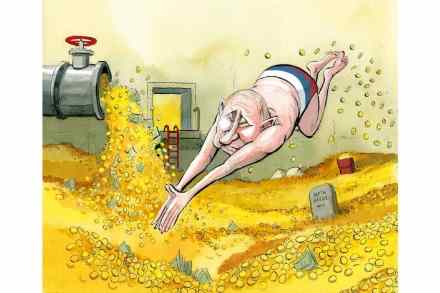
How outraged should we be that Saudi Aramco has reported a world-record quarterly profit of $48 billion, representing a giant bonus from the global oil price spike provoked by the war in Ukraine? Well, that’s how the cookie crumbles when you’re sitting on oil reserves so abundant and so easily accessible that your marginal cost of producing the next barrel is less than $10 when the market price has just doubled to $130 – as it did in March, before settling back to around $95 today. And you might think that this recent price retreat is likely to continue as oil demand begins to shrink with the onset of recession in developed economies – just as you worry that your own reserves will one day dwindle.

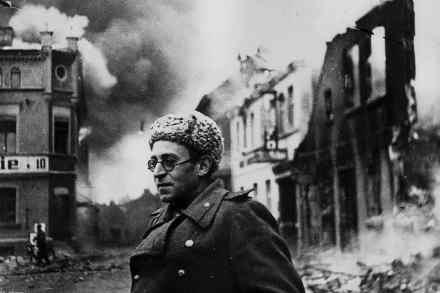
Propaganda from the Russian Front: The People Immortal, by Vasily Grossman, reviewed

From our UK edition

On its posthumous publication in 1980, Vasily Grossman’s Life and Fate was widely compared with War and Peace. For all the novel’s many virtues, the comparison was hyperbolic. In one respect, how-ever, Grossman’s was the more remarkable achievement. Whereas Tolstoy wrote about historical events with the benefit of hindsight, Grossman wrote about ones that he had recently endured. Life and Fate was the third of Grossman’s novels set during the Nazi invasion of the former Soviet Union. The first was The People Immortal, which, like the second, Stalingrad, is now available in an unexpurgated edition, superbly translated by Robert and Elizabeth Chandler.

Celebrities embark on a Ukraine safari

The saying goes that there is nothing that celebrities can’t make about themselves. As it turns out, that includes a war in Ukraine caused by an invasion of Russia that's already seen thousands of casualties. It's almost as though there are two wars happening at once: one on social media, where guerrilla clips from the front lines show bodies, shelling, and damage to homes, and one playing out in the pages of Vogue magazine. This week, it was revealed that Oscar-winning actress Jessica Chastain had visited with Ukrainian president Volodymyr Zelensky. The photo was posted to his official Telegram account and was taken from his presidential palace. There were also several shots of Chastain seated at a table with Zelensky having a discussion of some sort.

Do ‘ordinary Russians’ support the war?

From our UK edition

There was a whiteboard in the BBC Baghdad bureau for noting down phrases we hoped to ban from the airwaves. It had nothing to do with political correctness or self-censorship. This was all about self-improvement. The list of words was titled ‘Not Martha Gellhorn’, in honour of the veteran war reporter who wrote so well – especially when compared with us. We were perfectly aware of our shortcomings, though, and strove to do better, with the whiteboard serving as an aide memoire. It helped keep the prose fresh when deadlines were hectic, and when the temptation was to reach for the cliché closest to hand.

Sanctions are working – whatever Putin says

From our UK edition

Don’t believe Vladimir Putin’s hype. The Russian economy is not OK. With western sanctions jeopardising up to 40 per cent of the country’s GDP, Putin’s assurances of an economic pivot to the East are a sham. And his weaponising of gas supplies to Europe is the financial equivalent of strapping on a suicide vest. That, roughly, is the message of a major new study published last week by the Yale School of Management about the impact of sanctions on Russia. Yale, working with a team of international economists, has looked past a wall of Russian obfuscation and used real-world data from retailers, energy traders and investors to reveal a picture very different from the rosy image presented by Putin at the St Petersburg Economic Forum in June.

Russian escapism: Telluria, by Vladimir Sorokin, reviewed

From our UK edition

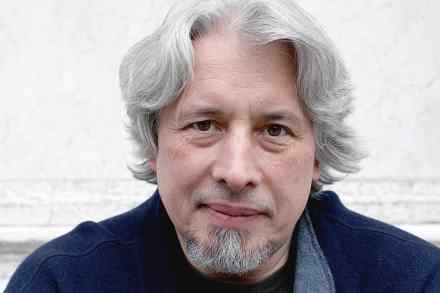
Vladimir Sorokin, old enough to have been banned in the Soviet Union, flourished in the post-Gorbachev spring, and he fled to Berlin several days before Russia attacked Ukraine. He writes phantasmagorias, as so many Russians do, because Russia is a nation that has never allowed its writers to examine society directly. Solzhenitsyn said: ‘Russian literature gives a poor notion of Russia, because after 1917 all truth was suppressed.’ But even in the so-called Golden Age, the Tsar’s censorship was brutal. Voinovich said: ‘Depicting reality as it is, it’s very alien to Russians.’ Gogol provided one way out – satire – but he escaped to Rome. Later writers escaped into the historic past, romantic passivity, surrealism.

Is Biden giving Brittney Griner special treatment?

The rule is simple: abroad, Americans are subject to the host country's laws and legal system, whether that be Great Britain or Russia. The Bill of Rights does not follow Americans to foreign countries, nor will the US government intervene with the host country on their behalf. Try and bring some weed into Japan, and if you're caught, you're looking at years behind bars. No matter if it's a small amount for personal use back home. In Japan, anything over about an ounce means you intended to sell it, and the punishment is accordingly lengthy. I should know: I spent seven years in Japan visiting American prisoners as part of my State Department job. The top three reasons for their arrests were drugs, drugs, and drugs. Just like Brittney Griner.

Pelosi is right to put China on notice

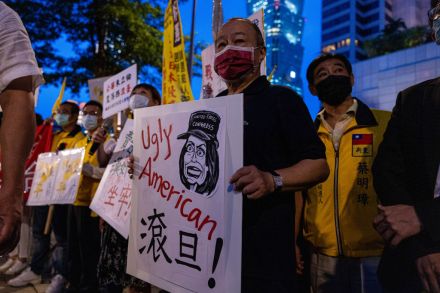
House speaker Nancy Pelosi has always had a flair for the dramatic. During the Trump presidency, for example, she ostentatiously tore up his State of the Union speech. But for sheer spectacle, it will be hard for Pelosi to top her “will she, won’t she” visit to Taiwan this week. In spite of the suspense, there was never really any doubt about it. For weeks China has issued dire warnings about the perils of her visit. So, as it happens, have several commentators, including The Spectator’s Freddy Gray, whom I debated on the Americano podcast, and who seems to have a bad case of the collywobbles about the Pelosi trip.

Is war brewing between Serbia and Kosovo?

From our UK edition

Serbia and Kosovo are close to conflict. Of all things, a dispute over car number plates is threatening the fragile peace won 23 years ago, after a Nato bombing campaign against then-Yugoslavia. For that, Serbs have never truly forgiven the West. On Sunday night, roads were blockaded by Serbs in northern Kosovo. Their anger was directed at an edict from the Kosovan government requiring Serbs to re-register their cars with Kosovar number plates. Serbs currently use number plates with acronyms of Kosovar cities, just one example of Serbia’s ongoing refusal to accept Kosovan independence. New documentation requirements were also to be imposed on Serbs entering and leaving Kosovo. Some have claimed that tensions have calmed, but they are only on hold.

Ukraine in black and white

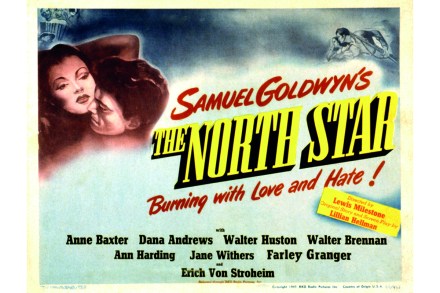
Displays of wanton brutality and heroic resistance in the Russo-Ukrainian War of 2022 have prompted some in the West to proclaim a moment of “moral clarity.” Some caution might be wise here, since moral clarity in world affairs is not always as clear or as moral as its claimants think. It was Soviet ideology, succeeding czarist imperialism, that for so long smothered Ukraine, along with the other captive nations consigned to Stalin at Yalta. As Ukraine may now be slipping captivity at last, the West rejoices. But how clear is the clarity? History’s players sometimes switch roles even from one act to the next. It has not, for example, always been brutal Russians that heroic Ukrainians went up against. Eighty-one years ago, it was brutal Germans.

North Star

Iran and Russia: the new Axis of Evil?

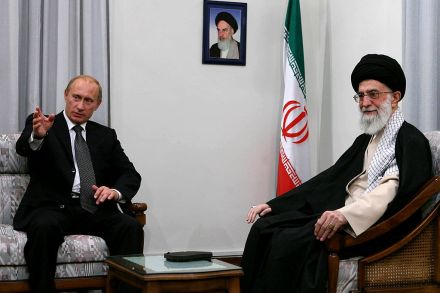
Russian President Vladimir Putin’s visit to Tehran last week brought attention to a growing partnership between Russia and Iran. The Russian shook hands with Iranian Supreme Leader Ali Khamenei, a rare gesture since both men are notorious coronaphobes. The old cleric expressed support for the Russian invasion of Ukraine, while the old KGB man offered Iran supplies of grain. US intelligence even claims Iran will open its drone arsenals to Russia. This strange friendship has its limits, but its growth could spell trouble. History does not suggest this is a natural partnership. The list of grievances between Iran and Russia is long. Great powers are often rough with middle-power neighbors.

The Zelenskys’ Vogue publicity misfire

The legendary nineteenth-century showman P.T. Barnum is credited with first uttering the words, “all publicity is good publicity.” Barnum had the good sense to die a century before he had the chance to see the Zelenskys’ Vogue photo shoot. https://twitter.com/MayraFlores2022/status/1552267933501489152 Ukrainian president Volodymyr Zelensky and his wife posed for renowned photographer Annie Leibovitz. In one shot Olena stands near Ukrainian female soldiers at the Antanov airport. In another she holds hands with her husband in the presidential office compound in Kyiv as the pair stare pensively at the camera.

zelensky vogue

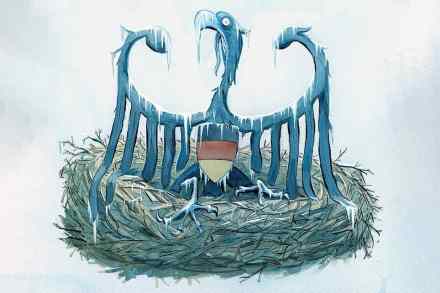
Germany’s energy crisis is a warning to Britain

From our UK edition

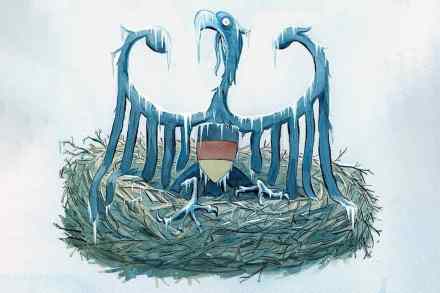
During the eurozone crisis, southern European states had to go cap in hand to Germany to stave off national bankruptcy. A decade on and it is Berlin doing the begging. Europe has reluctantly agreed a 15 per cent cut in gas use this winter in the hope that German factories can stay open and German citizens can keep from freezing. Meanwhile, Russia’s state-controlled energy giant Gazprom threatened to reduce the gas flowing through the Nord Stream 1 pipeline yet again so that Germany would receive only a fifth of the amount it did before the Ukrainian invasion. While Berlin has said it plans to wean itself off Russian gas over the next few years, Vladimir Putin is taunting Europe by cutting supplies faster than Germany can cut its dependence.

Portrait of the week: Sunak vs Truss, London dodges a blackout and 94st walrus capsizes boats

From our UK edition

Home In a television debate between the two contenders for the leadership of the Conservative party (and hence the prime ministership), Rishi Sunak said it would be irresponsible to put the country in even more debt by cutting taxes and Liz Truss said that the tax rises he approved would put Britain into a recession. Mr Sunak was criticised for interrupting. A later proposal he made to cut VAT when the price cap on energy bills rose above £3,000 only brought accusations of a U-turn. He agreed to be interviewed by Andrew Neil on Channel 4, but Ms Truss didn’t. Opinion polls put Ms Truss well ahead among Conservative voters; Labour voters preferred Mr Sunak.

Is self-loathing the British disease?

From our UK edition

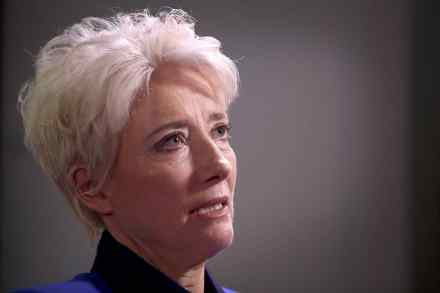
Whatever one thinks of the government’s plans to send refugees to Rwanda, it was amusing to see this country’s left suddenly finding all sorts of reasons why only the UK – ‘a cake-filled, misery-laden, grey old island’ according to Emma Thompson, patron of the Refugee Council – would do as a final destination for these poor people. It was especially ironic that the place which the great and the good decreed unfit for humane habitation was a country of which liberals have historically approved: France. The phrase ‘French flu’ was coined in the 1950s to describe the cultural cringe of British progressives towards France as the source of all things civilised.

Putin has Europe where he wants it

From our UK edition

Have we reached the endgame of Vladimir Putin’s energy war against the West, the point at which he turns off the gas for good? This afternoon, Gazprom announced that from Wednesday morning it will cut the quantity of gas flowing through the Nord Stream 1 pipeline to Germany to 33 cubic metres per day. This will halve the current flow of 67 million cubic metres and is just 20 per cent of the 167 million cubic metres which flowed through the pipeline before the Ukraine invasion. Ostensibly, the cut is for reasons of ‘maintenance’. That is unlikely to wash. Nord Stream 1 relies on a compressor station powered by six turbines, but Russia was supplied with two spare turbines to prevent any need for reduction in flows during maintenance periods.

The Ukraine war enters its sixth month

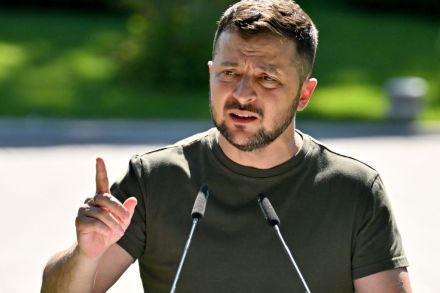
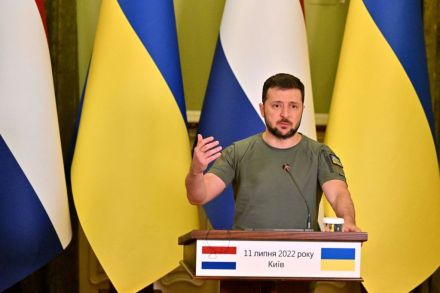
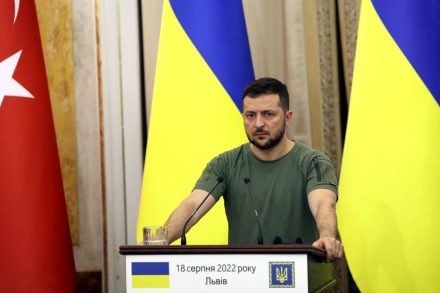
On February 24, Volodymyr Zelensky, the comedic actor-turned-president of Ukraine, addressed his countrymen at the same hour Russian missiles were landing in multiple Ukrainian cities simultaneously. Clad in olive garb and sporting a light stubble on his face, Zelensky promised his citizens victory for Ukraine and defeat for the Russians — and he implored the Russian people to protest the actions of their government in Moscow and St. Petersburg. As the war entered its sixth month this Sunday, Zelensky — this time dressed in a camouflage army uniform with a full beard — is just as defiant and sure of victory today as he was on that depressing February night. "Even the occupiers admit that we will win,” Zelensky boasted during his daily speech to the nation.

Ukraine and Russia sign grain deal – what next?

From our UK edition

This afternoon Kyiv and Moscow signed a UN-backed agreement to free up at least 20 million tons of grain from blocked ports. Ukraine said it would not sign a deal with Russia directly, only with Turkey and the UN. As Wolfgang Münchau noted this morning, it marks the first successful mediation between the two sides since the start of the war. This deal will complicate Vladimir Putin’s efforts to strangle the Ukrainian economy. But the Russian leader needs to show countries that are neutral – or more inclined towards Russia (in Africa and Asia) – that he saved them from hunger and rising food prices. Otherwise, Algeria could increase gas supplies to Europe and Egypt could supply Ukraine with hundreds of units of Soviet weapons and military equipment.

How Germany’s energy crisis could bite Britain

From our UK edition

For now, Berlin can breathe a sigh of relief: after a ten-day shutdown for maintenance, the Nord Stream 1 pipeline is back online. Russia is once again heating German homes, fuelling German industry, and using German money to finance its war in Ukraine. But this happy exchange may not continue; the pipeline is still operating at just 40 per cent of its usual capacity, and Vladimir Putin is warning this could fall to 20 per cent next week.