Russia

Putin has lost touch with reality

From our UK edition

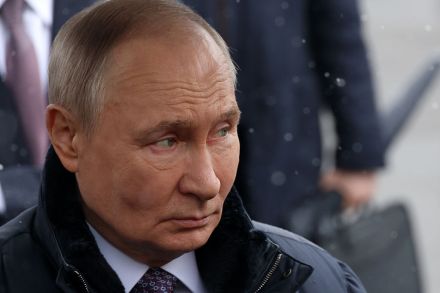
As dark clouds of burning oil billow like thunderheads on the skyline of Moscow and black rain falls across the capital, why does Vladimir Putin fail to see that something fundamental is changing in the dynamic of his war? Why, when Donald Trump effectively agreed to hand over every inch of the Ukrainian territory Russia has captured and offered the Kremlin an easy off-ramp studded with juicy business deals, did Putin refuse? And why, for that matter, did the Russian President choose to launch his full-scale invasion of Ukraine in the first place? One answer is that Tsar Vladimir is mad, so blinded by his imperialist ambitions that he deliberately chooses to ignore the reality of a crashing economy, half a million dead fellow countrymen and a war that is obviously unwinnable.

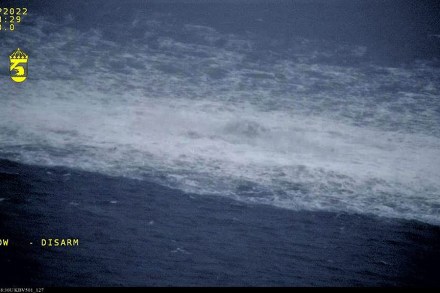
The conspiracy of silence surrounding the Nord Stream bombings

From our UK edition

Six months after undersea explosions ripped through three of the four Nord Stream gas pipelines between Russia and Germany I wrote a 2,500-word story for The Spectator entitled ‘Were Ukrainians behind the Nord Stream bombings?’ Citing senior European security sources, the piece revealed a conspiracy of silence – for fear of an anti-Ukraine backlash – by western intelligence agencies, law enforcement authorities and government to cover up what they all knew to be the truth. Forensic evidence and a German police investigation had disclosed that pipelines carrying the Russian gas on which the economies of Germany and many other European countries depended had been blown up by a tiny team of Ukrainian saboteurs.

Portrait of the week: Belfast riots, Starmer bans TikTok and Trump turns 80

From our UK edition

Home The electors of Makerfield decided who might be prime minister. After John Healey resigned as defence secretary, Al Carns resigned as armed forces minister. Mr Healey had declared that Sir Keir Starmer, the Prime Minister, had ‘been unable, and the Treasury has been unwilling, to commit the resources that the nation needs to defend the country’. Dan Jarvis was appointed Defence Secretary. Air Chief Marshal Sir Richard Knighton, the Chief of the Defence Staff, said the armed forces would have to ‘dial back’ operations without more funding. Belfast had multiple nights of anti-immigrant rioting in response to the terrible knife attack on Stephen Ogilvie. Two Ukrainian men were found guilty of plotting firebomb attacks on properties linked to Sir Keir Starmer.

What Tommy Robinson really sees in Russia

Everyone who is everyone – within a certain political and social fragment – has been in Russia this past week. Conservative American conspiracy theorist Candace Owens; Errol Musk, father of Elon; toxic “manosphere” influencers Andrew and Tristan Tate; and Tommy Robinson, the far-right activist. Robinson told the Guardian that he had traveled to Moscow “to see how this country got itself so well on to the straight and narrow and see the beauty of a civilized society here.” In the process, he was walking a well-trodden path of westerners heading to Russia to see exactly what they want to see. Once it was socialists like Sidney and Beatrice Webb, who found Stalin’s regime “the very opposite of a dictatorship.

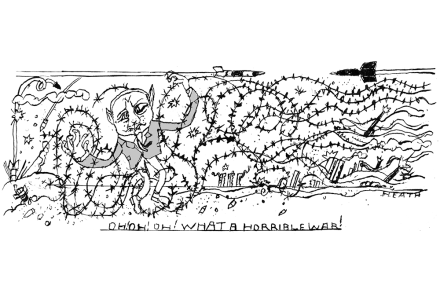
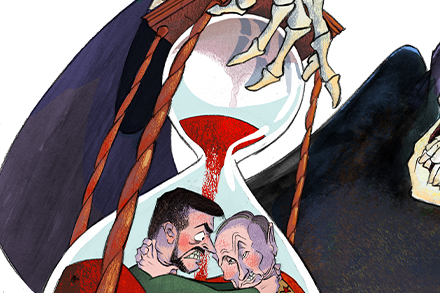
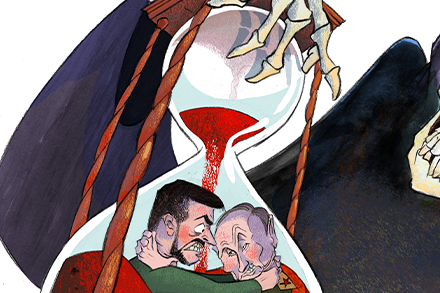
Forever war: will Zelensky and Putin be brought to an exhausted peace?

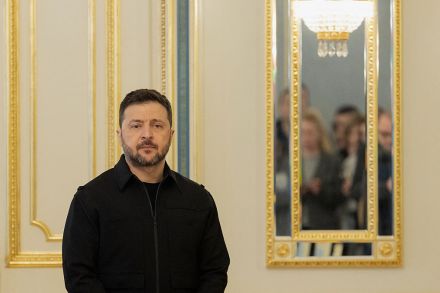
Volodymyr Zelensky stood proudly on the steps of 10 Downing Street earlier this month, flanked by Sir Keir Starmer and the leaders of France and Germany, ready to discuss Europe’s latest package of support for Ukraine’s ongoing war effort. Though the conflict has now lasted longer than World War One, Zelensky is in some ways in the most heroic period of his presidency. Ukraine not only continues to stand firm against intense Russian assaults but also seems to be regaining a strategic advantage with its long-range drone strikes. Europe has stepped up to replace US funding and diplomacy and the fall of Hungary’s Viktor Orbán has unlocked a €90 billion loan package. Yet it is also the most sordid period of Zelensky’s presidency.

war

Forever war: will Zelensky and Putin be brought to an exhausted peace?

Volodymyr Zelensky stood proudly on the steps of 10 Downing Street this week, flanked by Sir Keir Starmer and the leaders of France and Germany, ready to discuss Europe’s latest package of support for Ukraine’s ongoing war effort. Though the conflict has, as of this week, lasted longer that the first world war, Zelensky is in some ways in the most heroic period of his presidency. Ukraine not only continues to stand firm against intense Russian assaults but also seems to be regaining a strategic advantage with its long-range drone strikes. Europe has stepped up to replace US funding and diplomacy and the fall of Hungary’s Viktor Orban has unlocked a €90 billion loan package. Yet it is also the most sordid period of Zelensky’s presidency.

Russia is relying on drones to bring it victory in Ukraine

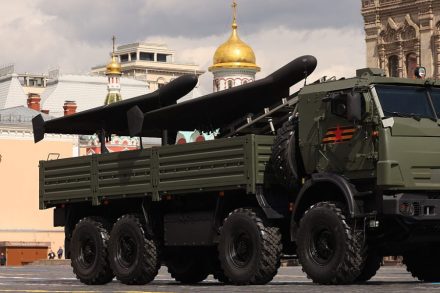
Earlier this week, Ukraine was subjected to one of the largest aerial assaults by Russia since the start of Vladimir Putin’s invasion over four years ago. Overnight from Monday into Tuesday, Russia sent 73 missiles and 656 drones into Ukraine, killing at least 21 and injuring dozens across the country. According to the Russian Ministry of Defense, this strike was retaliation for a Ukrainian attack on a vocational school in the occupied region of Luhansk on May 22. But, as the Kremlin’s war grinds on well into its fifth year, it also appears to signal a step change in how the Russian armed forces are choosing to fight.

russian

Russia won’t give up Armenia without a fight

From our UK edition

Since January, Karapetyan, leader of the Strong Armenia party, has been unable to leave his hilltop mansion to campaign ahead of Armenia’s parliamentary elections on Sunday. Last year, he waded into a fight between the Armenian Apostolic Church and the country’s prime minister, Nikol Pashinyan, leader of the Civil Contract party. His call for Pashinyan to stop pursuing clergymen critical of Pashinyan’s efforts to establish peace with neighbouring Azerbaijan was interpreted as a call to overthrow the government. Karapetyan was arrested, interrogated and spent six months in pre-trial detention before his sentence was commuted to house arrest. He denies the charge. How do you fight an election if you’re under house arrest?

How Iran turned Trump’s propaganda against him

From our UK edition

On 19 November 1941, King George and Queen Elizabeth paid a visit to Woburn Abbey, home of Britain’s covert propaganda war against the Nazis. Surrounded by a park full of rare monkeys, and among corridors bearing Old Masters, the King and Queen were presented with ‘Britain’s Secret Army’, a fleet of radio stations that broadcast subversive content deep into enemy territory. Sefton Delmer, who before the war had been a foreign correspondent for the Daily Express, presented his new German station. While the officious BBC German Service was lecturing Germans about the virtues of democracy and the evils of fascism, Delmer was trying something different.

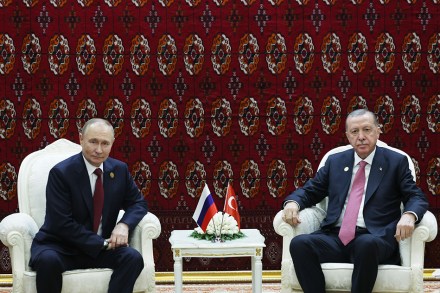
Putin and Erdogan are playing with fire in the Balkans and the Caucasus

From our UK edition

There are 34 disputed territories in and around Europe. In some cases, two or more nations claim the same patch of land. In others, separatist governments demand their own sovereignty. Many of these disputes have a quaint, eccentric interest: Italy and France struggling over the summit of Mont Blanc; or Britain, Ireland, Denmark and Iceland arguing over the barren islet of Rockall. But a few of them – such as Cyprus, Kosovo, Nagorno-Karabakh and Transnistria – provide more urgent political challenges. As Hannah Lucinda Smith argues, these places are Petri dishes – experiments in populism, nationalism and covert conflict that are being repeated across the continent. Her book Hinterlands explores several of these blind spots in most people’s mental map of Europe.

Ukraine’s Jehovah’s Witnesses are refusing to go to war

Prison guards led Vitalii Kryschenko to an inhospitable, cramped cell. Inside, the prisoners were curious. They watched with great interest as Kryuschenko found his allotted place. A small, gentle man with a nervous expression, he wasn’t a typical criminal but a Jehovah’s Witness. Kryschenko was jailed by Ukrainian authorities for refusing to go to war; taking up arms is forbidden by his religion. He was now going to share his days with the very worst of Ukrainian society. This would include thieves, those guilty of assault or worse.  "I was living with murderers, people jailed for life," he said. "It was terrifying. On my first night, I asked myself how I would survive in these conditions. All the same, I continued my daily prayers and read the Bible.

ukraine
europe

Should Europe mediate Russia-Ukraine talks?

The worst job in the world is to try negotiating with President Vladimir Putin to end the war in Ukraine to everyone’s satisfaction. Yet European leaders want to do just that. Frustrated by the failure of the Trump administration to negotiate anything of value with Putin, Europe is scurrying around looking for the ideal candidate to confront the Russian leader across the table and bash out a peace deal. It’s a fantasy world, of course. If Putin obstructed Trump, his old sparring partner, and never remotely got close to a deal with the Americans, why would he consider sitting down with some European leader, or ex-leader, to bring the four-year war to an end?

Is the West deserting Ukraine at precisely the wrong moment?

From our UK edition

Moscow is coming under direct drone attack, the Russian economy is creaking, patriotic bloggers are ever more apocalyptic in their predictions of military disaster and evidence is piling up that Russia’s elites are becoming seriously disillusioned with the war and Vladimir Putin himself. Is this the moment for Britain to desert Ukraine by easing sanctions and refusing to commit more money to Kyiv’s military? Last week, the British government issued licences for the import of gasoline products from Russia refined in a third country. No. 10 also approved  licences for British companies to continue to service tankers carrying Russian liquefied natural gas (LNG).

Why drones will carry out the next 9/11

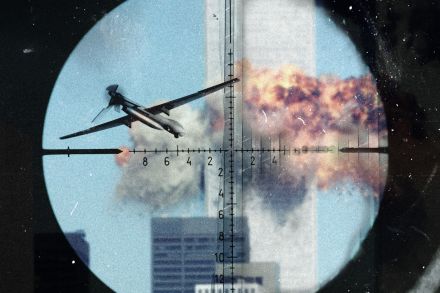
Few know more about drone warfare than Brett Velicovich. During the Iraq war, the former Delta Force intelligence analyst lived in a “black box” in the Iraqi desert using Reaper and Predator drones to pinpoint and track high-value terrorists – before sending in Tier 1 special forces teams, or a Hellfire missile, to end their lives. Most notable among the scalps he claimed were ISIS founder Abu Omar al-Baghdadi and the leader of Al Qaeda in Iraq Abu Ayyub al-Masri. “I feel like there's going to be another 9/11, but this time without the martyrs because you don't need humans anymore to cause sensational damage” Velicovich’s days in the "black box” were some of the last that America could control the skies with drones.

The tide has turned in Ukraine

The long war in Ukraine has morphed into a new and decisive phase, one that could lead to Ukraine’s upset victory over its much larger, more aggressive neighbor. The global consequences of Russia’s loss – and Vladimir Putin’s humiliation – would be enormous. What is this new phase? Is there really evidence the tide has turned in Ukraine’s favor? To sort out the answers and understand what’s new about the war’s current phase, we need to do a brief tour of the three phases that preceded it. The first phase began well over a decade ago, in February 2014, when Barack Obama was president. Ukraine fatefully signaled it wanted much stronger ties with Europe and the United States, not Russia, at the very moment US deterrence was weak.

Zelensky

How Putin got the Hollywood treatment

Sometimes life disappoints you in interesting ways. I hated Giuliano da Empoli's 2022 book The Wizard of the Kremlin, a fictional political thriller about the dawn of Putinism, with a shuddering passion. I had, therefore, been looking forward to despising the film version when it arrived in cinemas last month, too.  Yet it turns out that TWotK, directed and co-written by French filmmaker Olivier Assayas, is an impressive film: visually stunning, well cast, a straight story well told. Paul Dano (the greasy-faced young preacher from There Will Be Blood) plays Vadim Baranov, the fictional ‘Wizard’ of the title, a whizkid theatre and TV executive tasked with creating and curating a successor to the ailing Boris Yeltsin.

The Kremlin’s secret plans for post-war Russia

A top-level Kremlin policy document discussing post-war political planning and how to neutralize potential ultranationalist discontent has been leaked to the Russian investigative site Dossier Center. Entitled "Images of Victory," the paper gives a rare insight into the inner workings of Russia’s political machine. Crucially, it shows that while the Kremlin remains officially indifferent to peace talks, behind the scenes apparatchiks are working hard on selling an inevitable stalemate to the Russian people by dressing it up as a species of victory. The document was leaked before President Trump's announcement today of a three-day ceasefire between Russia and Ukraine.

Putin

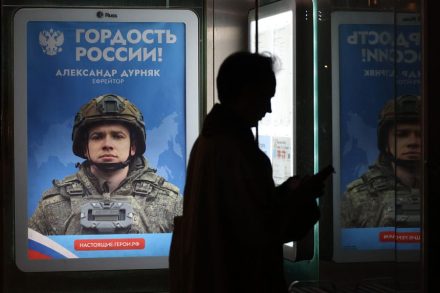
Russians no longer believe Putin’s war propaganda

A year ago, Russia marked the May 9 Victory Day celebration with a spectacular display of fireworks that lit up the Moscow sky. This year the fireworks have again been spectacular – but this time they have been caused by long-range Ukrainian attack drones slamming into refineries, pumping stations and factories deep inside Russia. In the Black Sea port of Tuapse, fireballs of burning gasoline 15 stories high erupted over the local oil refinery, while rivers of burning fuel ran down the city’s streets. Firefighters took three days to extinguish the inferno, which created a plume of smoke so high it was filmed by skiers from the slopes of the Caucasus mountains more than 60 miles away.

russia putin russians

Russians no longer believe Putin’s war propaganda

A year ago, Russia marked the 9 May Victory Day celebration with a spectacular display of fireworks that lit up the Moscow sky. This year the fireworks have again been spectacular – but this time they have been caused by long-range Ukrainian attack drones slamming into refineries, pumping stations and factories deep inside Russia. In the Black Sea port of Tuapse, fireballs of burning gasoline 15 storeys high erupted over the local oil refinery, while rivers of burning fuel ran down the city’s streets. Firefighters took three days to extinguish the inferno, which created a plume of smoke so high it was filmed by skiers from the slopes of the Caucasus mountains more than 60 miles away.

Russia is running out of workers

Vladimir Putin likes good statistics. At a government meeting on April 15, even as he acknowledged that growth was slowing, he pointed proudly to Russia's unemployment rate: 2.1 percent, a record low. Proof, he suggested, that the economy remains fundamentally sound despite everything the West has thrown at it. The Russian President would do better to worry. A record low unemployment rate is not, in normal circumstances, cause for alarm. In Russia's case it signals something closer to a slow-motion emergency. For the first time in its post-Soviet history, Russia has run out of workers.

workers