Russia

What we learned from the Korean War

From our US edition

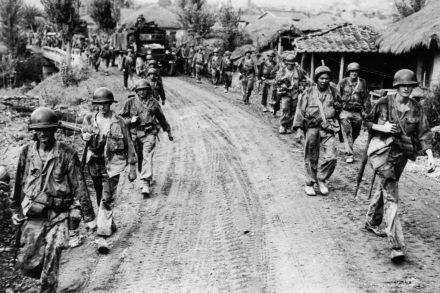
July 27 marks the seventieth anniversary of the armistice that ended major hostilities on the Korean Peninsula. Sometimes referred to as the Forgotten War, the last thing the Korean War should be is forgotten. First and foremost because tens of thousands of US and allied soldiers and millions of Koreans died, but also because of the lessons the war offers for policymakers today as the world enters an era not unlike the budding Cold War in 1950.  The first lesson is on the importance of messaging. The world pays attention to what the US says, and Washington’s adversaries pay particularly close attention. In January 1950, secretary of state Dean Acheson spoke to the National Press Club about a perimeter that the US would defend against communist aggression.
korean war

Inside Ukraine’s drone army

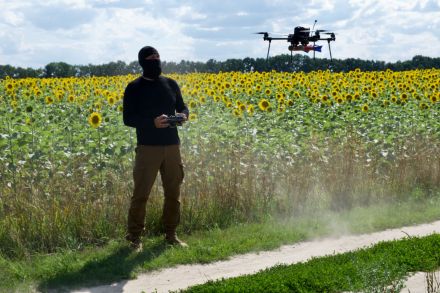
Kyiv ‘We will end this war with drones,’ says Mykhailo Fedorov, deputy prime minister of Ukraine. We meet at the Ministry of Digital Transformation, which he runs in Kyiv. It has become crucial to the counter-offensive. To reclaim occupied land, Ukrainian troops need to remove miles of landmines, and can do so only if kept safe by swarms of drones that fly ahead, searching for the enemy. Russia has drones too – many more of them – and is adept at jamming and downing Ukraine’s fleet. A drone arms race is under way. Soon after his election, President Volodymyr Zelensky asked the then 28-year-old Fedorov to run a new ministry aimed at turning Ukraine into a digital country (or, as he put it, a ‘paperless state’).

Games of love and jealousy: Ariane, by Claude Anet, reviewed

‘The world might condemn me, but what’s the world? A gathering of fools and a pile of prejudices.’ Thus, with all the certainty and absolutism of youth, does the 17-year-old Ariane reflect on the prospect of selling herself. There would be an element of épater les bourgeois in this sentiment in almost any age, but to see it so freely expressed at the dawn of the last century comes as something of a surprise. Written in Russia while its French author chronicled the immediate aftermath of the Bolshevik revolution, Claude Anet’s Ariane is a striking, if now largely forgotten, account of a young woman’s pursuit of self-realisation in a world of rapidly changing social mores.

How a small town in Ukraine stopped the Russians in their tracks

The other day, John Simpson, He Who Cannot Be Removed From The BBC, tweeted something purportedly about Volodymyr Zelensky. What it was really about, though, was John Simpson – how many world leaders he had interviewed (200), over how long (more than 50 years), and who he most admired (Zelensky, Nelson Mandela and Vaclav Havel). It is difficult to imagine Andrew Harding, a veteran BBC foreign correspondent, tweeting something like that. He is a much more understated reporter, and less prone to foreground himself at the expense of his interviewees. He is just as likely to be on receive as transmit and understands that he is not the story.

Will mounting casualties change the debate in Ukraine?

At a small army field clinic outside Bakhmut, I watched as the body of a dead soldier was carried in. Two more soldiers followed, this time seriously injured – and this was what troops described as a ‘quiet day’. Ukraine doesn’t talk about its military deaths much and refuses to reveal any figures. There’s little in the way of victim culture here; the emphasis is on how brave its troops are, not how many have perished. Most people know someone who’s died in action, but treat the collective trauma as something to worry about when the war is over. In the meantime, there’s vodka. While Russia has used the conflict to drain its jails, Ukraine is losing its brightest and best Here and there, though, glimpses of the nation’s best-kept secret emerge.

The unlikely rise of Germany’s defence minister

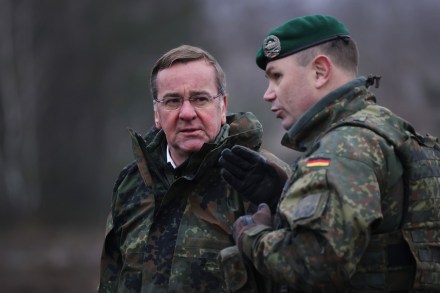
An unlikely political star has risen in Germany. Boris Pistorius, a 63-year-old father of two is a career politician and, as of January, defence minister, an office that has proved a dead end for many of his predecessors. On the face of it, Germany’s Boris has little by way of stardust. Yet he is the country’s most popular politician by a country mile and his department is set to increase its budget at a time when overall government spending is being sharply cut. It seems for the first time in decades, Germany is serious about security and defence – but how long will that seriousness last?

Why Putin still needs Wagner

It will be a matter of deep regret for Vladimir Putin that, in the wake of Yevgeny Prigozhin’s ill-fated attempt to overthrow Russia’s military establishment, he has finally been forced to come clean about the Kremlin’s association with the Wagner Group. Deniability is a vital facet for a veteran spook like Putin. Even when Wagner’s band of mercenary cut-throats were spearheading the assault on the east Ukrainian city of Bakhmut earlier this year, the Russian leader rebutted claims of Prigozhin’s involvement. ‘He runs a restaurant business, it is his job – he is a restaurant keeper in St Petersburg,’ Putin told Austrian television.

Letters: Prigozhin is the model of upward mobility

Prigozhin’s example Sir: Educationalists and policy advisers have long been concerned with identifying alternative routes of upward social mobility. The career of Yevgeny Prigozhin provides an illuminating example of precisely this (‘Crime and punishment’, 1 July). Instead of spending years swotting away at A-levels and business studies degrees, Yevgeny opted for hands-on commercial experience by running a hotdog stand in a big city. He was quick to recognise the value of physical fitness in the pursuit of ambition by engaging in regular training at a local gym. Networking was always high on his agenda, and he soon became close friends with an employee of the state intelligence agency who eventually became President of Russia.

A visit from the devil: Russian Gothic, by Aleksandr Skorobogatov, reviewed

Like light from faraway stars, fiction from outside the Anglosphere may take decades to reach English-language readers. This sinister, indeed sulphurous, novella by a Belarus-born author was first published in Russian in 1991, and won major awards. Ilona Yazhbin Chavasse’s English translation, as creepily compelling as the book deserves, appears long after the contemporary hook that Aleksandr Skorobogatov embeds in his tale has lost its topicality. Recent events, however, make this fable of obsession, madness and violence timelier than ever. It almost vindicates a belief in Russian history and literature as an epic recycling of eternal themes. In a dismal Russian town lives Nikolai, a drifter and drinker on a meagre government pension.

Beijing and Prigozhin: what does China think of the Wagner uprising?

36 min listen

It’s now a week since the Wagner Group revolted against the Kremlin. Though the dramatic uprising was quelled within 24 hours and the group’s leader, Yevgeny Prigozhin, is now exiled to Belarus, the episode will have lasting impact on President Putin’s authority. Among those closely watching the events unfold would have been the Chinese leadership, who sent out a statement of support for Putin, but only after it was clear that the revolt had been put down. What will those in Zhongnanhai make of the Prigozhin uprising? And could something similar happen in China? On the episode, I’m joined by James Palmer, a deputy editor at Foreign Policy and long time China hand, to discuss.

The Wagner Group isn’t Russia’s only private army

Allowing a psychopath to form a private army of violent criminals may not, on reflection, have been Vladimir Putin’s greatest idea. But Yevgeny Prigozhin’s mutinous Wagner Group is by no means the only private army operating in Russia. Over the past couple of months no fewer than five armies have been fighting on Russian soil. Only one of them, the official Armed Forces of the Russian Federation, is directly subordinate to the Kremlin. Pay can run to £2,400 a month, an attractive offer when the average wage in the provinces is under £600 The 12,000-strong semi-irregular forces of Chechen president Ramzan Kadyrov, officially known as the 141st Special Motorised Regiment but more famous as the ‘Kadyrovsty’, are effectively the Praetorian Guard of a regional leader.

Russian failure is a lesson for America

From our US edition

We may never understand the series of events and decisions that led Yevgeny Prigozhin to stage an armed rebellion against Russian president Vladimir Putin’s administration with his Wagner Group private military company, or PMC. Prigozhin was opposed to the planned forcible incorporation of Wagner into the Russian armed forces. He also came to be a sharp critic of the fabricated rationale for Russia’s war on Ukraine and the sloppy way it was being waged by its generals, who are more focused on politics than on defeating Kyiv.

russian military
Yevgeny Prigozhin influencer

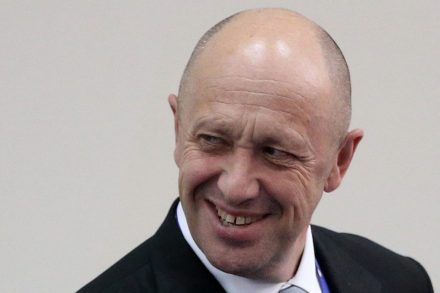
Yevgeny Prigozhin, the world’s strangest influencer

From our US edition

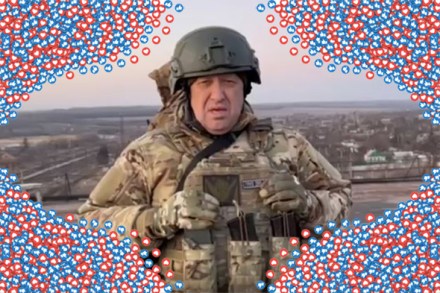
How did Yevgeny Prigozhin, the hot dog vendor-cum-leader of the Wagner private military company, become addicted to the allure of likes, retweets and digital validation? From the outside looking in, the warlord posts like a rich kid splayed over his dad’s Porsche — except rather than a swanky car, Prigozhin brags of the travails of the world’s deadliest private military, replete with tanks and artillery.   The early war days of PMC Wagner’s social media presence could be compared to that of ISIS or other paramilitary groups: the posts had a clear agenda, including intimidation, like the “hammer of revenge” video they circulated over Telegram, which documented the brutal murder of Yevgeny Nuzhin, a former Wagner Group member.

The Wagner uprising has left Putin isolated

Both Vladimir Putin and the mercenary Wagner Group have been dramatically weakened by yesterday’s attempted coup. Wagner’s nominal leader, Yevgeny Prigozhin, goes into exile while his group will no doubt lose its privileged status. Putin, meanwhile, has been publicly and massively humiliated, a dangerous position for an autocrat. Firstly, Putin’s famed security forces proved completely helpless during a mutiny. Secondly, the mutineers – whom he called ‘traitors’ and promised to severely punish – will go unpunished. Putin had to make major concessions to bring an end to the coup, although what those concessions include is not yet clear. What is clear is that he was unable to crush the most serious threat to his authority in 23 years.

Prigozhin turns back, halting ‘coup’ attempt

From our US edition

Yevgeny Prigozhin, the leader of the Wagner mercenary group, has tonight halted his march on Moscow, in return for assurances from the Kremlin on his men’s safety. Alexander Lukashenko, Belarusian president, brokered the agreement. Prigozhin has just released the following statement on Telegram: We marched out on June 23 on the Justice March. In one day, we got within 200 kilometers of Moscow. During this time we did not spill a single drop of blood of our fighters. Now comes the moment when blood may be spilled. Therefore, understanding the responsibility that Russian blood will be spilled on one side, we are turning our columns around and retreating in the opposite direction to the field camps.

prigozhin

This failed coup will be just the beginning

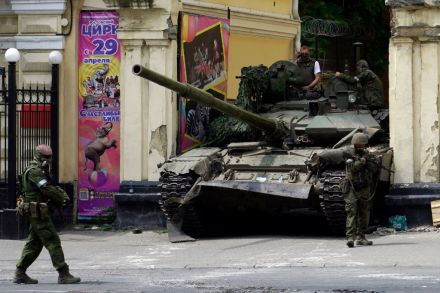
Yevgeny Prigozhin has just exposed the full extent of Vladimir Putin's weakness. In less than 24 hours, the leader of the Wagner mercenary group made extraordinary progress - taking control of the southern Russian city of Rostov-on-Don, the headquarters of the Southern Miliary District, and posing the most serious challenge to Putin’s leadership. The president did not look all-powerful, but unable to control Prigozhin as he said his 25,000 troops were willing to march on Moscow. Back on 9 May, when Prigozhin's challenge to Vladimir Putin first became evident, I argued in The Spectator against the idea that Putin was ‘in charge’ of the situation.

Prigozhin leaves Rostov

Yevgeny Prigozhin, the leader of the Wagner mercenary group, has left Rostov-on-Don and ended the armed insurrection against Vladimir Putin. After one of the most extraordinary days in Russian history, he said he marched within 125 miles of Moscow but said he decided to go no further to avoid bloodshed. Putin, who had ordered his army to crush Prigozhin and imprison his men, has agreed to drop all charges. After a Belarus-brokered peace deal, Prigozhin will self-exile in Minsk, according to the Kremlin. Footage emerged showing him being bid farewell by cheering crowds in Rostov and winding down his window to greet them. A few hours earlier, he released the following statement on Telegram: We marched out on 23 June on the Justice March.

Wagner Group leader claims Russian forces attacked his troops

From our US edition

The leader of Russia’s Wagner group, Yevgeny Prigozhin, claimed Friday that Russian forces targeted his private military company, with “many victims.” The attack occurred after Prigozhin produced a video where he lambasted the Russian military brass for peddling falsehoods about the war to the Russian public and to President Putin. “The ministry of defense is trying to deceive the public and the president and spin the story that there was insane levels of aggression from the Ukrainian side,” said Prigozhin according to The Guardian, “and that they were going to attack us together with the whole NATO block.” “When Zelensky became president,” he added, “he was ready for agreements. All that needed to be done was to get off Mount Olympus and negotiate with him.

yevgeny prigozhin

Portrait of the week: Boris locked out, mortgage misery and Titanic submarine search

Home Boris Johnson, the former prime minister, was ritually buried by the House of Commons voting by 354 to seven to approve the Privileges Committee report that found he had lied to parliament about observing coronavirus regulations. He would have been suspended for 90 days had he not left parliament; as it was, his pass to enter the Houses of Parliament was withdrawn. Rishi Sunak, the Prime Minister, having remembered an important long-standing engagement, was among 225 MPs who were absent or abstained. David Warburton, an MP who sat as a Conservative until last year, said he was leaving the House. In the King’s birthday honours, Sir John Bell, Ian McEwan and Dame Anna Wintour were appointed Companion of Honour.

Reminders of the Cold War in Vienna and Budapest

From our US edition

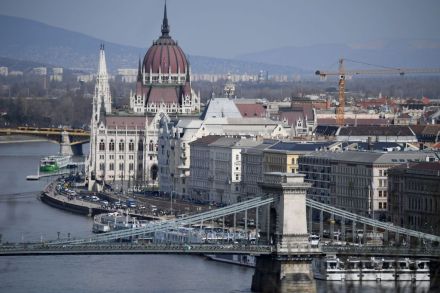
Apparently an acquaintance has dubbed me the “Kremlinologist of the right.” Redolent as it is of the Cold War-era drama surrounding the Kremlin, when the West was desperately trying to suss out what Winston Churchill called a riddle wrapped in a mystery inside an enigma, I could hardly object to this quip upon learning of it. Indeed, I recently traveled to two hot spots of the Cold War, Vienna and Budapest. I went full immersion in Vienna, where I attended a screening of Orson Welles’s The Third Man, a humdinger of a movie if there ever was one. Graham Greene set it in postwar Vienna, which was divided between the four occupying powers, France, Great Britain, America and the Soviet Union.

Cold War