Romanticism

The magic ears of Hyperion

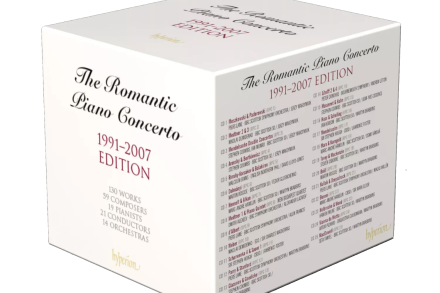
How do we evaluate Hyperion’s Romantic Piano Concerto series, which over a period of 35 years recorded more than 200 works for piano and orchestra? Was it one of the glories of the catalogue or a repository of works whose ambitions exceeded their achievement? The answer, of course, is that it was both. The paradox is unavoidable. You can’t assemble a giant collection of mostly forgotten concertos on the assumption that they all deserve to be famous – which, to be fair, Hyperion doesn’t claim: the liner notes often concede that a piece ‘perhaps understandably failed to secure a place in the repertoire’ or some such euphemism. But they may deserve to be recorded. Keyboard pyrotechnics can be their own reward, compensating for vapid melodies or structural lumps.

The joy of American romanticism

Grade: A– For some record collectors, the fun lies in comparing recordings of standard repertoire. For others, it’s more about exploring – discovering works that are extinct in the concert hall, but which the inscrutable economics of recording make viable. If you’ve a habit of forming modest crushes on wallflowers and unfashionable composers, the news that Chandos is recording the orchestral music of Edward MacDowell (1860-1908) will bring a pleasant flush of blood to the cheeks. MacDowell, in short, is what American classical music sounded like before there was such a thing as American classical music – before Copland, Gershwin and all that jazz. Romantic, in other words; very, very Romantic.

From enfant terrible to dame: Tracey Emin in her own words

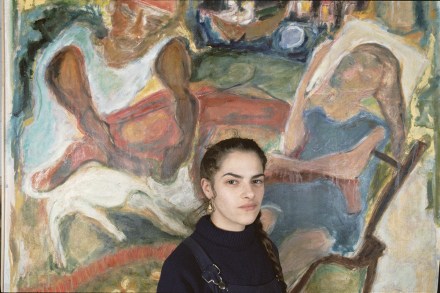
On the eve of a major retrospective at Tate Modern comes this portrait of Tracey Emin as a painter, told largely in her own words. It traces a remarkable trajectory, from gobby Margate teenager to one of the UK’s most respected and celebrated artists, and a Dame of the British Empire. At its heart is a series of conversations with Martin Gayford, a critic with a deep engagement with the nature of painting and insights gleaned from close friendships with 20th-century giants, Lucian Freud and David Hockney among them. It is a book full of heart – frank and confessional – and presents Emin at the zenith of her powers, having survived near-fatal cancer and found new purpose and conviction.

Fast cars, minimalist design and en suite bathrooms: the real Rachmaninoff

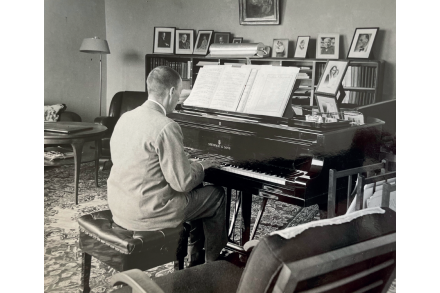
The train from Zurich to Lucerne tips you out right by the lakeside, practically on the steamboat piers. A white paddle-steamer takes you out of the city, past leafy slopes and expensive-looking mansions. Tribschen, where Wagner wrote the ‘Siegfried Idyll’, slides away to the right as you head out across the main arm of the lake. At the foot of Mount Rigi, shortly before the steamer makes its whistle-stop at the lakeside village of Hertenstein, is a promontory where – if the sun is coming from the west – a yellow-coloured cube shines among the trees. This is the house that Sergei Rachmaninoff built between 1931 and 1934: Villa Senar, his last attempt to make a home outside Russia in Europe.

In the footsteps of the Romantic poets

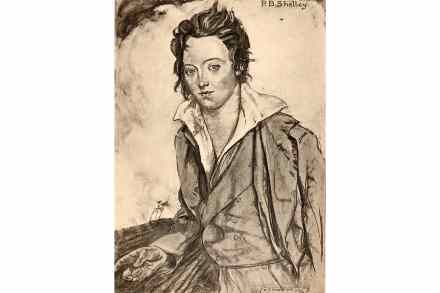
Shelley, walking as a boy through his ‘starlight wood’, looking for ghosts and filled with ‘hopes of high talk with the departed dead’, found nothing in reply. Nothing reverberated. The ghosts were silent. But he felt something else non-human: the springtime breezes bringing a sense of the marvellousness of life itself. And so in that instant (or so he says) his mind changed. No more seeking after gothic horrors or pining for the worst; no more listening to the dead. Instead, ‘the spirit of beauty’ descended on him, illuminated him, shaping his life, becoming his goddess, the only force he could imagine that ‘could free/ This world from its dark slavery’.

Hearing Percy Bysshe Shelley read aloud was a revelation

Last week I heard the actor Julian Sands give a virtuoso performance of work by Percy Bysshe Shelley to mark the bicentenary of the radical poet’s death this month. A couple of days later, I listened to a bit more Shelley, this time on the radio, and this time in the voice of Benjamin Zephaniah. Hearing his verses read aloud is so much more intimate than reading them silently. You may be sitting in a crowd, but as Shelley’s words fall into your ears, it’s possible to feel that you’re having a private audience with him. Reading the same poems in an empty room can be comparatively distancing. Zephaniah said something similar when he described his first encounter with the poetry at school.

Musical conservatives ought to love identity politics

It’s 2022 and classical music is, again, dead. It’d be surprising if it wasn’t. In 2014 the New Yorker published a timeline by the industry analyst Andy Doe showing the precise chronology of the decline and fall. Ageing audiences in the 21st century, the gramophone in the 20th, the dangerous new technology of the pianoforte in the 1840s: all, in their time, were considered proof that the rot was terminal. Doe traced the root of the problem back to a papal bull in 1324, giving new potency to Charles Rosen’s remark that ‘the death of classical music is perhaps its oldest continuing tradition’. Anyway, the fatal blow this time is the Great Awokening.

The art of the pillbox

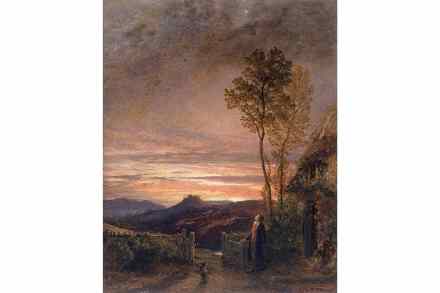
When Oscar Wilde famously claimed: ‘All art is quite useless’, he may not have had artistic subjects in mind. But it’s certainly true that since the Romantic era, artists have had a special affection for the superannuated. An image of an abandoned building with some sort of past, not necessarily glorious, appeals to our emotions, be it Rachel Whiteread’s ‘House’ or Constable’s ‘Hadleigh Castle’. Even ephemera pre-loved by strangers evoke nostalgia when incorporated in the shadow boxes of Joseph Cornell or the assemblages of Peter Blake. But what about things that are not just obsolete but have never had any use at all? That’s the curious question prompted by a new exhibition at Bodmin Keep, Cornwall’s Army Museum.

From bad joke to 21st-century classic: the best recordings of Korngold’s Violin Concerto

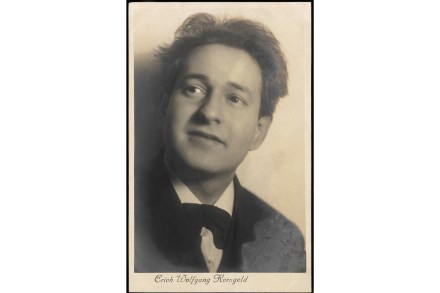
Erich Korngold was what you might call an early adopter. As a child prodigy in Habsburg Vienna, he’d astonished the world: a schoolboy composing orchestral scores that made Elektra sound tame. Jump ahead three decades, and Korngold, in his fashion, was still ahead of the curve. He was one of the first residents of Toluca Lake, North Hollywood, to buy a television. There wasn’t much to watch in 1947, but (according to Korngold’s biographer Brendan Carroll) Jascha Heifetz would drive over anyway from Beverly Hills, and the two exiles — the former protégé of Gustav Mahler, and the greatest violinist on earth — would sit there glued to the live wrestling.

How we became a nation of choirs and carollers

Between the ages of 15 and 17 I had a secret. Every Monday night I’d gulp down dinner before rushing out to the scrubby patch of ground just past the playing fields, where a car would be waiting. Hours later — long after the ceremonial nightly locking of the boarding house — I’d sneak back, knocking softly on a window to be let in. I’d love to say that it was alcohol or drugs that lured me out. It wasn’t even boys — or, at least, not like that. My weekly assignation was with Joseph and Johann, Henry, Ben and Ralph. My addiction? Choral music.